
Skin concerns · Acne-prone skin
Breakouts are not a hygiene problem.
A breakout is a cycle that starts inside the pore: oil, dead cells, bacteria and inflammation. Once you understand how that cycle works, you can take the right step instead of blaming yourself.
9.4%
Estimated share of the world's population living with acne. It is the eighth most common disease worldwide.[1]
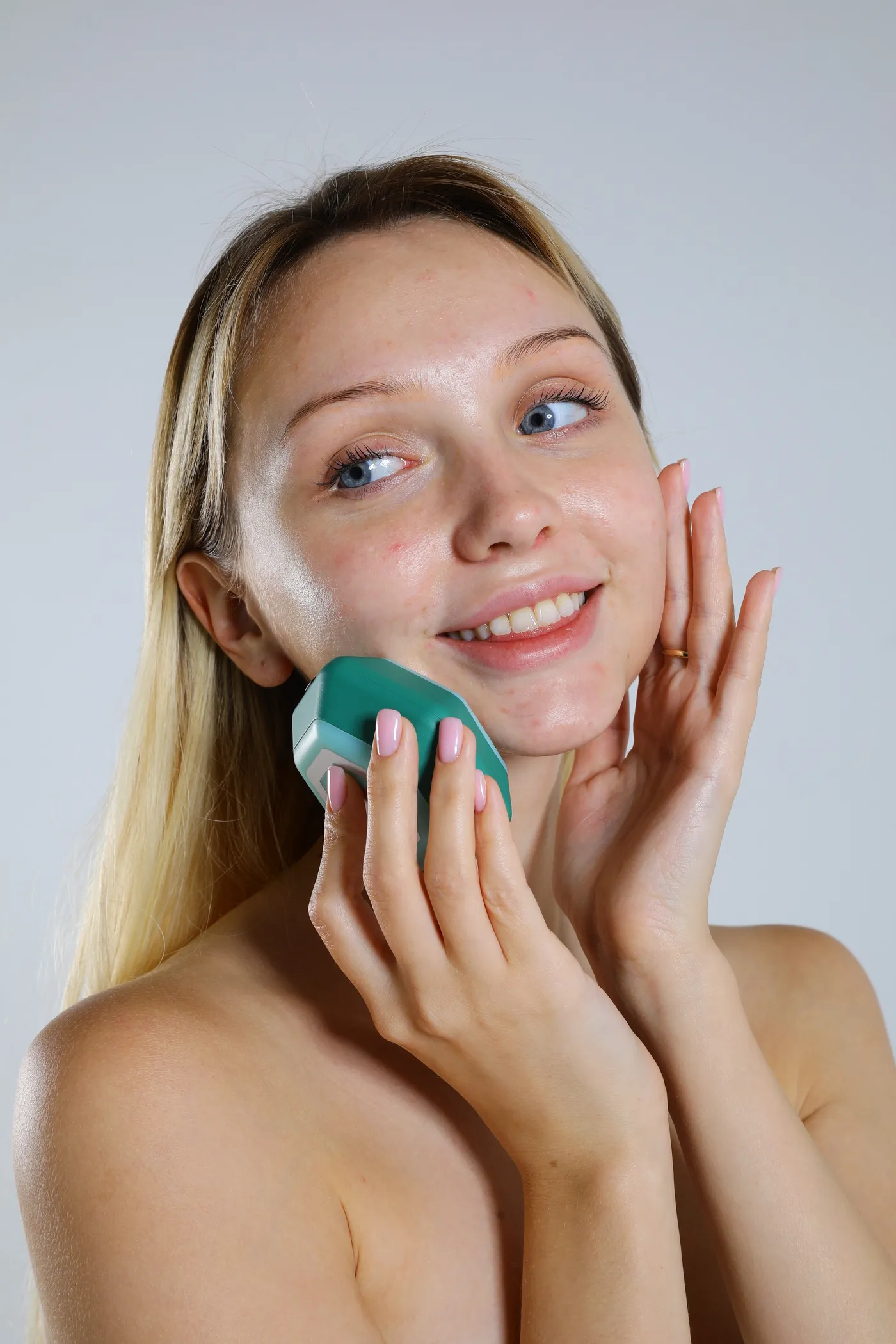
50.9%
Share of women aged 20 to 29 who reported having acne.[2]
Written with peer-reviewed studies, university laboratory measurements and input from a dermatologist.
Myths and facts
What you hear blames you. The studies don't.
The most common beliefs about breakouts often lead to habits that wear skin down even further. Flip the cards to see what the research says.
- What you hear
“Breakouts mean dirty skin. The more often I wash, the better.”
What we knowBreakouts begin inside the pore, not with dirt on the surface, and the dark colour of a blackhead isn't dirt either. In a 6-week randomised study of men with mild to moderate acne, the best results came from the group that washed twice a day with a gentle cleanser. Washing four times a day did no better.[3]
- What you hear
“Eat chocolate and you'll break out.”
What we knowNo single food is strictly off limits, but your overall diet may play a part. In a small study of 14 men with a history of acne, pure cocoa capsules increased the number of blemishes within a week. In a 12-week randomised study of 43 young men, a diet that raises blood sugar slowly (a low glycaemic load diet) led to a greater drop in breakouts than in the control group. The participants also lost weight, though, so the effect could not be attributed to diet alone.[4,5]
- What you hear
“Toothpaste dries out spots.”
What we knowToothpaste is made for teeth. Its cooling and foaming agents can irritate skin, and irritation can deepen the dark mark a spot leaves behind. A spot that looks dried out may leave a more noticeable trace.[6]
- What you hear
“The sun dries out breakouts, so my skin clears up in summer.”
What we knowA tan can mask redness for a while, but it doesn't clear breakouts. UV light darkens the brown marks that breakouts leave behind, and those marks can last for months or even years. A broad-spectrum sunscreen that won't clog pores is part of caring for acne-prone skin.[6]
- What you hear
“If I squeeze it, it will go away faster.”
What we knowSqueezing usually pushes the plug and the inflammation deeper. Of 324 people with acne seen by a dermatologist, 58.2% had dark marks after breakouts (post-inflammatory hyperpigmentation), and more than half of those marks lasted at least a year. The researchers named picking as a preventable risk factor.[7]
- What you hear
“Acne ends with your teens.”
What we knowAcne can carry on into adulthood, or start there for the first time. In a survey of 1,013 adults, 50.9% of women aged 20 to 29 and 26.3% of women aged 40 to 49 reported having acne.[2]
Four stages of a breakout
The spot you can see is the middle of the story.
A breakout starts inside the pore before you notice it, and it can leave a mark long after it has gone. Here are the four stages, and what helps at each one.
- 1 Before you can see it
Microcomedone
Cells in the pore wall multiply too quickly and combine with sebum (the skin's own oil) to form a tiny plug. This earliest stage is invisible to the eye. Researchers have shown that inflammatory cells gather even around pores that look healthy. In other words, inflammation starts before a spot appears.[8]
At this stageRegular, gentle care. Salicylates, which loosen the plug, are most useful at this stage.
- 2 When you notice it
Comedone
The plug grows. If the pore stays open at the surface, it becomes a blackhead; if it is closed over, a small skin-coloured bump forms, known as a whitehead. When the faces of 25 people were tracked with photographs over 12 weeks, the most common lesion was the whitehead, also called a closed comedone (37%).[9]
At this stageBlackheads and whiteheads respond well to care at home. Don't squeeze, don't scrub.
- 3 Within days
Inflammation
Inside a pore cut off from oxygen, bacteria multiply and the immune system steps in: redness, swelling, sometimes a yellow head. In the same study, 54% of inflamed spots grew from a comedone and 28% from skin that looked healthy. The plug was already there; it just wasn't visible yet.[9]
At this stageHands off. Choose care that targets bacteria and inflammation without drying the skin.
- 4 Over months
Mark
The spot clears, but a brown or reddish mark can stay behind. Most of the time this isn't a permanent pitted scar, and it fades over months, sometimes years. Sun and repeated inflammation make it darker.[6]
At this stageSunscreen every morning, plus care for dark marks.
- Plug
- Oil gland
- Inflammation
- Pigment
Control
Know what is in your hands.
Not your choice
- Your genetic predisposition
- Your hormones and menstrual cycle
- The structure of your pores and how your oil glands work
Your breakouts are not a flaw, and not a sign of neglect.
Find your acne type
Look in the mirror and find where your breakouts sit.
Blemishes fall into five levels, from the surface down. Look in a mirror in daylight and ask yourself three questions: does it have a head, does it hurt when you touch it, is it deep under the skin? Choose a level to see the details.
Blackhead
Open comedone
- What it looks like
- Small, flat, dark dots on the nose, chin and forehead. They don't hurt.
- What's happening in the pore
- The pore is open at the surface. The top of the plug, made of sebum and dead cells, looks dark; this isn't dirt, and it won't scrub away.
- What to do
- A product with salicylates, and gentle cleansing twice a day.
Whitehead
Closed comedone
- What it looks like
- Skin-coloured or whitish bumps the size of a pinhead. They feel rough when you run your hand over them.
- What's happening in the pore
- The plug builds up under the skin, in a pore that is closed at the surface. Most inflamed spots develop from these plugs.
- What to do
- Regular care that loosens the plug. Because the pore is closed, squeezing only pushes the inflammation deeper.
Papule
Inflamed bump
- What it looks like
- Small, reddish or dark bumps without a head that feel tender to the touch.
- What's happening in the pore
- The pore wall is inflamed, and immune cells gather in the area.
- What to do
- Leave them alone, and choose care that targets bacteria and inflammation without drying the skin. If they have spread across a large part of your face, talk to a dermatologist.
Pustule
Pus-filled spot
- What it looks like
- A yellowish or white head in the centre, with redness around it.
- What's happening in the pore
- The inflammation has progressed and pus has collected in the pore. Squeezing can spread the contents into the surrounding tissue.
- What to do
- Don't squeeze; let it settle on its own. If pustules keep coming back often and over a wide area, talk to a dermatologist.
Nodules and cysts
Deep inflammatory acne
- What it looks like
- Painful lumps under the skin, the size of a pea or larger. They can last for weeks.
- What's happening in the pore
- The inflammation has reached the base of the pore, in the deeper layers of the skin. The risk of a permanent pitted scar is high.
- What to do
- See a dermatologist. This type of acne can't be managed with cosmetic care; your doctor may suggest prescription treatment or, for large spots, an injection.[12]
When to see a dermatologist
- Deep, painful lumps: nodules or cysts.[12]
- Breakouts that are starting to leave pitted or raised scars. The later effective treatment begins, the higher the chance of scarring.[13]
- Breakouts that don't ease, or keep spreading, after a few months of regular care.
- Adult acne that starts alongside irregular periods or increased hair growth.
- Acne that upsets you or affects your social life. Guidelines recommend stronger treatment in this situation too.[12]
Seeing a dermatologist early saves time. Longos Sense and the serums can support the routine your dermatologist recommends; they do not replace prescription treatment.
A small first step
Not sure? Measure your skin.
The AI skin analysis in the Longos app marks each blemish where it sits on a map of your face, and scores your blackhead and pore indicators separately. Measure once a week in the same light and you can follow the change in numbers.
Adult acne
Acne doesn't end with age, especially for women.
Acne is most common in the teenage years, but it can persist into your twenties, thirties and even forties, or begin then for the first time. In a survey of 1,013 adults, women reported acne more often than men in every age group.[2]
Share of adults who reported having acne[2]
| Age group | Women | Men |
|---|---|---|
| 20-29 | 50.9% | 42.5% |
| 30-39 | 35.2% | 20.1% |
| 40-49 | 26.3% | 12.0% |
| 50+ | 15.3% | 7.3% |
Acne affects how you feel, too.
In a study of 3,775 eighteen-year-olds, those with acne reported lower self-worth and were less satisfied with their bodies. An analysis pooling 42 studies found a significant association between acne and both depression and anxiety.[14,15]
These feelings are a recognised part of acne. If they are wearing you down, talk to a dermatologist about it and, if needed, a mental health professional; that conversation matters as much as your skincare.
What helps
Break the cycle at three points.
The American Academy of Dermatology guideline recommends care that addresses the different causes of breakouts at the same time. Longos Sense and the serums offer support at these three points, within the limits of cosmetic care. In widespread inflammatory or cystic acne, they complement the treatment your dermatologist recommends; they do not replace it.[12]
01Pore
Loosen the plug.
What happens
Excess sebum and dead cells combine and clog the pore.
Evidence
Salicylic acid is oil-soluble, so it mixes with the oil inside the pore and loosens the plug. The guideline supports salicylic acid conditionally, meaning with a weaker recommendation.[12,16]
Longos Sense and the serums
The willow bark extract in Anti-Acne is a natural source of salicylates, while lactic acid gently renews the surface. For oily skin, add Pore Minimizer as a second step for the look of pores.
02Bacteria
Blue light at the surface
What happens
In a clogged pore starved of oxygen, acne-associated bacteria multiply.
Evidence
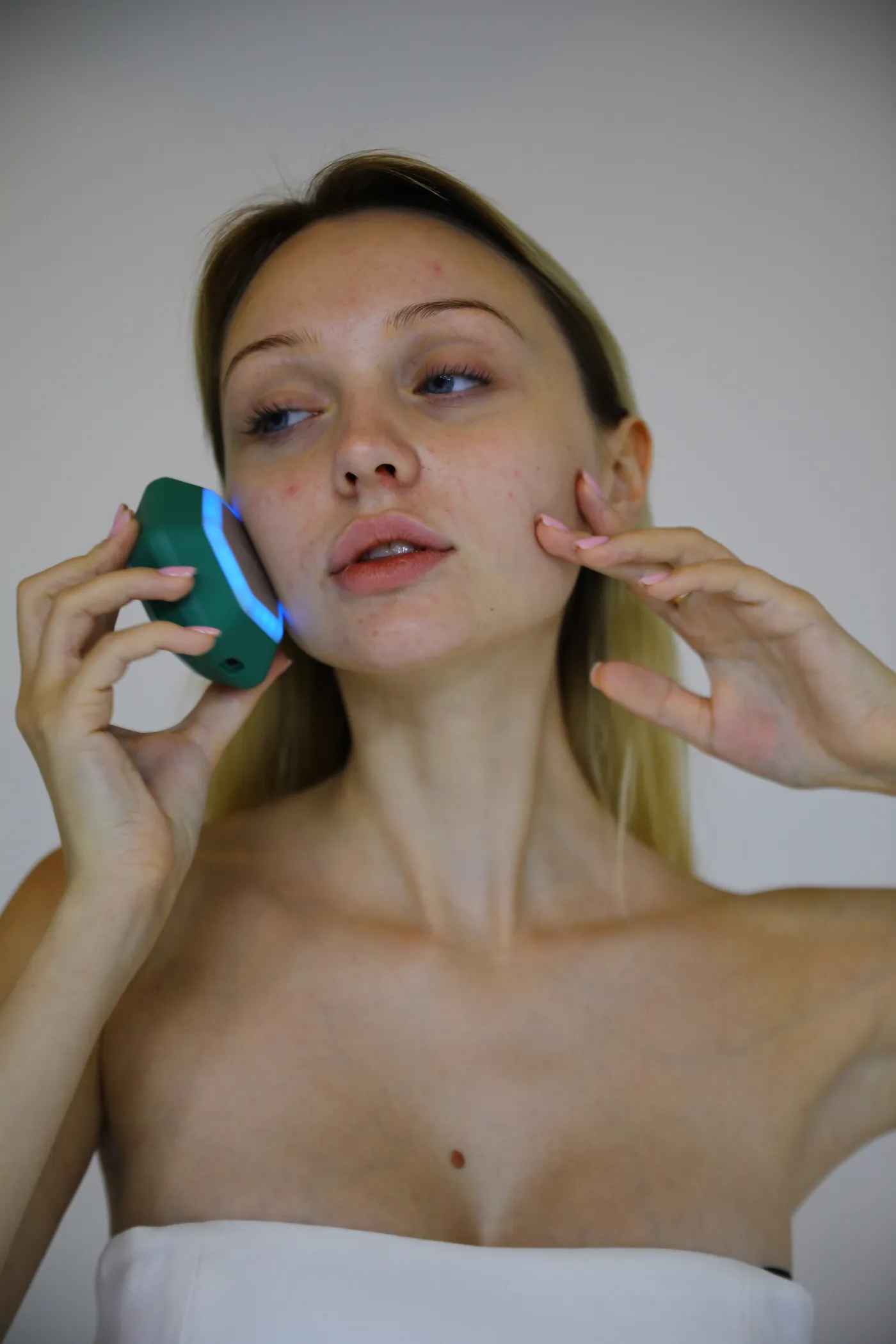
These bacteria produce light-sensitive molecules called porphyrins. In the lab, blue light at wavelengths of 407-420 nm excited these molecules and damaged the bacteria. In a 12-week randomised study of 107 people with mild to moderate acne, blue and red light used for 15 minutes a day with a portable device improved inflamed spots by an average of 76%. This study was not carried out with Longos Sense.[17,18]
Longos Sense and the serums
The Anti-Acne protocol on Longos Sense works with blue light. The polylysine and Tasmanian pepper extract in Anti-Acne support the skin's bacterial balance.
03Inflammation and barrier
Soothe, don't dry out.
What happens
Inflammation is there from the very start of a breakout. Harsh products disrupt the barrier and increase redness.
Evidence
Some of the active ingredients used for acne can disrupt the skin barrier and dry the skin. When that care was paired with a moisturiser, signs of irritation eased without a noticeable loss of effect.[11]
Longos Sense and the serums
The 8D hyaluronic acid in Anti-Acne helps keep skin hydrated. Soothing, with Tasmanian pepper extract and ceramide 3, reduces the look of redness and supports the barrier.
A note on the evidence: according to a Cochrane review of 71 randomised studies on light therapies, most of the studies are small and high-quality evidence is still lacking. So think of blue light therapy as one part of a regular routine.[19]
With Longos Sense
The Anti-Acne protocol: three modes, one session
The app scans your skin first, then adjusts the modes and timing of the Anti-Acne protocol to your skin.
- 1/3Blue lightStays in the top layer of the skin, where breakouts form.
- 2/3Medium heatGently warms the skin to prepare it for the serum.
- 3/3Ultrasonic WavesThe waves help the serum's active ingredients spread across the skin and pass into it.
Evening routine
- 1Wash your face with a gentle cleanser and pat it dry with a towel.
- 2Apply a few drops of Anti-Acne to your T-zone and any breakout-prone areas.
- 3Set Longos Sense to the Anti-Acne protocol and glide it over your skin in circular movements.
- 4If there is redness, finish with Soothing. In the morning, don't forget your sunscreen.
Realistic expectations: the light and diet studies measured their results at week 12. Keep up your routine for at least that long, and follow the change with the skin analysis.[5,18]
Hands off
Squeezing takes a second. The mark can last for months.
Reaching for a spot is deeply human; almost everyone does it. But squeezing pushes the plug and the inflammation deeper, and makes it more likely that a dark mark or a pitted scar will stay behind.
- Share of people with acne seen by a dermatologist who had dark marks after breakouts
- 58.2%
- Share of people with acne seen by a dermatologist who had dark marks after breakouts[7]
- Share with acne scars among 1,972 people with acne seen by a dermatologist
- 43%
- Share with acne scars among 1,972 people with acne seen by a dermatologist[13]
In 69% of those with scars, the acne was mild or moderate at the time: scarring is not limited to severe acne.[13]
When your hand goes to your face, try this instead
- 01Keep your hands busy: a glass of water, a few deep breaths, a short walk.
- 02Stay away from magnifying mirrors and harsh light; up close, a spot looks bigger than it is.
- 03Cover the spot with a pimple patch; it makes touching harder.
- 04Use the Longos Sense Anti-Acne protocol on that area, and give your hands a job to do.
- 05For a large, painful spot, see a dermatologist: they can give an injection that calms the inflammation.[12]
If you can't stop yourself, it isn't a lack of willpower. Repeated picking is sometimes a condition that deserves attention in its own right; talking to a dermatologist or a psychologist can help.
Laboratory measurement
A stronger response, together
2.4×
The response measured when Anti-Acne, Pore Minimizer and Longos Sense are used together, compared with the serum measured on its own.[20]
The response strength of Anti-Acne was measured electrochemically, in microamperes (µA), in three steps: the serum alone, with Longos Sense, and together with Pore Minimizer in the oily skin protocol.
What does µA mean?
A measure of the current generated at the electrode surface. Under the same conditions, a higher current means a stronger response in the test medium.
Measurement protocol
- Blue LED
- Medium heat
- Ultrasonic vibration
+137.6%Increase over the serum alone
- Anti-Acne alone 10.1 µA
- With Longos Sense 11 µA
- With Pore Minimizer and Longos Sense 24 µA
The measurements were carried out in the laboratories of Yıldız Technical University and Dokuz Eylül University. AGON Biotechnology, which develops biosensors and electrochemical measurement systems, and Bioİzmir contributed to the scientific work.[20]
These findings are controlled laboratory observations; they make no claim of medical diagnosis or treatment. Results on skin vary from person to person.
All laboratory measurementsExperience and expert view
From someone who's been there, and from a doctor.
Frequently asked questions
About caring for acne-prone skin
Why do my breakouts always appear in the same place?
Breakouts that keep returning to one area are often linked to how many oil glands sit there, to friction (a phone, a mask, a helmet) or to hair and skincare products. In adult women, breakouts on the chin and jawline can come with hormonal fluctuations. For deep or frequently recurring breakouts, talk to a dermatologist.
When will I see a difference?
Because a breakout starts forming before you can see it, the effect of a new routine also takes weeks to show; studies measure results after a few months. New breakouts in the first weeks don't mean the routine isn't working. Follow the change with the skin analysis in the app, in the same light each week.
Can I use Anti-Acne with my prescription medication?
Anti-Acne is a cosmetic product and does not replace prescription treatment. If you use a retinoid, benzoyl peroxide or another medication, add any new product only after checking with your dermatologist, and avoid layering strong actives on the same evening.
Does makeup make breakouts worse?
Wanting to cover a breakout is completely natural. The problem isn't makeup itself, but heavy products that clog pores and residue left on the skin. Choose non-comedogenic products and remove your makeup gently every evening.
Can I use it while pregnant or breastfeeding?
During pregnancy and breastfeeding, talk to your doctor before starting products with salicylates (including Anti-Acne) or using the device. Breakouts often increase at this time because hormones change; your dermatologist can explain the safe options.
Do acne marks and scars go away completely?
The brown or reddish marks left after breakouts usually fade over time; sun protection and care for dark marks can shorten that time. Pitted scars, however, are permanent and don't improve with cosmetic care; they need dermatological procedures. The best approach is to manage breakouts early, without squeezing, before scars can form.
References
Sources for the information on this page
Studies published in peer-reviewed journals, dermatology guidelines and Quantum Orbit Labs laboratory measurements. The numbers in square brackets in the text link to this list.
- 1.Tan JK, Bhate K. A global perspective on the epidemiology of acne. British Journal of Dermatology. 2015;172(Suppl 1):3-12. pubmed.ncbi.nlm.nih.gov
- 2.Collier CN, Harper JC, Cafardi JA et al. The prevalence of acne in adults 20 years and older. Journal of the American Academy of Dermatology. 2008;58(1):56-59. pubmed.ncbi.nlm.nih.gov
- 3.Choi JM, Lew VK, Kimball AB. A single-blinded, randomized, controlled clinical trial evaluating the effect of face washing on acne vulgaris. Pediatric Dermatology. 2006;23(5):421-427. pubmed.ncbi.nlm.nih.gov
- 4.Caperton C, Block S, Viera M, Keri J, Berman B. Double-blind, placebo-controlled study assessing the effect of chocolate consumption in subjects with a history of acne vulgaris. Journal of Clinical and Aesthetic Dermatology. 2014;7(5):19-23. pmc.ncbi.nlm.nih.gov
- 5.Smith RN, Mann NJ, Braue A, Mäkeläinen H, Varigos GA. A low-glycemic-load diet improves symptoms in acne vulgaris patients: a randomized controlled trial. American Journal of Clinical Nutrition. 2007;86(1):107-115. pubmed.ncbi.nlm.nih.gov
- 6.Davis EC, Callender VD. Postinflammatory hyperpigmentation: a review of the epidemiology, clinical features, and treatment options in skin of color. Journal of Clinical and Aesthetic Dermatology. 2010;3(7):20-31. pmc.ncbi.nlm.nih.gov
- 7.Abad-Casintahan F, Chow SK, Goh CL et al. Frequency and characteristics of acne-related post-inflammatory hyperpigmentation. Journal of Dermatology. 2016;43(7):826-828. pubmed.ncbi.nlm.nih.gov
- 8.Jeremy AH, Holland DB, Roberts SG, Thomson KF, Cunliffe WJ. Inflammatory events are involved in acne lesion initiation. Journal of Investigative Dermatology. 2003;121(1):20-27. pubmed.ncbi.nlm.nih.gov
- 9.Do TT, Zarkhin S, Orringer JS et al. Computer-assisted alignment and tracking of acne lesions indicate that most inflammatory lesions arise from comedones and de novo. Journal of the American Academy of Dermatology. 2008;58(4):603-608. pubmed.ncbi.nlm.nih.gov
- 10.Chiu A, Chon SY, Kimball AB. The response of skin disease to stress: changes in the severity of acne vulgaris as affected by examination stress. Archives of Dermatology. 2003;139(7):897-900. pubmed.ncbi.nlm.nih.gov
- 11.Thiboutot D, Del Rosso JQ. Acne vulgaris and the epidermal barrier. Journal of Clinical and Aesthetic Dermatology. 2013;6(2):18-24. pmc.ncbi.nlm.nih.gov
- 12.Reynolds RV, Yeung H, Cheng CE et al. Guidelines of care for the management of acne vulgaris. Journal of the American Academy of Dermatology. 2024;90(5):1006.e1-1006.e30. pubmed.ncbi.nlm.nih.gov
- 13.Tan J, Kang S, Leyden J. Prevalence and risk factors of acne scarring among patients consulting dermatologists in the USA. Journal of Drugs in Dermatology. 2017;16(2):97-102. pubmed.ncbi.nlm.nih.gov
- 14.Dalgard F, Gieler U, Holm JØ, Bjertness E, Hauser S. Self-esteem and body satisfaction among late adolescents with acne: results from a population survey. Journal of the American Academy of Dermatology. 2008;59(5):746-751. pubmed.ncbi.nlm.nih.gov
- 15.Samuels DV, Rosenthal R, Lin R, Chaudhari S, Natsuaki MN. Acne vulgaris and risk of depression and anxiety: a meta-analytic review. Journal of the American Academy of Dermatology. 2020;83(2):532-541. pubmed.ncbi.nlm.nih.gov
- 16.Arif T. Salicylic acid as a peeling agent: a comprehensive review. Clinical, Cosmetic and Investigational Dermatology. 2015;8:455-461. pmc.ncbi.nlm.nih.gov
- 17.Ashkenazi H, Malik Z, Harth Y, Nitzan Y. Eradication of Propionibacterium acnes by its endogenic porphyrins after illumination with high intensity blue light. FEMS Immunology and Medical Microbiology. 2003;35(1):17-24. pubmed.ncbi.nlm.nih.gov
- 18.Papageorgiou P, Katsambas A, Chu A. Phototherapy with blue (415 nm) and red (660 nm) light in the treatment of acne vulgaris. British Journal of Dermatology. 2000;142(5):973-978. pubmed.ncbi.nlm.nih.gov
- 19.Barbaric J, Abbott R, Posadzki P et al. Light therapies for acne. Cochrane Database of Systematic Reviews. 2016;9:CD007917. pmc.ncbi.nlm.nih.gov
- 20.Quantum Orbit Labs. Electrochemical laboratory measurements of Longos Sense and the serums. Laboratories of Yıldız Technical University and Dokuz Eylül University, with contributions from AGON Biotechnology and Bioİzmir. quantumorbitlabs.com/en/clinical-evidence
Where to start
For acne-prone skin
Longos Sense and three serums, step by step. Start with Anti-Acne; add Pore Minimizer if your skin is oily, and Soothing if there is redness. The skin analysis in the app sets the order for your skin.
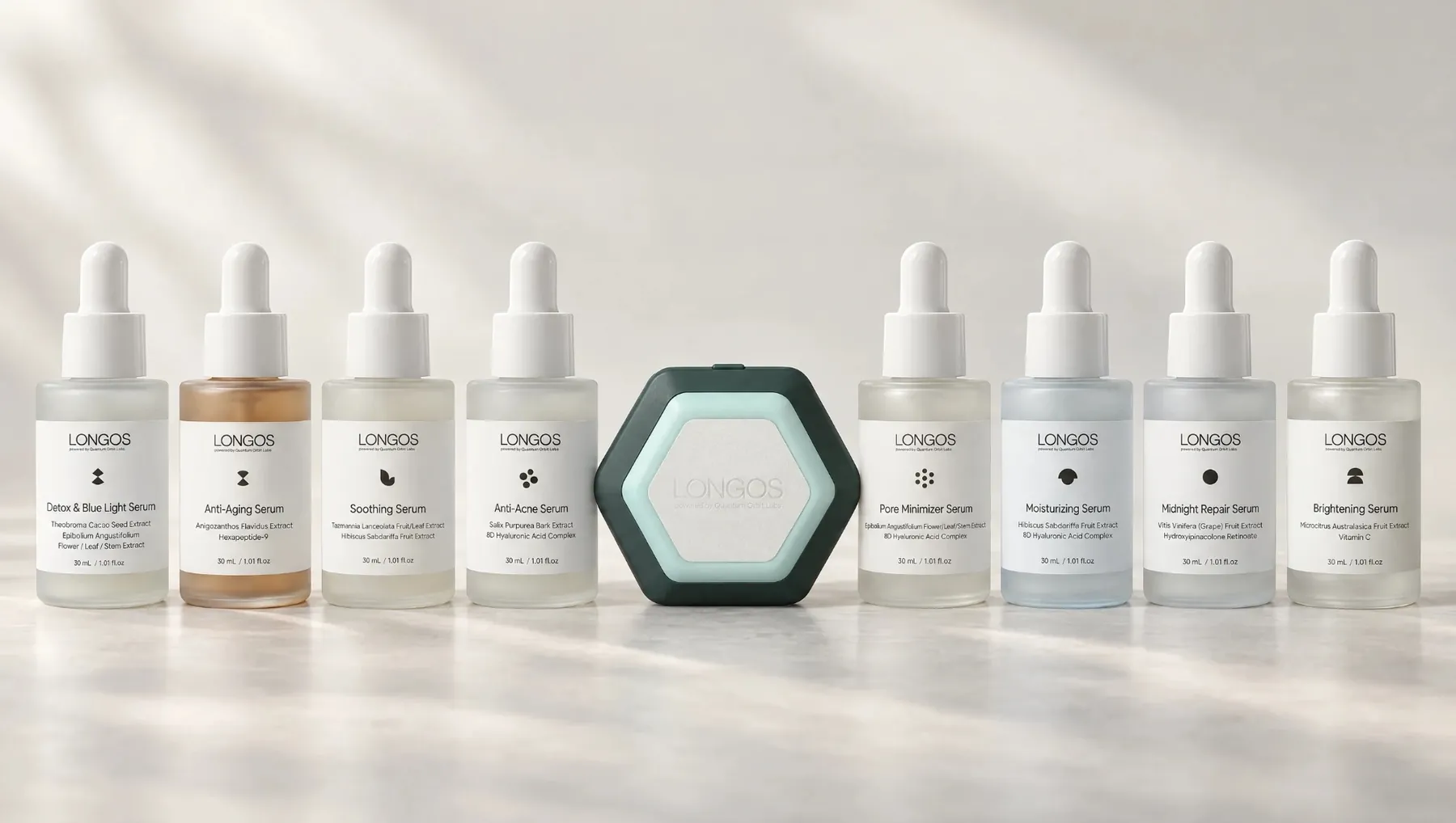
Longos Sense set
Quantum Light (blue light), Ultrasonic Waves, Thermal Therapy and Radiofrequency in one device. The app scans your skin and sets the Anti-Acne protocol; the set includes all three serums on this page.
Explore the set-
Step 1
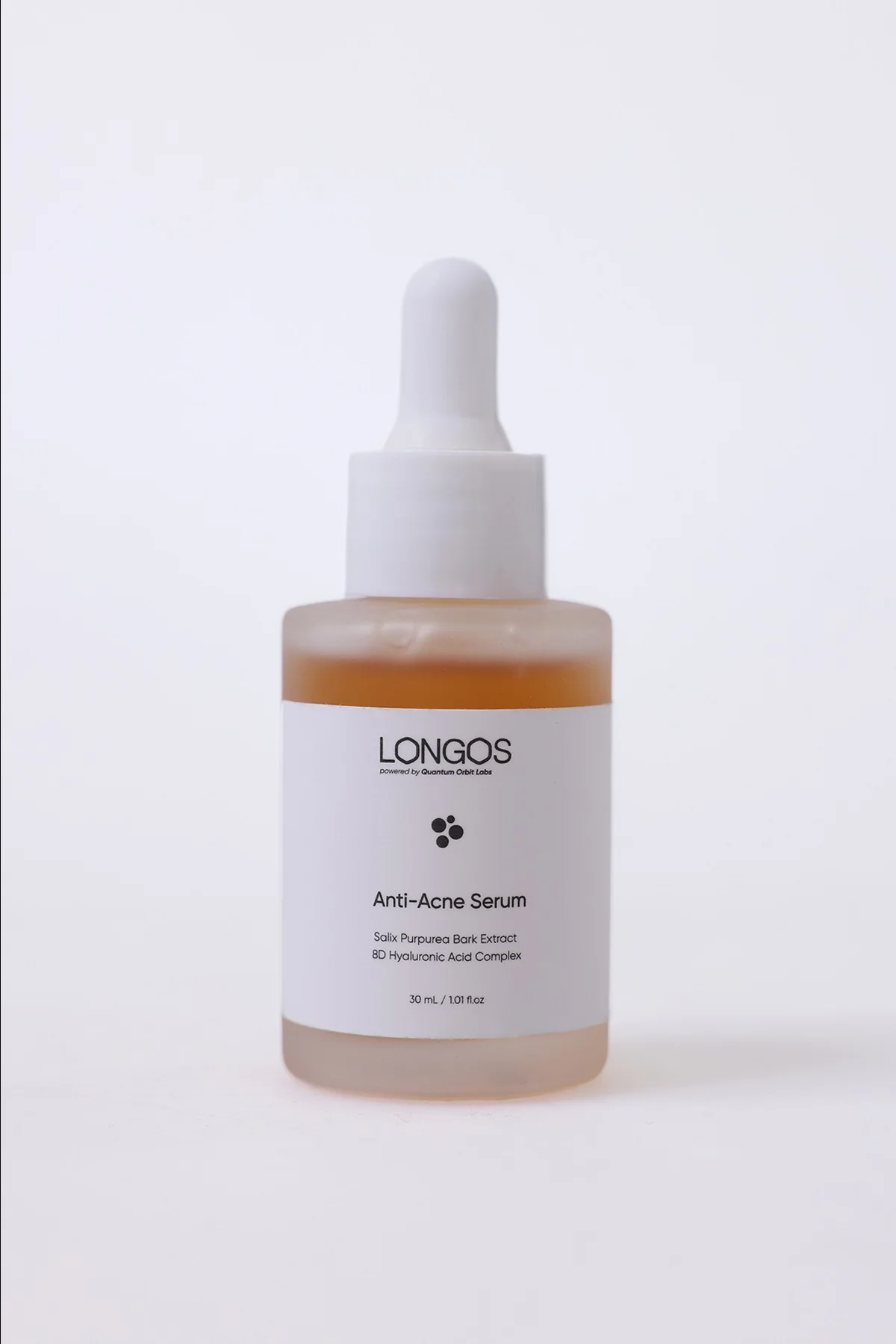
Every evening · Pores and bacteria
Anti-Acne serum
Willow bark extract, polylysine, lactic acid and 8D hyaluronic acid. Used with blue light and Ultrasonic Waves.
Blue light Ultrasonic -
Step 2
For oily skin · Second step
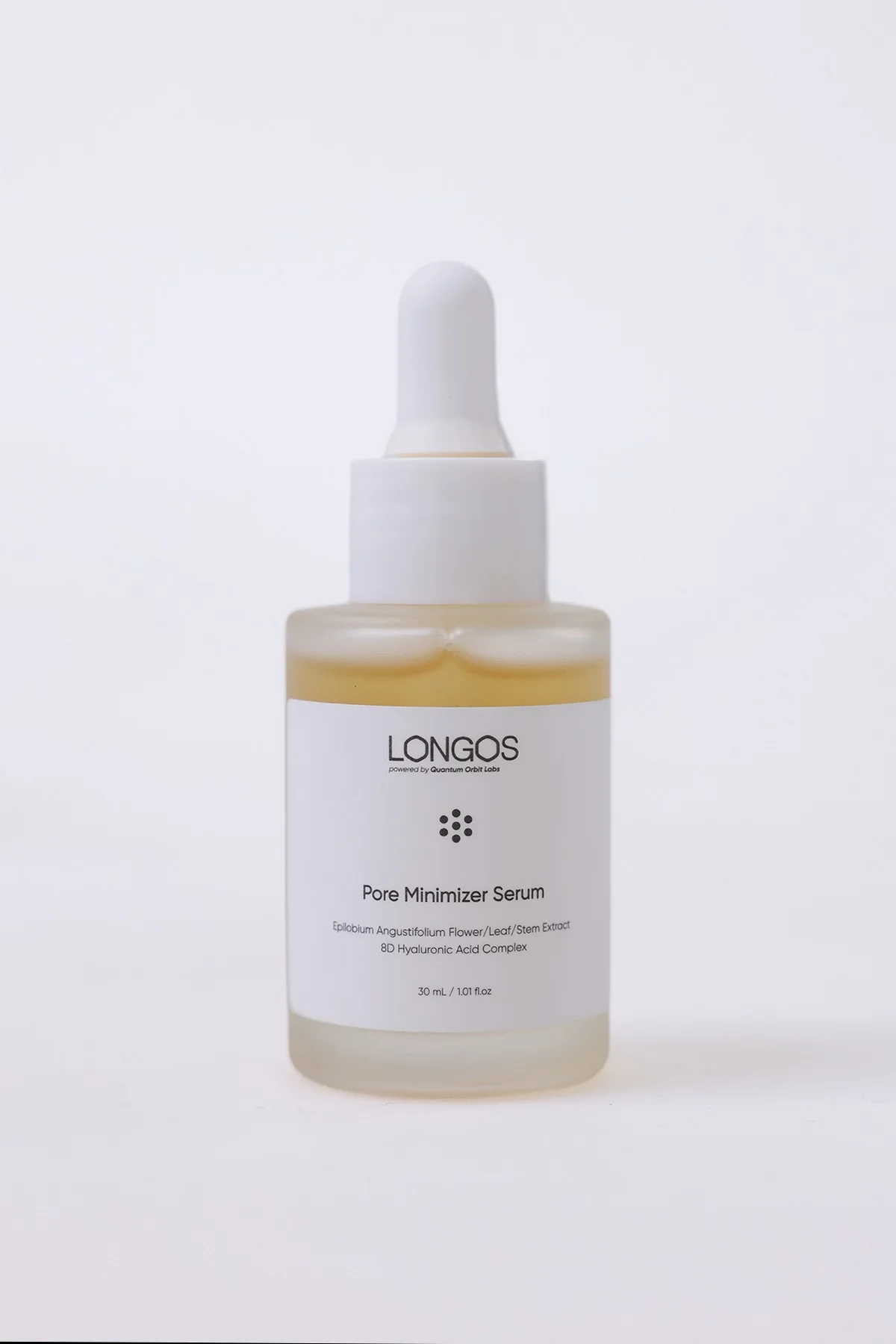
Pore Minimizer serum
Red clover and finger lime extracts. Measured together with Anti-Acne in the lab.
Blue light Red light Ultrasonic Thermal -
Step 3
For redness · Calming
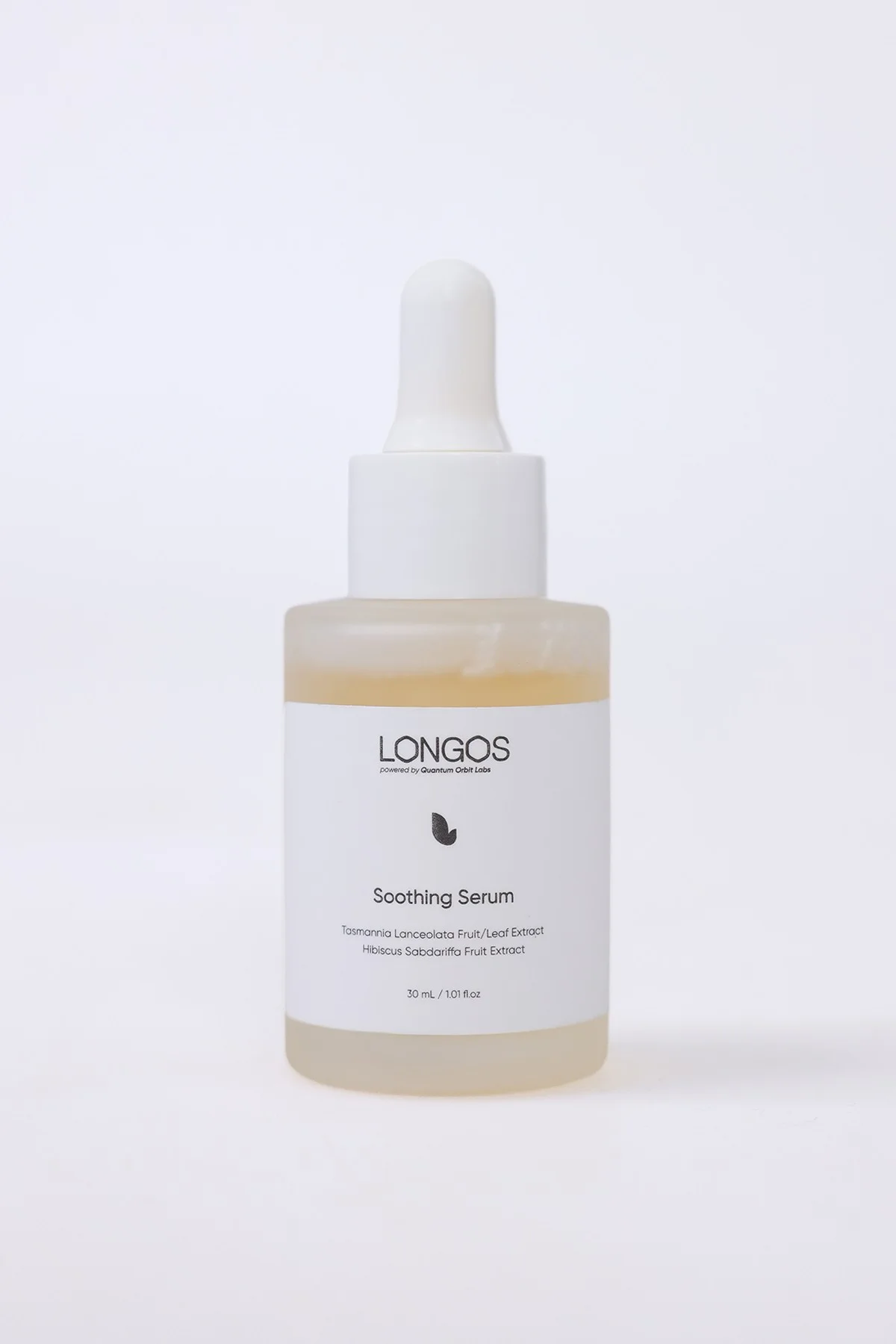
Soothing serum
Tasmanian pepper extract and ceramide 3. Supports the skin barrier and reduces the look of redness.
Cryo
Take one step this week: run your skin analysis in daylight, and don't touch a single spot for a week. Next week, measure again in the same light.
Start the skin analysis