
Skin concerns · Dark spots
Not every dark spot has the same cause.
Sun spots, melasma, post-acne marks and freckles are all made of the same pigment, melanin, yet each is set off by something different. Once you know which kind you have, you also know what is likely to help, how long fading takes and why the spot may come back.
Is a mole or spot changing? Read this first.The melanin factory
A dark spot is the last link in a five-step production line.
Pigment-producing cells called melanocytes sit in the lowest layer of the epidermis. When they receive a signal, they make melanin and hand it out in small packages to the cells above. If too much pigment collects in one place, a spot shows. Each active ingredient works on a different link in this chain, which is why it pays to build your routine around the steps.
Trigger
UV rays, visible light, hormonal changes and inflammation send melanocytes a “protect the skin” signal. In deeper skin tones, visible light can also cause pigmentation that lingers.[1,2]
What works here
Sunscreen
A broad-spectrum sunscreen filters UV, and a tinted formula with iron oxides also holds back part of the visible light.[3]
In the Longos range: Your own sunscreen; Detox & Blue Light adds antioxidant support.
Signal
UV causes oxidative stress in skin cells: damage done by free radicals. This stress raises levels of signalling molecules such as α-MSH, which stimulate pigment production. Melanocytes receive the message through a receptor called MC1R.[1]
What works here
Antioxidants
In a lab study, the vitamin C derivative 3-O-Ethyl Ascorbic Acid suppressed the free-radical-driven α-MSH signal in skin cells exposed to UVA.[4]
In the Longos range: Brightening and Detox & Blue Light
Production
Inside the melanocyte, the enzyme tyrosinase turns the amino acid tyrosine into melanin, step by step. This enzyme sets the pace of production.[1]
Transfer
Melanin travels in packages called melanosomes, passed along the melanocyte's branches to the surrounding keratinocytes. A spot becomes visible when pigment builds up in these cells.[1]
What works here
Niacinamide
In cells grown in the lab (cell culture), niacinamide, a form of vitamin B3, reduced the transfer of pigment packages by 35 to 68%.[6]
In the Longos range: Not in Longos serums; included here as general information.
Surface
Pigment-laden cells move upwards and are eventually shed. In young adults, the journey through the skin's outermost layer takes about 20 days; later in life, it takes more than 10 days longer.[7]
What works here
Retinoids and fruit acids
Retinoids, derivatives of vitamin A, speed up cell turnover: in tissue samples (biopsies) taken from spots where tretinoin was applied, pigment in the epidermis fell by 35%. Fruit acids (AHAs) help surface cells shed gently.[8]
In the Longos range: Midnight Repair: HPR · Brightening: finger lime (AHA)
Niacinamide and tretinoin, a prescription retinoid, are mentioned as general information; neither is an ingredient of Longos serums. The HPR in Midnight Repair is a gentle ester from the retinoid family; most of the retinoid evidence on dark spots comes from tretinoin studies.
Identify your spot
Which type is yours? Follow the clues.
Answer three questions: when did the spot appear, is it symmetrical on both sides of your face, and does it fade in winter? Your answers point to one of the types below. If you're unsure, or the spot is changing, show it to a dermatologist.
Sun spots
Solar lentigo
How common it is
More common with age: the Leiden study found a strong link between sun spots and age.[9]
- What it looks like
- Flat, light to dark brown spots with well-defined edges, often called age spots. They become more numerous with age and don't fade in winter.
- Where it appears
- Cheeks, forehead, nose, backs of the hands, arms, shoulders and décolletage.
- Why it happens
- Sun exposure that adds up over the years. In the Leiden study of 962 people, sun spots increased markedly with age and were linked to total time spent in the sun and to sunburn before the age of 20.[9]
- What helps
- Daily sunscreen, vitamin C and a retinoid. With prescription tretinoin, facial spots lightened within 10 months in 20 of 24 people; among the 28 who used a placebo cream, the figure was 8.[8]
- How long it takes
- Months. In the same study, the first difference was measured in month 1. Spots that cleared completely took 8 months on average, and they did not return over the following 6 months.[8]
TipApply sunscreen to the backs of your hands too: sun spots appear on the hands and arms as well as the face.
Melasma
Chloasma
How common it is
In a study of 515 workers in Brazil, melasma was found in 34% of the women and 6% of the men.[10]
- What it looks like
- Large brown or greyish-brown patches with irregular edges. Usually symmetrical on both sides of the face; darker in summer, lighter in winter.
- Where it appears
- Cheeks, forehead, upper lip, bridge of the nose and chin.
- Why it happens
- Sun, visible light, hormones and genetic predisposition, working together. In a survey of 324 women across nine clinics, melasma began at an average age of 34, and 48% of the women had a family history of it.[10,11]
- What helps
- A tinted sunscreen with iron oxides, protection from heat and a routine that doesn't irritate. Vitamin C can help: in a study of 16 women, it caused markedly fewer side effects than hydroquinone, a prescription product. Treatment options such as hydroquinone, azelaic acid and tranexamic acid are for your dermatologist to assess; cosmetic serums and Longos Sense are not a substitute for that treatment.[3,12]
TipProtect your skin from heat as well. In a study of 1,001 people with melasma in India, the longer they spent in front of a cooking fire or in workplace heat, the more severe their melasma was.[14]
Post-acne marks
Post-inflammatory hyperpigmentation
How common it is
Of 324 people who saw a dermatologist for acne in seven Asian countries, 58.2% had post-acne marks.[15]
- What it looks like
- Flat, light to dark brown marks left where a blemish used to be. When the pigment sits deeper, they look grey-blue, and this kind fades far more slowly.
- Where it appears
- Anywhere breakouts appear: most often the cheeks, jawline and forehead.
- Why it happens
- Inflammation. When skin is inflamed, melanocytes produce extra pigment, and squeezing or picking at blemishes makes the inflammation worse. These marks are more frequent and more noticeable in darker skin.[16]
- What helps
- Calm the breakouts themselves first, then add sunscreen, vitamin C and a retinoid. Anything that irritates the skin can darken the marks, so choose steady, gentle care over harsh peels.[16]
- How long it takes
- Months, sometimes years. In a study of 324 people, the marks lasted at least 1 year in more than half of the participants, and 5 years or longer in 22.3%.[15]
TipHands off your breakouts. Picking is a risk factor for post-acne marks, and one you can control.[15]
Freckles
Ephelides
How common it is
Noticeably more common in people with fair skin and red hair.[9]
- What it looks like
- Tiny light brown or reddish-brown dots. They darken and multiply in the sunny months and fade when you stay out of the sun.
- Where it appears
- Nose, cheeks, shoulders and arms.
- Why it happens
- Genetic predisposition and sun. In the Leiden study, freckles, unlike sun spots, decreased with age and were more closely linked to fair skin and red hair.[9]
- What helps
- Freckles are not a health problem, and you're welcome to keep them. If you'd like them lighter, the basics are sunscreen and a hat; vitamin C helps your tone look more even.
- How long it takes
- It depends on the season. They fade in the months you protect your skin from the sun and become more visible again in summer.
TipA dot that appears, grows or changes colour in adulthood may not be a freckle. Check the ABCDE list below.
The skin analysis in the app doesn't tell you which type of spot you have; it uses the skin tone score to track differences in tone from week to week.
How the skin analysis measuresSafety check
If a spot is changing, start with a dermatologist's examination.
Most spots are harmless. If a mole or spot is changing, show it to a dermatologist before you try to fade it. Dermatologists use a five-letter checklist for exactly this.[17]
A: Uneven shapeAsymmetry
The two halves of the spot don't match.
B: Ragged edgesBorder
The edges are irregular, notched or blurred.
C: Mixed coloursColour
The same spot shows more than one shade: brown, black, red, white or blue.
D: SizeDiameter
Wider than 6 millimetres, roughly the size of the eraser on the end of a pencil.[17]
E: ChangeEvolving
Its size, shape, colour or surface is changing; it itches, feels tender or bleeds.
See a dermatologist promptly if:
- A mole or spot has changed in recent weeks or months
- It bleeds, crusts over or looks like a sore that won't heal
- It itches or hurts when you touch it
- A spot you took for melasma or an acne mark keeps growing despite regular care
This list is not meant for diagnosis; it helps you recognise when it's time to see a specialist. The skin analysis in the app is not a substitute for a medical diagnosis either.
Why do they come back?
A faded spot can return with its trigger.
Melanocytes respond to a trigger every time it shows up. When a spot fades, production has slowed, not stopped; once the trigger returns, it speeds up again. That is why, in caring for dark spots, protection comes before brightening ingredients.
Melanocytes produce again
- 01SunThe most important trigger for melasma. Melasma darkens in summer and right after strong sun, and lightens in winter; a few sunny days can undo weeks of fading.[10]
- 02Visible lightIn 20 volunteers with brown to dark skin (skin types IV to VI), visible light caused darker, longer-lasting pigmentation than UVA1, the long-wave part of UVA. In medium to olive skin (skin types III to IV), blue-violet light (415 nm) caused darkening that lasted up to 3 months, while red light (630 nm) did not increase pigment.[2,18]
- 03HeatHeat is also cited as an accelerator of melasma: stoves, ovens, saunas, hot steam. Sunscreen doesn't block heat, so the answer is to keep your distance from the source.[14]
- 04HormonesPregnancy and hormonal contraception are common starting points for melasma. Among the surveyed women who used a hormonal method, 25% said their melasma first appeared after starting it.[11]
- 05IrritationHarsh peels, scrubbing and squeezing blemishes cause inflammation, and inflammation means new pigment.[15,16]
Melasma through the summer
With a tinted sunscreen, less of the melasma came back.[13]
- Untinted cream with UV protection only +2.43
- Tinted cream with iron oxides, against UV and short-wave visible light +0.45
What about screen light?
At the same wavelengths, the blue light from phone and computer screens measured 100 to 1,000 times weaker than sunlight. In 12 people with melasma, one half of the face was exposed for 5 days to light equivalent to 8 hours a day of heavy screen use, and the spots showed no difference. The main source of visible light is the sun.[19]
The protection habit[13]
- Broad-spectrum sunscreen every morning, whatever the weather
- A tinted formula with iron oxides if you're prone to dark spots
- Reapply every 2 hours outdoors
- A hat, shade and sunglasses
- Keep your face away from hot steam and oven heat
What to expect, and when
Fading a dark spot takes weeks, sometimes months.
Pigment-laden cells need time to reach the surface and shed, and that time grows longer with age. Measurements from studies show what you can expect, week by week.
Week 3
One renewal cycle
In young adults, the skin's outermost layer renews in about 20 days; later in life, it takes more than 10 days longer. Allow at least one cycle before you look for the first change.[7]
Week 4
The first measurable difference
In a study comparing a moisturiser with 5% niacinamide against a placebo moisturiser in the same people (18 participants), spots had decreased significantly more with niacinamide after 4 weeks. In the tretinoin study, too, the first difference was measured in month 1.[6,8]
Week 8
The first clear change in melasma
In an 8-week study of 68 people with melasma, the group using an iron-oxide sunscreen improved 15% more on the spot score than the group using a product that protects against UV only. Both groups were also using hydroquinone.[3]
Week 12
Spots become less visible
In 50 women who applied 5% niacinamide to one half of the face twice a day, the look of spots, fine lines and sallowness had decreased after 12 weeks.[20]
Week 16
Where vitamin C stands
In a group of 16 women who applied 5% vitamin C to one half of the face and 4% hydroquinone to the other, the women's own ratings favoured the hydroquinone side: good or very good results for 93%, against 62.5% for vitamin C. Colour measurements showed no significant difference between the sides, and side effects occurred in 1 of 16 women on the vitamin C side, compared with 11 on the hydroquinone side.[12]
Month 6
Getting through summer
With melasma, the real test is the summer months. In people using a tinted sunscreen with iron oxides, less of the melasma came back over 6 months.[13]
Month 10
The outcome for sun spots
Facial sun spots lightened in 83% of those using tretinoin, compared with 29% in the placebo group. Spots that cleared completely did not return over the following 6 months.[8]
The studies used different products, doses and protocols. Tretinoin and hydroquinone are prescription products, and niacinamide is not in Longos serums; these results do not come from Longos products. Results vary from person to person.
What helps
Protect first, then brighten, then renew.
Dark spot care is built in three layers, and the order matters: without protection, every sunny day undoes the progress made with brightening ingredients. Longos serums and Longos Sense support one step in each layer; sun protection comes from your own sunscreen.
- 1 Every morning
Protect
A broad-spectrum sunscreen with SPF 30 or higher. If you're prone to dark spots or have melasma, choose a tinted formula with iron oxides. In Detox & Blue Light, Baikal skullcap root, cocoa and Epilobium extracts provide antioxidant support against environmental stress; they don't replace sunscreen.[3,13,16]
Your own sunscreen + Detox & Blue Light
- 2 Morning or evening
Brighten
The 3-O-Ethyl Ascorbic Acid in Brightening is a more stable derivative of vitamin C and works at the tyrosinase step, which governs melanin production. Kakadu plum is a fruit rich in vitamin C, and the fruit acids in finger lime gently renew the surface.[4,5]
Brightening + Longos Sense
- 3 Evening · start with 2 to 3 nights a week
Renew
The hydroxypinacolone retinoate (HPR) in Midnight Repair is a gentle ester from the retinoid family; by supporting cell renewal, it may help pigmented cells shed from the surface. The strongest retinoid evidence on dark spots comes from prescription tretinoin, and studies of HPR on dark spots are limited.[8]
Midnight Repair
Longos Sense
Where does the device fit in?
Longos Sense works together with a serum; on its own, it doesn't fade spots. The Brightening protocol combines three modes, and the app adjusts the timing to your skin.
Red light
The end of visible light that drives pigment is blue-violet; in one study, red light (630 nm) caused no increase in pigment.[18]
Radiofrequency
Warms the skin gently and in a controlled way, in the same session as the serum. If you have melasma, check with your dermatologist before you start any mode that uses heat.[14]
Cryotherapy
Part of the Brightening protocol; it cools the skin during the session.
Skin analysis
The app scores differences in tone with the skin tone score; measure once a week in the same light to follow the change.
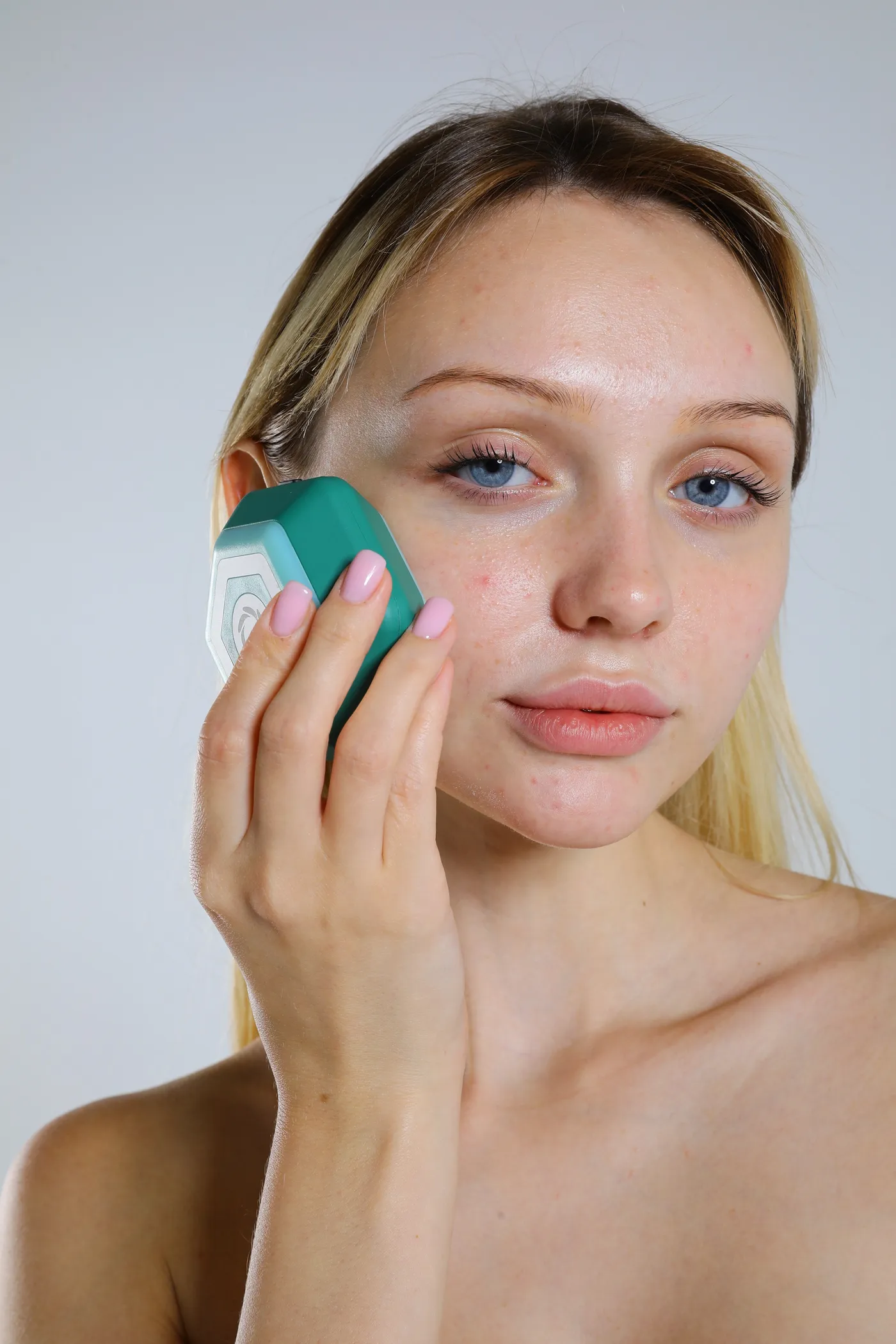
For the first 12 weeks
- 1Sunscreen every morning: your choice of formula, tinted with iron oxides if you're prone to dark spots
- 2Brightening with Longos Sense, on the protocol the app recommends
- 3Midnight Repair: start with 2 to 3 evenings a week and build up as your skin adjusts
- 4A skin analysis every four weeks, in the same light
Real user
Measure your spots to see how they change.
Spots change slowly, and a daily look in the mirror won't show the difference. Measuring your progress helps you stay patient.
- 01
Same light
Let daylight fall on your face from the front, and measure at the same time and in the same place each week.
- 02
Clean face
No make-up and no products on your skin; hair tied back, phone at face level.
- 03
Skin tone score
The app tracks differences in tone with a separate score, and every analysis is saved with its date.
- 04
Once a week
You can follow the change week by week in the History tab.
The skin analysis is not a medical diagnosis and does not identify the type of spot.
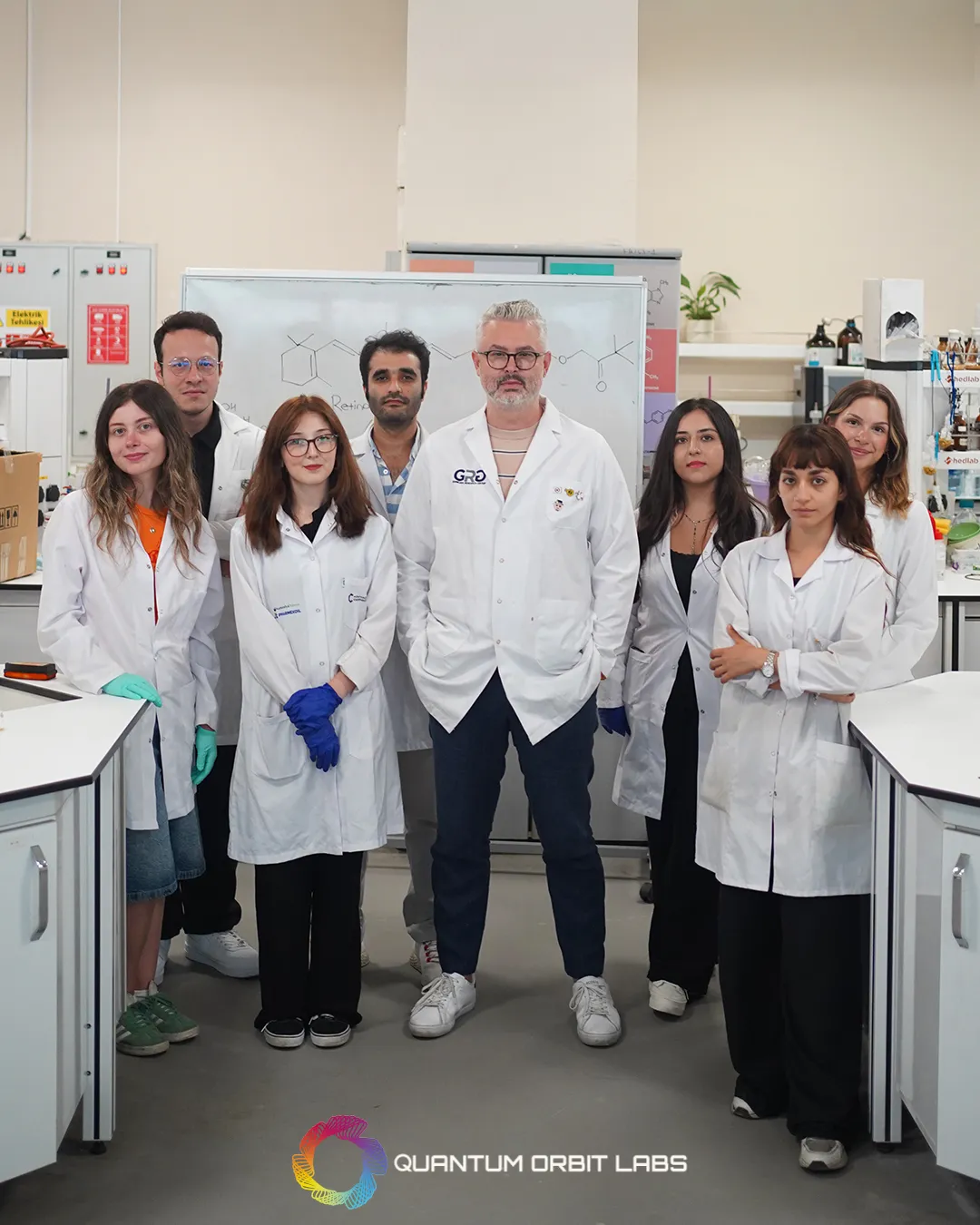
Lab measurement
Brightening responded more strongly with Longos Sense.
Brightening's response was measured electrochemically, in two steps, in the laboratories of Yıldız Technical University and Dokuz Eylül University: the serum on its own, then with the Longos Sense protocol. The result is read in microamperes (µA), a small unit of electric current. Under the same conditions, a higher current means a stronger response in the test medium.
+12.2%Increase measured with Longos Sense
Measurement protocol
- Cold mode
- Red LED
- Radiofrequency
Measured values: 19,6 µA · 22 µA
- Serum on its own Baseline
- With Longos Sense +12.2%
AGON Biotechnology and Bioİzmir contributed to the scientific work. AGON Biotechnology develops biosensors and electrochemical measurement systems in the technology development zone of Dokuz Eylül University.[21]
These findings are controlled laboratory observations; they make no claim of medical diagnosis or treatment. The measurement was carried out in the laboratory, not on skin, and results on skin vary from person to person.
All lab measurementsFrequently asked
About caring for dark spots
Will a dark spot serum erase my spots completely?
It depends on the type of spot. Sun spots and post-acne marks can fade noticeably over time. Melasma, on the other hand, is chronic: even when it fades, it can return with its triggers. Cosmetic products help reduce the look of dark spots; to keep the results, you need daily sun protection.
Should I use vitamin C in the morning or the evening?
Either works. In the morning, apply it under your sunscreen. The 3-O-Ethyl Ascorbic Acid in Brightening is a more stable derivative than pure vitamin C. Because the formula also contains fruit acids, always wear sunscreen during the day.
Can I use a retinoid and vitamin C together?
Yes. Most people use them at different times of day: vitamin C in the morning, the retinoid in the evening. The HPR in Midnight Repair is a gentle retinoid ester, but start with 2 to 3 nights a week all the same. If you notice redness or stinging, use it less often, because irritation can cause spots too.
What can I do about dark spots during pregnancy?
Melasma is common in pregnancy, and the key step during this time is sun protection. Talk to your doctor before using products that contain retinoids (Midnight Repair included) or devices that work with light, heat or radiofrequency.
Do I need sunscreen in winter too?
If you're prone to dark spots, yes. Melasma may darken in summer, but UV and visible light reach your skin all year round. Protecting spots that have faded over the winter helps you go into summer with calmer skin.
Can Longos Sense fade dark spots on its own?
No. Longos Sense is a device that works together with a serum; in the lab measurement, Brightening's response increased when it was used with the device. The real work of dark spot care is done by daily protection and brightening ingredients; the device is one part of that routine.
References
Sources for the information on this page
Studies published in peer-reviewed journals, plus laboratory measurements by Quantum Orbit Labs. The numbers in square brackets in the text link to this list.
- 1.D'Mello SAN, Finlay GJ, Baguley BC, Askarian-Amiri ME. Signaling pathways in melanogenesis. International Journal of Molecular Sciences. 2016;17(7):1144. pmc.ncbi.nlm.nih.gov
- 2.Mahmoud BH, Ruvolo E, Hexsel CL et al. Impact of long-wavelength UVA and visible light on melanocompetent skin. Journal of Investigative Dermatology. 2010;130(8):2092-2097. pubmed.ncbi.nlm.nih.gov
- 3.Castanedo-Cazares JP, Hernandez-Blanco D, Carlos-Ortega B et al. Near-visible light and UV photoprotection in the treatment of melasma: a double-blind randomized trial. Photodermatology, Photoimmunology & Photomedicine. 2014;30(1):35-42. pubmed.ncbi.nlm.nih.gov
- 4.Chen SJ, Hseu YC, Gowrisankar YV et al. The anti-melanogenic effects of 3-O-ethyl ascorbic acid via Nrf2-mediated α-MSH inhibition in UVA-irradiated keratinocytes and autophagy induction in melanocytes. Free Radical Biology and Medicine. 2021;173:151-169. pubmed.ncbi.nlm.nih.gov
- 5.Al-Niaimi F, Chiang NYZ. Topical vitamin C and the skin: mechanisms of action and clinical applications. Journal of Clinical and Aesthetic Dermatology. 2017;10(7):14-17. pmc.ncbi.nlm.nih.gov
- 6.Hakozaki T, Minwalla L, Zhuang J et al. The effect of niacinamide on reducing cutaneous pigmentation and suppression of melanosome transfer. British Journal of Dermatology. 2002;147(1):20-31. pubmed.ncbi.nlm.nih.gov
- 7.Grove GL, Kligman AM. Age-associated changes in human epidermal cell renewal. Journal of Gerontology. 1983;38(2):137-142. pubmed.ncbi.nlm.nih.gov
- 8.Rafal ES, Griffiths CEM, Ditre CM et al. Topical tretinoin (retinoic acid) treatment for liver spots associated with photodamage. New England Journal of Medicine. 1992;326(6):368-374. pubmed.ncbi.nlm.nih.gov
- 9.Bastiaens M, Hoefnagel J, Westendorp R et al. Solar lentigines are strongly related to sun exposure in contrast to ephelides. Pigment Cell Research. 2004;17(3):225-229. pubmed.ncbi.nlm.nih.gov
- 10.Handel AC, Miot LDB, Miot HA. Melasma: a clinical and epidemiological review. Anais Brasileiros de Dermatologia. 2014;89(5):771-782. pmc.ncbi.nlm.nih.gov
- 11.Ortonne JP, Arellano I, Berneburg M et al. A global survey of the role of ultraviolet radiation and hormonal influences in the development of melasma. Journal of the European Academy of Dermatology and Venereology. 2009;23(11):1254-1262. pubmed.ncbi.nlm.nih.gov
- 12.Espinal-Perez LE, Moncada B, Castanedo-Cazares JP. A double-blind randomized trial of 5% ascorbic acid vs. 4% hydroquinone in melasma. International Journal of Dermatology. 2004;43(8):604-607. pubmed.ncbi.nlm.nih.gov
- 13.Boukari F, Jourdan E, Fontas E et al. Prevention of melasma relapses with sunscreen combining protection against UV and short wavelengths of visible light: a prospective randomized comparative trial. Journal of the American Academy of Dermatology. 2015;72(1):189-190. pubmed.ncbi.nlm.nih.gov
- 14.Sarkar R, Jagadeesan S, Basavapura Madegowda S et al. Clinical and epidemiologic features of melasma: a multicentric cross-sectional study from India. International Journal of Dermatology. 2019;58(11):1305-1310. pubmed.ncbi.nlm.nih.gov
- 15.Abad-Casintahan F, Chow SKW, Goh CL et al. Frequency and characteristics of acne-related post-inflammatory hyperpigmentation. Journal of Dermatology. 2016;43(7):826-828. pubmed.ncbi.nlm.nih.gov
- 16.Davis EC, Callender VD. Postinflammatory hyperpigmentation: a review of the epidemiology, clinical features, and treatment options in skin of color. Journal of Clinical and Aesthetic Dermatology. 2010;3(7):20-31. pmc.ncbi.nlm.nih.gov
- 17.Abbasi NR, Shaw HM, Rigel DS et al. Early diagnosis of cutaneous melanoma: revisiting the ABCD criteria. JAMA. 2004;292(22):2771-2776. pubmed.ncbi.nlm.nih.gov
- 18.Duteil L, Cardot-Leccia N, Queille-Roussel C et al. Differences in visible light-induced pigmentation according to wavelengths: a clinical and histological study in comparison with UVB exposure. Pigment Cell & Melanoma Research. 2014;27(5):822-826. pubmed.ncbi.nlm.nih.gov
- 19.Duteil L, Queille-Roussel C, Lacour JP et al. Short-term exposure to blue light emitted by electronic devices does not worsen melasma. Journal of the American Academy of Dermatology. 2020;83(3):913-914. pubmed.ncbi.nlm.nih.gov
- 20.Bissett DL, Oblong JE, Berge CA. Niacinamide: a B vitamin that improves aging facial skin appearance. Dermatologic Surgery. 2005;31(7 Pt 2):860-865. pubmed.ncbi.nlm.nih.gov
- 21.Quantum Orbit Labs. Electrochemical laboratory measurements of Longos Sense and the serums. Laboratories of Yıldız Technical University and Dokuz Eylül University, with contributions from AGON Biotechnology and Bioİzmir. quantumorbitlabs.com/en/clinical-evidence
Recommended products
For dark spot care
Longos Sense and three serums that work at different steps of dark spot care. Sunscreen isn't on this list: make a broad-spectrum sunscreen of your choice (a tinted formula if you're prone to dark spots) the first step of your routine every morning.
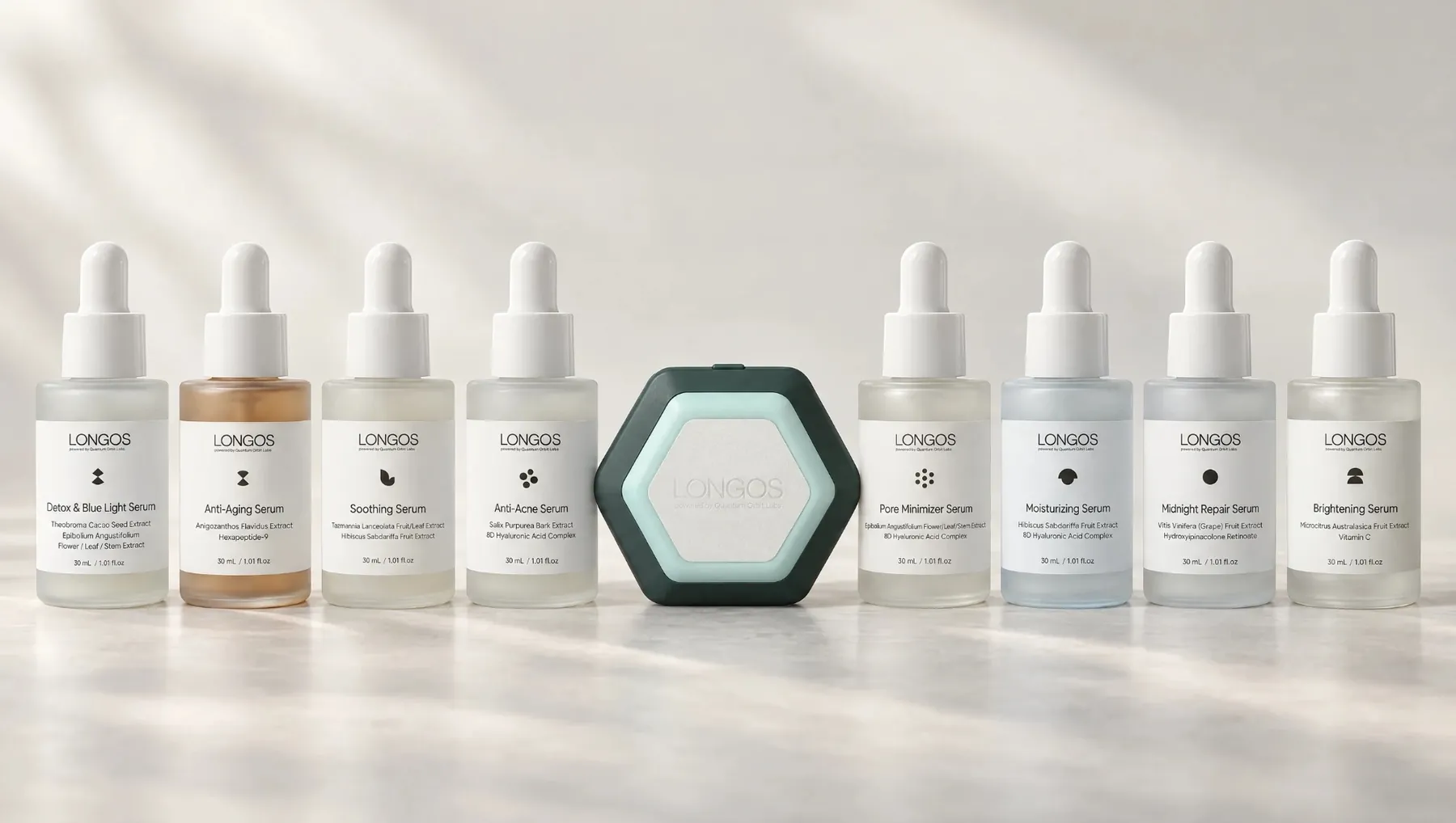
Longos Sense set
The red light, radiofrequency and cryotherapy of the Brightening protocol, in one device. The app measures your skin tone score and selects the Brightening protocol; the set includes all three serums on this page.
View the set-
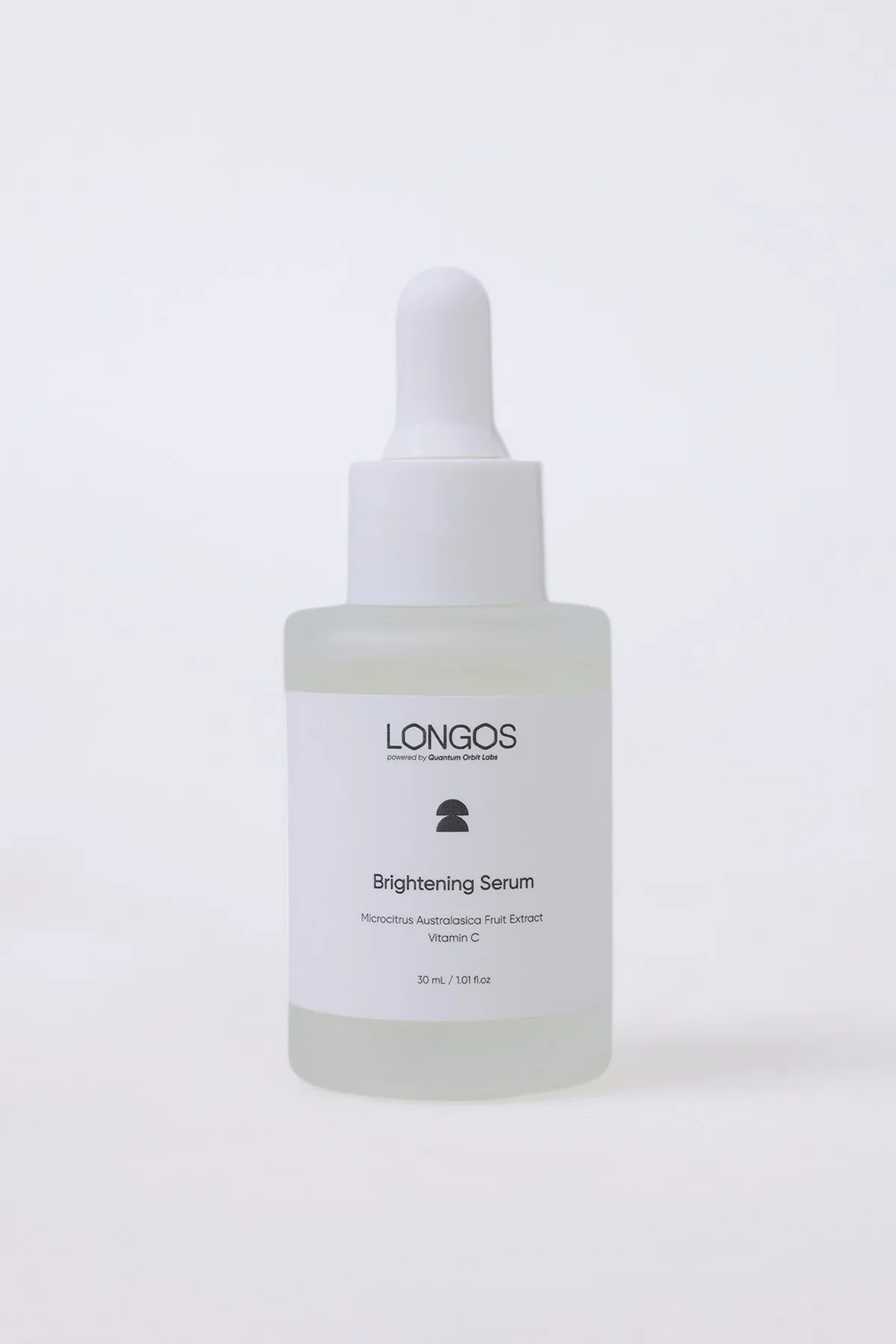
Start here · Brighten
Brightening serum
3-O-Ethyl Ascorbic Acid, Kakadu plum and finger lime. Works at the tyrosinase step and helps dark spots look less noticeable.
Red light Radiofrequency Cryo -
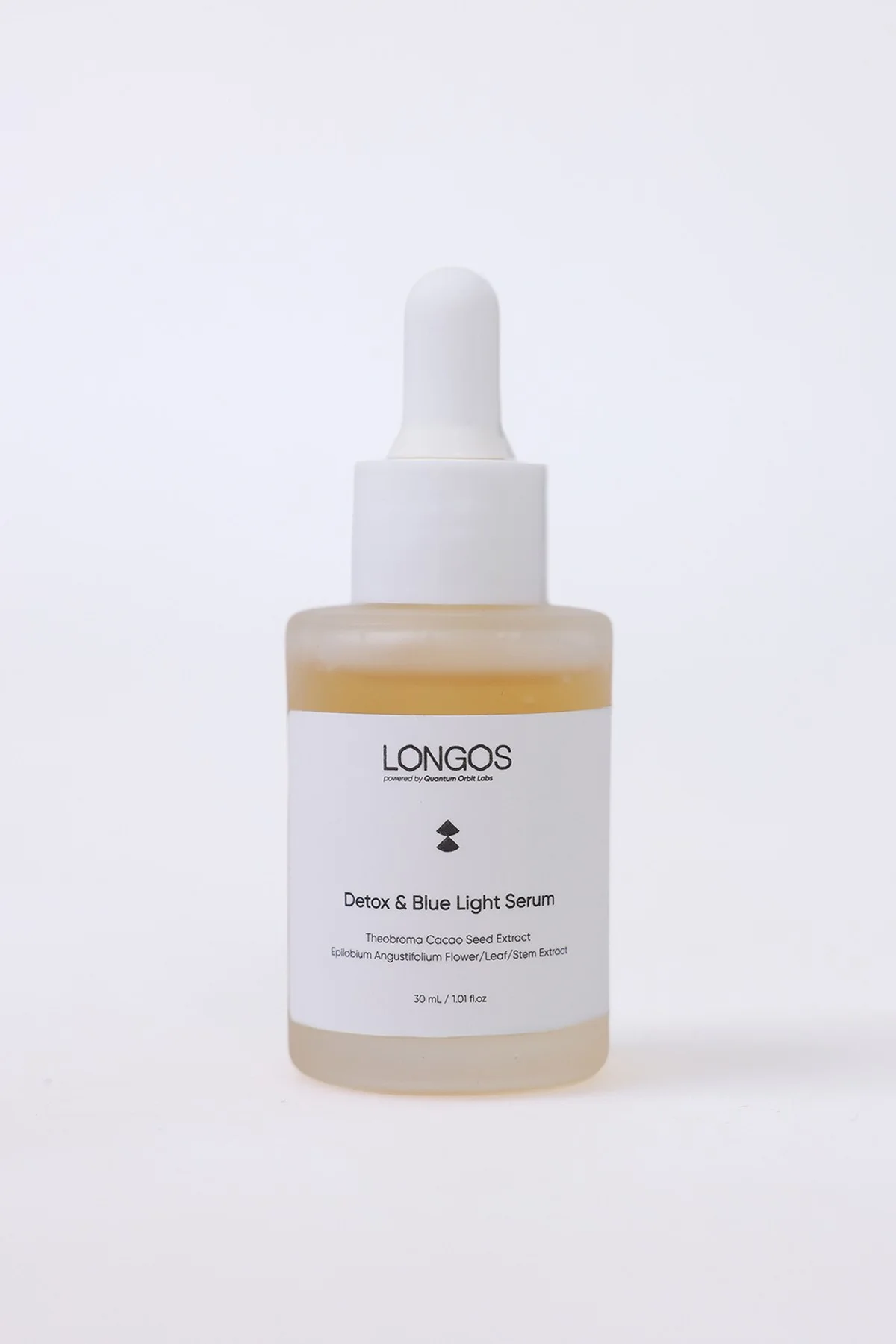
Morning · Protection support
Detox & Blue Light serum
Baikal skullcap root, cocoa and Epilobium extracts. Antioxidant support against city and light stress; not a substitute for sunscreen.
Ultrasonic -
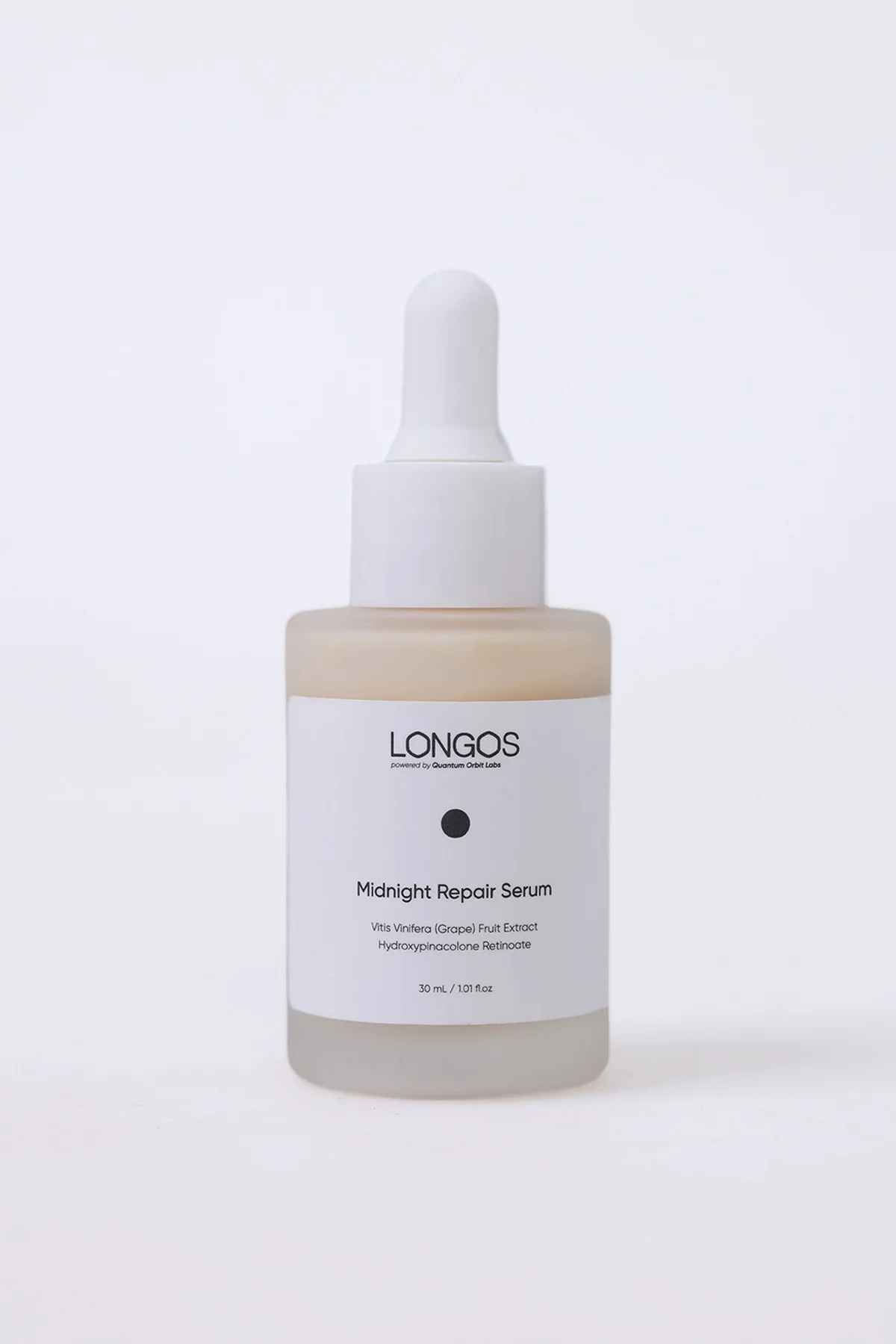
Evening · Renew
Midnight Repair serum
The retinoid ester HPR, grape extract and sweet almond oil. Supports surface renewal overnight.
Red light Radiofrequency
Your first step this week: tomorrow morning, whatever the weather, apply sunscreen to your face and the backs of your hands. On the same day, run the skin analysis in the app once on a clean face; your skin tone score becomes your starting point.
Start the skin analysis