
Skin concerns · Open pores
The closer you lean into the mirror, the bigger your pores get.
Everyone has pores, and your skin needs them to work. How visible a pore looks has less to do with the size of its opening than with three things: the oil inside it, the support of the tissue around it, and clogging. As those three improve, pores look smaller.
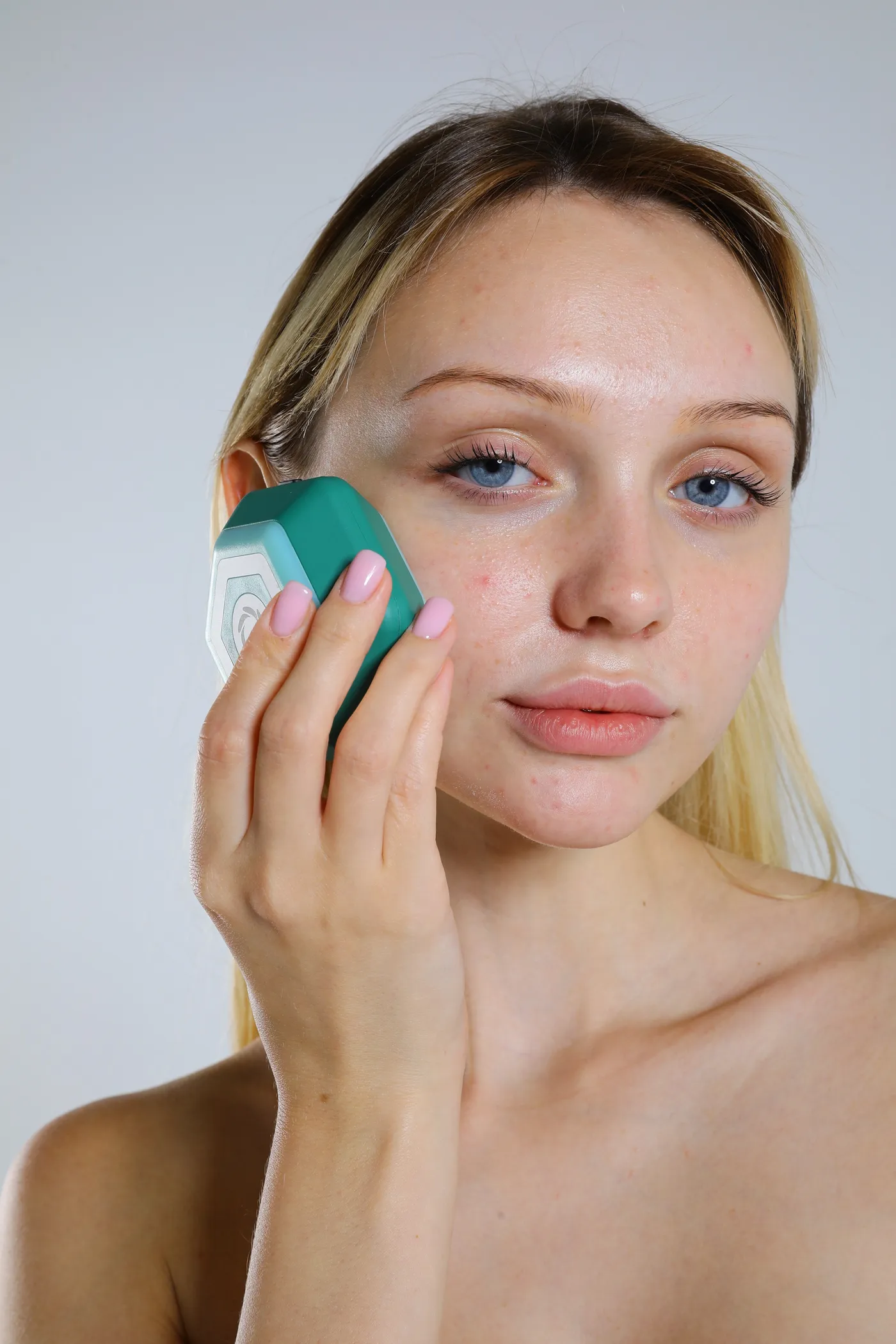
In the mirror · 50 cm
Magnifier
Use the slider or tap a level to zoom from the whole face down into the opening of a pore.
In the mirror: The whole face
The whole face
From this distance you can't make out individual pores; what you see is light reflecting off the surface. The forehead, nose and chin carry more oil than the cheeks, which is why the T-zone looks shinier and its pores more visible.[1]
Field of view: ≈ 25 cm
The honest answer
Do pores really get smaller?
The answer comes in two parts. A pore doesn't open and close like a door: steam won't open it and ice won't shut it. But how visible a pore is does change, and your daily routine can influence that.
The opening
Doesn't open or close.
What we call a pore is a shallow pit holding the openings of a hair follicle and sweat glands; it has no muscle or lid to open or close it. Heat doesn't widen the opening, it makes oil more fluid: warmed sebum spreads across the surface more easily.[2,7]
How it looks
Can improve.
With less oil, a loosened plug and better support from the surrounding tissue, the pit looks shallower and less noticeable. In a study that randomly assigned 568 people to groups, visible pore size fell further over 24 weeks in those who used a retinoid (vitamin A derivative) cream once a day. The difference from the group using a placebo cream was significant.[8]
A common concern
Everyone has them
Researchers measured the cheeks of 2,585 women from different continents; every one of them had pores.[2]
One in three
In every ethnic group, about a third of the women felt their pores were large.[2]
They shift through the month
In women, pores were measurably larger around ovulation. If they look more noticeable one day, that doesn't signal a permanent change.[9]
Three causes
Three things that enlarge pores
Visible pores have three main causes: excess oil, loss of elasticity around the pore, and a channel that has widened or clogged. Most faces have two of these at once, and knowing which one leads makes it easier to choose the right care.
- A
Oil
In a study of 60 people, pore size was most strongly linked to sebum output. Being male came second, and age played a part too. Oil collects mostly in the T-zone and increases in the summer months.[1,9]
- How to tell
- Shine on your forehead and nose by midday; pores most visible in the T-zone.
- What helps
- Active ingredients that balance oil without drying the skin, and gentle cleansing morning and evening.
- B
Loss of elasticity
As the tissue around a pore loses support, the rim of the pit slackens. Measurements showed pore counts rising as skin elasticity fell; sun and the passing years both weaken this support.[4,10]
- How to tell
- Pores most visible on the cheeks, and less noticeable when you gently stretch the skin with your fingers.
- What helps
- Collagen-supporting care, retinoids and sunscreen every morning.
- C
Clogging
When dead cells and thickened oil build up in the channel, the opening stretches. Acne-prone skin was found to have more pores, and hair follicles that widen over time also make the pore larger.[5,10]
- How to tell
- Dark dots on the nose and chin; a rough surface when you run a finger over it.
- What helps
- Oil-soluble purifiers that reach inside the channel (salicylates) and gentle fruit acids.
Get to know your skin
The T-zone tissue test
All you need is a paper tissue and an hour. The result shows which cause is doing most to enlarge your pores, and where to start.
Before you start
- 1Wash your face with lukewarm water and a gentle cleanser, then pat it dry.
- 2Wait an hour without applying any product.
- 3Press a single-ply tissue to your forehead and nose first, then to your cheeks, for a few seconds each.
- 4Hold the tissue up to the light and answer the questions.
Your tissue
Dark areas show traces of oil; dots show clogging.
Question 1 / 4
This test is not a diagnosis. Oil levels change with the seasons, so repeat the test in summer and again in winter. The skin analysis in the app tracks pore visibility with a score of its own and marks blackheads on a map of your face.[1]
When to see a dermatologist
It may be more than a pore.
Visible pores are not a disease, and most of the time care at home is enough. If you notice any of these signs, have a dermatologist look at your skin.
- Breakouts that are painful, deep, leave scars or last for weeks.
- A single pore or bump that grows, bleeds, crusts over or takes on a shiny, pearly look.
- Redness, burning and visible pores all increasing together on your face: this may be rosacea.
- Oiliness that has risen sharply in a short time, along with irregular periods, excess hair growth or hair loss.
- No change at all after months of consistent care.
What a clinic can offer
Prescription retinoids, oral medication, chemical peels and devices such as lasers are among the options dermatologists use for the appearance of pores. Which of them suits you is for the doctor who examines your skin to decide.[11]
Instant and lasting
What you see tonight and what remains weeks later are two different things.
Some pore-care methods change the surface for a few hours; others work over weeks on the cause that enlarges the pore. Both have their place, as long as you don't expect one to deliver the other's result.
Instant
Visible within minutes, gone the same day.
Cold and cryotherapy
Cold narrows the skin's blood vessels and thickens oil, so for a while the surface looks less red and more matte, and the skin feels tight. Once the skin warms up, the effect wears off; the structure of the pore stays the same.[7,12]
Clay masks and blotting papers
They soak up oil from the surface and cut shine straight away. Because they don't change how much oil the gland produces, it builds up again over the day.[13]
Make-up primer
Silicone primers fill in the pits and diffuse light. When you cleanse your face in the evening, the pore is right where it was that morning.
Tuba Ünsal
She compares the cryotherapy mode with ice. Cold gives the surface instant firmness and a matte finish; lasting change takes serums and regular use.
Lasting
Visible within weeks, and it stays as long as you keep going.
Balancing oil
Some active ingredients affect how much oil the gland produces. In a placebo-controlled study of 100 people, a moisturiser with 2% niacinamide lowered the sebum excretion rate at weeks 2 and 4; in a second study of 30 people, it reduced surface oil at week 6.[13]
Keeping the channel clear
Salicylic acid dissolves in oil, so it travels down into the hair follicle, loosens the structures that hold dead cells together and makes it harder for a plug to form. Fruit acids renew the surface but can make skin more sensitive to the sun; wear sunscreen during the day.[6,14]
Supporting the surroundings
Retinoids support surface renewal and the tissue around the pore. In the retinoid study, differences in some measures appeared at week 2 and were still growing at week 24.[8]
Aydan Şener
She explains the Ultrasonic Waves mode. On skin with serum applied, this mode helps the active ingredients pass into the skin; the difference builds up over weeks, not in a single session.
How the effect develops over time, schematic. The experiences in the videos are personal; results vary from person to person.
Longos Sense and serums
Modes chosen by cause
Longos Sense works on the causes of enlarged pores with different modes. Based on your skin analysis, the app decides which mode to use, with which serum and for how long.
Ultrasonic Waves
Helps the active ingredients in your serum pass into the skin.
Ultrasound creates microscopic bubbles in the liquid on the skin's surface, which increases how much of a substance passes into the skin. In the lab, a 10-minute application of MIT's experimental ultrasound patch increased niacinamide transport through pig skin 26.2 times. Longos Sense is a different device, and this figure is not claimed for it.[15]
Quantum Light (blue and red)
For oily and acne-prone skin, with Anti-Acne.
In a study that randomly assigned 107 people to groups, inflamed blemishes fell by an average of 76% over 12 weeks in those treated with blue and red light every day. That figure was achieved with the light source used in the study; it is not claimed for Longos Sense.[16]
Cryotherapy
An instantly firmer, more matte look before a special occasion, with Soothing.
Cold narrows the blood vessels near the surface, and the effect lasts until the skin warms up again. Don't expect a lasting change; think of it as a finishing touch for the moment.[12]
Inside Pore Minimizer
- Epilobium extract
- Helps reduce shine on skin that tends to get oily. In lab studies, the plant's compounds showed soothing and antioxidant effects; the evidence so far comes mostly from the lab.[17]
- Red clover extract
- Contains natural isoflavones and helps skin look more supple and firm.
- Finger lime extract
- Its natural fruit acids gently renew the surface and smooth the texture. These acids can increase sun sensitivity, so wear sunscreen during the day.[14]
- 8D hyaluronic acid
- In eight different molecule sizes, it hydrates the surface and the upper layers. On well-hydrated skin the surface looks smoother and pores less visible.
Pore Minimizer in the lab[18]
3.1times
Activity measured with Anti-Acne and the full device protocol, compared with the serum measured on its own
- Pore Minimizer alone 8 µA
- With Longos Sense 11 µA
- With Anti-Acne and Longos Sense 25 µA
µA (microampere): a measure of electrical current that shows the electrochemical activity of the serum's active ingredients.
Measured electrochemically in the laboratories of Yıldız Technical University and Dokuz Eylül University; AGON Biotechnology and Bioİzmir contributed to the scientific work. This is a controlled laboratory observation, not a measurement on skin, a medical diagnosis or a treatment claim.
All laboratory measurementsFrequently asked questions
About pores
Does steam or hot water open pores?
No, a pore's opening doesn't open or close. Warmth softens oil and helps it spread across the surface, which is why cleansing with lukewarm water feels more effective. Very hot water and long steaming, on the other hand, can dry out and irritate the skin.
Does cold water or ice close pores?
No. Cold narrows the blood vessels and makes the surface look firmer and more matte for a while; the effect fades as the skin warms up. Don't hold ice directly against your skin for long. Longos Sense's cryotherapy mode delivers cold through the device head, for the length of time the app sets.
Should I squeeze blackheads or use pore strips?
Don't squeeze: pressing with your fingers or a hard tool can damage the channel wall and leave redness and marks. Strips and clay masks lift off the top of the plug and the oil on the surface, so the pore looks cleaner that day, but because they don't change oil production, the effect is short-lived. Salicylates that reach inside the channel dissolve the plug over time.
Do pores get bigger with age?
Partly. In a large study, pore size varied more with ethnic background than with age, and in many groups it held steady after middle age. The elasticity lost with age does weaken the support around the pore, though, and sun protection and collagen-supporting care help preserve that support over the long term.
Can I use Pore Minimizer and Anti-Acne together?
Yes. These two serums were measured together in the lab for oily and acne-prone skin. Based on your skin, the app suggests which one to use on which evening, and with which device mode. Because the formulas contain fruit acids and salicylates, wear sunscreen during the day, and if you feel dryness or stinging in the first few weeks, use them less often.
When will I see a difference?
Clay, cold and make-up primer work the same day and wear off the same day. Care that balances oil and keeps the channel clear shows within a few weeks; care that supports the tissue around the pore takes months. Repeat the analysis in the app every month in the same light, and follow the change in your score rather than searching for it in the mirror.
References
Sources for the information on this page
Studies published in peer-reviewed journals, plus laboratory measurements by Quantum Orbit Labs. The numbers in square brackets in the text link to this list.
- 1.Youn SW, Na JI, Choi SY, Huh CH, Park KC. Regional and seasonal variations in facial sebum secretions: a proposal for the definition of combination skin type. Skin Research and Technology. 2005;11(3):189-195. pubmed.ncbi.nlm.nih.gov
- 2.Flament F, Francois G, Qiu H et al. Facial skin pores: a multiethnic study. Clinical, Cosmetic and Investigational Dermatology. 2015;8:85-93. pmc.ncbi.nlm.nih.gov
- 3.Sugata K, Nishijima T, Kitahara T, Takema Y. Confocal laser microscopic imaging of conspicuous facial pores in vivo: relation between the appearance and the internal structure of skin. Skin Research and Technology. 2008;14(2):208-212. pubmed.ncbi.nlm.nih.gov
- 4.Mizukoshi K, Takahashi K. Analysis of the skin surface and inner structure around pores on the face. Skin Research and Technology. 2014;20(1):23-29. pubmed.ncbi.nlm.nih.gov
- 5.Lee SJ, Seok J, Jeong SY, Park KY, Li K, Seo SJ. Facial pores: definition, causes, and treatment options. Dermatologic Surgery. 2016;42(3):277-285. pubmed.ncbi.nlm.nih.gov
- 6.Arif T. Salicylic acid as a peeling agent: a comprehensive review. Clinical, Cosmetic and Investigational Dermatology. 2015;8:455-461. pmc.ncbi.nlm.nih.gov
- 7.Blanc D, Agache P. Sebum excretion: methods of measurement and influence of physical factors. International Journal of Cosmetic Science. 1980;2(5):243-250. pubmed.ncbi.nlm.nih.gov
- 8.Kang S, Krueger GG, Tanghetti EA et al. A multicenter, randomized, double-blind trial of tazarotene 0.1% cream in the treatment of photodamage. Journal of the American Academy of Dermatology. 2005;52(2):268-274. pubmed.ncbi.nlm.nih.gov
- 9.Roh M, Han M, Kim D, Chung K. Sebum output as a factor contributing to the size of facial pores. British Journal of Dermatology. 2006;155(5):890-894. pubmed.ncbi.nlm.nih.gov
- 10.Kim BY, Choi JW, Park KC, Youn SW. Sebum, acne, skin elasticity, and gender difference: which is the major influencing factor for facial pores? Skin Research and Technology. 2013;19(1):e45-e53. pubmed.ncbi.nlm.nih.gov
- 11.Dong J, Lanoue J, Goldenberg G. Enlarged facial pores: an update on treatments. Cutis. 2016;98(1):33-36. pubmed.ncbi.nlm.nih.gov
- 12.Johnson JM, Kellogg DL Jr. Local thermal control of the human cutaneous circulation. Journal of Applied Physiology. 2010;109(4):1229-1238. pmc.ncbi.nlm.nih.gov
- 13.Draelos ZD, Matsubara A, Smiles K. The effect of 2% niacinamide on facial sebum production. Journal of Cosmetic and Laser Therapy. 2006;8(2):96-101. pubmed.ncbi.nlm.nih.gov
- 14.Kornhauser A, Coelho SG, Hearing VJ. Applications of hydroxy acids: classification, mechanisms, and photoactivity. Clinical, Cosmetic and Investigational Dermatology. 2010;3:135-142. pmc.ncbi.nlm.nih.gov
- 15.Yu CC, Shah A, Amiri N et al. A conformable ultrasound patch for cavitation-enhanced transdermal cosmeceutical delivery. Advanced Materials. 2023;35(23):e2300066. pubmed.ncbi.nlm.nih.gov
- 16.Papageorgiou P, Katsambas A, Chu A. Phototherapy with blue (415 nm) and red (660 nm) light in the treatment of acne vulgaris. British Journal of Dermatology. 2000;142(5):973-978. pubmed.ncbi.nlm.nih.gov
- 17.Nowak A, Zielonka-Brzezicka J, Perużyńska M, Klimowicz A. Epilobium angustifolium L. as a potential herbal component of topical products for skin care and treatment: a review. Molecules. 2022;27(11):3536. pmc.ncbi.nlm.nih.gov
- 18.Quantum Orbit Labs. Electrochemical laboratory measurements of Longos Sense and its serums. Laboratories of Yıldız Technical University and Dokuz Eylül University, with contributions from AGON Biotechnology and Bioİzmir. quantumorbitlabs.com/en/clinical-evidence
Where to start
Three steps for pores
Longos Sense and three serums that work together in pore care. Your tissue test result tells you which to focus on, and the skin analysis in the app tells you which mode to use and for how long.
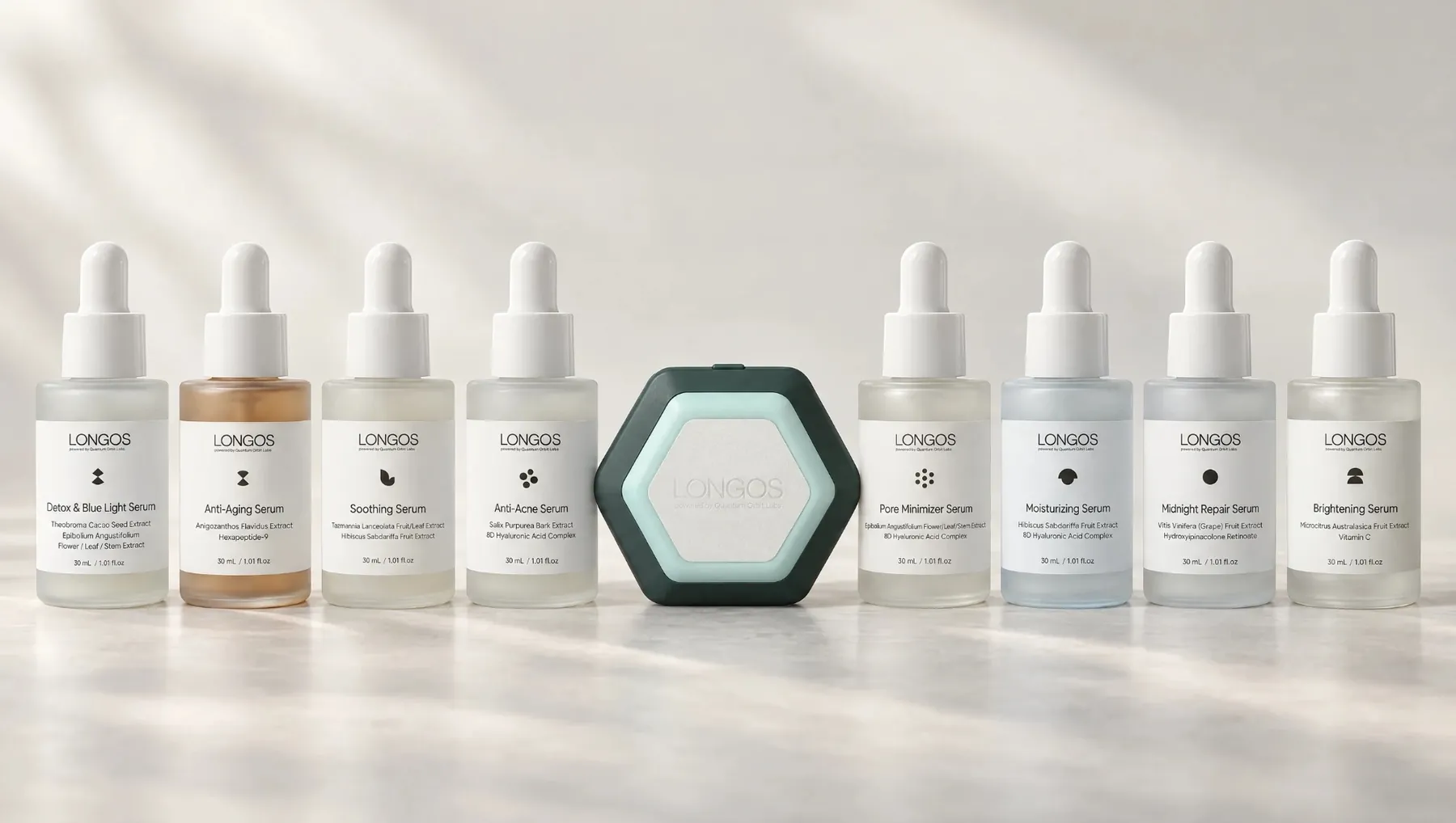
Longos Sense set
Ultrasonic Waves, Quantum Light in blue and red, Thermal Therapy and Cryotherapy in one device. The app analyses your pores and blackheads and chooses the protocol, and the set includes all three of these serums.
Explore the set-
Step 1
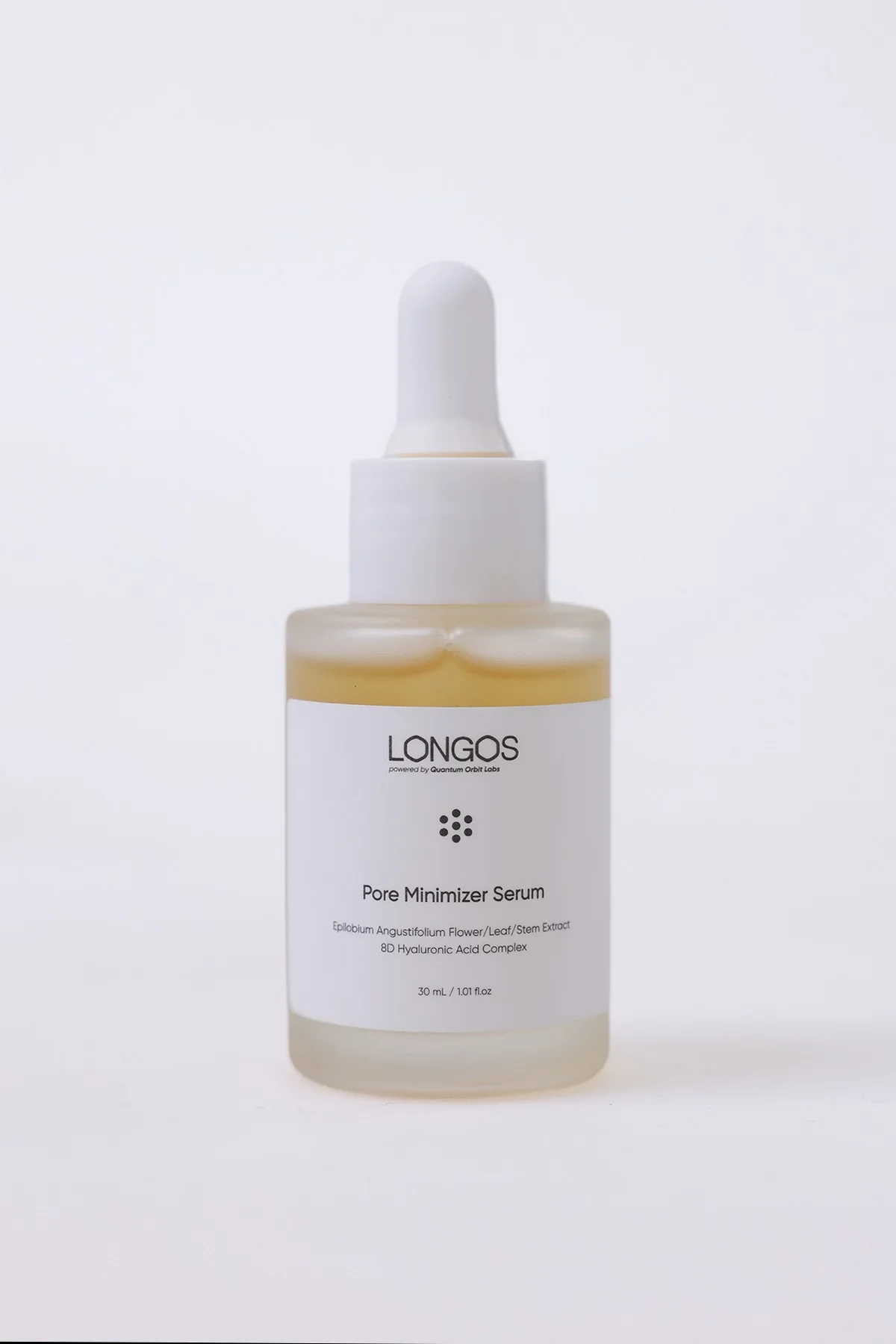
Evening · Pores
Pore Minimizer serum
Epilobium, red clover and finger lime extracts, plus 8D hyaluronic acid. Applied with the ultrasonic mode.
Blue light Red light Ultrasonic Thermal -
Step 2
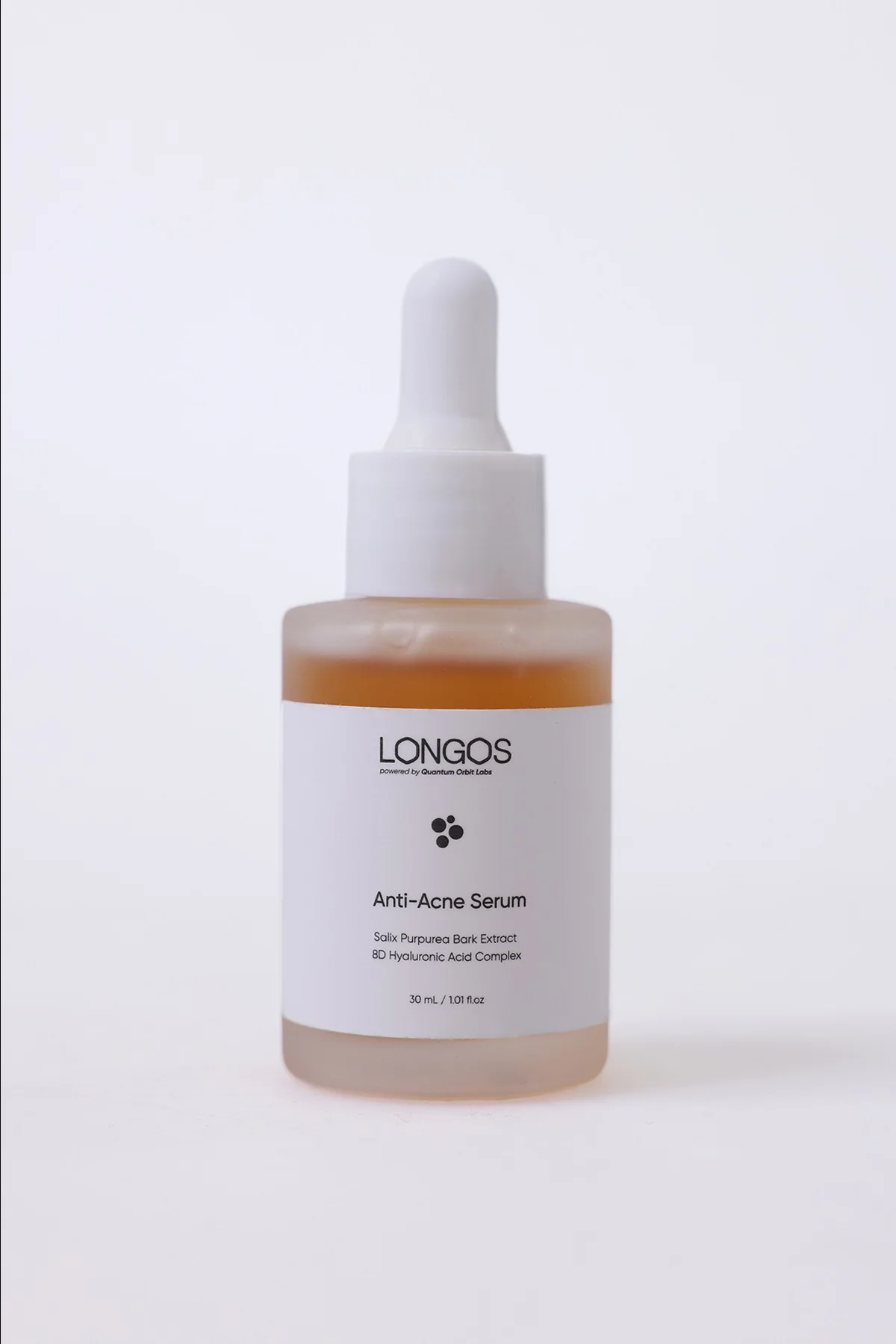
Evening · Purifying
Anti-Acne serum
Natural salicylates from willow bark, polylysine and lactic acid. Applied with blue light; measured together with Pore Minimizer in the lab.
Blue light Ultrasonic -
Step 3
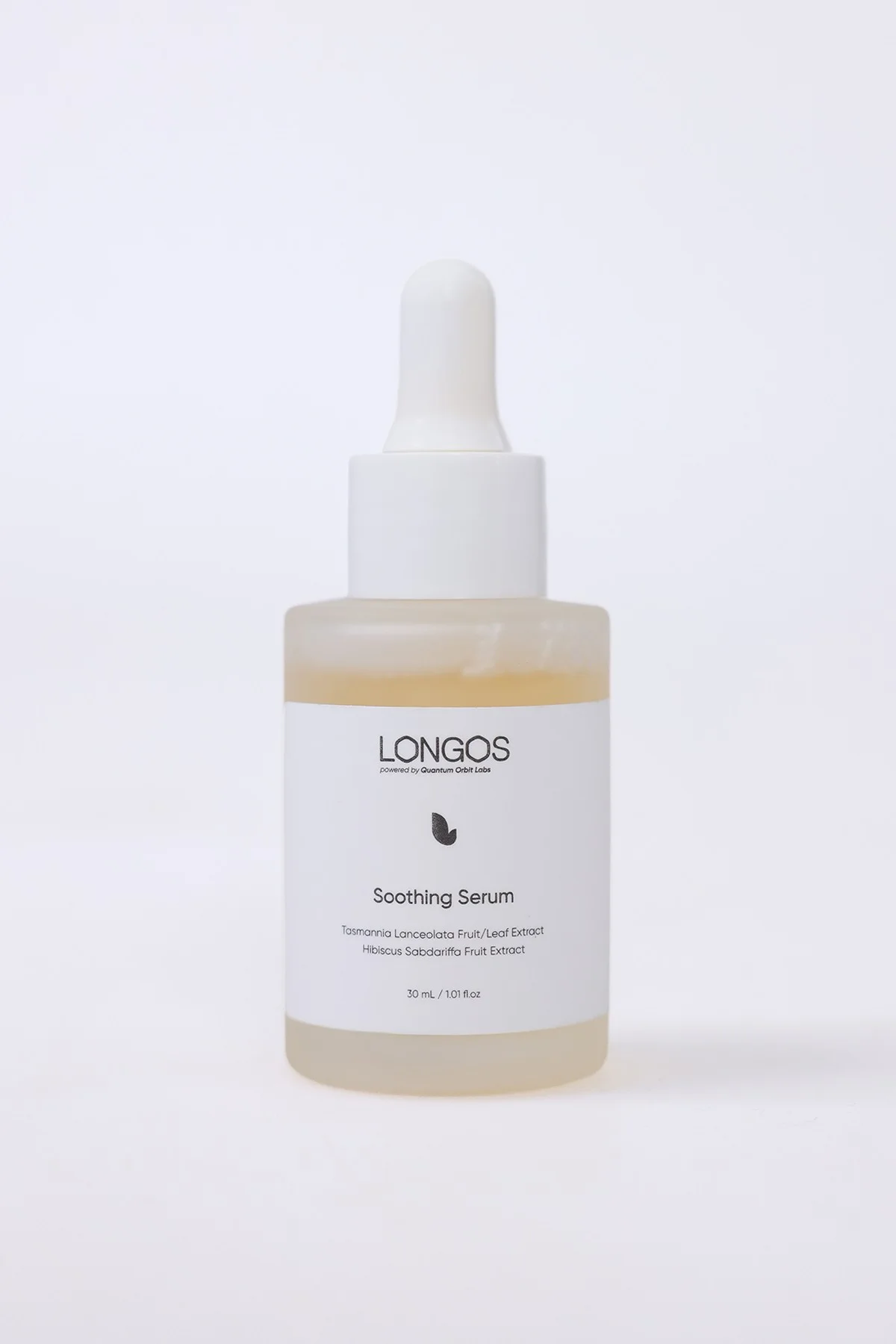
As needed · Balance
Soothing serum
Tasmanian pepper extract and ceramide 3. Calms the skin alongside purifying care; applied with the cryotherapy mode.
Cryo
Do the tissue test tonight, then run the skin analysis in the app once and note your pore score. A month later, repeat the analysis in the same light and put the two scores side by side.
Start your skin analysis