
Skin concerns · Sagging and loss of firmness
Sagging is less about gravity than about lost support.
Your face is built from five stacked layers, and each one changes at its own pace over the years. The layer you can influence at home is the top one: the skin. As its collagen network grows stronger, your contours can look firmer and more defined.
- The firming effect of a single radiofrequency session on the cheeks and neck was still holding at this point
- Month 6
- The firming effect of a single radiofrequency session on the cheeks and neck was still holding at this point[2]
- Reduction in neck sagging one hour after a cream with kangaroo paw extract
- 24%
- Reduction in neck sagging one hour after a cream with kangaroo paw extract[3]
The architecture of the face
The five layers that hold up your face
Pinning sagging on a single cause is misleading. Skin, fat pads, muscles, retaining ligaments and bone carry the face together. Knowing which layer you can reach at home makes it easier to set realistic expectations and choose the right care.
- 01 Skin
- 02 Fat pads
Facial fat is not a single mass; it sits in separate compartments. With age these thin at different rates and slide over one another, so the mid-cheek hollows while the jawline grows heavier.[6]
In clinic - 03 Muscles
Facial muscles carry volume too. In a small study, 20 weeks of facial exercise increased fullness in the upper and lower cheeks.[7]
Partly - 04 Retaining ligaments
These structures anchor the skin to the bone where the fat compartments meet. As the compartments shift, the anchor points loosen and the lines of the face drift downward.[6]
In clinic - 05 Bone
The facial skeleton ages as well: the rims of the eye sockets, the upper jaw and the front of the chin resorb at specific points. The tissues above lose their support.[8]
In clinic
At home: responds directly to regular care. Partly: habits make some difference. In clinic: calls for a doctor's procedure such as fillers, a thread lift or surgery.
Why now
Time and hormones shape firmness most.
Dark spots are largely the sun's doing; sagging owes more to the years and to hormones. That does not make the sun irrelevant: every habit that protects collagen also supports firmness.
Hormones
After menopause, skin collagen, skin thickness and bone mass decline together, by 1-2% a year. It is one reason loss of firmness can seem to speed up in your forties and fifties.[1]
The years
In a study of 298 women, signs of sagging did not differ between sun-seekers and sun-avoiders; age was what made the difference. Wrinkles and dark spots, by contrast, rose markedly with sun exposure.[9]
Sun and smoking
Sun and smoking age the skin directly and thin the collagen network. Long-term heavy smokers (more than 50 pack-years) showed premature wrinkling 4.7 times more often, and combined with sun exposure the risk multiplied.[10]
Know your skin
The 60-second mirror test
Stand in front of a mirror in daylight, without makeup. Answer five questions, and the result will tell you where to start.
01Seen in profile, is your jawline less defined than it was a few years ago?
02When you lie on your back and look into a hand mirror, does your face look noticeably more lifted?
03If you gently pinch the skin on your cheek between two fingers and let go, does it spring straight back?
04Do the lines running from the sides of your nose to your mouth look deeper by the end of the day?
05Do you notice any laxity under your chin or on your neck?
0 / 5 questions
This test is not a diagnosis. The skin analysis in the app measures elasticity and lets you follow the change over the weeks.
What is possible at home
Three ways to firm the skin
The layer you can influence at home is the skin. Studies have tested three ways to firm it: heat, support and movement. A fourth, sun protection, preserves what you gain.
Heat
Radiofrequency stimulates collagen production.
Radiofrequency energy turns into heat in the deeper layer of the skin (the dermis). Existing collagen fibres contract, and over the following weeks the skin produces new collagen. In a study of 86 people, 6 months after a single session with a clinical device, 83.2% of the areas around the eyes had improved and 61.5% of eyebrows had lifted by at least 0.5 mm. A 12-week study in which an at-home device was used on only one half of the face also found significant improvements in wrinkle and skin thickness measurements.[2,11,12]
Support
Peptides and kangaroo paw extract add tautness.
In the lab, the kangaroo paw flower extract in Anti-Aging increased type I collagen by 136%, tenascin-X (a supporting protein) by 39% and elastin by 43%. In a study of 42 women, a cream containing 2% of the extract reduced neck sagging by 24% within one hour.[3]
Movement
Facial exercise supports muscle volume.
It is free and you can do it at home. In a small study in which 16 women aged 40 to 65 did facial exercises for 20 weeks, cheek fullness increased and the age estimated by assessors went down. The study had no comparison group that skipped the exercises; even so, it is a harmless habit to add alongside your skincare.[7]
Protection
Sunscreen protects what you have gained.
In a study that randomly assigned 903 people to groups, those who used sunscreen every day showed no measurable increase in skin ageing over 4.5 years. Holding on to the collagen you have matters as much as making new collagen.[13]
Facial exercise and estimated age[7]
At-home devices run at lower energy than clinical devices, so the effect builds more gradually and depends on regular use. Care at home does not restore volume lost in the fat, ligament and bone layers.
90-day firmness plan
Three months, three rhythms
Collagen is made slowly, which is why the plan unfolds month by month. The app sets the mode and length of each session based on your skin analysis.
- Month 1
Settling in
Start Midnight Repair on 2-3 evenings a week, and use Anti-Aging and sunscreen in the mornings. Keep your Longos Sense sessions to the shortest times the app recommends.
A feeling of tautness and a more hydrated surface: the first signs of firmness.
- Month 2
Building up
Once your skin has adjusted, move Midnight Repair to every evening. Keep up radiofrequency and red light as often as the app recommends, and add facial exercise to your daily routine.
A firmer, more defined look along the cheeks and jawline. In studies, a significant change with at-home radiofrequency was measured at 12 weeks.[12]
- Month 3
Maintaining
Repeat the analysis in the same light and compare it with month one. To keep what you have gained, stay with your device sessions and sun protection.
A measurable difference in your elasticity score; your jawline may look more defined.
Anti-Aging protocol
- Red LED (2 min)
- High heat
- Radiofrequency (50 sec)
Anti-Aging is more active in the lab with the device[14]
+28%
Measured electrochemically in the laboratories of Yıldız Technical University and Dokuz Eylül University; AGON Biotechnology and Bioİzmir contributed to the research. This is a controlled laboratory observation, not a medical diagnosis or a treatment claim.
- Serum alone 11.5 µA
- With Longos Sense 14.7 µA
In their own words
Experiences after menopause and with mature skin
Two women who use Longos Sense in their routine describe their experience in their own words.
Azade Horasan
Mature skin, blue and red light modes
Aydan Şener
Skincare after menopause
Frequently asked
About sagging and firmness
Can I fully reverse sagging at home?
No. The layer you can reach at home is the skin: when collagen and elastin are supported, skin looks firmer and more toned. Deeper changes, such as volume loss in the fat pads or bone resorption, call for medical procedures. The two complement each other.
Can radiofrequency be used at any age?
It helps most once loss of firmness has set in, which for most people is from the late thirties onward. Because it does not target skin pigment, it can be used on every skin tone. If you have a pacemaker or a metal implant, are pregnant, or have an active skin condition, check with your doctor first.
When will I see results?
A feeling of tautness is noticeable in the first few days. In studies, collagen-related change was measured between 12 weeks and 6 months. Repeating the analysis in the app every four weeks, in the same light, lets you track the change with data.
I am in menopause. Is it too late?
No. Menopause speeds up collagen loss, but fibroblasts still respond to stimulation later in life. In this phase, a steady rhythm and sun protection are more valuable than ever.
Does facial exercise really work?
In a small study, 20 weeks of exercise increased cheek fullness and lowered estimated age. The study had no comparison group, so the evidence is still weak. Even so, it is a free and harmless habit.
Can I use a retinoid and radiofrequency on the same evening?
Yes. Radiofrequency is already part of the Longos Sense protocol for Midnight Repair, and the app adjusts the timing to your skin. If you notice redness or stinging, space your sessions further apart. If you are pregnant or breastfeeding, talk to your doctor before using a retinoid.
References
Sources for the information on this page
Studies published in peer-reviewed journals, plus laboratory measurements by Quantum Orbit Labs. The numbers in square brackets in the text link to this list.
- 1.Brincat M, Kabalan S, Studd JW et al. A study of the decrease of skin collagen content, skin thickness, and bone mass in the postmenopausal woman. Obstetrics & Gynecology. 1987;70(6):840-845. pubmed.ncbi.nlm.nih.gov
- 2.Alster TS, Tanzi EL. Improvement of neck and cheek laxity with a nonablative radiofrequency device: a lifting experience. Dermatologic Surgery. 2004;30(4 Pt 1):503-507. pubmed.ncbi.nlm.nih.gov
- 3.Attia J, Shortt M, Lacasse I, Loing E. Tensor effect of Anigozanthos flavidus flower extract: modulation of tenascin-X to regenerate the skin. Journal of Investigative Dermatology. 2018;138(5):S247. doi.org
- 4.Shuster S, Black MM, McVitie E. The influence of age and sex on skin thickness, skin collagen and density. British Journal of Dermatology. 1975;93(6):639-643. pubmed.ncbi.nlm.nih.gov
- 5.Varani J, Dame MK, Rittie L et al. Decreased collagen production in chronologically aged skin: roles of age-dependent alteration in fibroblast function and defective mechanical stimulation. American Journal of Pathology. 2006;168(6):1861-1868. pubmed.ncbi.nlm.nih.gov
- 6.Rohrich RJ, Pessa JE. The fat compartments of the face: anatomy and clinical implications for cosmetic surgery. Plastic and Reconstructive Surgery. 2007;119(7):2219-2227. pubmed.ncbi.nlm.nih.gov
- 7.Alam M, Walter AJ, Geisler A et al. Association of facial exercise with the appearance of aging. JAMA Dermatology. 2018;154(3):365-367. jamanetwork.com
- 8.Mendelson B, Wong CH. Changes in the facial skeleton with aging: implications and clinical applications in facial rejuvenation. Aesthetic Plastic Surgery. 2012;36(4):753-760. pmc.ncbi.nlm.nih.gov
- 9.Flament F, Bazin R, Laquieze S et al. Effect of the sun on visible clinical signs of aging in Caucasian skin. Clinical, Cosmetic and Investigational Dermatology. 2013;6:221-232. pmc.ncbi.nlm.nih.gov
- 10.Kadunce DP, Burr R, Gress R et al. Cigarette smoking: risk factor for premature facial wrinkling. Annals of Internal Medicine. 1991;114(10):840-844. pubmed.ncbi.nlm.nih.gov
- 11.Fitzpatrick R, Geronemus R, Goldberg D et al. Multicenter study of noninvasive radiofrequency for periorbital tissue tightening. Lasers in Surgery and Medicine. 2003;33(4):232-242. pubmed.ncbi.nlm.nih.gov
- 12.Shu X, Wan R, Huo W et al. Effectiveness of a radiofrequency device for rejuvenation of aged skin at home: a randomized split-face clinical trial. Dermatology and Therapy. 2022;12(4):871-883. pmc.ncbi.nlm.nih.gov
- 13.Hughes MCB, Williams GM, Baker P, Green AC. Sunscreen and prevention of skin aging: a randomized trial. Annals of Internal Medicine. 2013;158(11):781-790. pubmed.ncbi.nlm.nih.gov
- 14.Quantum Orbit Labs. Electrochemical laboratory measurements of Longos Sense and the serums. Laboratories of Yıldız Technical University and Dokuz Eylül University, with contributions from AGON Biotechnology and Bioİzmir. quantumorbitlabs.com/en/clinical-evidence
For the 90-day plan
A starting point for firmness
Longos Sense and three serums that work in sequence in a firmness routine. The skin analysis in the app tells you which one to start with.
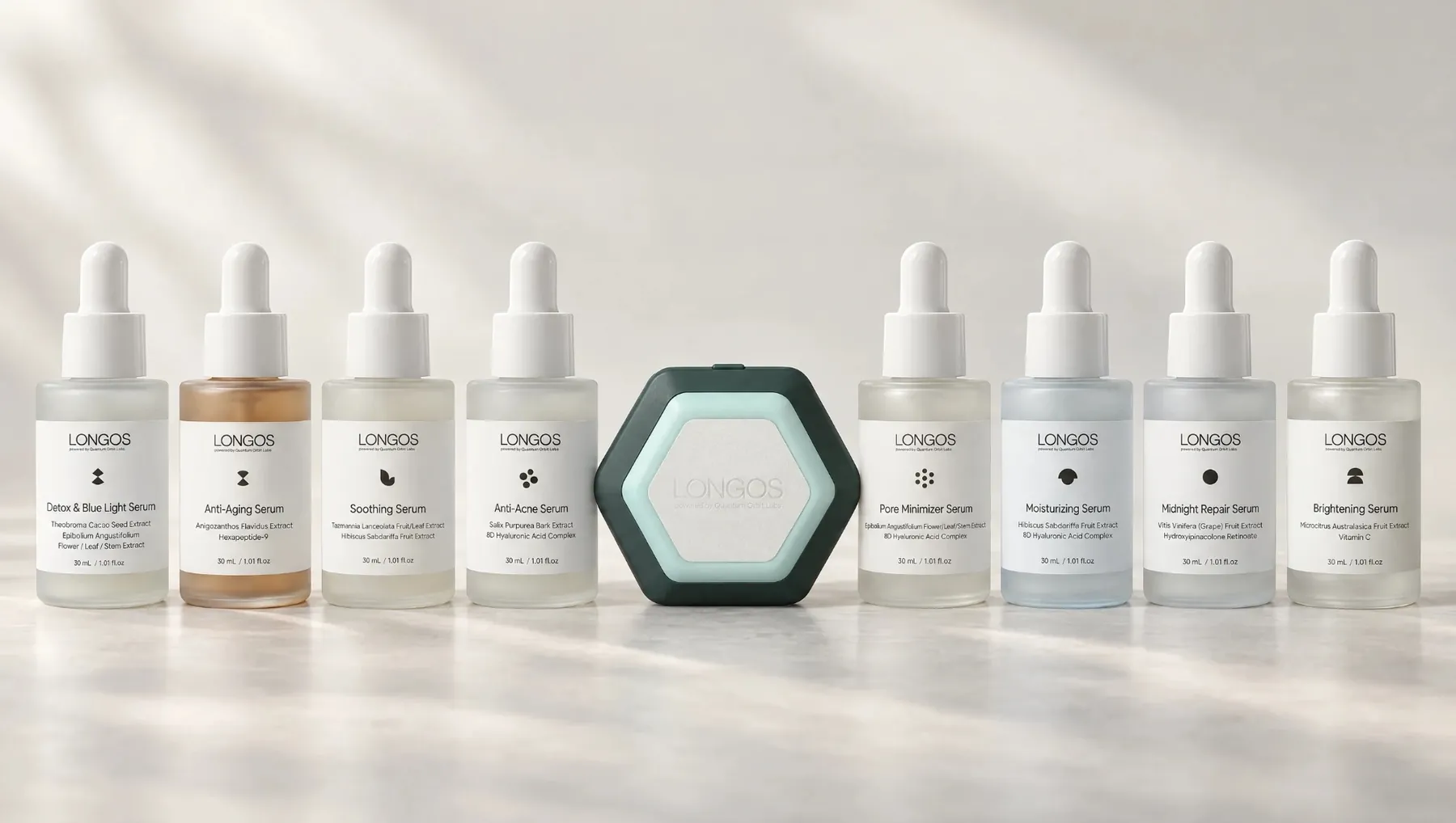
Longos Sense set
Radiofrequency, red light, thermal therapy and ultrasonic waves in one device. The app measures your elasticity and chooses the protocol, and the set includes all three of these serums.
View the set-
Step 1
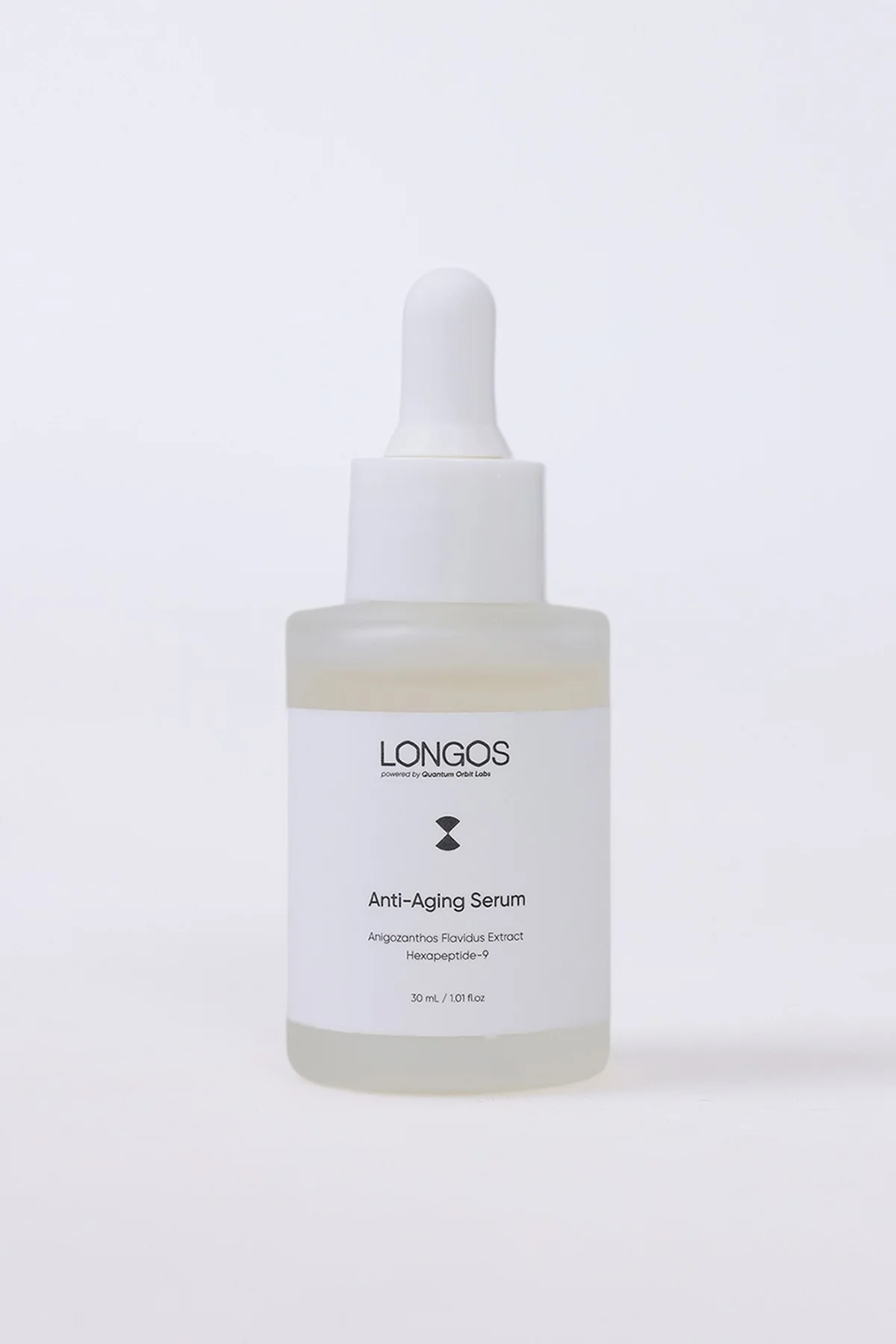
Day · Firmness
Anti-Aging serum
Kangaroo paw extract and Hexapeptide-9. Applied together with radiofrequency and red light.
Red light Radiofrequency -
Step 2
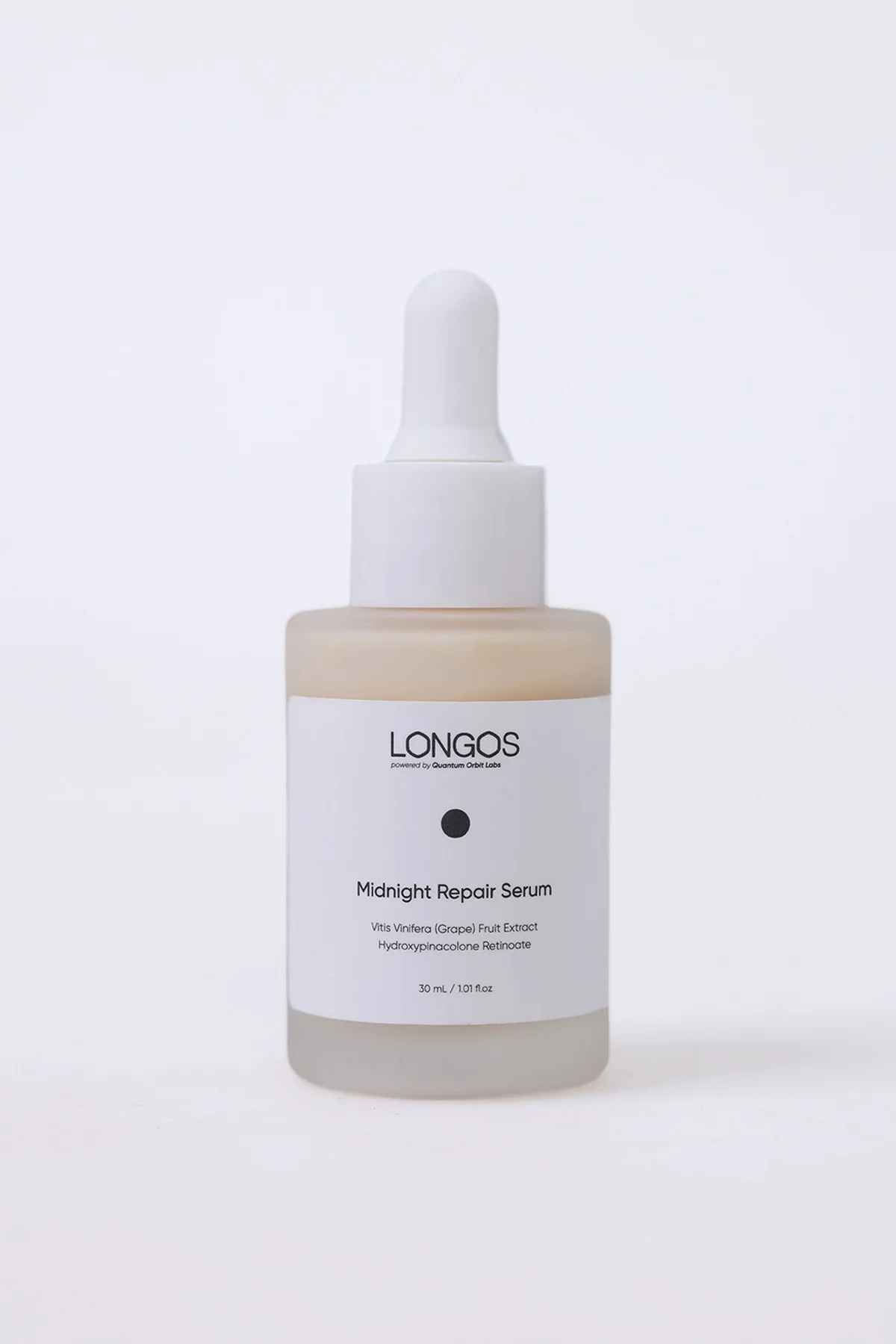
Night · Repair
Midnight Repair serum
The retinoid ester HPR, grape extract and sweet almond oil. Supports collagen production through the night.
Red light Radiofrequency -
Step 3
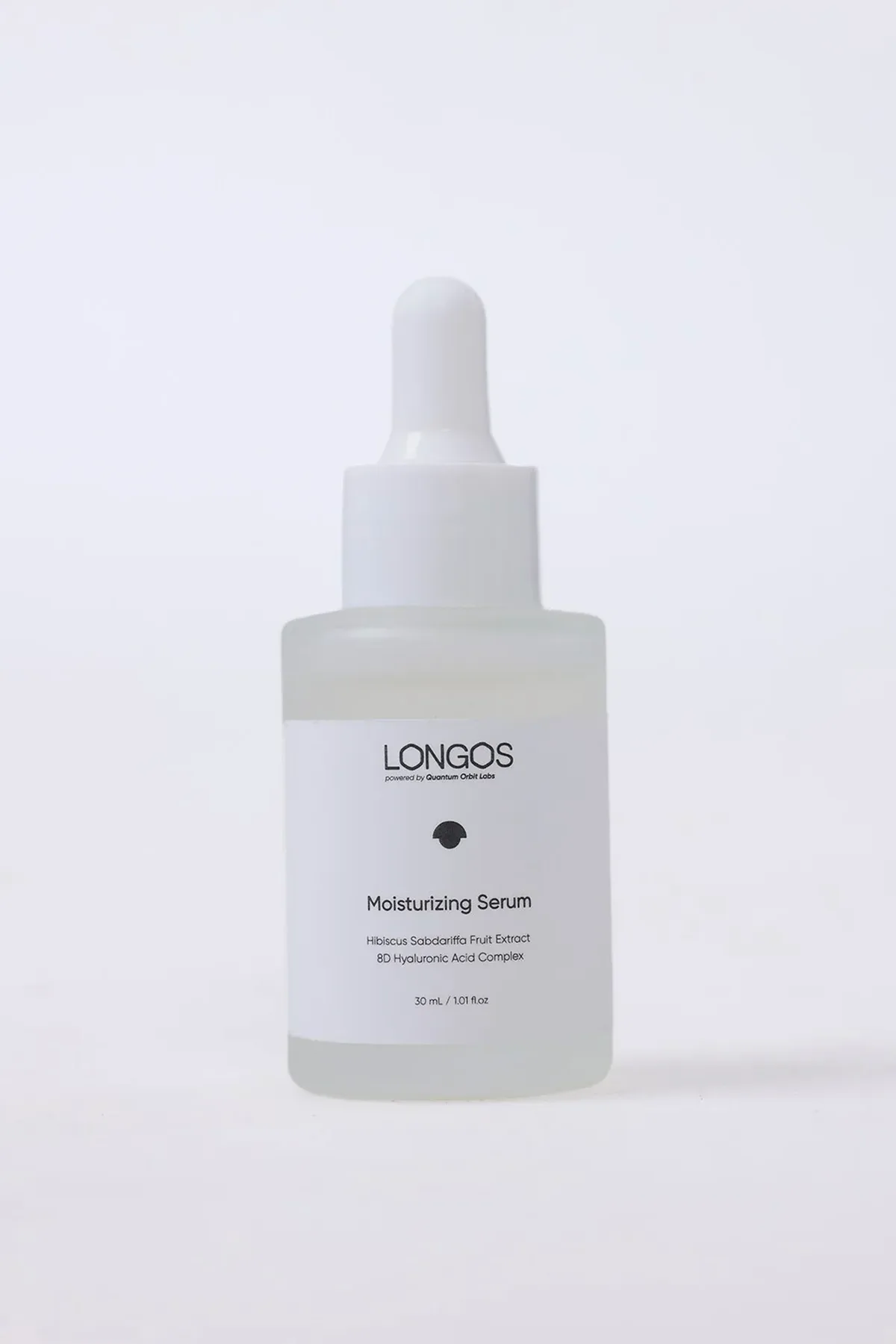
Day and night · Plumpness
Moisturizing serum
An 8D hyaluronic acid complex. Paired with Midnight Repair, it gave the highest response in the lab.
Red light Thermal Vibration
Tonight, after the mirror test, run the skin analysis in the app once and note your elasticity score. After 90 days, repeat the analysis in the same light; comparing it with your first reading shows you the change.
Start your skin analysis