
Skin concerns · Dull complexion
Dullness begins where light scatters.
When light falls on smooth, well-hydrated, even-toned skin, it reflects back cleanly and the face looks alive. On a dry, rough surface the same light scatters in every direction, and skin looks grey and tired. Often, this has less to do with age than with sleep, moisture, sun and air pollution, and most of these you can influence through everyday habits.
Light experiment
The four elements of radiance
Radiant skin is made of two kinds of light: the shine reflected off the surface, and a softer glow from light that travels into the skin and gently returns. On faces that look luminous, the two are in balance.[3]
This illustration is a simplified model of how light travels, not a measurement.
Switch the four elements on one at a time and watch how the path of the light changes.
Smoothness
Dead cells have built up, so light scatters in all directions.
Your skin's outermost layer renews itself constantly. When dead cells fail to shed, the surface turns rough. In one study, skin with more uniform surface cells reflected more shine.[4]
Moisture
Water loss: tiny lifted flakes break up the light.
Cells in the outer layer need water to shed in an orderly way. When water loss rises, renewal stalls and skin looks dry and flaky.[5]
Tone
Dark spots and redness absorb the light in patches.
When 353 people rated cheek photographs of 170 women, they judged skin with more even colour as healthier and younger.[6]
Circulation
Sluggish blood flow leaves skin looking pale and grey.
In one study, participants were asked to adjust the colour of face photographs so they looked as healthy as possible. They did so by adding the colour of oxygenated blood to the skin. After a sleepless night, on the other hand, skin looks paler.[7,8]
Sleep and radiance
Tired-looking skin is often more about sleep than age.
“You look tired” often sounds like a remark about age. Yet most signs of fatigue on the face arrive with poor sleep and leave with good sleep, which is why sleep-related dullness is also the quickest kind to fade.
Seven signs sleep loss leaves on your face[8]
- 01Paler skin
- 02Darker circles under the eyes
- 03Puffier eyes
- 04Droopy eyelids
- 05Red eyes
- 06More visible fine lines
- 07Downturned corners of the mouth
40 observers rated photographs of 10 people taken after normal sleep and after 31 hours without sleep.
Sleep supports the barrier, too.
In a study of 60 women, good sleepers (7-9 hours a night) showed 30% greater recovery of the skin barrier 72 hours after it was disrupted. These women were also more satisfied with how they looked.[9]
Same faces, two different mornings[1]
One step for tonight: go to bed a little earlier than usual, then look in the mirror in daylight tomorrow morning.
City and screens
The city takes a real toll on skin. Screens, far less.
Sunlight and air pollution generate free radicals in the skin: unstable molecules that can damage cells. Over time, this load (known as oxidative stress) shows up as dark spots and dullness. Screens play a smaller part than many people assume. Beside each factor, you can see how strong the evidence is.
The sun's UV light
Strength of evidence:Strong evidence
The best-known cause of skin ageing. In a randomised trial of 903 people (participants were assigned to groups at random), those who applied sunscreen every day showed no measurable increase in skin ageing over 4.5 years.[10]
Air pollution
Strength of evidence:Observational evidence
In a study of 400 women aged 70 to 80, a given increase in exposure to traffic soot and fine particles was linked to about 20% more dark spots on the forehead and cheeks. This is an association: on its own, it does not prove that pollution causes spots.[11]
The sun's visible light
Strength of evidence:Lab and small studies
UV makes up less than 10% of sunlight. Visible light, too, generated free radicals, both in skin models and in volunteers. Blue-violet light (415 nm) caused darkening that lasted up to 3 months in medium and olive skin tones; red light did not. In 9 volunteers, high doses of blue-violet light lowered the skin's carotenoids, a group of antioxidants, by 13.5% and 21.2% at the two doses tested.[12,13,14]
Blue light from screens
Strength of evidence:No evidence found
The blue light from screens is far weaker than the blue light in sunshine. A systematic review of 9 studies found no evidence that screen light poses a risk of pigmentation or redness, while noting that the studies were few and limited.[15]
So what helps against this load?
Broad-spectrum sunscreen by day, skincare with antioxidants, and a gentle cleanse in the evening after a day in the city. In one study, a sunscreen containing antioxidants reduced the oxidative stress that visible light caused in the skin.[12]
The blue light in the name Detox & Blue Light also comes mainly from the sun. The serum's plant antioxidants help support the skin's own defences against this load.
Discover Detox & Blue LightMeasure for yourself
The same-light photo test
Radiance depends on the light it is seen in, so two photos taken in different light can't be compared. Photos taken under the same conditions each week, on the other hand, let you see change with your own eyes.
A photo relies on your eye, the analysis on numbers.
The skin analysis in the Longos app needs the same conditions. It scores uneven skin tone and dark circles under the eyes and saves each analysis with its date, so you can follow the change from week to week.
Start your skin analysisBefore you shoot
0 / 5 ready
When should you see a doctor?
See a doctor if dullness comes with persistent fatigue, noticeable paleness, itching or a change in weight, or if your skin colour has changed markedly within a short time. Iron deficiency, thyroid problems and some skin conditions can produce a similar look.
What helps
Six ways to support radiance
Each one acts on at least one of the four elements of radiance. Some show the same morning, others take weeks, and the strength of the evidence differs from one to the next.
- Quick results
Circulation
Circulation
A five-minute facial massage with a massage roller raised blood flow in the cheek for at least ten minutes, and after five weeks of regular use the blood vessels responded more strongly to heat. In women who drank cocoa rich in flavanols (plant compounds) for 12 weeks, skin blood flow and hydration also rose, while roughness fell.[16,17]
- When
- Same morning
- Evidence
- Small studies
- Quick results
Moisture
Moisture · Smoothness
Water in the outer layer keeps cells shedding in an orderly way. A hydrated, smooth surface reflects light more evenly.[4,5]
- When
- Same day
- Evidence
- Good
- Quick results
Sleep
Circulation · Moisture
In good sleepers, the skin barrier recovered faster; sleep loss, by contrast, made faces look paler and more tired.[8,9]
- When
- After one night
- Evidence
- Good
- Gradual results
Gentle peel
Smoothness
Fruit acids (AHAs) loosen the bonds that hold dead cells together, leaving the surface smoother. Over-the-counter products use them at 4-10%. They can make skin more sensitive to the sun, an effect that wears off within a week of stopping. While you use them, sunscreen is a must.[18]
- When
- A few weeks
- Evidence
- Good
- Gradual results
Antioxidants
Tone
They neutralise the free radicals that sun and pollution form in the skin. Vitamin C is highly concentrated in the skin's upper layers, and in the lab its derivatives reduced the production of melanin, the pigment that gives skin its colour. In the visible-light study, a sunscreen with antioxidants reduced oxidative stress.[12,19]
- When
- Within weeks
- Evidence
- Limited
- Gradual results
Protection
Tone · Smoothness
Daily sunscreen preserves the progress you have made in tone and texture. In a randomised trial, regular use noticeably slowed skin ageing.[10]
- When
- Over months
- Evidence
- Strong
Where Longos fits in
Which product works on which element of radiance?
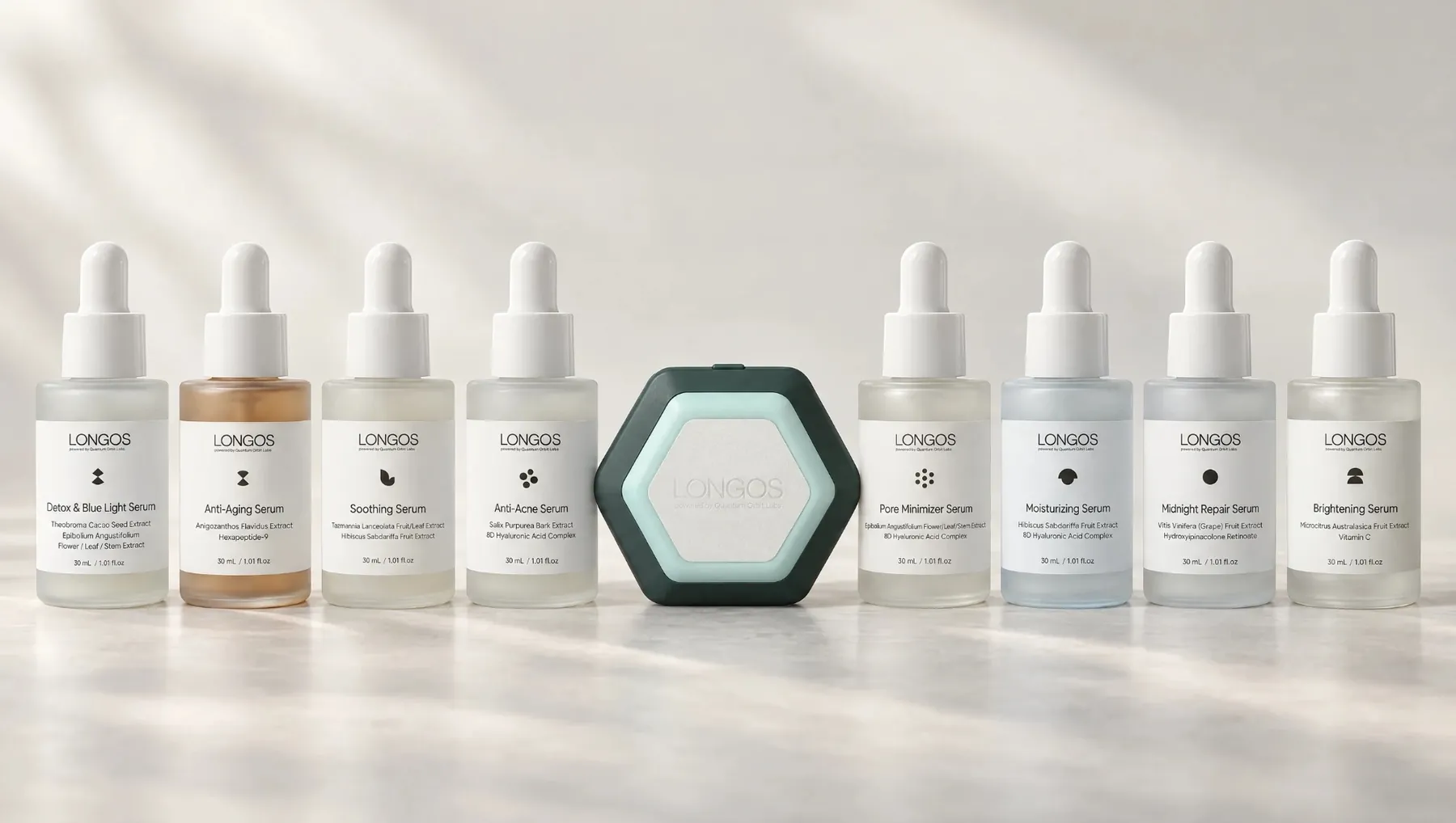
The serums and Longos Sense work on different elements of radiance. The table shows each product's main role and the areas it supports.
Detox & Blue Light
- Moisture · Support
- Tone · Support
- City and light · Main role
Cocoa seed extract is an antioxidant. Epilobium extract helps reduce the look of redness, Baikal skullcap root extract helps calm the skin, and ceramide 3 supports the barrier. In the lab, oenothein B, the main compound in Epilobium, suppressed inflammation-related enzymes and the production of free radicals.[20]
ViewBrightening
- Smoothness · Main role
- Tone · Main role
- City and light · Support
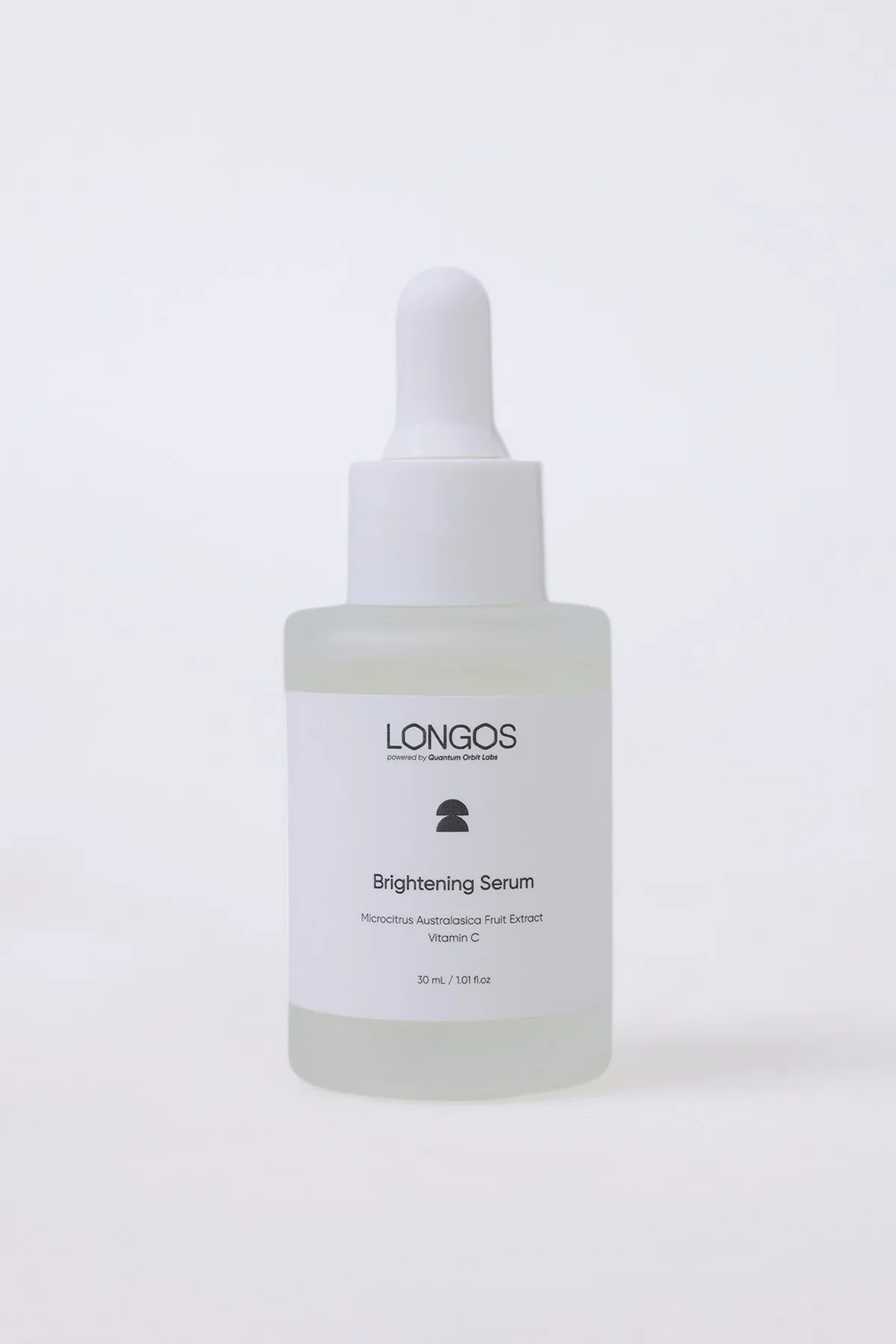
A stable vitamin C derivative and Kakadu plum help tone look more even, while the fruit acids in finger lime gently renew the surface. In the lab, vitamin C derivatives reduced melanin production.[19]
ViewMoisturizing
- Smoothness · Support
- Moisture · Main role
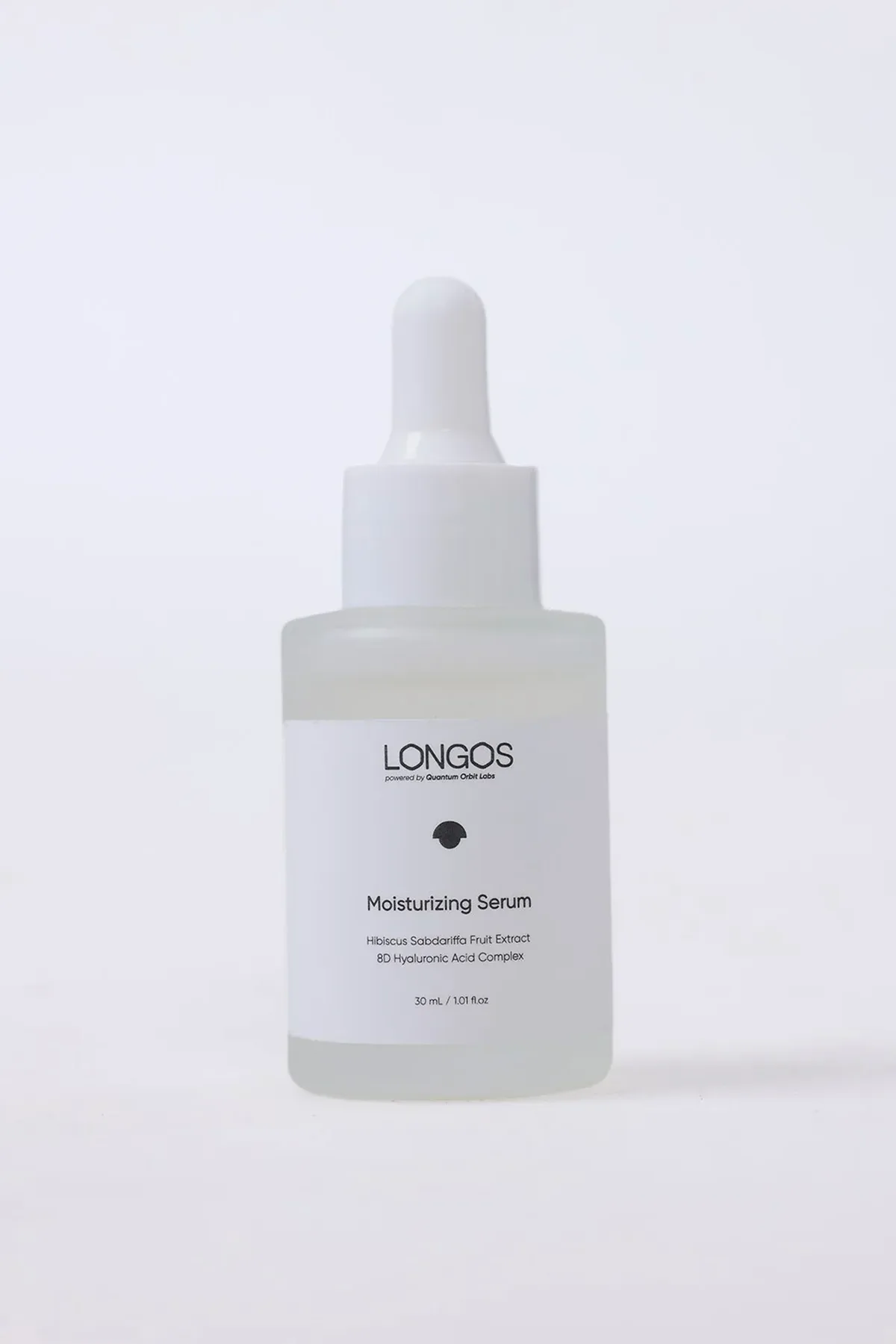
The 8D hyaluronic acid complex holds moisture in different layers, Irish moss forms a fine film on the surface, and hibiscus extract gently renews it.
ViewLongos Sense
- Circulation · Support
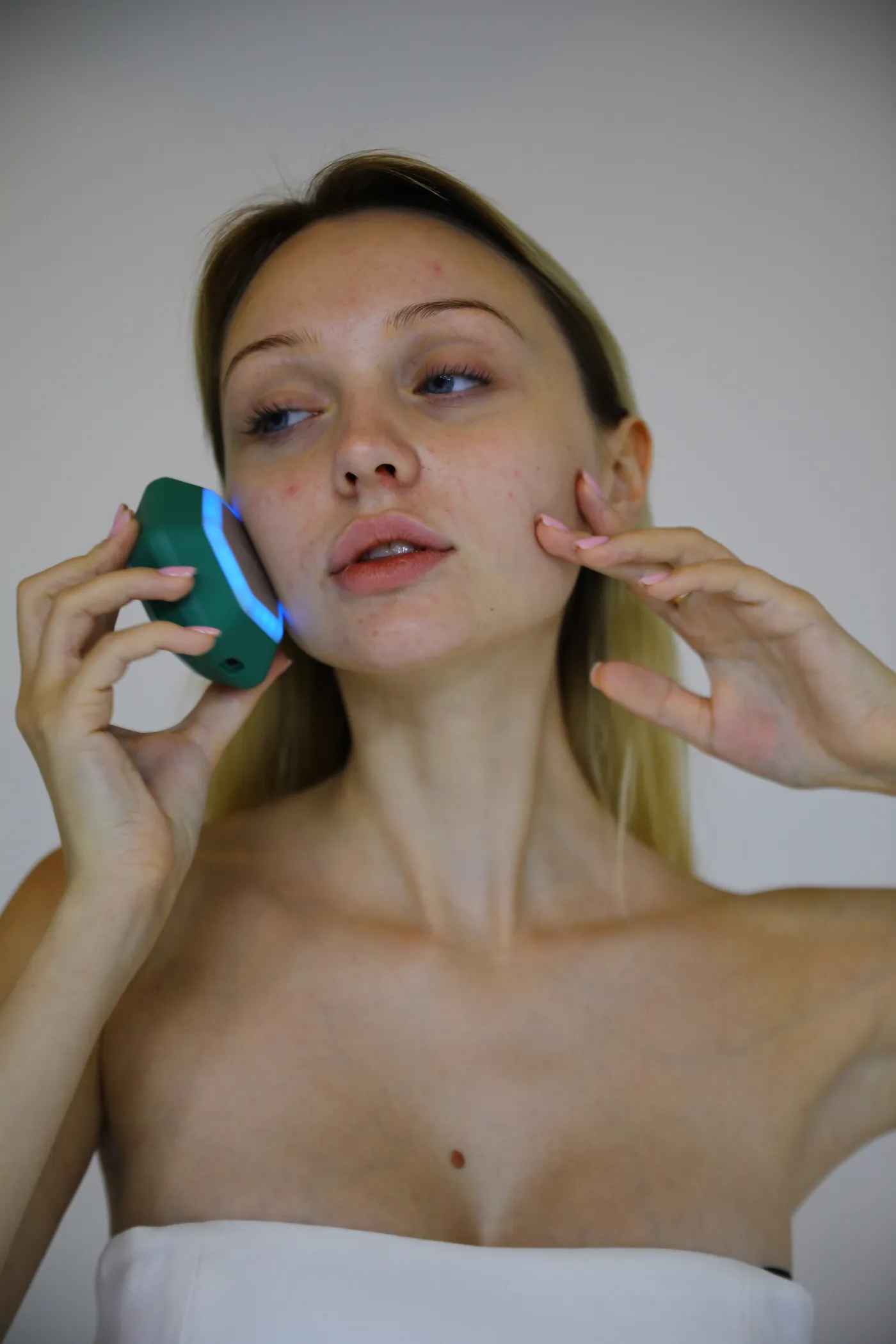
Gliding the device in circles over skin with serum applied is a gentle facial massage, and ultrasonic waves help the serum's active ingredients absorb into the skin. The app measures your skin and chooses the serum and the session length.
View
To get started
Longos Sense, with Detox & Blue Light in the morning. If tone and texture are your priority, add Brightening in the evening; if your skin is dry, add Moisturizing.
Morning ritual
Five short steps, every morning
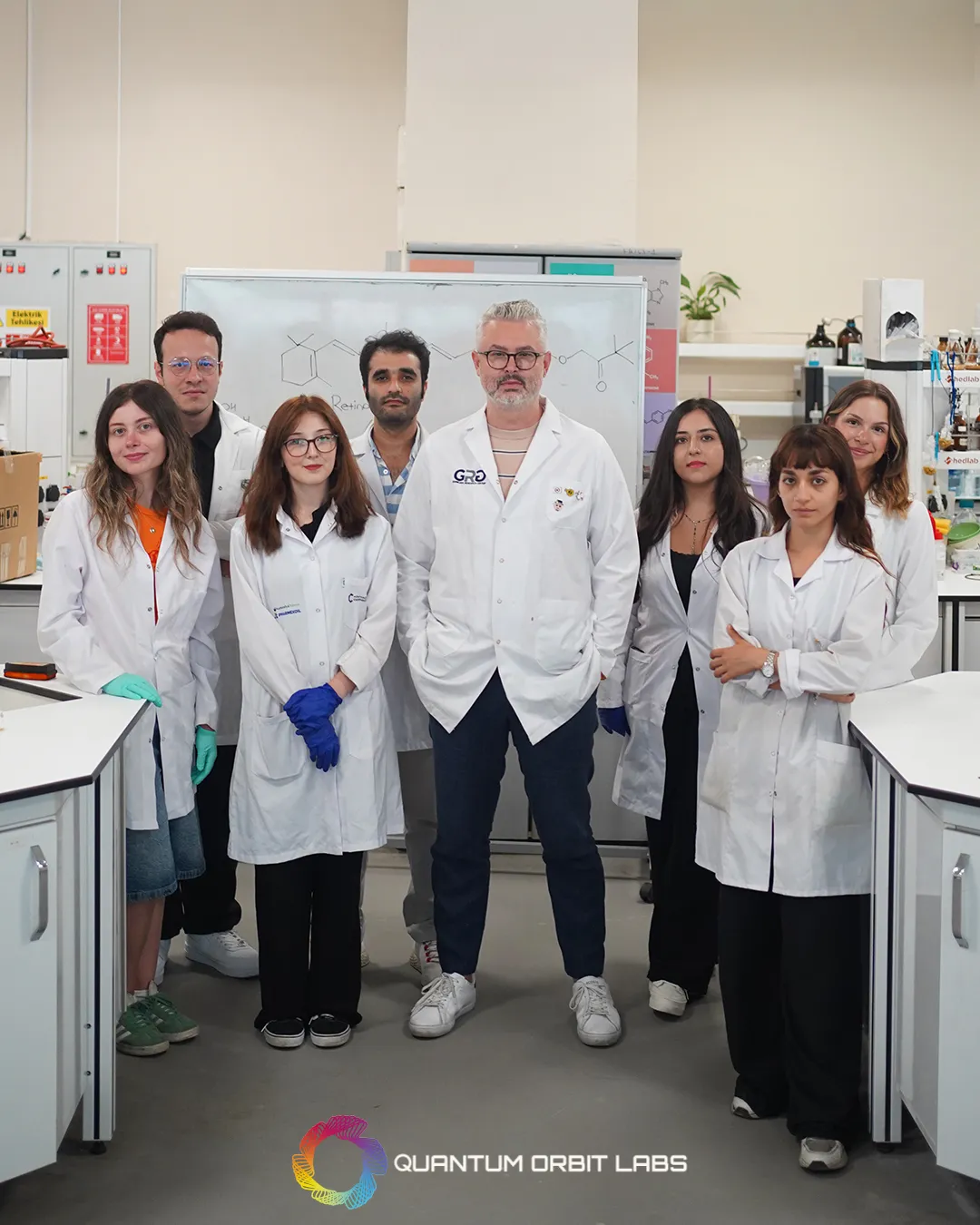
This sequence covers all four elements of radiance in a single morning. At its heart are Longos Sense and Detox & Blue Light: the serum gives antioxidant support, the device's movement gently massages the face, and the app sets the timing.
- 1
Moisture
Wash, then pat dry
Use lukewarm water, then press the towel lightly to your face instead of rubbing.
- 2
City and light
Detox & Blue Light
Smooth a few drops over clean, dry skin: an antioxidant start to a day of city air and sun.
- 3
Circulation
Longos Sense
Glide the device in circular motions over skin with the serum applied. The app sets the mode and duration.
Detox & Blue Light protocol
- Red/blue LED
- Medium heat/cold
- Ultrasonic vibration
- 4
Moisture
Moisture
Moisturizing or your usual moisturiser, to keep the surface plump and smooth.
- 5
Tone
Sunscreen
Broad-spectrum, every morning. If you use a fruit-acid serum in the evening, never skip it: these acids can increase sun sensitivity.
The rhythm beyond the ritual
Every evening
Gently cleanse away the day's grime. If tone and texture are your priority, add Brightening; the app sets how often.
Every night
Restorative sleep. In the barrier study, the good sleepers slept 7-9 hours a night.[9]
Once a week
A photo in front of the same window, or the skin analysis in the app.
From the lab
Detox & Blue Light is more active with the device.
The serum's electrochemical activity was measured on its own, with Longos Sense, and in the full protocol together with Soothing.
- With the device
- +56.3%
- In the full protocol
- +637.5%
Increase compared with the serum measured on its own.
- Serum alone 8 µA
- With Longos Sense 12.5 µA
- With Soothing, full protocol 59 µA
Measured electrochemically in the laboratories of Yıldız Technical University and Dokuz Eylül University, with AGON Biotechnology and Bioİzmir contributing to the scientific work. This is a controlled laboratory observation, not a medical diagnosis or treatment claim.[21]
All laboratory measurementsQuantum Orbit Labs · From the lab to your home
Quantum Orbit Labs · Longos Sense introduction film
FAQ
Questions about dull skin
Is dull skin a sign of ageing?
Not always. Skin renewal does slow with age, but the most common causes of dullness are lack of sleep, water loss, sun and air pollution. These happen at any age, and most of their effects are reversible: even one sleepless night can make a face look more tired.
Can screen light make my skin dull?
The current evidence doesn't suggest so. Blue light from screens is far weaker than the sun's, and a review of the research could not show that screen light poses a risk of pigmentation or redness. The main source of blue light is the sun, which is why daytime protection matters more than a screen filter. Late nights in front of a screen do show on your face, though, when they cut into your sleep.
When will I see a difference?
The freshness that comes from massage and hydration shows the same morning. Changes in tone and texture take weeks. A weekly photo in the same light, together with the analysis in the app, lets you see change without guesswork.
Can I exfoliate every day?
Even a gentle peel isn't needed daily. Fruit acids smooth the surface but can make skin more sensitive to the sun, so apply sunscreen every morning while you use them. If stinging, redness or flaking increases, use it less often.
Which serum should I start with?
If you live in a city and spend much of your day outdoors or at a hectic pace, Detox & Blue Light. If uneven tone and dark spots are your main concern, Brightening. If your skin feels tight and looks flaky, Moisturizing. The skin analysis in the app shows which to prioritise.
Can I use Detox & Blue Light and Brightening on the same day?
Yes. Using Detox & Blue Light in the morning and Brightening in the evening keeps the two serums in separate sessions. Your weekly plan in the app shows which serum to use on which day. Because Brightening contains fruit acids, don't skip sunscreen the next morning.
References
Sources for the information on this page
Studies published in peer-reviewed journals, and laboratory measurements by Quantum Orbit Labs. The numbers in square brackets in the text link to this list.
- 1.Axelsson J, Sundelin T, Ingre M, Van Someren EJW, Olsson A, Lekander M. Beauty sleep: experimental study on the perceived health and attractiveness of sleep deprived people. BMJ. 2010;341:c6614. pmc.ncbi.nlm.nih.gov
- 2.Liu Y, Wheaton AG, Chapman DP, Cunningham TJ, Lu H, Croft JB. Prevalence of healthy sleep duration among adults: United States, 2014. Morbidity and Mortality Weekly Report. 2016;65(6):137-141. pubmed.ncbi.nlm.nih.gov
- 3.Matsubara A, Liang Z, Sato Y, Uchikawa K. Analysis of human perception of facial skin radiance by means of image histogram parameters of surface and subsurface reflections from the skin. Skin Research and Technology. 2012;18(3):265-271. pubmed.ncbi.nlm.nih.gov
- 4.Masuda Y, Yagi E, Oguri M, Kuwahara T. Development of a quantitative method for evaluation of skin radiance and its relationship with skin surface topography. Journal of Society of Cosmetic Chemists of Japan. 2017;51(3):211-218. doi.org
- 5.Verdier-Sévrain S, Bonté F. Skin hydration: a review on its molecular mechanisms. Journal of Cosmetic Dermatology. 2007;6(2):75-82. pubmed.ncbi.nlm.nih.gov
- 6.Matts PJ, Fink B, Grammer K, Burquest M. Color homogeneity and visual perception of age, health, and attractiveness of female facial skin. Journal of the American Academy of Dermatology. 2007;57(6):977-984. pubmed.ncbi.nlm.nih.gov
- 7.Stephen ID, Coetzee V, Law Smith M, Perrett DI. Skin blood perfusion and oxygenation colour affect perceived human health. PLoS ONE. 2009;4(4):e5083. pmc.ncbi.nlm.nih.gov
- 8.Sundelin T, Lekander M, Kecklund G, Van Someren EJW, Olsson A, Axelsson J. Cues of fatigue: effects of sleep deprivation on facial appearance. Sleep. 2013;36(9):1355-1360. pmc.ncbi.nlm.nih.gov
- 9.Oyetakin-White P, Suggs A, Koo B et al. Does poor sleep quality affect skin ageing? Clinical and Experimental Dermatology. 2015;40(1):17-22. pubmed.ncbi.nlm.nih.gov
- 10.Hughes MCB, Williams GM, Baker P, Green AC. Sunscreen and prevention of skin aging: a randomized trial. Annals of Internal Medicine. 2013;158(11):781-790. pubmed.ncbi.nlm.nih.gov
- 11.Vierkötter A, Schikowski T, Ranft U et al. Airborne particle exposure and extrinsic skin aging. Journal of Investigative Dermatology. 2010;130(12):2719-2726. pubmed.ncbi.nlm.nih.gov
- 12.Liebel F, Kaur S, Ruvolo E, Kollias N, Southall MD. Irradiation of skin with visible light induces reactive oxygen species and matrix-degrading enzymes. Journal of Investigative Dermatology. 2012;132(7):1901-1907. pubmed.ncbi.nlm.nih.gov
- 13.Duteil L, Cardot-Leccia N, Queille-Roussel C et al. Differences in visible light-induced pigmentation according to wavelengths: a clinical and histological study in comparison with UVB exposure. Pigment Cell & Melanoma Research. 2014;27(5):822-826. pubmed.ncbi.nlm.nih.gov
- 14.Vandersee S, Beyer M, Lademann J, Darvin ME. Blue-violet light irradiation dose dependently decreases carotenoids in human skin, which indicates the generation of free radicals. Oxidative Medicine and Cellular Longevity. 2015;2015:579675. pmc.ncbi.nlm.nih.gov
- 15.Ceresnie MS, Patel J, Lim HW, Kohli I. The cutaneous effects of blue light from electronic devices: a systematic review with health hazard identification. Photochemical & Photobiological Sciences. 2023;22(2):457-464. pubmed.ncbi.nlm.nih.gov
- 16.Miyaji A, Sugimori K, Hayashi N. Short- and long-term effects of using a facial massage roller on facial skin blood flow and vascular reactivity. Complementary Therapies in Medicine. 2018;41:271-276. pubmed.ncbi.nlm.nih.gov
- 17.Heinrich U, Neukam K, Tronnier H, Sies H, Stahl W. Long-term ingestion of high flavanol cocoa provides photoprotection against UV-induced erythema and improves skin condition in women. Journal of Nutrition. 2006;136(6):1565-1569. pubmed.ncbi.nlm.nih.gov
- 18.Kornhauser A, Coelho SG, Hearing VJ. Applications of hydroxy acids: classification, mechanisms, and photoactivity. Clinical, Cosmetic and Investigational Dermatology. 2010;3:135-142. pmc.ncbi.nlm.nih.gov
- 19.Pullar JM, Carr AC, Vissers MCM. The roles of vitamin C in skin health. Nutrients. 2017;9(8):866. pmc.ncbi.nlm.nih.gov
- 20.Kiss AK, Bazylko A, Filipek A et al. Oenothein B's contribution to the anti-inflammatory and antioxidant activity of Epilobium sp. Phytomedicine. 2011;18(7):557-560. pubmed.ncbi.nlm.nih.gov
- 21.Quantum Orbit Labs. Electrochemical laboratory measurements of Longos Sense and the serums. Laboratories of Yıldız Technical University and Dokuz Eylül University; with contributions from AGON Biotechnology and Bioİzmir. quantumorbitlabs.com/en/clinical-evidence
For the morning ritual
Where to start with dull skin
Longos Sense and three serums that work on different elements of radiance. The skin analysis in the app tells you which one to start with.
Longos Sense set
Ultrasonic waves, light modes, heat and cold in a single device. The app measures your skin and chooses the protocol. The set contains all eight serums, including these three and Soothing from the full protocol.
View the set-
Morning · City and light
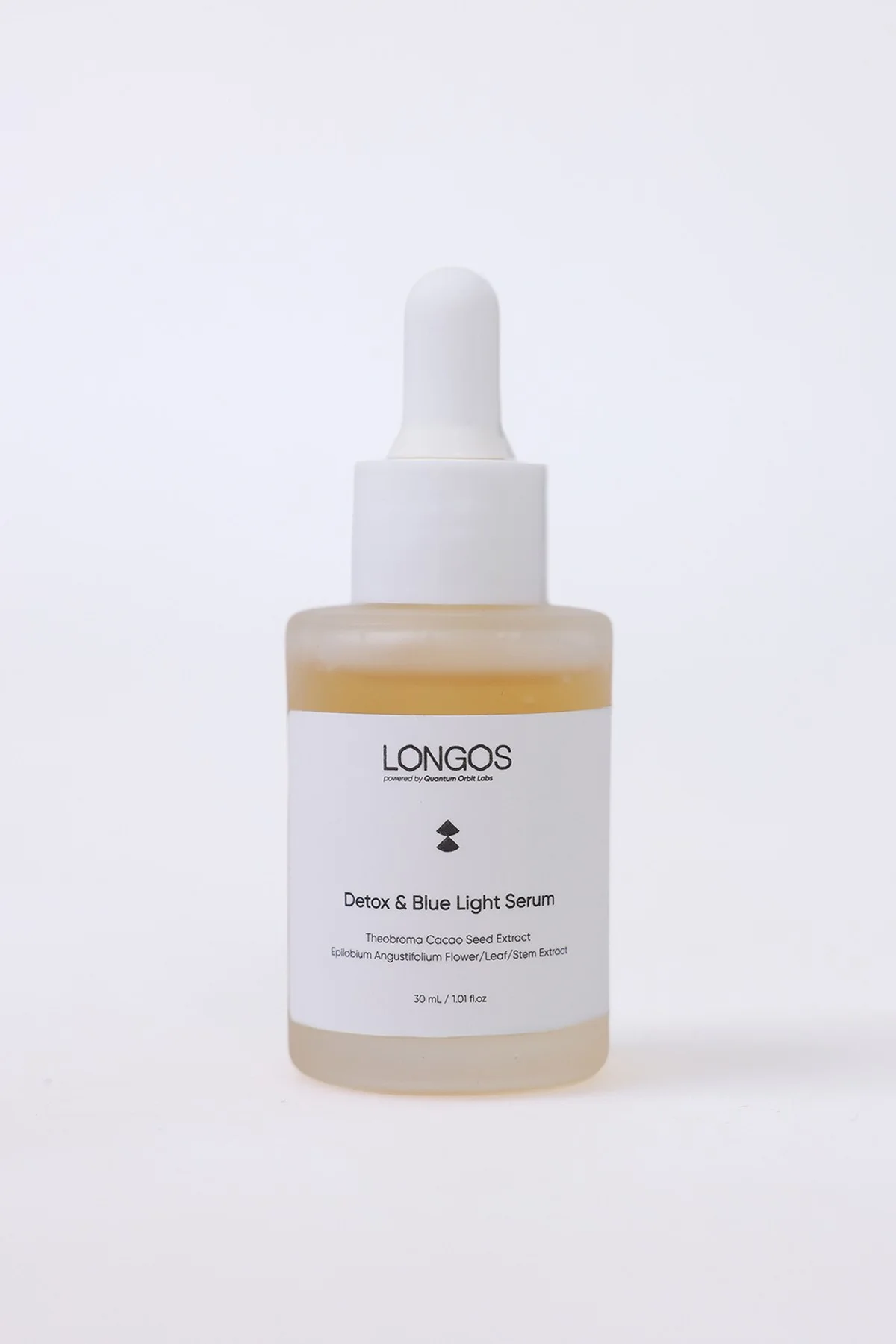
Detox & Blue Light serum
Cocoa seed, Epilobium and Baikal skullcap root extracts, with ceramide 3. Used together with ultrasonic waves.
Ultrasonic -
Evening · Tone and texture
Brightening serum
A stable vitamin C derivative, Kakadu plum and finger lime. Because of its fruit acids, use sunscreen during the day.
Red light Radiofrequency Cryo -
Morning and evening · Moisture
Moisturizing serum
8D hyaluronic acid complex, hibiscus and Irish moss. Helps skin feel hydrated and plump.
Red light Thermal Vibration
One morning this week, take a photo without make-up facing the window, and run the skin analysis in the app once. Four weeks later, repeat both in the same light and compare the photos and the scores.
Start your skin analysis