
Skin concerns · Dryness
You feel dryness before you see it.
The tightness after you wash your face. The itch that creeps in around midday. Fine flakes showing through your make-up. All three point to the same thing: the barrier in your skin's outermost layer is struggling to hold on to water. Built like bricks and mortar, it renews itself continuously, and the right habits help it recover.
20 peer-reviewed sources · Lab measurements: Yıldız Technical and Dokuz Eylül
- Bricks. Corneocytes: dead cells that have flattened on their way to the surface.
- Mortar. Lipid layers made of ceramides, cholesterol and fatty acids.
- Escaping water. Water that evaporates through the skin once the mortar thins, known as transepidermal water loss.
How the barrier works
Bricks and mortar: the wall that keeps water in.
In the early 1980s, the dermatologist Peter Elias described the skin's outermost layer as a two-compartment structure: bricks made of protein, with a mortar of lipids filling the spaces between them. It is still the simplest way to understand dryness.[1]
How common is it
60%
The share of 5,547 middle-aged and older adults found to have dry skin when examined by a doctor. Localised dryness was less common among those who used a cream every day.[5]
The bricks bind water
The bricks are cells that flatten and die as they rise towards the surface. Inside them is natural moisturising factor (NMF), formed when a protein called filaggrin breaks down; these small molecules hold water inside the cell.[2]
What wears the mortar down?
Some dryness comes with the season. Some starts in the bathroom.
You can't choose the season or your age. The temperature of the water you wash with and the cleanser you reach for, though, are choices you make every day.
- Season
Cold, dry air
Low humidity and low temperatures weaken barrier function and make skin more reactive to irritants. In winter, the lipids in the outer layer fall noticeably compared with spring and summer.[3,6]
- Water
Hot water
In a study of 50 volunteers, contact with hot water more than doubled water loss through the skin. Cold water raised it too, though less, and the researchers recommend washing with lukewarm or cold water.[7]
- Cleanser
Harsh cleansers
The ingredients in a cleanser that foam and lift away dirt are called surfactants. Harsh surfactants interact with the skin's proteins and lipids and can leave it tight, dry and itchy after washing. High-pH (alkaline) solutions make the outer layer swell even without any cleanser.[8]
- Limescale
Hard water
Skin washed in hard water held on to noticeably more cleanser residue, and that residue increased water loss and irritation. The effect was stronger in people whose barrier was already sensitive.[9]
- Age
Years and hormones
After a deliberate experimental disruption, the barrier recovered by only 15% within 24 hours in people over 80, compared with 50% in those aged 20 to 30. In women, the output of the oil glands declines gradually after menopause.[10,11]
Tell them apart
Dry or dehydrated?
Both feel tight, but what's missing is different. Dry skin lacks oil; dehydrated skin lacks water. That is why oily skin can be dehydrated too.
- What's missing?
- Dry skin: The skin's own oil (sebum) and the lipids in the mortar are in short supply.
- Dehydrated skin: The outer layer is low on water; oil production is normal, or even high.
- How long does it last?
- Dry skin: It's lasting: part of your skin type, and it can become more pronounced with age.
- Dehydrated skin: It's temporary: it comes and goes with the seasons, hot water, a harsh cleanser or a hectic stretch of life.
- How does it feel?
- Dry skin: Tightness that lasts all day, a dull and rough surface, flaky patches on the cheeks and around the eyes.
- Dehydrated skin: Tightness after washing or around midday. Your T-zone may shine while your cheeks feel tight, and fine lines look more visible.
- What helps?
- Dry skin: Lipid support: emollient oils and ceramides, with an occlusive layer on top at night.
- Dehydrated skin: Humectants on damp skin, a light layer over them, and letting go of the habits that dry your skin out.
Know your skin
The tightness clock
The clue that separates dry skin from dehydrated skin is often when the tightness shows up. Over the course of one day, choose how your skin feels at four separate moments, and you'll see a starter routine based on the result.
0 / 4 an
Your result appears here once you've chosen all four moments.
This test is not a diagnosis. The skin analysis in the app identifies your skin type from a photo, and when you choose dryness as your care need, it puts together your serum and your morning and evening routine.
When to see a dermatologist
These signs call for more than skincare.
Dryness is usually a matter of skincare. Sometimes, though, it is a sign of a skin condition or of another change in the body. If any of the following apply to you, see a dermatologist.
- Red, itchy patches that flare up again and again. Eczema (atopic dermatitis) shows itself through recurring rashes and intense itching.[15]
- Intense itching that disturbs your sleep or that you can't stop scratching.[12,15]
- Cracks that bleed or sting, especially on the hands, the heels and the corners of the mouth.[12]
- Dryness that doesn't clear up, or keeps spreading, despite regular care.[12]
- Dryness across the whole body that comes with other symptoms. Besides many skin conditions, dryness can also be a sign of internal diseases and disorders of the nervous system.[12]
- Dryness that begins after you start a new medication. In a large population study, widespread dryness was more common among people taking cholesterol-lowering statins or diuretics.[5]
Longos Sense and the serums are cosmetic products; they are not a substitute for treating a skin condition. If your dermatologist has recommended a treatment, check with them before starting a new product.
What each one does
Three jobs of moisturising: attract, fill, seal.
Good moisturising meets all three of the barrier's needs at once. Humectants draw water in, emollients fill the gaps in the mortar, and occlusives slow evaporation. When one is missing, the other two only do half the job.
01 · Humectant
Water binder
Draws water to itself, from the deeper layers of the skin and from humid air.
Every cream containing 0.1% hyaluronic acid significantly improved hydration and elasticity compared with placebo over 60 days of use. Glycerin is often described as the most effective humectant.[16,17]
Used on its own, it can leave the water it draws up from deeper layers exposed to evaporation at the surface, which is why it is usually paired with an occlusive.[17]
Examples
- Hyaluronic acid
- Glycerin
- Urea
02 · Emollient
Softener
Fills the gaps in the mortar, leaving the surface soft, supple and smooth.
A ceramide cream designed to mimic the skin's own moisturising system increased hydration and reduced water loss for 24 hours after a single application. The study was carried out by the cream's manufacturer.[17,18]
Examples
- Sweet almond oil
- Ceramides
- Squalane
03 · Occlusive
Sealant
Forms a thin film on the surface that physically slows the evaporation of water.
According to one review, a formula containing at least 5% petrolatum cuts water loss through the skin by more than 98%. In an outer layer depleted of lipids, petrolatum starts supporting barrier function straight away.[4,17]
Examples
- Petrolatum
- Dimethicone
- Beeswax
- Seaweed extracts
Experts advise that a skincare product should both moisturise and replace the lipids the skin has lost. The drier the skin, the higher the proportion of lipids the formula should contain.[12]
An expert explains
Why eight sizes?
The molecular size of hyaluronic acid determines where it reaches in the skin. In a study comparing different sizes, every size increased hydration, but only the low-molecular-weight forms also reduced wrinkle depth. The researchers put this down to smaller molecules penetrating better.[16]
Where do Longos serums sit in this trio?
- Moisturizing
- Water binder
- Film former
The 8D Hyaluronic Acid Complex (eight different molecular sizes) draws water in and erythritol helps support moisture balance, while Irish moss extract leaves a thin film on the surface. Hibiscus extract gently renews the surface.
- Midnight Repair
- Softener
Sweet almond oil softens the skin and supports the barrier; grape extract and vitamin E are antioxidants, and bisabolol from chamomile soothes. The retinoid ester HPR helps cell renewal overnight.
- Soothing
- Mortar lipid
Ceramide 3 is a lipid also found in the skin's own barrier. Tasmanian pepper extract helps reduce the look of redness and irritation.
The studies above show the general evidence for these ingredients; they are not clinical studies of Longos serums. The serums have a light texture, so if your skin is noticeably dry, add an emollient or occlusive cream on top.
In your hands
Your barrier is built anew every day, from the choices you make.
Of everything behind dryness, your daily habits are the quickest to change: the temperature of the water, the type of cleanser, and when you apply your moisturiser.
If it feels tight right now
Relief in three steps
- 1
Wash your face with lukewarm water and pat it dry with a towel; don't rub.
- 2
While your skin is still damp, apply your humectant serum.
- 3
Add an emollient or occlusive layer on top to keep the moisture in.
Within your control
- Water temperature
- Type of cleanser and how often you use it
- When you moisturise
- Humidity in the room
- A consistent routine
Beyond your control
- Age and hormones
- Season and climate
- Genetic predisposition
- 01
Lukewarm water
In one study, hot water more than doubled water loss through the skin. Wash with lukewarm or cool water, and keep showers short.[7]
- 02
Moisturise straight after washing
In a small study, bathing without a moisturiser left the skin of people with eczema (atopic dermatitis) less hydrated than before; a moisturiser applied after the bath offset that loss. Don't leave freshly washed skin without moisturiser.[19]
- 03
A gentle cleanser with a skin-friendly pH
The natural pH of the skin's surface is around 5.5. Neutral or slightly acidic cleansers may be less damaging to the barrier; if a product leaves your skin tight after washing, switch to another.[8]
- 04
Humidity in the room
Low humidity and cold air weaken the barrier. In a heated or air-conditioned room, raising the humidity can ease the load on your skin.[6]
- 05
A little, every day
In a large population study, localised dryness was less common in people who used a cream every day. A moisturiser only works if you use it regularly.[4,5]
- 06
Drinking water: helpful, but not enough on its own
Drinking extra water may slightly raise hydration in the outer layer, especially in people who don't usually drink much. The evidence is limited and weak, and more research is needed to know whether it eases the signs of dryness.[20]
What to expect, and when
First application
With the right layers, tightness can ease quickly. A ceramide cream kept hydration high for 24 hours after a single application.[18]
First few weeks
As the habits settle in, tightness after washing becomes less frequent. The barrier recovers more slowly with age, so later in life it takes more patience.[10]
Day 60
In the hyaluronic acid study, the gains in hydration and elasticity were measured on days 30 and 60.[16]
With Longos Sense
Applying serum with light, heat and vibration.
Longos Sense applies Moisturizing with red light, Thermal Therapy at medium heat and Mechanical Vibration. The mobile app analyses your skin and sets the session's mode and length to match.
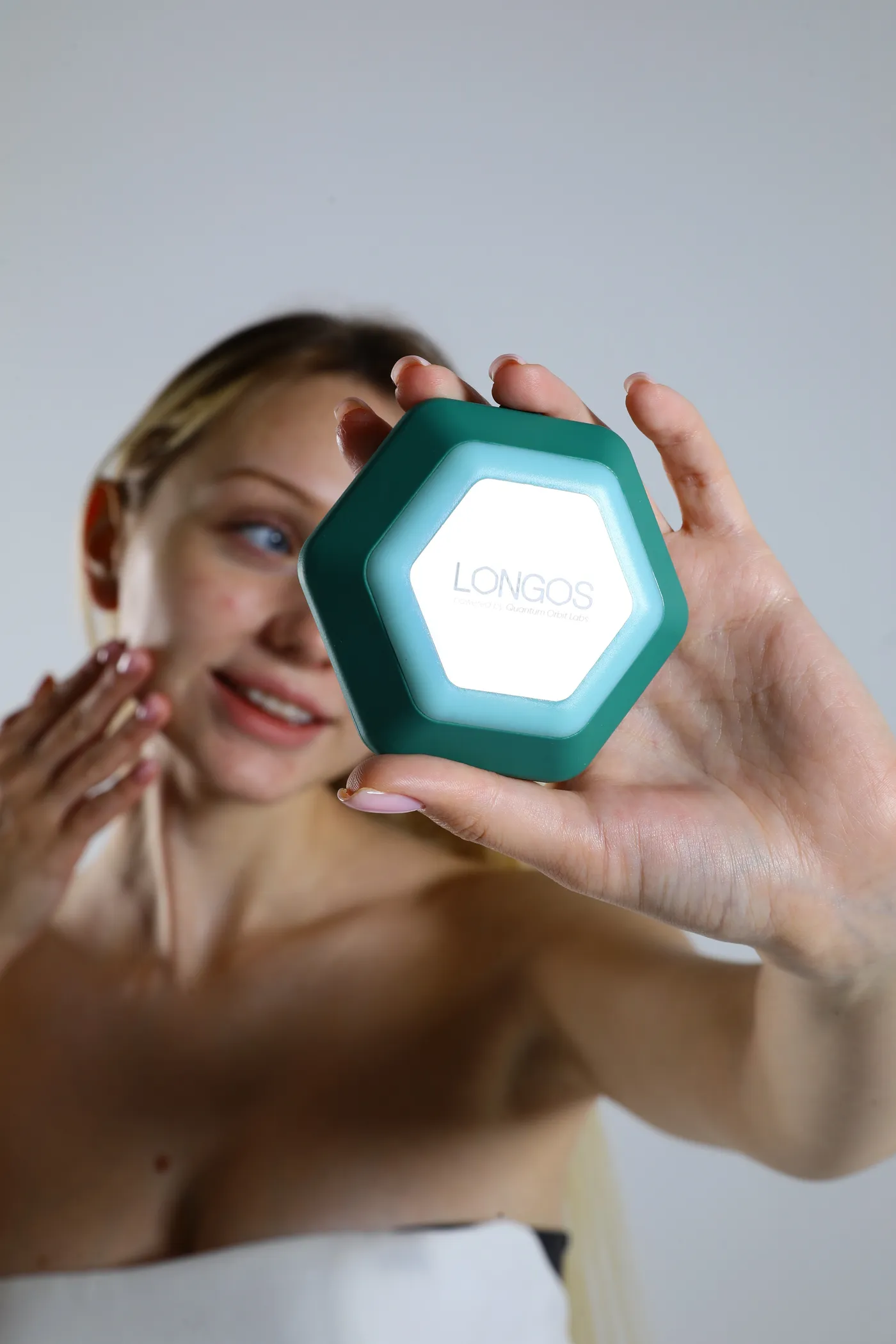
- Red light
- The light component of the Moisturizing protocol, applied to serum-covered skin throughout the session.
- Thermal Therapy
- Gentle, warm contact at medium heat. The app decides how long it lasts.
- Mechanical Vibration
- A light vibration that accompanies the serum as it spreads, while you glide the device over your skin.
- With Midnight Repair
- The combined protocol for dry skin: Midnight Repair is applied with red light and Radiofrequency mode.
In her own words
Laboratory
Moisturizing gave its highest response together with Midnight Repair and the device.[21]
The serums' activity was measured electrochemically (µA) in laboratories at Yıldız Technical University and Dokuz Eylül University. This measurement shows how active a serum is; it is not a measurement of moisture in the skin.
+313%
Compared with Moisturizing alone, with Midnight Repair and the full protocol
Device alone: +20%
Moisturizing protocol
- Red LED
- Medium heat
- Mechanical Vibration
- Moisturizing alone 15 µA
- With Longos Sense 18 µA
- Together with Midnight Repair, full protocol 62 µA
Measured in laboratories at Yıldız Technical University and Dokuz Eylül University; AGON Biotechnology and Bioİzmir contributed to the scientific work. This is a controlled laboratory observation, not a medical diagnosis or a treatment claim.
All laboratory measurementsFrequently asked
About dryness
For dry skin, should I use a rich cream or a moisturiser?
Both, together. A humectant draws water in, and an oil-rich layer keeps that water where it is. Experts advise that the drier the skin, the higher the proportion of lipids in the formula should be. In practice: a humectant serum on damp skin, followed by an emollient or occlusive cream.
My skin is oily but still feels tight. Why?
Oil and water are two different things. Your skin can produce plenty of oil while the outer layer runs low on water; this is called dehydrated skin. Trying to strip the oil with harsh cleansers puts the barrier under even more strain. A gentle cleanser and a light humectant usually work better.
Will drinking lots of water fix dry skin?
Not on its own. There is weak evidence that drinking extra water can slightly raise hydration in the outer layer, especially in people who drink little. What really shapes dryness is what you do at the skin's surface: habits that protect the barrier, and moisturising with the right layers.
Can hyaluronic acid dry out my skin?
Humectants draw water from wherever they find it. Without a layer on top to seal it in, that water can evaporate from the surface. That's why the usual advice is to apply hyaluronic acid to damp skin and add an emollient or occlusive layer on top. The Irish moss extract in Moisturizing also leaves a thin film on the surface.
Midnight Repair contains a retinoid. Is it suitable for dry skin?
Retinoids can cause dryness and peeling at first. The HPR in Midnight Repair is a gentle retinoid ester, and the formula also contains sweet almond oil, bisabolol and vitamin E. Start on a few nights a week, follow with Moisturizing, and wear sunscreen during the day. If you are pregnant or breastfeeding, talk to your doctor before using a retinoid.
When will I notice a difference?
With the right layers, tightness can ease quickly. The barrier itself recovers more slowly, and that pace slows with age. Repeat the skin analysis in the app once a week, in the same light, and you can follow the change in measurements.
References
Sources for the information on this page
Studies published in peer-reviewed journals, and laboratory measurements by Quantum Orbit Labs. The numbers in square brackets in the text link to this list.
- 1.Elias PM. Epidermal lipids, barrier function, and desquamation. Journal of Investigative Dermatology. 1983;80(1 Suppl):44s-49s. pubmed.ncbi.nlm.nih.gov
- 2.Rawlings AV, Harding CR. Moisturization and skin barrier function. Dermatologic Therapy. 2004;17 Suppl 1:43-48. pubmed.ncbi.nlm.nih.gov
- 3.Rogers J, Harding C, Mayo A, Banks J, Rawlings A. Stratum corneum lipids: the effect of ageing and the seasons. Archives of Dermatological Research. 1996;288(12):765-770. pubmed.ncbi.nlm.nih.gov
- 4.Lodén M. Role of topical emollients and moisturizers in the treatment of dry skin barrier disorders. American Journal of Clinical Dermatology. 2003;4(11):771-788. pubmed.ncbi.nlm.nih.gov
- 5.Mekić S, Jacobs LC, Gunn DA et al. Prevalence and determinants for xerosis cutis in the middle-aged and elderly population: a cross-sectional study. Journal of the American Academy of Dermatology. 2019;81(4):963-969. pubmed.ncbi.nlm.nih.gov
- 6.Engebretsen KA, Johansen JD, Kezic S, Linneberg A, Thyssen JP. The effect of environmental humidity and temperature on skin barrier function and dermatitis. Journal of the European Academy of Dermatology and Venereology. 2016;30(2):223-249. pubmed.ncbi.nlm.nih.gov
- 7.Herrero-Fernandez M, Montero-Vilchez T, Diaz-Calvillo P et al. Impact of water exposure and temperature changes on skin barrier function. Journal of Clinical Medicine. 2022;11(2):298. pmc.ncbi.nlm.nih.gov
- 8.Ananthapadmanabhan KP, Moore DJ, Subramanyan K, Misra M, Meyer F. Cleansing without compromise: the impact of cleansers on the skin barrier and the technology of mild cleansing. Dermatologic Therapy. 2004;17 Suppl 1:16-25. pubmed.ncbi.nlm.nih.gov
- 9.Danby SG, Brown K, Wigley AM et al. The effect of water hardness on surfactant deposition after washing and subsequent skin irritation in atopic dermatitis patients and healthy control subjects. Journal of Investigative Dermatology. 2018;138(1):68-77. pubmed.ncbi.nlm.nih.gov
- 10.Ghadially R, Brown BE, Sequeira-Martin SM, Feingold KR, Elias PM. The aged epidermal permeability barrier: structural, functional, and lipid biochemical abnormalities in humans and a senescent murine model. Journal of Clinical Investigation. 1995;95(5):2281-2290. pmc.ncbi.nlm.nih.gov
- 11.Pochi PE, Strauss JS, Downing DT. Age-related changes in sebaceous gland activity. Journal of Investigative Dermatology. 1979;73(1):108-111. pubmed.ncbi.nlm.nih.gov
- 12.Augustin M, Wilsmann-Theis D, Körber A et al. Diagnosis and treatment of xerosis cutis: a position paper. Journal der Deutschen Dermatologischen Gesellschaft. 2019;17 Suppl 7:3-33. pubmed.ncbi.nlm.nih.gov
- 13.Youn SW, Kim SJ, Hwang IA, Park KC. Evaluation of facial skin type by sebum secretion: discrepancies between subjective descriptions and sebum secretion. Skin Research and Technology. 2002;8(3):168-172. pubmed.ncbi.nlm.nih.gov
- 14.Yosipovitch G, Xiong GL, Haus E et al. Time-dependent variations of the skin barrier function in humans: transepidermal water loss, stratum corneum hydration, skin surface pH, and skin temperature. Journal of Investigative Dermatology. 1998;110(1):20-23. pubmed.ncbi.nlm.nih.gov
- 15.Langan SM, Irvine AD, Weidinger S. Atopic dermatitis. The Lancet. 2020;396(10247):345-360. pubmed.ncbi.nlm.nih.gov
- 16.Pavicic T, Gauglitz GG, Lersch P et al. Efficacy of cream-based novel formulations of hyaluronic acid of different molecular weights in anti-wrinkle treatment. Journal of Drugs in Dermatology. 2011;10(9):990-1000. pubmed.ncbi.nlm.nih.gov
- 17.Sethi A, Kaur T, Malhotra SK, Gambhir ML. Moisturizers: the slippery road. Indian Journal of Dermatology. 2016;61(3):279-287. pmc.ncbi.nlm.nih.gov
- 18.Spada F, Barnes TM, Greive KA. Skin hydration is significantly increased by a cream formulated to mimic the skin's own natural moisturizing systems. Clinical, Cosmetic and Investigational Dermatology. 2018;11:491-497. pmc.ncbi.nlm.nih.gov
- 19.Chiang C, Eichenfield LF. Quantitative assessment of combination bathing and moisturizing regimens on skin hydration in atopic dermatitis. Pediatric Dermatology. 2009;26(3):273-278. pmc.ncbi.nlm.nih.gov
- 20.Akdeniz M, Tomova-Simitchieva T, Dobos G, Blume-Peytavi U, Kottner J. Does dietary fluid intake affect skin hydration in healthy humans? A systematic literature review. Skin Research and Technology. 2018;24(3):459-465. pubmed.ncbi.nlm.nih.gov
- 21.Quantum Orbit Labs. Electrochemical laboratory measurements of Longos Sense and the serums. Laboratories of Yıldız Technical University and Dokuz Eylül University, with contributions from AGON Biotechnology and Bioİzmir. quantumorbitlabs.com/en/clinical-evidence
For the barrier
A starting point for dryness
Longos Sense and three serums that share the three jobs of moisturising. The tightness clock and the skin analysis in the app tell you which one to start with.
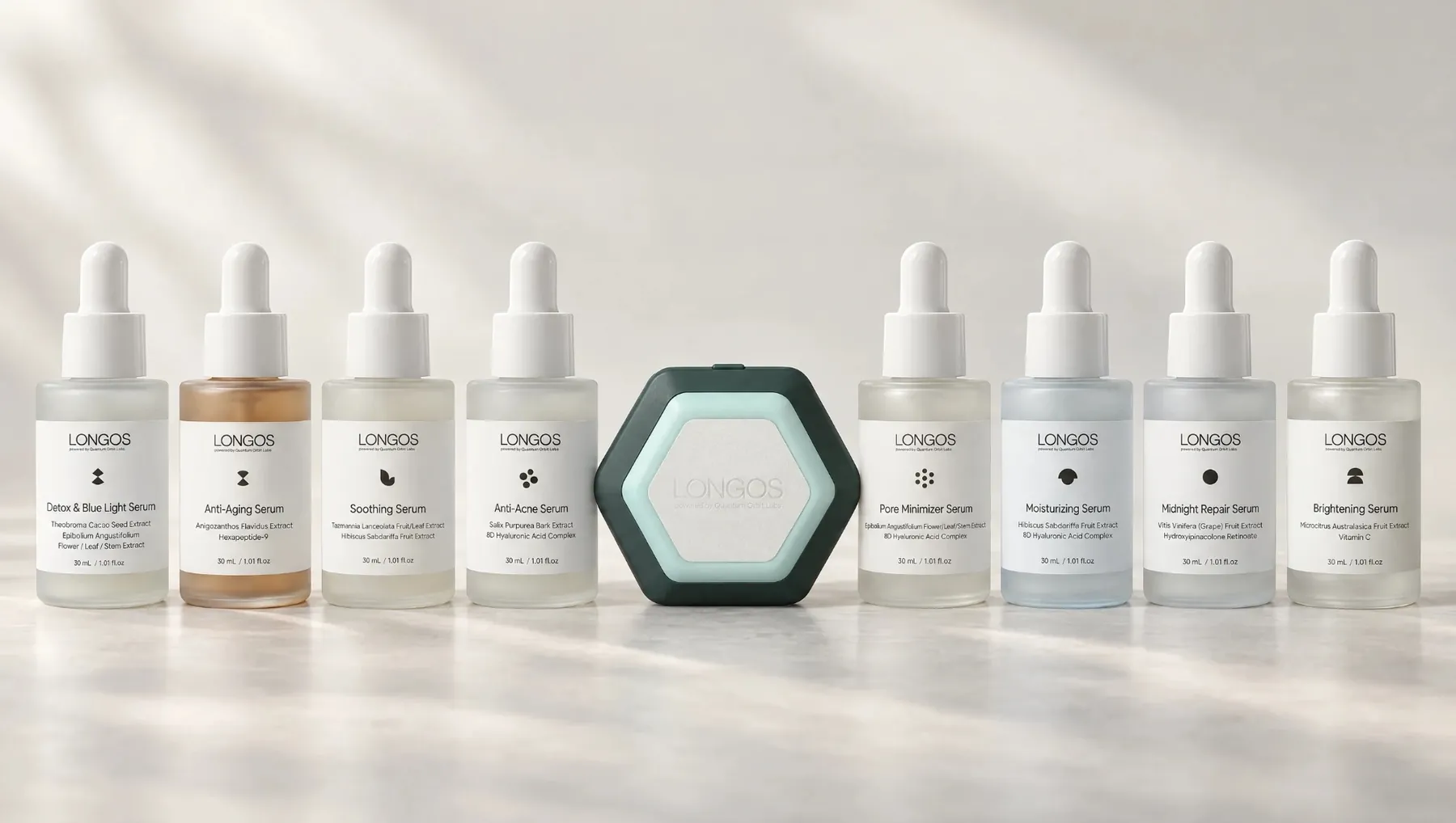
Longos Sense set
Red light, Thermal Therapy and Mechanical Vibration in a single device. The app analyses your skin and chooses the protocol, and the set includes all three of these serums.
View the set-
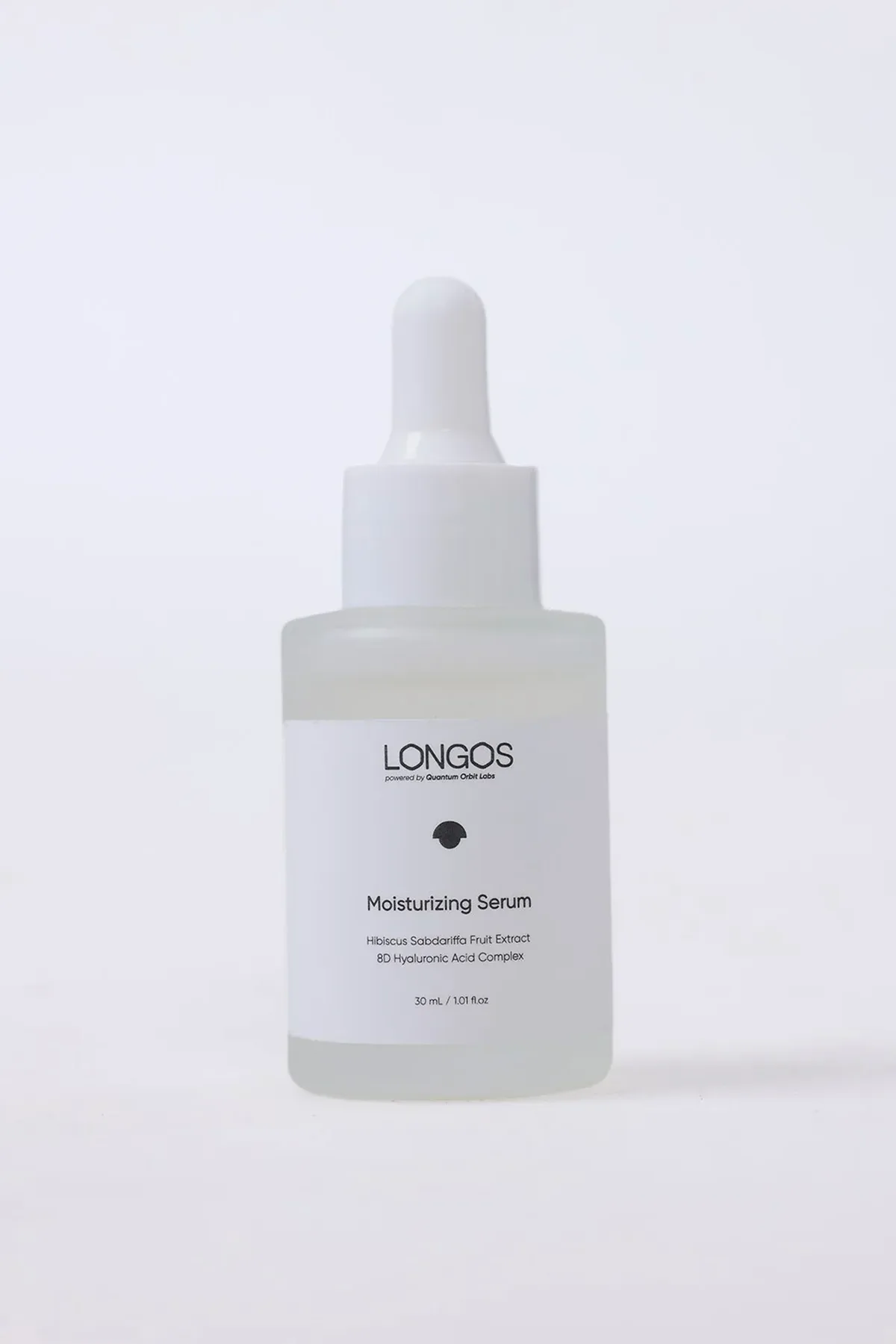
Morning and evening · Hydration
Moisturizing serum
8D Hyaluronic Acid Complex, erythritol and Irish moss. Draws water in and leaves a thin film on the surface.
Red light Thermal Vibration -
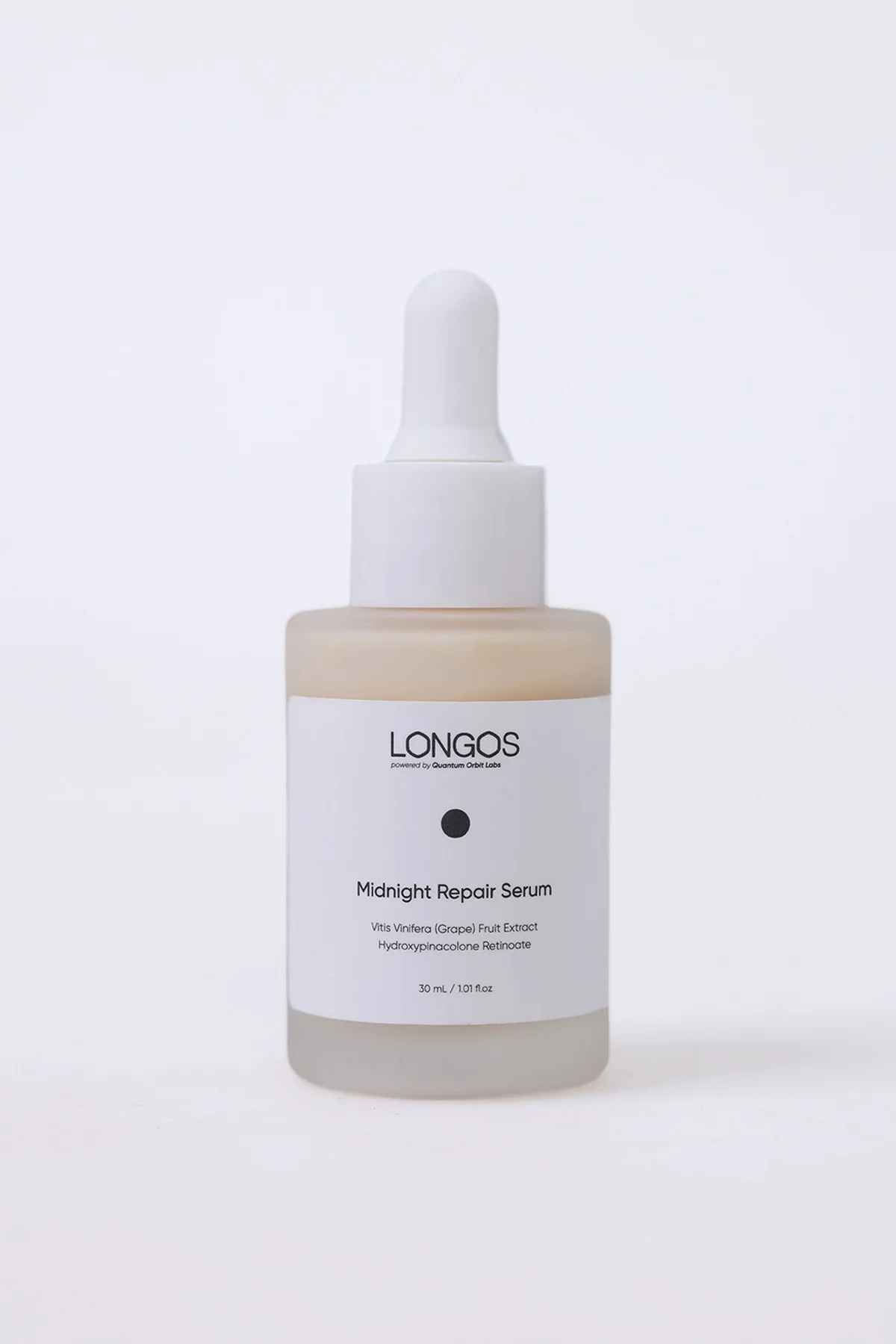
Evening · Lipid support
Midnight Repair serum
Sweet almond oil, vitamin E and the retinoid ester HPR. Gave the highest laboratory response together with Moisturizing.
Red light Radiofrequency -
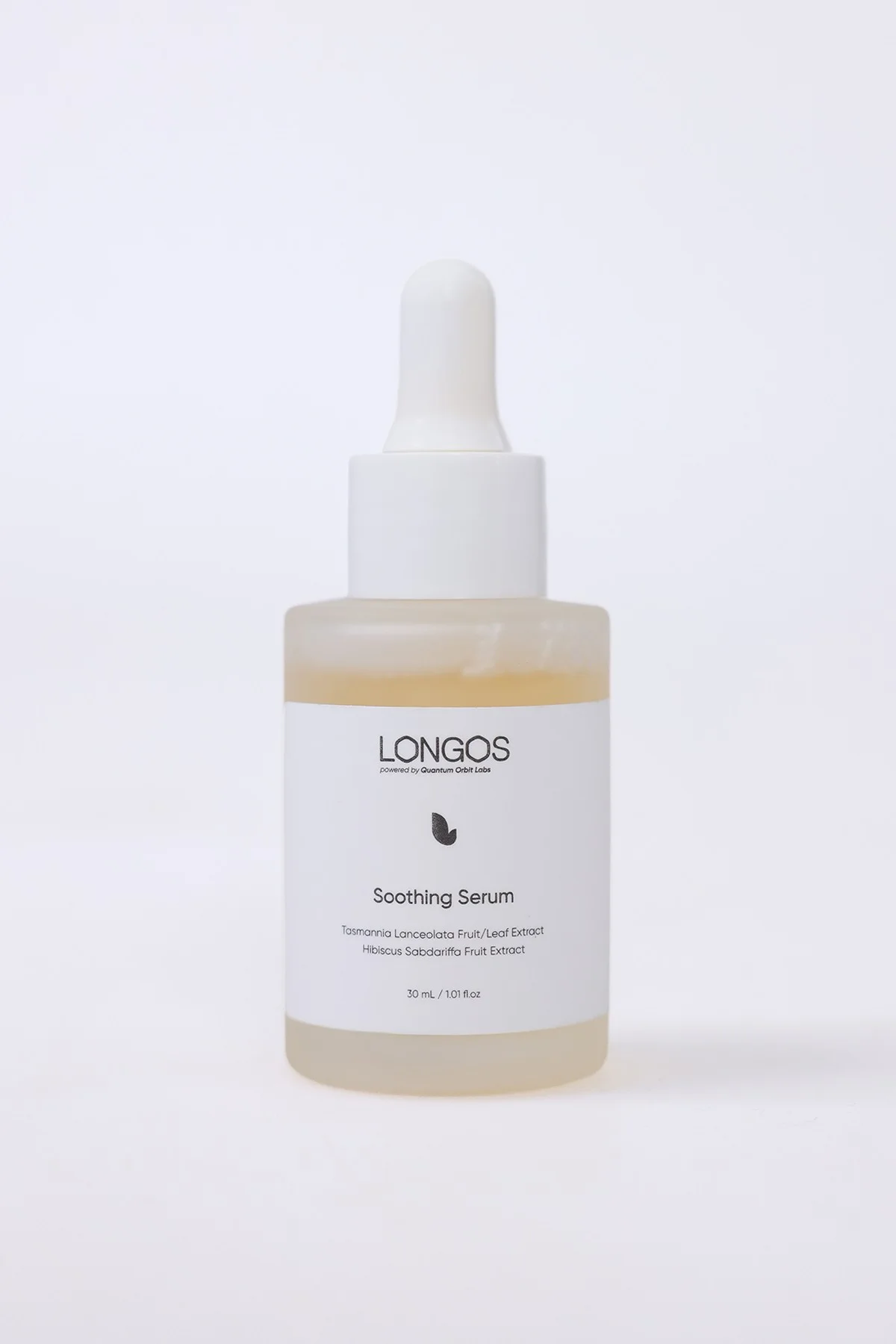
As needed · Sensitivity and redness
Soothing serum
Ceramide 3 and Tasmanian pepper extract. For the sensitivity that can come with dryness.
Cryo
Tonight, wash your face with lukewarm water and, a few minutes after drying it, make a note of how your skin feels. Then run the skin analysis in the app and choose dryness as your care need; the app puts together your serum and your morning and evening routine.
Start your skin analysis