
Skin concerns · Sensitivity and redness
Sensitive skin asks for a simpler routine.
Stinging, burning, tightness. Often there is nothing to see in the mirror, yet you feel it. This page starts by helping you find out what sets your skin off. Then you can read which kinds of redness a doctor should look at, and how to try a new product safely.
You don't need to try anything new. The first step might be letting something go.
40%
of adults describe their skin as moderately or very sensitive[1]
What is sensitive skin?
You feel it, even when it doesn't show.
An expert group of the International Forum for the Study of Itch defines sensitive skin as stinging, burning, pain, itching or tingling in response to stimuli that should not normally cause any discomfort. These sensations cannot be explained by a skin disease; the skin may look normal or turn red.[2]
Stinging
Right after you apply a product, like a pinprick.
Burning
After a hot shower, time in the sun or a windy day.
Tightness
After washing your face, as if your skin had shrunk.
Itching
In the cold, as you warm up, or at the end of a busy day.
Sensitive skin is defined by sensations such as stinging, burning, tightness, itching or pain.[3]
How common is it?
In an analysis of 51,783 people from 18 countries, 71% of adults said their skin was sensitive to some degree and 40% said it was moderately or very sensitive; the share was higher among women. The researchers also note that survey studies may overstate these figures.[1]
Beneath the surface
Why does the alarm go off so early?
Nerves
Nerve endings react early.
Sensitive skin is not an allergy and is not driven by the immune system; it is linked to changes in the skin's nerves. In skin samples from 50 women, the fine nerve fibres that sense pain, itch and temperature were sparser in the sensitive-skin group. Experts liken this to a state in which the remaining nerve endings overreact.[3,4,5]
Barrier
The wall may have worn thin.
The outermost layer of your skin is a wall that holds cells together with lipids such as ceramides. In a study of 50 people, the sensitive-skin group had markedly lower ceramide levels on the face. Barrier problems are common in sensitive skin, but they have not been shown to be the sole cause of sensitivity.[4,6]
Receptors
Heat and spice come in through the same door.
Skin senses heat and capsaicin, the compound that makes chillies hot, through the same receptor: the TRPV1 channel. That is why a hot room and a spicy meal can set off the same burning. Spicy food, hot drinks and alcohol can trigger redness, especially in people prone to rosacea (a skin condition marked by persistent facial redness). According to experts, the sheer variety of triggers suggests that these receptors are too easily activated in sensitive skin.[2,4,7]
Trigger diary
Find out what bothers your skin.
In an analysis pooling 13 studies, people with sensitive skin most often named cosmetics as a trigger, followed by humid air, air conditioning, temperature changes, heat, water, pollution, dry air, cold, wind, sun and emotions. Symptoms usually begin within an hour of the trigger.[8]
Nothing selected yet
Your personal plan
Your choices turn into a short plan here.
You don't have to choose anything. For each trigger you select, you'll see one concrete step, with the most effective at the top.
The triggers you choose are not saved anywhere.
Redness or rosacea?
Not all redness is the same.
Sensitive skin is mostly felt; sometimes it flushes, then settles again. Persistent redness, visible blood vessels or a rash may point to something else. Seeing the three pictures side by side helps you tell what you can keep an eye on at home from what a doctor should see.
- Temporary
Sensitive skin
- What does it look like?
- Often only felt. The skin looks normal or turns slightly red.
At home: trigger diary, simple routine, patch test.
- Reaction
Allergy or eczema
- What does it look like?
- An itchy, raised rash where the product touched the skin, sometimes weeping or crusting. It can appear hours or even days after you apply the product.
Dermatologist: a patch test shows which substance you react to.
- Persistent
Rosacea
- What does it look like?
- Persistent redness on the cheeks, nose, forehead or chin that flares up from time to time. It may come with fine blood vessels, pimple-like bumps, or stinging or redness in the eyes.
Dermatologist: diagnosis and treatment are a doctor's job.
When to see a dermatologist
If you notice any of these signs, don't wait.
These signs point you to the right person. Having a doctor take a look is the shortest route to the right care. Longos Sense and the serums are cosmetic products; they are not a substitute for medical treatment.
- 1Redness in the centre of the face that has lasted for weeks and flares up from time to time, especially with fine blood vessels or pimple-like bumps. This may be rosacea.[11]
- 2Stinging or redness in the eyes, or prominent blood vessels along the edge of the eyelid.[11]
- 3Swelling of the face, the lips or the area around the eyes.
- 4Raised, itchy patches (hives), or a rash that weeps, crusts or spreads.
- 5Symptoms that don't go away, or get worse, despite a simple routine and steering clear of your triggers.
If you have trouble breathing or your tongue or throat swells, call your local emergency number (such as 112) straight away.
Patch test
Let your arm meet a new product first.
With sensitive skin, if you apply a new product straight to your face, a reaction can affect your whole face, and it becomes harder to tell which product caused it. These steps are adapted from the tests dermatologists use.
Day 0
A small area
Apply the product to a coin-sized area on the inside of your forearm, close to the crook of your elbow. Mark the spot and keep other products off it.[13]
Hour 48
First look
If you see redness, itching, swelling or burning, stop the product and rinse the area with lukewarm water. In dermatology, patch tests are also first read at this point, then checked again on day 3 or 4 and around day 7.[10]
After that
A small area on the face
Try it along your jawline for a few days. If all is well, move on to your whole face.
An at-home test is not a substitute for an allergy test, and the absence of a reaction does not rule out every allergy. If in doubt, a dermatologist can use a standard patch test to find out which substance you react to.[10]
What helps?
Four core habits
There is no quick fix for sensitive skin, but we do know what helps. Each habit comes with the type of evidence behind it: some rest on small studies and surveys, others on expert consensus.
Reduce
Use fewer products in your routine.
Cosmetics are the most frequently reported trigger in sensitive skin: people with sensitive skin named them as a trigger far more often than others did (odds ratio 7.1). The expert group recommends using fewer cosmetics and avoiding those that contain fragrance, alcohol or strong acids.[4,8]
EvidenceSurvey data and expert consensus
Nourish
Support your barrier with ceramides.
In a controlled study of 39 women with sensitive skin, a ceramide cream raised the skin's ceramide levels and reduced water loss within 4 weeks. In a lactic acid sting test, relief in the first week was more pronounced with the ceramide cream. The cream without ceramides also brought relief over time, which suggests that regular moisturising helps in its own right.[14]
EvidenceSmall controlled study
Recognise
Find your trigger and steer clear of it.
Avoiding triggers tops the expert group's list of recommendations. Factor in stress, too: during exam periods, the skin barrier of 27 students recovered more slowly than during the holidays.[4,15]
EvidenceExpert consensus and a small study
Cool
Balance heat with gentle cooling.
Heat widens the skin's blood vessels; coolness narrows them. This is the physiology behind calming a flushed face with gentle cooling.[16]
EvidencePhysiology research
How cold affects your skin
Coolness soothes, harsh cold triggers.
The blood vessels in your skin respond quickly to temperature. Depending on how it is applied, the same cold can either soothe the skin or redden it.
Heat widens
Hot showers, saunas, a hot kitchen: anything that warms the skin widens the vessels and increases redness.[16]
Coolness narrows
When the skin is cooled, the vessels narrow. This response is controlled jointly by receptors in the vessel wall and by cold-sensitive nerves.[16]
Harsh cold triggers
Cold wind is one of the triggers people with sensitive skin report most often. Very rapid cooling can also cause a brief widening at first. That is why gentle coolness is preferred to putting ice directly on the skin.[8,16]
Longos Sense's cryotherapy mode delivers this coolness in the same session as Soothing, without ice ever touching your skin. The app sets the duration and frequency to suit your skin.
Longos Sense and the serums
Two additions to your routine
For sensitive skin, Longos adds two things without crowding your routine: a serum that supports the barrier, and gentle cooling from the device. The mobile app analyses your skin and chooses the mode and duration to match.
- Calming and barrier supportSoothing
- Ceramide 3 and Tasmanian pepper (Tasmannia lanceolata) extract. Ceramides are among the main components of the lipids in the skin's outermost layer. Tasmanian pepper is a plant extract used in soothing formulas; because peer-reviewed studies on its effects on skin are limited, this page does not attribute a mechanism to it.[6]
- CoolingCryotherapy
- Applied in the same session as Soothing; your skin feels cool and comfortable.
- If dryness comes with itMoisturizing
- 8D hyaluronic acid complex, hibiscus, erythritol and Irish moss (Chondrus crispus). Adds moisture support when skin feels tight and dry.
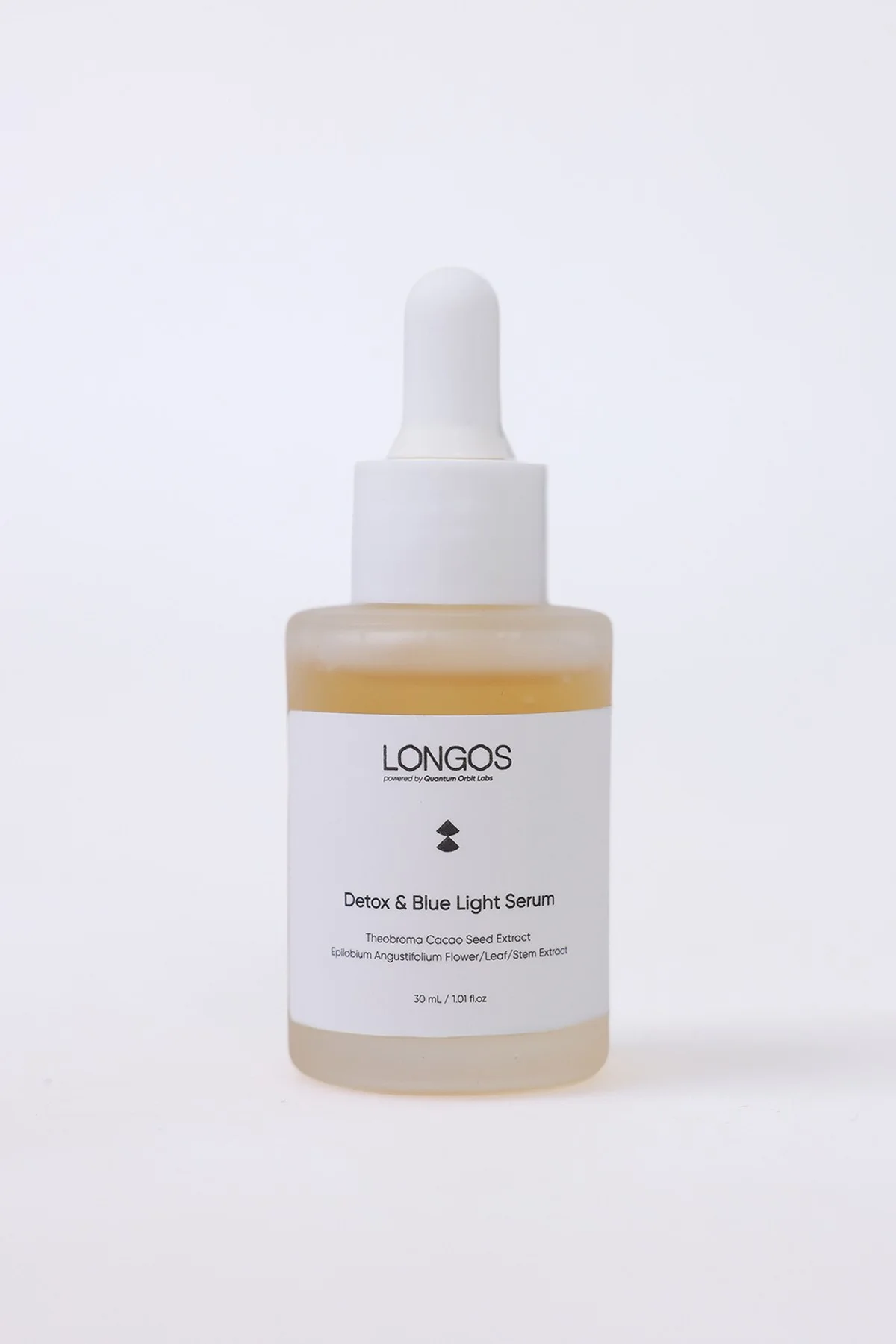
- Part of the full protocolDetox & Blue Light
- Extracts of Baikal skullcap (Scutellaria baicalensis) root, cocoa seed and Epilobium angustifolium. Baicalin, a compound found in Scutellaria, reduced skin inflammation in a mouse study when applied as a cream; this is not conclusive evidence for human skin.[17]
Starter suggestion: three unhurried steps
- 1Patch test Soothing on your inner arm, then use it on its own in the evenings.
- 2If your skin feels comfortable, use it together with Longos Sense's cryotherapy mode.
- 3Add Moisturizing if you have dryness, and Detox & Blue Light for city stress, each one again with a patch test and one at a time.
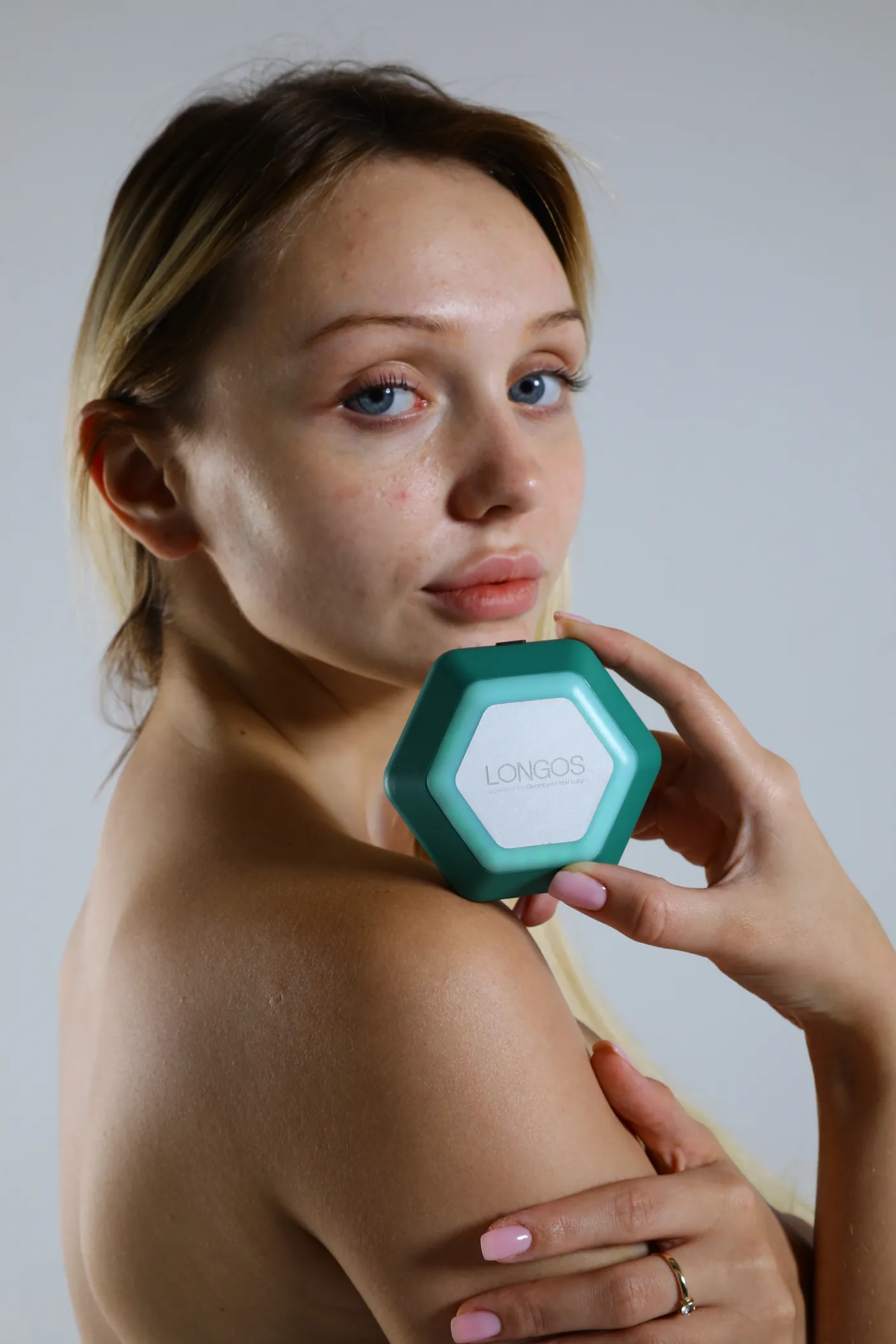
Experts and the lab
Soothing is 4.5× more active with Detox & Blue Light and the full protocol.[18]
Soothing's electrochemical activity was measured in three stages: the serum on its own, with Longos Sense, and with the full protocol. In the full protocol, Soothing was applied together with Detox & Blue Light, using light, cold application and radiofrequency.
Measurement protocol
- Yellow LED
- Cold application
- Radiofrequency vibration
- Soothing on its own 13 µA
- With Longos Sense 15 µA
- With Detox & Blue Light and the full protocol 59 µA
What does µA mean?
Microampere: a unit of electric current that reflects the electrochemical activity of the serum's active ingredients. The higher the value, the higher the measured activity.
Measured electrochemically in the laboratories of Yıldız Technical University and Dokuz Eylül University, with contributions to the scientific work from AGON Biotechnology and Bioİzmir. This is a controlled laboratory observation, not a test on skin, and it makes no claim of medical diagnosis or treatment.
Frequently asked questions
About sensitivity and redness
Is sensitive skin a disease?
No. Experts describe sensitive skin as a syndrome, meaning a set of symptoms that occur together: stinging, burning or itching in response to stimuli that should not normally cause discomfort. It is not caused by an allergy or the immune system. It can, however, occur alongside rosacea, eczema or allergies, so if you have persistent redness, swelling or a rash, see a dermatologist.
Which ingredients should I avoid with sensitive skin?
The main irritants experts list are fragrance and essential oils, alcohol, acid exfoliants such as alpha hydroxy acids, propylene glycol, high levels of preservatives and strong foaming agents. That doesn't mean every one of them bothers everyone; a trigger diary and patch testing help you draw up your own list.
Is the cryotherapy mode safe for sensitive skin?
The cryotherapy mode cools your skin without ice touching it, and the app sets the duration. Keep your first sessions short and watch how your skin responds. If you have cold-induced hives, Raynaud's syndrome (fingers that turn white, then blue, in the cold) or any other hypersensitivity to cold, ask your doctor before using it.
I've been diagnosed with rosacea. Can I use Soothing?
Rosacea is a medical condition; diagnosing and treating it is a dermatologist's job. If your doctor agrees, you can use Soothing as supportive care after a patch test. The serum is not a medicine and does not replace treatment.
My patch test left some mild redness. What should I do?
Stop the product, rinse the area with lukewarm water and don't rub. If the redness fades quickly, the product may simply be too irritating for you. If you notice itchy bumps, swelling or a reaction spreading beyond the test area, see a dermatologist; a standard patch test can show which substance you react to.
When will I notice a difference?
You'll feel the coolness during the session. The barrier recovers more slowly: in studies of ceramide care, the first differences were measured within weeks. If you repeat the skin analysis in the app under the same light, you can follow the change in photos.
References
Sources for the information on this page
Studies published in peer-reviewed journals, alongside Quantum Orbit Labs' own laboratory measurements. The numbers in square brackets in the text link to this list.
- 1.Chen W, Dai R, Li L. The prevalence of self-declared sensitive skin: a systematic review and meta-analysis. Journal of the European Academy of Dermatology and Venereology. 2020;34(8):1779-1788. pubmed.ncbi.nlm.nih.gov
- 2.Misery L, Ständer S, Szepietowski JC et al. Definition of sensitive skin: an expert position paper from the special interest group on sensitive skin of the International Forum for the Study of Itch. Acta Dermato-Venereologica. 2017;97(1):4-6. pubmed.ncbi.nlm.nih.gov
- 3.Huet F, Misery L. Sensitive skin is a neuropathic disorder. Experimental Dermatology. 2019;28(12):1470-1473. pubmed.ncbi.nlm.nih.gov
- 4.Misery L, Weisshaar E, Brenaut E et al. Pathophysiology and management of sensitive skin: position paper from the special interest group on sensitive skin of the International Forum for the Study of Itch (IFSI). Journal of the European Academy of Dermatology and Venereology. 2020;34(2):222-229. doi.org
- 5.Buhé V, Vié K, Guéré C et al. Pathophysiological study of sensitive skin. Acta Dermato-Venereologica. 2016;96(3):314-318. pubmed.ncbi.nlm.nih.gov
- 6.Cho HJ, Chung BY, Lee HB et al. Quantitative study of stratum corneum ceramides contents in patients with sensitive skin. Journal of Dermatology. 2012;39(3):295-300. pubmed.ncbi.nlm.nih.gov
- 7.Weiss E, Katta R. Diet and rosacea: the role of dietary change in the management of rosacea. Dermatology Practical & Conceptual. 2017;7(4):31-37. pubmed.ncbi.nlm.nih.gov
- 8.Brenaut E, Barnetche T, Le Gall-Ianotto C et al. Triggering factors in sensitive skin from the worldwide patients' point of view: a systematic literature review and meta-analysis. Journal of the European Academy of Dermatology and Venereology. 2020;34(2):230-238. pubmed.ncbi.nlm.nih.gov
- 9.Alinaghi F, Bennike NH, Egeberg A, Thyssen JP, Johansen JD. Prevalence of contact allergy in the general population: a systematic review and meta-analysis. Contact Dermatitis. 2019;80(2):77-85. pubmed.ncbi.nlm.nih.gov
- 10.Uter W, Aerts O, Agner T et al. European Society of Contact Dermatitis guideline for diagnostic patch testing: recommendations on best practice (update 2026). Contact Dermatitis. 2026;95(3):237-275. pmc.ncbi.nlm.nih.gov
- 11.Tan J, Almeida LMC, Bewley A et al. Updating the diagnosis, classification and assessment of rosacea: recommendations from the global ROSacea COnsensus (ROSCO) panel. British Journal of Dermatology. 2017;176(2):431-438. academic.oup.com
- 12.Gether L, Overgaard LK, Egeberg A, Thyssen JP. Incidence and prevalence of rosacea: a systematic review and meta-analysis. British Journal of Dermatology. 2018;179(2):282-289. pubmed.ncbi.nlm.nih.gov
- 13.Hannuksela M, Salo H. The repeated open application test (ROAT). Contact Dermatitis. 1986;14(4):221-227. pubmed.ncbi.nlm.nih.gov
- 14.Nojiri H, Ishida K, Yao X, Liu W, Imokawa G. Amelioration of lactic acid sensations in sensitive skin by stimulating the barrier function and improving the ceramide profile. Archives of Dermatological Research. 2018;310(6):495-504. pubmed.ncbi.nlm.nih.gov
- 15.Garg A, Chren MM, Sands LP et al. Psychological stress perturbs epidermal permeability barrier homeostasis: implications for the pathogenesis of stress-associated skin disorders. Archives of Dermatology. 2001;137(1):53-59. pubmed.ncbi.nlm.nih.gov
- 16.Johnson JM, Kellogg DL Jr. Local thermal control of the human cutaneous circulation. Journal of Applied Physiology. 2010;109(4):1229-1238. pubmed.ncbi.nlm.nih.gov
- 17.Wu J, Li H, Li M. Effects of baicalin cream in two mouse models: 2,4-dinitrofluorobenzene-induced contact hypersensitivity and mouse tail test for psoriasis. International Journal of Clinical and Experimental Medicine. 2015;8(2):2128-2137. pmc.ncbi.nlm.nih.gov
- 18.Quantum Orbit Labs. Electrochemical laboratory measurements of Longos Sense and the serums. Laboratories of Yıldız Technical University and Dokuz Eylül University; with contributions from AGON Biotechnology and Bioİzmir. quantumorbitlabs.com/en/clinical-evidence
A calm start
Where to start with sensitive skin
Longos Sense and three serums for sensitive skin, added one after another. Bring each one into your routine on its own, after a patch test; the skin analysis in the app tells you which one to start with.
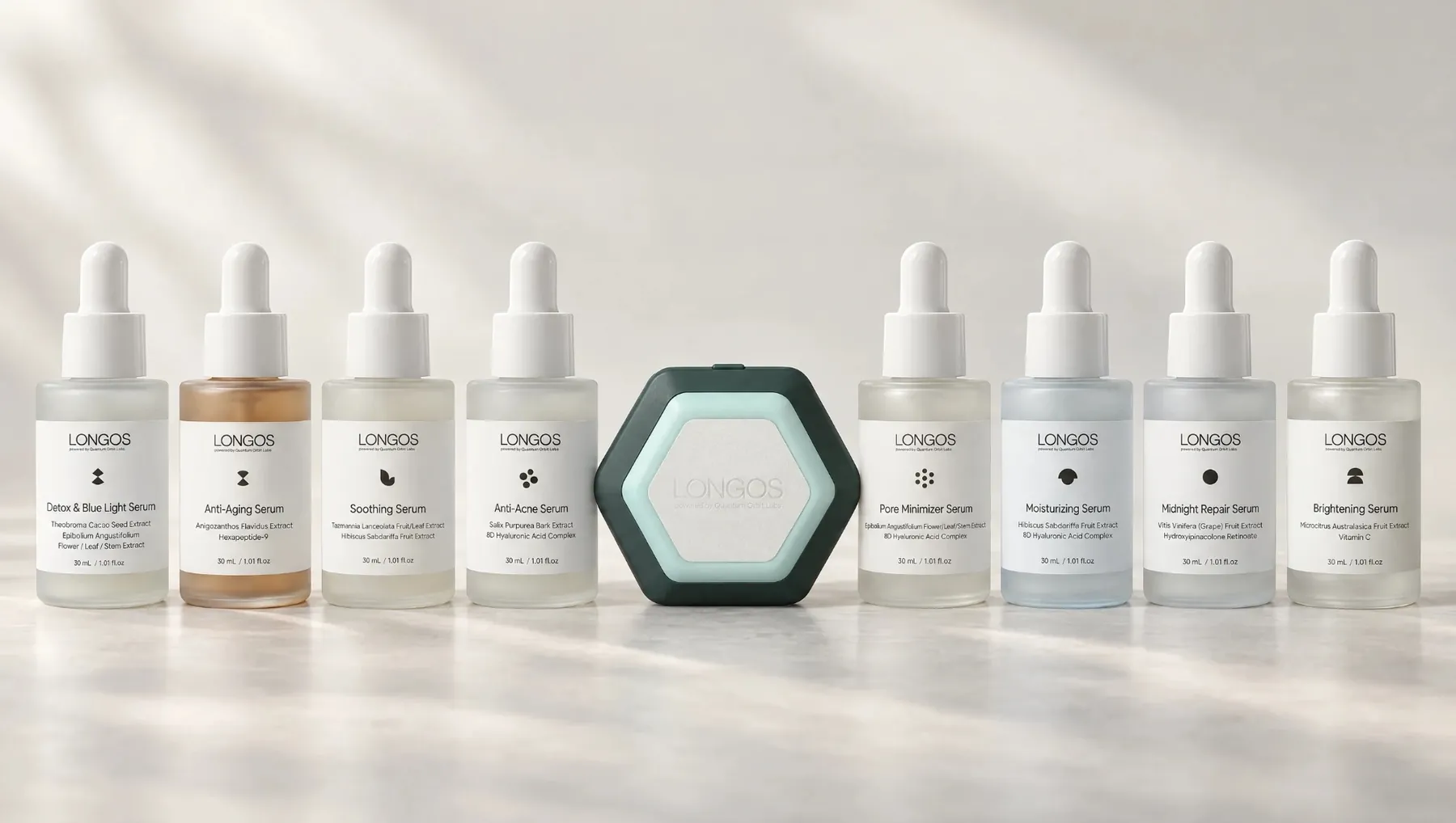
Longos Sense set
Cryotherapy, Quantum Light and Radiofrequency in one device. The app analyses your skin and chooses the mode and duration; the set includes all three of these serums.
Explore the set-
Step 1
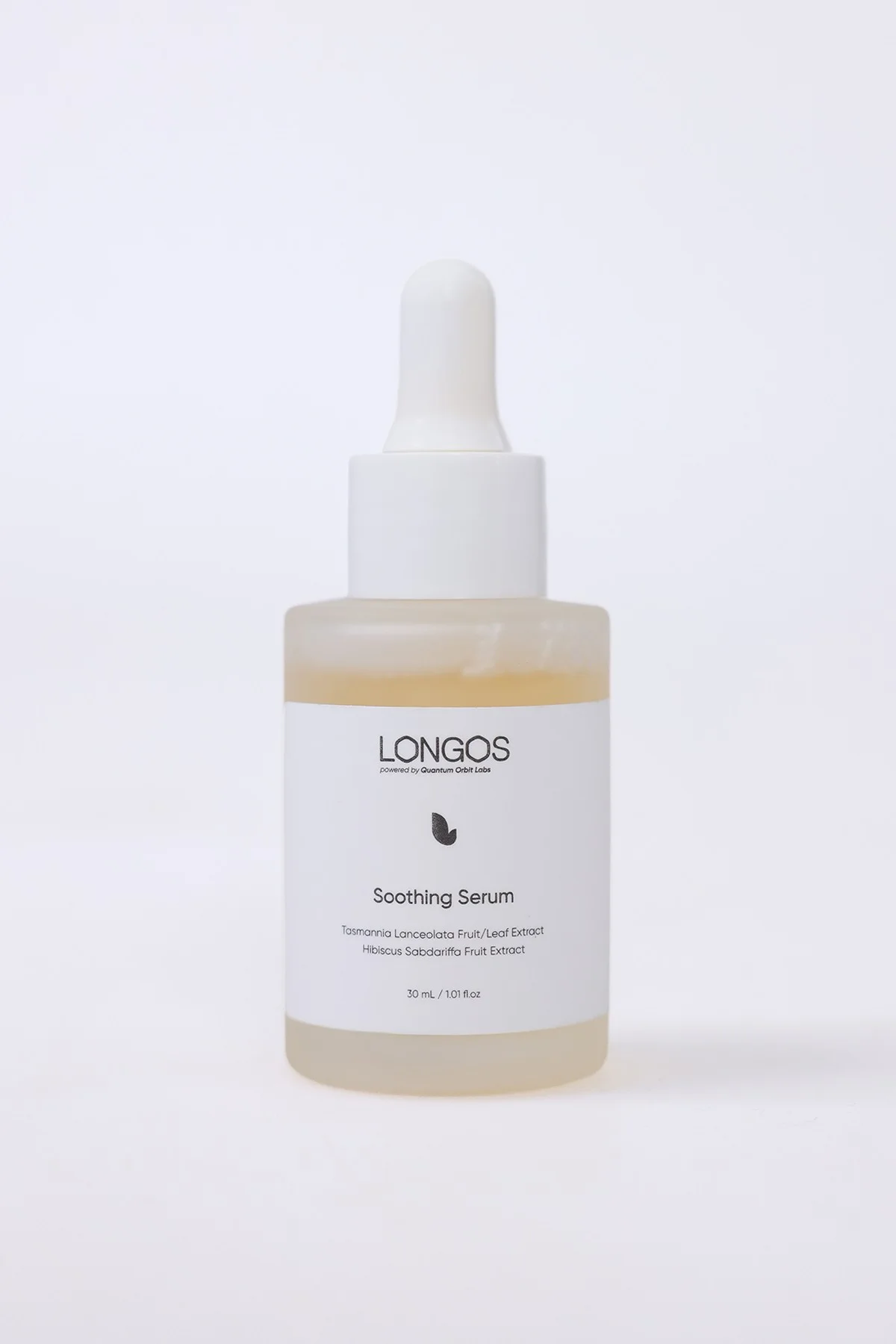
First step · Calming
Soothing serum
Ceramide 3 and Tasmanian pepper extract. Applied in the same session as Longos Sense's cryotherapy mode.
Cryo -
Step 2
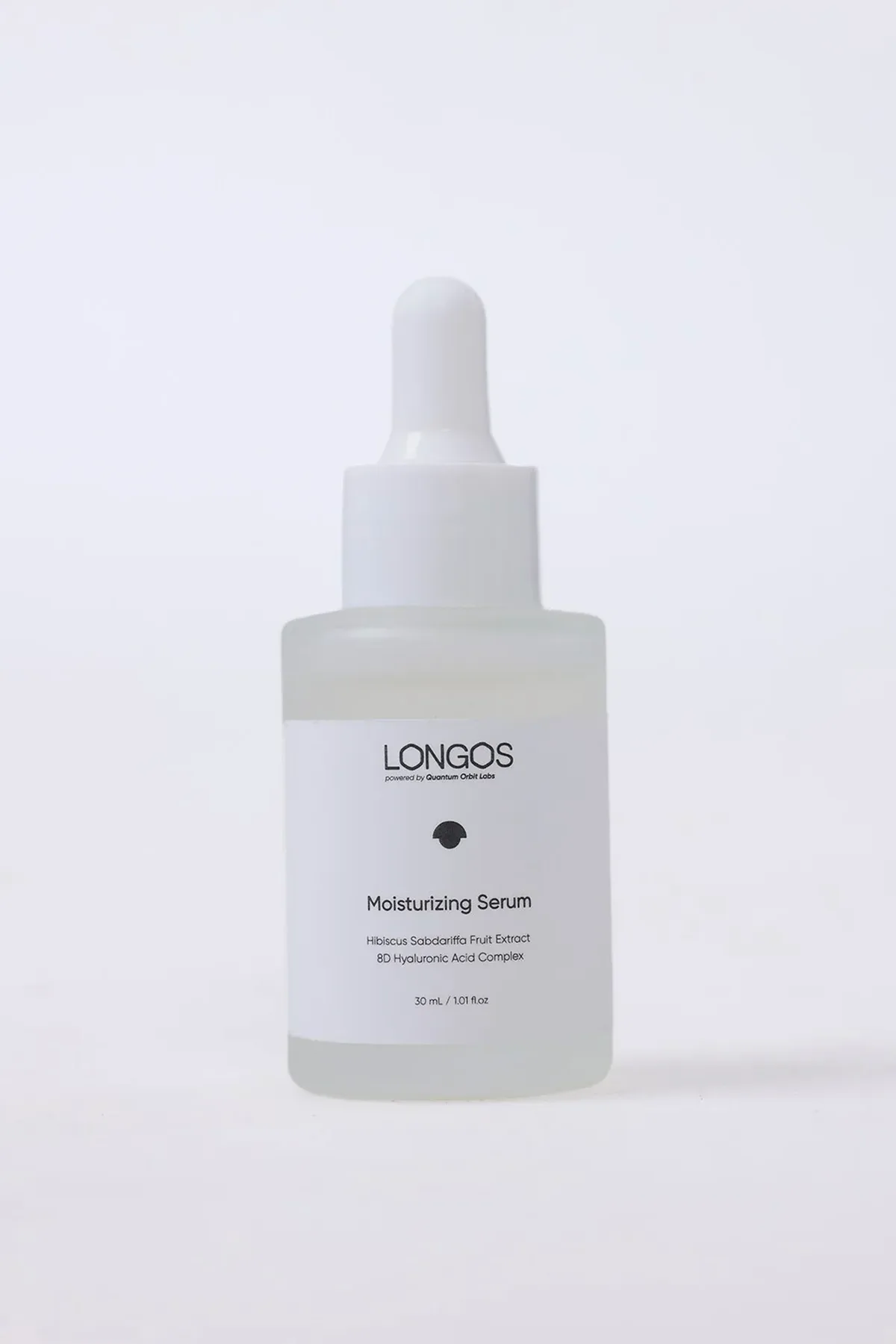
If dryness comes with it · Moisture
Moisturizing serum
8D hyaluronic acid complex, hibiscus and Irish moss. Adds moisture support when skin feels tight.
Red light Thermal Vibration -
Step 3
In the full protocol · City stress
Detox & Blue Light serum
Scutellaria baicalensis, cocoa and Epilobium extracts. Paired with Soothing in the full protocol, this serum gave the highest response in the lab.
Ultrasonic
Start small this week: take the first step from your diary and begin a patch test on your inner arm with the serum you've chosen. Run the skin analysis in the app once today; when you repeat it in the same light two weeks from now, you'll see the difference in your photos and your skin score.
Start your skin analysis