
blue light
At-home LED light therapy: which wavelength does what, how long results take and who should avoid it
What does at-home LED light therapy actually do to your skin?
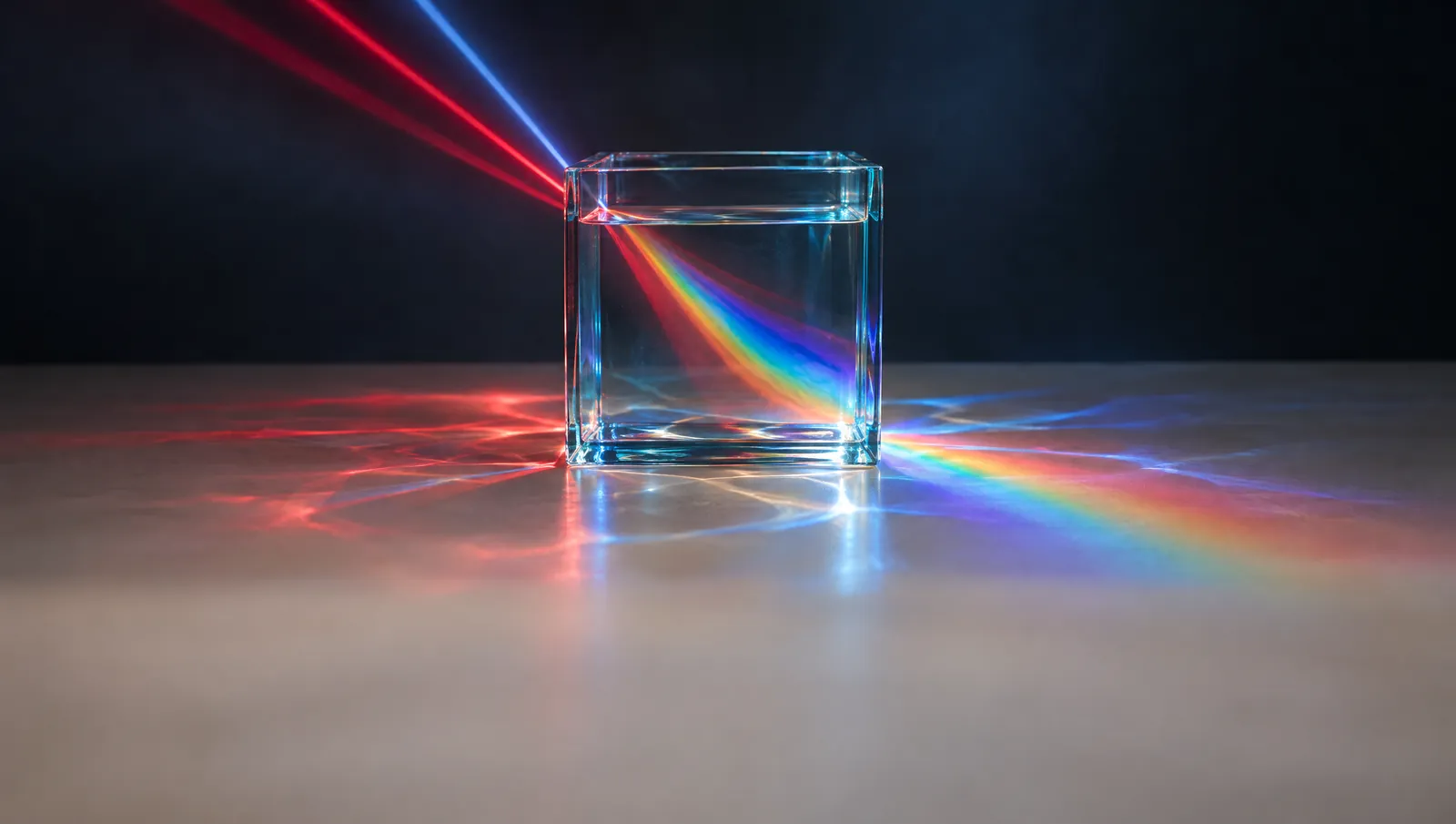
When you place an LED mask on your face for the first time, what you feel is often no more than a gentle warmth. The real work happens where you cannot see it. Light at specific wavelengths is absorbed by light-sensitive molecules inside your cells, and these molecules convert that light into a biological signal. Scientists call this process photobiomodulation.
The most important molecule that picks up this signal is cytochrome c oxidase, an enzyme found in the mitochondria. According to a 2018 review by dermatologist Daniel Barolet, this enzyme's absorption peaks sit in the red and near-infrared wavelengths. When the enzyme absorbs light, electron transport, oxygen consumption and the production of ATP, the cell's energy molecule, all increase. Barolet emphasizes that this effect becomes especially pronounced in cells that are under stress or low on oxygen, and that it supports repair processes.
Two points need to be clear from the start. First, LED light therapy does not use ultraviolet light; as Cleveland Clinic notes, it therefore does not cause sunburn-like damage to the skin. Second, the effect here is not a heat effect. Light works not by warming the skin but by sending a signal to the cell's energy production. That is why the idea that "a device that feels warmer is more powerful" is misleading.
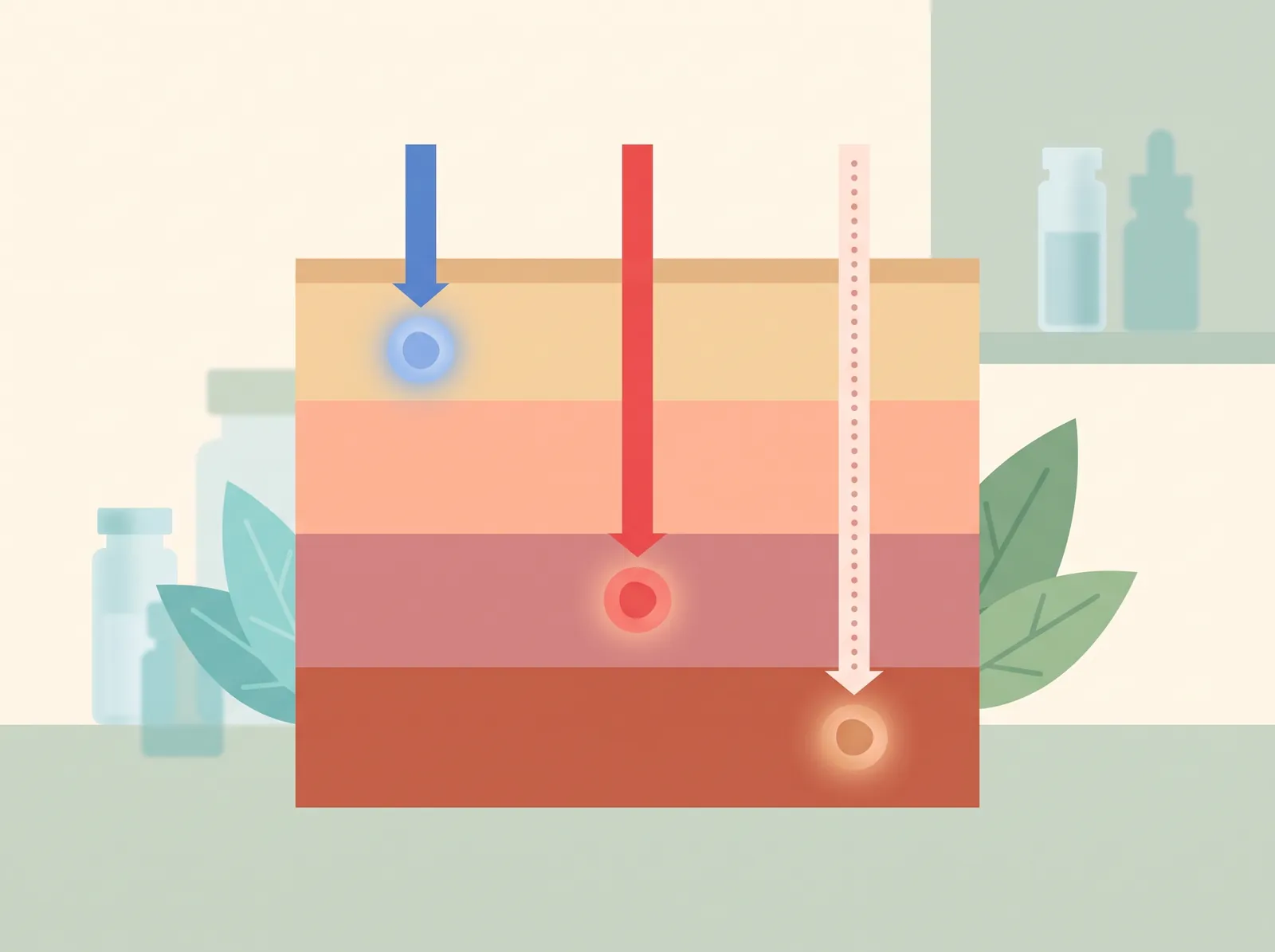
The color of the light also determines which layer of the skin it reaches. According to Cleveland Clinic, blue light affects the top layer of the skin, yellow light goes slightly deeper, red light travels deeper still and near-infrared light reaches the deepest. Which color you choose depends on the concern you are targeting.
Red, blue, near-infrared: which wavelength does what?
| Light | Approximate wavelength | Layer reached | Most studied for | Evidence status |
|---|---|---|---|---|
| Blue | Around 415 nm | Top layer | Acne-prone skin | Small randomized trials |
| Yellow (amber) | Around 590 nm | Slightly below blue | Redness, sensitivity | Limited |
| Red | 610-660 nm | Deeper layers | Fine lines, collagen, inflammation | Controlled studies |
| Near-infrared | 800-850 nm | Deepest | Repair, deep tissue | Limited in home devices |
Red light is the most studied color for wrinkles and collagen. Cleveland Clinic reports that experts believe red LED light may reduce inflammation and stimulate collagen production. This effect shows up in the appearance of fine lines and the smoothness of skin texture.
Blue light is used on acne-prone skin. According to Cleveland Clinic, blue LED light can destroy the bacteria that contribute to acne. Its effect stays at the surface of the skin, so think of it for controlling active breakouts, not for deep wrinkles. Also keep in mind that blue light can leave long-lasting dark spots on darker skin tones.
Near-infrared light is invisible to the eye and reaches the deepest. Many devices offer it together with red light. Barolet's review notes that the absorption peaks of cytochrome c oxidase lie in the near-infrared as well as in the red. In short, the two colors drive the same mechanism at different depths.
Yellow and green light present a less clear picture. While yellow light is known to penetrate deeper than blue light, clinical data on its effect on redness and sensitivity are far more limited than for red and blue light. Green light is usually marketed as an anti-pigmentation option, but no strong clinical study supports this claim. If a device offers seven colors, bear in mind that a good share of them may have been added for variety rather than on the strength of the evidence.
What does the evidence say? Controlled studies on wrinkles, collagen and acne

Wrinkles and collagen. A controlled study published in 2014 in the journal Photomedicine and Laser Surgery examined the effect of red light on the skin using measurable parameters. The study by Alexander Wunsch and Karsten Matuschka enrolled 136 volunteers, 128 of whom completed follow-up. One group received mainly red light in the 611-650 nanometer range, while another received broad-spectrum light spanning 570-850 nanometers. Sessions took place twice a week, reaching a total of 30 sessions.
Results were measured in four ways: collagen density by ultrasound, surface roughness around the eyes, the volunteers' own assessments and wrinkle ratings by three physicians who reviewed the photos without knowing which group they belonged to. In the red light group, collagen density increased and skin roughness decreased significantly. The physicians reported that wrinkles looked better in 69% of volunteers in the red light group; in the untreated control group, this figure was just 4%. No serious side effects were observed during the study.
It is also worth knowing this study's limitations. The research was funded by the company that supplied the light systems, and the control group was neither randomly selected nor given a sham light treatment. Even so, the fact that some measurements were made with objective methods such as ultrasound and surface scanning makes the results more valuable than those of studies based on perception alone. Another notable finding was that broad-spectrum light offered no advantage over red light alone. More colors did not mean better results.
Acne. A small systematic review published in JAMA Dermatology in 2025 and summarized in JAMA's news section examined at-home LED devices for mild to moderate acne. Data from 216 participants across six randomized trials were pooled. Compared with control groups, the LED devices produced greater change in both inflammatory and non-inflammatory lesions. The authors stressed that the devices may be safe and effective, but that more research is needed to confirm this.
The difference between home and clinic devices. Cleveland Clinic notes that in-clinic LED treatment is more powerful than home devices and therefore delivers more effective results. Dramatic anti-aging or acne-reducing results should not be expected from LED masks and handheld devices. This does not mean home devices do not work. It means the effect arrives more slowly and depends on regular use. The strength of at-home LED light therapy shows not in a single session but in a routine kept up without interruption over weeks.
Why does dose matter? Wavelength, light intensity and energy
Two LED devices can emit the same color of light yet deliver very different amounts of energy to your skin. Barolet's review emphasizes that the parameters producing the best response in photobiomodulation are defined within specific ranges, and that total energy and light intensity are especially important. When evaluating a device, you only need to know three concepts:
- Wavelength (nm): Determines the color of the light and which layer of the skin it reaches. A serious device clearly states the wavelength, in nanometers, at which its red light operates.
- Light intensity (mW/cm²): Shows the light power falling on each square centimeter of skin.
- Energy dose (J/cm²): The total energy reaching each square centimeter of skin during one session. It is calculated from light intensity and session length.
The math is simple: energy dose equals light intensity multiplied by time in seconds. For example, a device operating at 10 mW/cm² delivers 9 J/cm² of energy to every square centimeter of skin in a 15-minute (900-second) session. Using the same device for 30 minutes doubles the dose, which is often more than necessary.
A concrete example: in the Wunsch and Matuschka study, light intensity in the red light group was 5.9-13.3 mW/cm², energy per session was 8.5-9.6 J/cm² and session length was 12-25 minutes. These values are not a prescription. They show the ranges within which a protocol that achieved measurable results operated.
The practical lesson is this: extending the session on your own does not speed up results. The duration a device recommends is set according to that device's light intensity. In a method where parameters work best within specific ranges, going outside the range may only increase the risk of irritation instead of adding benefit.
Which light suits your skin type?
The same device should be used differently on different skin types. The guide below summarizes which light makes the most sense for which skin, based on the evidence covered so far.
Dry and mature skin. If your priority is fine lines and firmness, red light is the natural starting point, since it has the most data on collagen. Because dryness makes fine lines look more pronounced, moisturizing after each session matters even more for this skin type.
Oily and acne-prone skin. Blue light can be considered for active breakouts and red light for calming inflammation. Randomized studies on acne with at-home LED devices cover mild to moderate acne. In cystic or widespread acne, light does not replace treatment from a dermatologist, but it can complement it.
Sensitive and redness-prone skin. Red light stands out for this skin type because of its potential to reduce inflammation. Still, during the first weeks it is wise to keep sessions at the lower end of what your device recommends and watch how your skin responds. If you have visible capillaries, track any changes closely.
Pigmentation-prone and darker skin. For this skin type, the preference should lean toward red light. Because blue-violet light has been shown to cause pigmentation lasting months in skin types III and IV, do not use blue light mode without a doctor's recommendation if you are prone to melasma or post-acne marks.
Combination skin. The concern varies by zone, for example breakouts in the T-zone and dryness on the cheeks. With handheld devices you can choose a different light for each area. If you use a mask, decide based on your skin's dominant concern.
How to use LED light therapy at home: a step-by-step session plan
Instructions for home devices vary widely. According to Cleveland Clinic, some devices call for 30-60 minute sessions twice a day for four to five weeks, while others consider a few minutes a day enough. That is why the first rule is to follow your own device's instructions. The steps below make each session safer and more effective, whichever device you use.
- Cleanse your skin. Makeup, sunscreen and oil can make it harder for light to reach the skin. Before the session, gently cleanse your face and pat it dry.
- Protect your eyes. Cleveland Clinic recommends wearing sunglasses or protective goggles for home use. Do not shine light directly at the eye area, and if you use a mask, pay attention to the design of the eye openings.
- Keep distance and duration consistent. Always hold a handheld device at the same distance from your skin, because the energy reaching your skin changes as the distance changes. Use the device's timer to control duration.
- Be consistent. Results come from regular repetition. Decide at the start how many sessions you will do each week and put them in your calendar.
- Carry on with your routine. After the session you can move on to your serum and moisturizer. If you will be going outside during the day, do not skip sunscreen.
- Document your progress. Take a photo every two weeks in the same light and from the same angle. Because change comes slowly, photos reveal what your eye cannot catch.
When should you expect results? In the Wunsch and Matuschka study, measurements were taken after 30 sessions, that is, after a period of roughly 15 weeks at two sessions a week. Cleveland Clinic also notes that even in a clinic, meaningful results usually require a series of weekly sessions lasting about a month, followed by maintenance sessions. So it is normal not to see a clear difference in the first two weeks at home. Waiting for at least two to three months of regular use before judging is more realistic.
Is at-home LED light therapy safe? Who should avoid it?
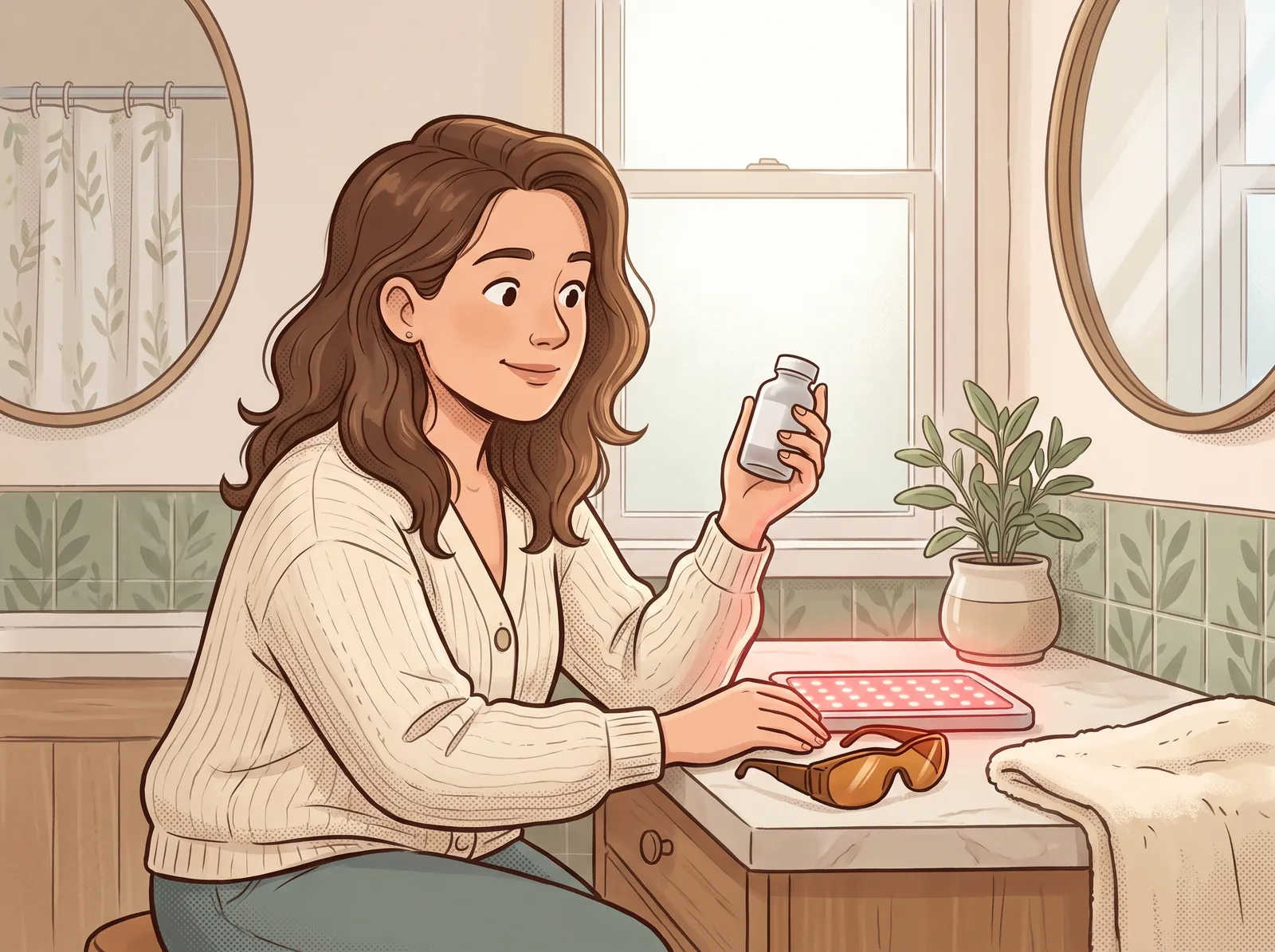
The overall picture is reassuring. According to Cleveland Clinic, side effects from LED light therapy are rare; possible effects include increased inflammation, rash, redness and pain. The institution also notes that less is known about its long-term safety. In some situations, however, light therapy is not suitable or calls for consulting a doctor first.
People taking medication that causes light sensitivity. Cleveland Clinic advises people taking medications that increase sensitivity to sunlight to avoid LED light therapy, naming isotretinoin and lithium as examples. Some antibiotics and other medications can also cause light sensitivity. If you take a medication regularly, consult your doctor or pharmacist before you start using a device.
People with certain health histories. The same source also lists people with a history of skin cancer and those with hereditary eye diseases among the groups for whom LED light therapy is not suitable.
Darker skin and a tendency toward pigmentation: be careful with blue light. This is the least known but perhaps the most important point. In a study published in 2014 in the journal Pigment Cell & Melanoma Research, Duteil and colleagues showed that 415 nanometer blue-violet light caused dose-dependent pigmentation in volunteers with skin types III and IV, while 630 nanometer red light did not. The pigmentation caused by blue light was more pronounced than that caused by UVB and lasted up to three months. If you are prone to melasma or post-acne marks, use blue light mode only on a doctor's recommendation. Red light is the safer option in this respect.
Irritated, broken or infected skin. If you have an active wound, an eczema flare-up or an infection, postpone sessions until your skin has healed.
Pregnancy. There is not enough research on at-home LED use during pregnancy. During this time, the best course is to consult your doctor before starting a new device.
One detail from the Wunsch study is also worth noting. A volunteer with dilated facial capillaries noticed that the vessels looked more prominent during the sessions. If your skin has capillary concerns, watch the effect of each session closely and take a break if you notice any change.
6 criteria to check when buying an LED mask or device
There are hundreds of devices on the market, and most are sold with similar promises. Look past brand names and check these criteria instead:
- Is the wavelength clearly stated? A serious device specifies the wavelength, in nanometers, for each color. A product that only says "red light" or "7 colors" is not really telling you what it targets.
- Is there information on light intensity and dose? If a value is given in mW/cm² or J/cm², you can compare the device with protocols that achieved measurable results.
- Timer and auto shut-off. A device that switches itself off when the time is up prevents overuse.
- Eye safety. Does the device come with protective goggles, and does the design around the eye area keep light from shining directly into the eyes? The answer to this question should be clear.
- Safety certification and manual. For electrical devices sold in Europe, the CE mark is a basic indicator. A user manual that clearly sets out safety warnings and who should not use the device is also a sign of quality.
- Coverage and ease of use. Does the mask cover the whole face at an even distance, and is the handheld device designed for targeted use? A device that is hard to use is also hard to use regularly, and with this method, consistency is everything.
Combining LED light therapy with serums and your daily routine
Light alone is not a routine. The best results come from a regimen that supports your target concern in different ways: light provides an energy signal at the cellular level, serum delivers the targeted active ingredient and sunscreen protects the gains.
A few practical principles:
- Match by goal. For fine lines and firmness, consider pairing red light with a serum containing collagen-supporting peptides. On acne-prone skin, use blue light together with a serum formulated for that skin type. For uneven tone, choose red light and a tone-evening serum, and on pigmentation-prone skin, stay away from blue light.
- Be careful with sensitizing products. Products containing retinoids or acids can make skin more sensitive. If you use them, watch how your skin reacts after a session; if redness increases, use these products and light on separate days.
- Do not skip sun protection. The most effective way to protect the gains you make with light therapy is daily sun protection. For pigmentation-prone skin, products with physical filters that also protect against visible light stand out.
Longos Sense's approach is built on these principles. The device's Quantum Dot light technology directs light at controlled, pure wavelengths, and this is its key difference from broad-spectrum devices with unclear wavelengths. The AI skin analysis in the app evaluates your skin type, moisture and oil balance, elasticity, pores and dark spots, then recommends the serum and device mode that suit you. The device's ultrasonic waves help the active ingredients in the serum reach the skin. For fine lines, Hexapeptide-9 in the Anti-Aging Serum targets firmness and fine lines; for uneven tone, the stabilized 3-O-Ethyl Ascorbic Acid in the Brightening Serum helps reduce the appearance of dark spots.
The 7 most common mistakes when using LED at home
- Extending the session. A longer session does not mean a greater effect. The dose is calibrated to the device's light intensity.
- Not protecting your eyes. Skipping protective goggles or shining light directly at the eye area is the easiest mistake to avoid.
- Using it irregularly. Random, once-a-week sessions do not replace a consistent protocol. The effect builds through repetition.
- Using blue light on pigmentation-prone skin. On darker skin or skin prone to melasma, blue light can disrupt the very tone you want to improve.
- Stacking sensitizing products all at once. Starting retinoids, acids and light therapy at the same time also makes it harder to tell what is causing irritation. Add one new thing at a time.
- Judging results after two weeks. In controlled studies, measurements were taken at the end of session series lasting months. Giving up early means abandoning a routine that could have worked.
- Skipping sun protection. Leaving the skin you are supporting with light therapy unprotected in the sun every day undoes your effort.
Realistic expectations: what LED light can and cannot do
Used correctly, at-home LED light therapy is a low-risk method that may help improve the appearance of fine lines, skin texture and breakouts on acne-prone skin. It is not a method that erases deep wrinkles, lifts sagging skin on its own or transforms your skin in a few sessions. Remember that clinic devices are more powerful than home devices and that the strongest evidence exists for red and blue light.
The winning formula is clear:
- A wavelength suited to your goal: red for wrinkles and collagen, blue for acne.
- Regular sessions that stick to the duration your device recommends.
- Eye protection and a check in advance that it is right for you.
- A serum matched to your goal and daily sun protection.
- Patience of at least two to three months.
If you are not sure where to start, the first step is getting to know your skin. Tonight, on freshly cleansed skin with no products applied, run the AI skin analysis in the Longos Sense app once. From there, you can see which light mode and which serum suit your skin.
Frequently Asked Questions
Can I do at-home LED light therapy every day?
That depends on the device you use. According to Cleveland Clinic, some home devices call for 30-60 minute sessions twice a day for four to five weeks, while others consider a few minutes a day enough. That is why the first rule is to follow your own device's instructions. Extending the session on your own does not speed up results; the duration a device recommends is set according to that device's light intensity.
Does LED light therapy contain UV, and can it harm the skin?
LED light therapy does not use ultraviolet light, so it does not cause sunburn-like damage to the skin. According to Cleveland Clinic, side effects are rare; possible effects include increased inflammation, rash, redness and pain. Because less is known about its long-term safety, it is important to use eye protection and to check in advance whether it is right for you.
When do you see results from at-home LED light therapy?
The effect comes slowly and depends on regular use. In the Wunsch and Matuschka study, measurements were taken after roughly 15 weeks at two sessions a week. Cleveland Clinic also notes that even in a clinic, meaningful results require a series of weekly sessions lasting about a month. It is normal not to see a clear difference in the first two weeks at home; waiting for at least two to three months of regular use before judging is realistic.
Can blue light cause dark spots on the skin?
On darker skin, it can. In a study by Duteil and colleagues published in 2014, 415 nanometer blue-violet light caused dose-dependent pigmentation in volunteers with skin types III and IV, while 630 nanometer red light did not. The pigmentation caused by blue light lasted up to three months. If you are prone to melasma or post-acne marks, use blue light mode only on a doctor's recommendation.
Does an LED mask completely get rid of wrinkles?
No. At-home LED light therapy may help improve the appearance of fine lines and skin texture, but it does not erase deep wrinkles or lift sagging skin on its own. In one controlled study, physicians reported that wrinkles looked better in 69% of volunteers in the red light group. Cleveland Clinic, for its part, stresses that dramatic anti-aging results should not be expected from LED masks.
Can LED light therapy be used during pregnancy?
There is not enough research on at-home LED use during pregnancy. During this time, the best course is to consult your doctor before starting a new device. More generally, LED light therapy may not be suitable for you if you take a medication that causes light sensitivity, or if you have a history of skin cancer or a hereditary eye disease.
Clinical evidence

