skin firmness
Radiofrequency or Red Light? Which to Choose for Wrinkles and Firmness, and When
Radiofrequency or red light? The short answer
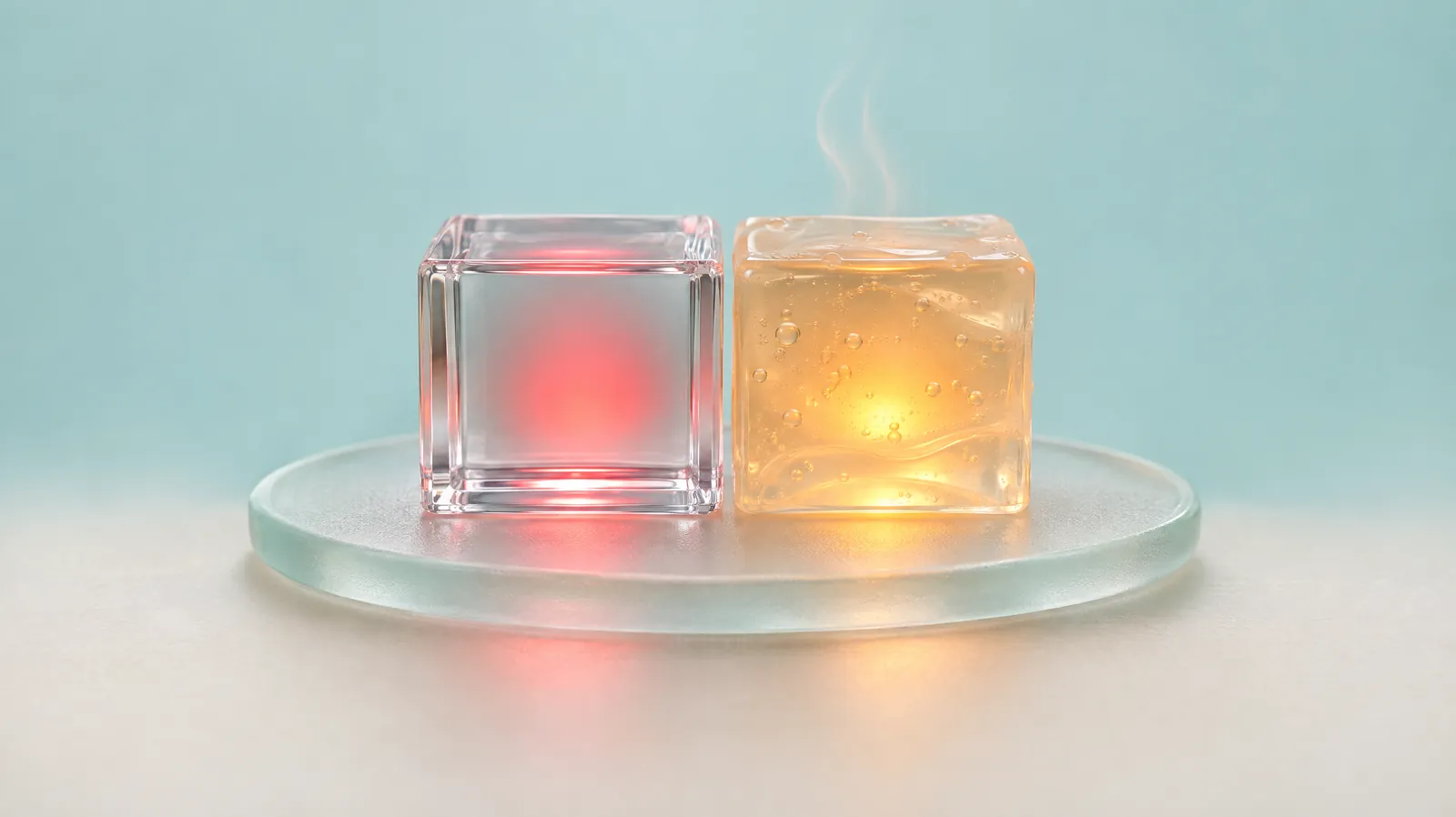
Radiofrequency and red light head for the same goal, younger and fuller-looking skin, by two different routes. Red light reaches the cells as energy without heating the skin, and it is chosen mostly for fine lines, skin texture and glow. Radiofrequency creates a gentle warmth in the dermis and is preferred mostly for laxity and the look of firmness.
The two technologies are not rivals; they complement each other. That is why at-home skincare routines in 2026 often include both.
The right choice starts with knowing what your skin needs right now. Of two people the same age, one may be bothered by fine lines and the other by softening facial contours. The sections below explain in plain words which technology stands out in which situation.
In short
- Fine lines, texture and dullness: Start with red light.
- Laxity starting on the cheeks and jawline: Radiofrequency stands out.
- Both at once: They complement each other because they have different targets.
- When results show: Within weeks with regular use, most clearly at 8-12 weeks.
- The shared rule: Clean skin, the time in the manual and eye protection.
What does red light do in the skin?
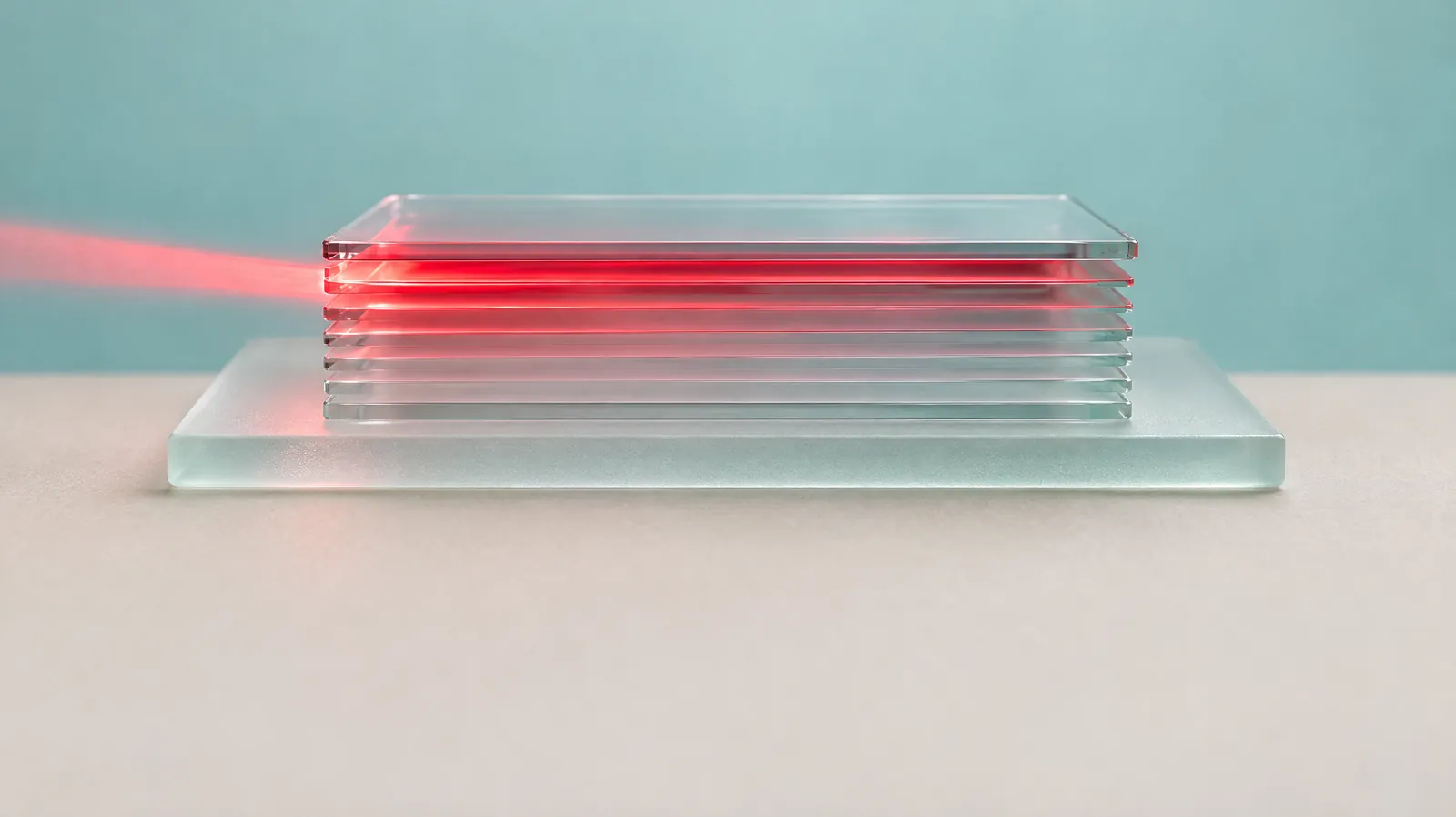
Light turns into energy. Red light (about 630-660 nm) and near-infrared light (about 830-850 nm) are thought to be absorbed by an enzyme in the mitochondria, the energy centres of cells. The cell produces more energy and repair signals speed up. This process is called photobiomodulation.
No heat, no peeling. Red light does not heat the skin, does not peel the surface and does not hurt during use. That is why people with sensitive skin can easily add it to their routine too.
Red versus near-infrared. Red light works mainly in the epidermis and the upper dermis; it is ideal for targets close to the surface, such as fine lines and tone. Near-infrared reaches a little deeper and supports skin quality as a whole. You can find the details of the wavelengths in our guide to red light therapy and quantum dot LED.
Who is it for? For anyone who notices their first fine lines or feels their skin looks dull or tired, red light is an easy place to start. With no heat and no peeling, sessions fit easily into an evening routine; you can even read a book or rest during use.
More is not better. The effect of light depends on the dose: too little light does nothing, and sessions longer than needed do not add benefit. Short, regular sessions give the best results.
What does radiofrequency do in the skin?
The heat starts inside the tissue. Radiofrequency relies on energy applied to the skin turning into heat as it meets the tissue's resistance. In at-home bipolar devices, the current stays between two electrodes, and the gentle warmth forms at a depth of about 1-4 mm, that is, in the dermis.
Collagen remodelling in two steps. The heat first gently tightens the collagen fibres. The skin then enters a repair process, and over the following months new collagen production and the reorganisation of elastic fibres are supported. We explain how collagen holds up the skin in our guide to collagen.
Who is it for? Adults who notice that their facial contours look less defined than before and that their skin bounces back more slowly love radiofrequency the most. Because it feels like a warm massage, many people describe the session as one of the most relaxing moments of their day.
Skin tone makes no difference. Radiofrequency does not target pigment; the heat comes from the tissue's resistance. That is why it is known as a technology suitable for every skin tone.
It feels warm. Feeling a mild warmth during the session is normal. A mild, short-lived pinkness may appear afterwards and usually fades quickly.
At-home versus clinic devices. Clinic radiofrequency works with higher energy and reaches deeper, with sessions spaced weeks apart. An at-home device is designed with lower energy and builds up its effect through regular use. One takes the big step; the other feeds the gains every week. You can find how to choose and use at-home devices in our guide to at-home radiofrequency devices.
The difference between the two technologies in one table
Seeing the two technologies side by side makes the choice easier. The table sums up how they work, what they target and how they are used at home.
| Red and near-infrared light | Radiofrequency | |
|---|---|---|
| How does it work? | Light turns into energy in the cell | Energy turns into gentle heat inside the tissue |
| How deep does it reach? | Epidermis and upper dermis; near-infrared a little deeper | Dermis, about 1-4 mm with at-home devices |
| What does it target most? | Fine lines, texture, glow and skin quality | Laxity, the look of firmness and wrinkles |
| How does it feel? | Like nothing; there is no heat | Mild warmth |
| Typical home routine | Short, frequent sessions | A few sessions a week, kept moving |
| Watch out for | Eyes, medicines that cause light sensitivity | Electronic and metal implants, never resting on one spot |
Which is better for wrinkles?
Red light leads for fine lines. In a double-blind, sham-controlled study, 76 people received two LED sessions a week for four weeks. In the active light groups, wrinkles decreased by up to 36% from baseline, elasticity rose by up to 19%, and skin samples showed more collagen and elastic fibres. A review published in October 2026 that looked at 8 studies with at-home LED devices also reported improvements in wrinkles, texture and elasticity.
Radiofrequency steps in for deepening wrinkles. If a wrinkle is not just a line on the surface and the support beneath it has also weakened, radiofrequency, which creates heat in the dermis, adds strongly to a routine. In studies of at-home radiofrequency, the first changes in wrinkles and roughness usually appear within a few weeks.
A practical way to tell. For fine lines that show when you smile and disappear at rest, and for a dull tone, it makes sense to start with red light. For lines that stay visible when your face is at rest and deepen with laxity, it is better to add radiofrequency to your routine.
A short guide by area.
- Forehead: Red light is a good start for horizontal expression lines; if the lines have deepened, add radiofrequency.
- Around the mouth and laugh lines: Laxity in the cheeks also plays a part here; using radiofrequency and light together is a balanced approach.
- Around the eyes: The skin is very thin. Do not apply the device over the eyes or eyelids, and do not go beyond the area the manual allows.
Which is better for sagging and firmness?
Laxity calls for radiofrequency. How firm skin looks depends largely on the collagen network in the dermis. Because radiofrequency creates heat in this layer, it is the preferred choice for early laxity on the cheeks, jawline and neck.
Red light plays a supporting role. Light supports skin quality, texture and elasticity, but on its own it is not the main tool for firmness. Used together with radiofrequency, it lets the routine target both the skin's surface and the support underneath.
Jawline and neck. With age, the first laxity often shows on the jawline and neck. Moving the radiofrequency head slowly upwards over these areas makes for some of the most productive minutes of the routine.
What happens outside the routine matters too. Sun protection, enough sleep and staying away from smoking protect collagen as powerfully as a device. The device gives its best results when combined with these habits.
Realistic expectations. Early to moderate laxity responds well to a home routine. For marked sagging, clinical procedures are the stronger option; in that case an at-home device is ideal for keeping up care after the clinic. You can find the structure of the dermis in detail in our guide to the dermis.
Can you use them together?
Yes, and the logic is strong. Red light supports cell energy and repair signals without heat, while radiofrequency creates heat in the dermis that targets collagen. One works on the cell, the other on the structure of the tissue.
Studies point the same way. In a comparative study of 30 women with sun damage around the eyes, LED brought the most improvement in wrinkles and radiofrequency in firmness. The group that received both improved in all three areas (texture, wrinkles and firmness), and satisfaction was highest in this group.
How do you combine them in a routine? The easiest way is to spread the two technologies across the week: radiofrequency on some evenings, light on others. A sample week could look like this:
- Monday, Wednesday, Friday: Radiofrequency session.
- Tuesday, Thursday, Saturday: Red light session.
- Sunday: Rest day; just cleansing, moisturiser and sunscreen.
This plan gives each technology its own day and keeps the routine from getting boring. Follow your device's manual for the length and frequency of each technology, and the app's suggestion for how to schedule the two sessions. We cover the bigger picture, together with the other technologies in at-home devices, in our guide to 2026 beauty tech trends.
Which one suits you? Four questions to ask yourself
- What bothers me most in the mirror? If it is fine lines and dullness, light stands out; if it is a loss of firmness, radiofrequency does.
- Are my lines visible even when my face is at rest? If so, light alone may not be enough; add radiofrequency.
- How many evenings a week can I set aside? Short, frequent sessions suit light, and a few focused sessions a week suit radiofrequency. You can also spread both across the week.
- Is there a reason I should not use them? If you have an electronic implant, are pregnant or take a medicine that causes light sensitivity, first read the section on who should not use them and talk to your doctor if needed.
The answers to these four questions give you the backbone of your routine. The rest is consistency and patience.
Which should you start with, by age and skin needs?
- Your 20s and 30s: Red light is a good start for the first fine lines, dullness and a tired look. It is used regularly as a preventive routine; the habit you build now becomes your biggest advantage in the years ahead.
- Late 30s and 40s: If mild laxity has started along with the lines, using both technologies together is the most balanced approach. Light targets the surface, radiofrequency the support beneath.
- 50 and over: Radiofrequency and light together become the foundation of the routine. For marked sagging, they can be considered alongside clinical procedures; a home routine helps keep the look gained in the clinic for a long time.
Age alone does not decide. A 35-year-old skin with a lot of sun exposure may need support earlier than a well-protected 45-year-old skin. The real question is what you most want to change in the mirror: the lines, the firmness, or both?
When do you see results?
Why weeks? Skin is a living tissue that renews itself, and collagen is made slowly. This renewal, supported by light and heat, does not show overnight; it becomes visible as each session builds on the last.
With red light. With regular use, changes in skin texture and glow are usually noticeable in the first weeks. For measurable improvement in fine lines, 4-12 weeks of regular use is a good benchmark.
With radiofrequency. In studies of at-home radiofrequency, the first changes in wrinkles and roughness appeared within a few weeks, and changes in firmness and elasticity mostly around weeks 8-12. Because new collagen forms over months, patience pays off.
Measure your progress. Before you start, take a photo in the same light or run the analysis in your app once; repeat every two weeks. You see the change through comparison, not guesswork.
Keeping the results. After the first intensive 8-12 weeks, it is best to keep the routine going at a lower frequency rather than stopping. Collagen is constantly renewed; regular but less frequent sessions help you keep the look you have gained.
Who should not use them?
Both technologies are safe to use at home when used correctly. Still, in some situations they are not used, or you should talk to a doctor first:
- Radiofrequency: Active electronic implants such as a pacemaker, ICD or insulin pump; a metal implant, plate or screw in the area of use; pregnancy and breastfeeding.
- Red light: Known light sensitivity; medicines that cause light sensitivity (some antibiotics, isotretinoin and similar; talk to your doctor); epilepsy or a history of light-triggered seizures.
- For both: An open wound, active infection or rash in the area of use; under 18. The device is not applied over the eyes or eyelids.
Keep your first session short and watch how your skin responds for a day. If all is well, build up gradually to the time in the manual; if unexpected redness or discomfort appears, take a break and see a dermatologist if needed.
You will find the safety rules for other home technologies too, and what to watch if you take medicines, in our guide to the safety of at-home skincare devices.
Using them correctly at home: step by step
- Cleanse your skin. Remove make-up and cream, then pat your skin dry. Radiofrequency is applied to dry skin.
- Start at a low level. In the first sessions, choose the device's lowest intensity level and watch how your skin responds.
- Keep the radiofrequency moving. Move the head continuously in slow upward circles; do not hold it on one spot. Mild warmth is normal; stop if you feel discomfort.
- Stick to the time with light. Apply red light to each area for the time given in the manual, and keep it away from your eyes.
- Moisturise. Finish the session with your moisturiser.
- Apply sunscreen in the mornings. It is the easiest way to protect the renewal supported by light and heat.
Common mistakes. A few small habits directly affect your results:
- Thinking a longer session is better: For both light and radiofrequency, the time in the manual is enough; more adds no benefit.
- Holding the radiofrequency on one spot: The head should always be moving so the heat spreads evenly.
- Using it irregularly: One long session a week does not replace short sessions spread across the week.
- Deciding without measuring: Instead of looking in the mirror after two weeks and giving up, compare with photos.
- Skipping sunscreen: The sun is one of the factors that wear down collagen fastest.
Both technologies together in Longos Sense
Longos Sense offers red light and radiofrequency in the same device. The user manual defines red light (630 nm) for "improving the appearance of the skin; visually reducing wrinkles and fine lines" and near-infrared light (850 nm) for "supporting the appearance of the skin". The bipolar 1 MHz radiofrequency mode is used for "temporarily warming the skin tissue to improve the appearance of the skin".
According to the manual, the LED mode is applied at most three times a day for 5-10 minutes per area, and the radiofrequency mode 3-4 times a week for 5-10 minutes per session. Radiofrequency is always moved slowly and continuously, the device is used only on the face and neck, and it is not applied over the eyes. The AI analysis in the app tracks your wrinkle and fine line score and personalises your routine. That way, you decide which evenings to focus on light and which on radiofrequency based on data from your own skin, not guesswork.
Where to start this week?
Tonight, in front of the mirror, ask yourself one question: do you most want to change your fine lines, or how firm your face looks? Start with red light for fine lines and dullness, and with radiofrequency for early laxity; if both matter to you, use them together, spread across the week.
Take your starting photo, keep going regularly for 8-12 weeks, and do not skip sunscreen in the mornings. Small but regular steps are the real source of the change you see in the mirror. If you use Longos Sense, track your progress in the app by measuring every two weeks in the same light. This is a skincare guide, not medical advice.
Frequently Asked Questions
Is radiofrequency or red light better for wrinkles?
They do different jobs. Red light stands out for fine lines, skin texture and dullness; the light reaches the cells as energy without heating the skin. Radiofrequency is better suited to wrinkles that deepen along with laxity and to the look of firmness, because it creates a gentle heat in the dermis that targets collagen. In a comparative study, light brought the most improvement in wrinkles and radiofrequency in firmness; those who received both improved in all three areas.
Can radiofrequency and red light be used together?
Yes. Because the two technologies work toward different targets, they complement each other: red light supports cell energy and repair signals, while radiofrequency creates heat in the dermis that targets collagen. The easiest way is to spread them across the week, for example radiofrequency on some evenings and light on others. Follow your device's manual for the length and frequency of each technology, and start at a low level based on how your skin responds.
How many weeks does it take to see the effects of radiofrequency and red light?
With red light, changes in texture and glow are usually noticeable in the first weeks; for measurable improvement in fine lines, 4-12 weeks of regular use is a good benchmark. In studies of at-home radiofrequency, the first changes in wrinkles appeared within a few weeks, and changes in firmness and elasticity mostly around weeks 8-12. To see your progress, take a photo before you start and repeat it in the same light every two weeks.
Does radiofrequency burn the skin, and is it normal to feel warmth?
Feeling a mild warmth is normal; the effect of radiofrequency relies on exactly this heat forming inside the tissue. At-home devices are designed to work with low energy. The basic rule of safe use is to move the head slowly and continuously and never to rest on one spot. Apply the device to dry skin, start at a low level and stop the session if you feel discomfort. A mild, short-lived pinkness may appear after the session.
Can someone with a pacemaker or a metal implant in the face use radiofrequency?
No. People with an active electronic implant such as a pacemaker, ICD or insulin pump, and people with a metal implant, plate or screw in the area of use, should not use radiofrequency. Radiofrequency is also not used during pregnancy and breastfeeding. In these situations, talk to your doctor first about other technologies such as red light too, and check your device's manual for the situations in which it should not be used.
Can you use red light while taking antibiotics or retinol?
Some medicines make the skin more sensitive to light. Tetracycline antibiotics, some quinolones, isotretinoin and some blood pressure medicines are in this group; topical retinoids can also make the skin more sensitive. If you take a medicine like this, talk to your doctor before starting a red light routine. If your skin is sensitive, start at a low level with short sessions, and always protect your eyes from the light.
Clinical evidence