blue light
Are At-Home Skincare Devices Safe? How to Use LED, Radiofrequency and Ultrasound Correctly

Are at-home skincare devices safe? The short answer
Yes. Used correctly, at-home skincare devices are safe, because they are designed from the start with low energy levels that an untrained user can apply on their own. A comprehensive review published in 2026 ranked at-home LED and radiofrequency devices among the home technologies with the best balance of effectiveness and safety.
Almost every documented problem comes from three mistakes: holding a heat-producing mode on one spot of the skin, shining light into the eyes, and using devices meant only for the clinic at home. Avoid these three mistakes and your home device becomes one of the safest parts of your routine.
In short
- LED light: It does not heat the skin. The golden rule is to keep the light away from your eyes.
- Radiofrequency: Gentle warmth is normal. The golden rule is to keep the head moving at all times.
- Ultrasound: The gentle massage in home devices is completely different from focused ultrasound in the clinic.
- Heat and cold: Temperature limits and time rules are the foundation of safety.
- Before you start: Read the manual's list of when not to use the device once.
What separates a home device from a clinic device?
Energy level. Clinic devices run at higher energy and are used under a doctor's supervision. Home devices offer the same technology at levels users can apply safely on their own. They work through regular use, not through the power of a single session.
Strict rules. The US Food and Drug Administration (FDA) places over-the-counter light-based wrinkle devices and over-the-counter radiofrequency devices under separate product codes, in a class that is subject to special controls. For radiofrequency devices, these controls cover overheating tests and studies showing that users can operate the device correctly just by reading the manual. The agency also updated its guidance on low-risk general wellness products on 6 January 2026.
Surface devices versus needle or focused devices. The LED, radiofrequency, ultrasound massage and heat and cold modes used at home work on the skin from the surface. Devices that push needles into the skin or focus energy on a single point deep inside it are a separate group and count as clinical procedures. The same 2026 review linked needle devices used at home with infection problems; surface devices keep the skin intact, so this risk does not arise. Knowing this difference is the first step to staying safe at home.
Using a home device alongside clinical care. A home device and clinical care do not rule each other out. If you are planning a clinical procedure, tell your doctor which device you use at home, and plan together when you can go back to it after the procedure.
Is LED light harmful?
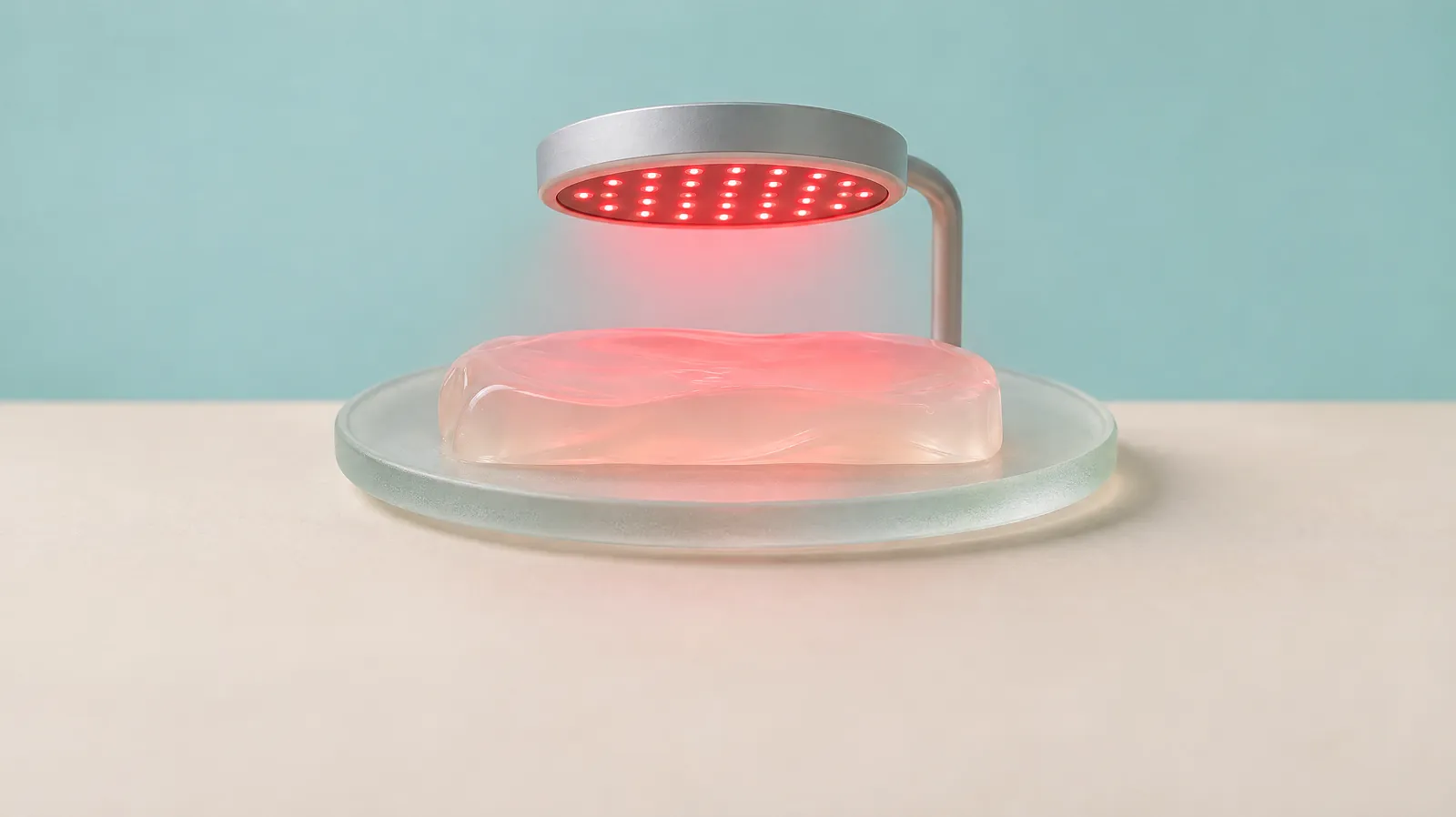
No heat, no peeling. Red and near-infrared LED light does not heat the skin, does not peel the surface and causes no pain during use. That is why light is one of the most comfortable technologies you can use at home.
The safety margins are wide. In randomized studies that explored the safety limits of red LED, the light was generally well tolerated even at several times the doses tested in earlier studies. Problems such as blistering or long-lasting redness appeared only at very high doses and in a few people. Home devices, for their part, are designed for short, regular sessions.
Four things to watch.
- Eyes: Do not shine the light directly into your eyes, and do not use it on the eyes or eyelids.
- Light sensitivity: If you have a light-sensitive condition such as lupus, or take a photosensitizing medication, talk to your doctor first.
- Time: The time in the manual is enough; a longer session adds no benefit.
- Darker skin: In studies, participants with darker skin were slightly more sensitive to red light. If your skin is darker, keep your first sessions short, watch how your skin responds and see a dermatologist if needed.
You can read more about what each wavelength does in the skin in our guide to red light therapy and quantum dot LED.
Can blue light harm your eyes?
Made for the skin, not the eyes. Blue light (about 415 nm) is used to care for acne-prone skin and is a comfortable technology on the skin. The eyes, however, are more sensitive to short-wavelength light. So the rule is the same with blue light: do not shine the light into your eyes, and do not use the device on the eyes or eyelids.
Screens and lighting. For the LED light in everyday lighting and screens, a scientific committee of the European Commission found no evidence of direct harm to health in the healthy general population under normal use. In skincare, the caution around blue light is about holding the light very close to the eyes and pointing it straight at them.
Children are more sensitive. Children's eyes are more sensitive to blue light than adults' eyes. At-home skincare devices are designed for adults anyway; store your device out of children's reach.
Do you need protective goggles? If your device's manual recommends them, wear them. Sunglasses are no substitute for goggles designed for light therapy. With devices that do not call for goggles, the easiest approach is to keep the lit surface away from your eyes and not use it around the eye area.
Is radiofrequency harmful?
Gentle warmth is normal. Radiofrequency works by creating gentle heat inside the tissue. Feeling this warmth during a session shows the device is working properly. The most common effect seen in at-home radiofrequency studies is a mild, short-lived pinkness after the session; this pinkness usually fades within an hour.
The golden rule: keep it moving. Holding a heat-producing head on one spot of the skin lets heat build up there. Keep the head moving at all times in slow upward circles, use it on dry skin and start on a low level. If you feel discomfort, stop the session.
Who should not use it? People with an active electronic implant such as a pacemaker, ICD or insulin pump, and people with a metal implant, plate or screw in the treatment area, should not use radiofrequency. It is also not used during pregnancy or breastfeeding.
Needle radiofrequency is a different procedure. RF microneedling devices, which deliver energy into the skin through needles, are a medical procedure; an official safety warning issued in October 2025 stated clearly that these devices should not be used at home. The surface radiofrequency used at home is completely different from this group. For choosing and using a home device, take a look at our guide to at-home radiofrequency devices.
Is ultrasound safe at home? How is it different from focused ultrasound?
At-home ultrasound is a massage. The ultrasound in home devices gives the skin a gentle micro-vibration massage and is usually used together with a serum. The energy is not focused and does not heat a point inside the skin.
Focused ultrasound in the clinic is something else. High-intensity focused ultrasound concentrates energy on a single point deep in the tissue and creates very high heat there. A doctor performs this procedure with knowledge of the anatomy of the area. Because burns and temporary nerve effects have been reported when it is done with the wrong technique, this procedure should be left to doctors and never tried at home.
Using it with a serum. Ultrasound massage is usually applied after spreading a thin layer of serum on the skin; the serum lets the head glide easily over the skin. Choose a serum your skin knows well, and test any new product first on a small area under your chin.
Care points for home ultrasound. Keep the device away from your eyes, do not use it on open wounds or rashes, and stick to the time in the manual. We explain the difference between the two types of ultrasound in detail in our guide to ultrasound skincare.
How do you use heat, cold and vibration safely?
Heat. The heat modes in home devices are designed to warm the skin and work within temperature limits. Low-temperature burns happen when even a warm source stays in the same place for a long time. So the rule in heat mode is simple too: do not hold the device on the same spot for more than a few seconds, keep it moving. Do not apply heat to areas where feeling is reduced because of an injury or another reason, because you may not notice overheating in time. You can read how heat affects the skin in our guide to using heat on the face.
Cold. Cold modes cool the skin above freezing point, just enough to refresh it, and are used for a short time. They can be a refreshing final step for a face that looks puffy in the morning; do not use them on the eyelids. People who break out in hives from cold (cold urticaria) or whose fingers change color in the cold (Raynaud's) should talk to their doctor before using a cold mode.
Vibration massage. Mechanical vibration is a gentle massage that moves the tissue rhythmically. Use it without pressing into the skin, on areas with no open wounds or rashes. Vibration is also a gentle method dermatologists use to ease discomfort during injections; at home, you can think of it as the relaxing final step of your routine.
Safety table by technology
Each technology has its own feel, its own golden rule and its own situations that call for care. The table shows them at a glance. Match the modes on your own device to this table and keep the rule for each one in mind.
| Technology | What do you feel? | Golden rule | See your doctor first or do not use |
|---|---|---|---|
| Red and near-infrared LED | Nothing; there is no heat | Do not point it at your eyes | Light sensitivity, photosensitizing medicines, epilepsy |
| Blue LED | Nothing | Do not point it at your eyes | Light sensitivity, photosensitizing medicines |
| Radiofrequency | Gentle warmth | Keep the head moving at all times | Electronic and metal implants, pregnancy |
| Ultrasound massage | Light vibration | Keep it away from your eyes | Open wounds, rashes, an electronic implant in the treatment area |
| Heat | Warmth | Do not stay on one spot | Areas with reduced feeling |
| Cold | Coolness | Keep it short | Cold urticaria, Raynaud's |
| Vibration massage | Rhythmic massage | Do not press | Open wounds, rashes |
We explain in detail which skin needs radiofrequency and red light each suit best in our guide comparing radiofrequency and red light.
Who should not use them?
Before you use a home device, check once whether any of these apply to you:
- Pregnancy and breastfeeding. Cosmetic treatments are usually put off during this time.
- An active electronic implant. Pacemaker, ICD, cochlear implant, neurostimulator, insulin pump.
- A metal implant in the treatment area, or a plate, screw or pin.
- Epilepsy or a history of light-triggered seizures.
- An active infection in the treatment area, or an open wound, rash or active lesion.
- Active cancer or ongoing cancer treatment.
- Anyone under 18.
Temporary situations. If you have sunburn, irritation or a new rash, take a break until your skin heals. If you recently had a peel, laser or needle procedure at a clinic, ask the doctor who performed it when you can start using the device.
If you have a health condition that is not on this list, the best step is to talk to your doctor before using the device.
Taking medication? What to watch for
Photosensitizing medicines. Some medicines make the skin more sensitive to light. This group includes tetracycline antibiotics, some quinolones, some blood pressure and heart medications, some painkillers, oral retinoids and St John's wort. If you take one of these, talk to your doctor before you start the light modes.
Isotretinoin. This acne medication makes the skin more sensitive and more reactive to the sun. If you want to use a home device during or after treatment, ask your dermatologist when you can start.
Blood thinners and topical retinoids. People who take blood thinners should check with their doctor first. Because topical retinoids such as retinol or tretinoin can make the skin more sensitive, it is a good habit to use the device on a low level and in short sessions during this time.
Seven golden rules for safe use
- Read the manual once from start to finish. When not to use the device, session times and frequencies are all there.
- Start with clean, dry skin. Remove makeup and cream; radiofrequency is used on dry skin.
- Start on a low level. Choose the lowest intensity for your first sessions and watch how your skin responds for a day.
- Keep heat-producing modes moving. Do not hold radiofrequency or heat mode on one spot.
- Protect your eyes. Do not use the device on the eyes or eyelids, and do not shine the light into your eyes.
- Stick to the time and frequency. Longer or more frequent sessions do not mean better results.
- Keep it away from water and charging. Do not use the device near water, with wet hands or while it is charging.
What is normal after a session? After radiofrequency and heat mode, mild pinkness or a feeling of warmth is normal and passes quickly. After light modes, you usually feel nothing at all.
When should you stop? If you notice burning or stinging during a session, redness that lasts for hours, blistering, itchy bumps or a change in skin color, stop using the device and see a dermatologist. In that case, go back to your next session only once your skin has fully calmed down, on a lower level and with your doctor's approval.
Hygiene. Clean the part of the device that touches your skin after every use, following the manual, and do not share the device with others. A clean surface is part of good care, especially for acne-prone skin.
Once these rules become habits, you will use your device safely every evening without a second thought.
What should you check for safety when buying a device?
- A clear user manual. It should state plainly when not to use the device, how long a session lasts and how often to use it.
- Clear wavelengths. For light modes, the actual values for red, blue or near-infrared should be listed.
- Temperature control. For heat mode, the maximum temperature and an automatic temperature cut-off should be stated.
- Surface technologies. For home use, choose devices that work from the surface, not needle or focused ultrasound devices.
- Support and service. There should be a support line you can reach and a service option if something goes wrong.
- An easy-to-clean surface. The surface that touches your skin should be smooth and easy to clean.
How was safety built into Longos Sense?
Longos Sense is a cosmetic skincare device for home use, designed for adults aged 18 and over. Its user manual sets out safety with separate rules for each mode: heat mode reaches at most 39°C and a sensor provides automatic temperature cut-off, while cold mode works at about 10°C. The manual asks that radiofrequency and heat modes always be applied with slow, continuous movement, and that in heat mode the device not be held on one spot for longer than 10 seconds.
According to the manual, LED mode is used at most three times a day and for 5-10 minutes per area; the device is used only on the face and neck, never on the eyes or eyelids. Pregnancy and breastfeeding, an active electronic implant, a metal implant in the treatment area, epilepsy, light sensitivity and being under 18 are among the cases in which the manual says not to use it. You can find step-by-step instructions for each mode in our guide to using Longos Sense.
Where to start this week
Tonight, open your device's manual and read just two sections: when not to use it, and the session time for the mode you use. Then do a short first session on clean, dry skin at the lowest level, and watch how your skin responds until the next day.
A simple plan for the first week:
- Day 1: Read the manual and do a short session at the lowest level.
- Day 2: Skip the session; check your skin in the mirror and in daylight.
- Days 3-7: If your skin is calm, build up gradually to the time in the manual and follow the weekly frequency for the mode you use.
- End of the week: Take a photo in the same light; compare your progress every two weeks under the same conditions.
If all is well, make the seven golden rules part of your routine. Don't skip sunscreen in the morning. This is a care guide, not medical advice.
Frequently Asked Questions
Are LED masks harmful? Can they damage your eyes?
Used correctly, an LED mask is safe. Red and near-infrared light does not heat the skin, does not peel the surface and causes no pain during a session. The rule is about your eyes: do not shine the light directly into them, do not use it on the eyes or eyelids, and wear protective goggles if the manual recommends them. Sunglasses are no substitute for these goggles. If you have a light-sensitive condition or take a photosensitizing medication, talk to your doctor first.
Can a radiofrequency device burn your skin?
At-home radiofrequency devices run on low energy and feel gently warm during a session; that warmth shows the device is working properly. In studies, the most common effect was a mild, short-lived pinkness after the session, and it usually faded within an hour. To keep heat from building up, never hold the head in one spot: keep it moving in slow circles, use it on dry skin and start on a low level. If you feel discomfort, stop the session.
Can you use an at-home skincare device every day?
It depends on the technology. LED light can be used often in short sessions; the Longos Sense manual, for example, recommends the LED mode at most three times a day and 5-10 minutes per area. Radiofrequency is used 3-4 times a week in sessions of 5-10 minutes. Longer or more frequent sessions do not mean better results. Follow the session length and frequency in your device's manual, and start less often if your skin is sensitive.
Can you use a skincare device while pregnant?
Cosmetic treatments are usually put off during pregnancy and breastfeeding. Because there are no controlled studies on the safety of home devices during this time, do not use modes such as radiofrequency, heat and ultrasound; the Longos Sense manual also lists pregnancy and breastfeeding among the times not to use the device. Meanwhile, you can keep up your skincare with cleansing, moisturizing and sunscreen, and go back to your device after the birth and breastfeeding, once you have checked with your doctor.
Is it safe to use a HIFU device at home?
No. HIFU, or high-intensity focused ultrasound, concentrates energy on a single point deep in the tissue and creates heat above 60°C. When a doctor performs it in a clinic, side effects are mostly mild and temporary, but burns and temporary nerve effects have been reported with the wrong technique. That is why HIFU should be left to doctors. The ultrasound in home devices, by contrast, is an unfocused, gentle micro-vibration massage and should not be confused with HIFU in the clinic.
Which medications don't mix with light devices?
Take care with medicines that make the skin sensitive to light. This group includes tetracycline antibiotics, some quinolones, some blood pressure and heart medications, some painkillers, oral retinoids and St John's wort. If you take one of these, talk to your doctor before you start the light modes. During and after isotretinoin treatment, ask your dermatologist when you can start using a device. People who take blood thinners should also check with their doctor first.