
Wound healing
What is 8D hyaluronic acid? Why molecule size matters and how to use the serum

What is 8D hyaluronic acid? Not one ingredient but a team of eight forms
When you see "8D" on a serum label, you might picture a single, newly discovered molecule. In fact, 8D is the name of a blend that brings together eight different forms of hyaluronic acid. It has no single INCI name; instead, you will find several hyaluronic acid derivatives listed side by side on the label.
These forms differ from one another in two ways. Some are different sizes of the same molecule: the long-chain ones are heavy, while those shortened by enzymes are light. The others are slightly chemically modified derivatives, designed to cling better to the skin or to release moisture over a longer time.
A typical 8D blend, as described in a raw material supplier's technical document, looks like this:
| Form | Approximate molecular size | Intended role |
|---|---|---|
| Sodium hyaluronate (large) | 1.8-3.0 million Daltons | Moisture-holding film on the surface |
| Sodium hyaluronate (medium) | 0.8-1.5 million Daltons | Balanced surface hydration |
| Hydrolyzed hyaluronic acid (medium) | 100-500 kDa | Moderate hydration support |
| Hydrolyzed hyaluronic acid (small) | 20-50 kDa | Light, fast feeling of hydration |
| Hydrolyzed hyaluronic acid (very small) | 8-20 kDa | Low molecular weight hydration support |
| Cationic hyaluronate | Derivative | Better adhesion to the skin |
| Acetylated hyaluronate | Derivative | High affinity for the skin, soft feel |
| Cross-linked hyaluronate | Network structure | Long-lasting moisture film |
One important detail: 8D is not a standard definition. Different suppliers build their eight forms from different combinations. That is why two "8D" products may not contain the same ingredients; the real information is in the ingredient list on the label.
What does hyaluronic acid already do in your skin?
Hyaluronic acid is not a foreign substance that reaches your skin from the outside. Your body makes it on its own. According to a paper by Essendoubi and colleagues published in Skin Research and Technology, the human body contains about 15 grams of hyaluronic acid, and one third of it is found in the skin.
This molecule turns over very quickly in the skin. According to a review of the effects of topical hyaluronic acid on the skin, its half-life in the skin is less than one day: it is constantly broken down by enzymes and free radicals and replaced with newly made molecules. The same review notes that different enzymes produce hyaluronic acid in the skin. Some make the long-chain, high molecular weight form, while others make the short-chain form in the 5-50 kDa range. In other words, the skin itself does not rely on a single size of hyaluronic acid. With age, this production slows down and the skin begins to lose its moisture and plumpness.
So where does the famous claim that it "holds 1,000 times its weight in water" come from? The phrase is repeated in many sources and rests on hyaluronic acid's ability to hold a very large amount of water in solution. However, a 2025 review (Zanchetta and colleagues) reports values between 0.7 and 2 grams per gram for the amount of water the molecule binds tightly. The two figures measure different things. The practical takeaway: hyaluronic acid is a powerful humectant, but on its own it is not a miracle water reservoir.
Why does molecule size matter so much? What stays on the surface and what goes deeper
The outermost layer of the skin acts like a sturdy wall against large molecules coming from outside. How far hyaluronic acid can travel depends largely on its size.
In the study by Essendoubi and colleagues, hyaluronic acid in three different sizes was applied to human skin samples and tracked with Raman spectroscopy. The result was clear: low molecular weight hyaluronic acid in the 20-300 kDa range passed through the outermost layer of the skin, while the high molecular weight form in the 1,000-1,400 kDa range could not. The review by Zanchetta and colleagues likewise concludes that forms below 100 kDa enter the skin and that smaller ones can reach deeper.
This does not mean large molecules are useless. As Harvard Health explains, high molecular weight hyaluronic acid holds water better but is too large to pass into the skin, so it stays in the outermost layer. According to the reviews, it forms a thin film there that reduces water loss. Small molecules bind less water but can go a little deeper. The two sizes answer two different needs of the skin.
What does the evidence say? Five molecule sizes, one 60-day study

One of the clearest studies on how molecule size changes the outcome is the research Pavicic and colleagues published in the Journal of Drugs in Dermatology in 2011. In it, 76 women aged 30-60 with wrinkles around the eyes applied a cream containing 0.1% hyaluronic acid to the eye area twice a day for 60 days. Each participant received one of five molecule sizes, and the same cream without hyaluronic acid was applied around the other eye.
| Molecule size | Hydration | Elasticity | Wrinkle depth |
|---|---|---|---|
| 2,000 kDa | Significant improvement | Significant improvement | No significant difference |
| 800 kDa | Significant improvement | Significant improvement | No significant difference |
| 300 kDa | Significant improvement | Significant improvement | No significant difference |
| 130 kDa | Significant improvement | Significant improvement | Significant reduction |
| 50 kDa | Significant improvement | Significant improvement | Significant reduction |
The table tells us two things at once. First, whatever its size, hyaluronic acid improved skin hydration and elasticity. Second, a measurable reduction in wrinkle depth appeared only in the 130 and 50 kDa groups; the researchers attribute this to smaller molecules penetrating the skin better. The review by Zanchetta and colleagues points in the same direction: in every comparative study, the high molecular weight form had a smaller effect than forms below 1,000 kDa, and molecules below 300 kDa, especially those below 50 kDa, were linked to improvements in wrinkles, roughness and elasticity. We cover what you can do at home for fine lines in detail in our wrinkle guide.
Why combine eight forms? The logic of layered hydration
If small molecules go deeper while large molecules hold moisture on the surface, it makes sense to use both in the same formula. That is the idea behind 8D blends: each form works at a different point in the skin.
Derivatives bring different skills to this team. Cationic hyaluronate is positively charged and clings better to the negatively charged skin surface. Acetylated hyaluronate stands out for its high affinity for the skin and the soft feel it leaves. The cross-linked form builds a three-dimensional network and, because enzymes break it down more slowly, releases moisture over a longer time.
The dermatologist Harvard Health consulted also recommends choosing a hyaluronic acid serum that contains both high and low molecular weight forms, and notes that products with more than one molecule size can improve dryness, roughness and fine lines in as little as one to two weeks.
To be honest, independent clinical data directly comparing 8D blends with single-weight formulas is still limited. Science clearly shows that different sizes do different jobs; how much better eight forms work together than each one alone is a question that has to be tested product by product.
Are very small molecules safe?
Once you learn that smaller molecules go deeper, it is tempting to think "the smaller, the better." Science is more cautious here.
The very small fragments produced when hyaluronic acid breaks down in the body can, under certain conditions, increase inflammatory signals. According to a 2024 scoping review (Waggett and colleagues), in skin model studies by Farwick and colleagues, hyaluronic acid of 20 kDa and below markedly increased TNF-α, a signaling molecule linked to inflammation, while 50 kDa was found to be safe. On the other hand, in a study published in 2025, a very small 3 kDa sodium hyaluronate did not increase inflammatory signals in skin samples and was predicted to be non-sensitizing in laboratory tests.
So the picture is debated and depends on the formulation. The overall safety picture, however, is reassuring: according to the review by Zanchetta and colleagues, the Cosmetic Ingredient Review, an independent expert panel, found seven common forms, including hyaluronic acid, sodium hyaluronate, hydrolyzed hyaluronic acid and sodium acetylated hyaluronate, safe as used in cosmetics. If you have sensitive skin, it is still a good habit to do a patch test behind the ear or on the inner arm before using a new serum for the first time.
Humectant, emollient and occlusive: which player on the team is hyaluronic acid?
Thinking about the ingredients in a moisturizer in terms of three roles makes it easier to see what hyaluronic acid does and does not do. Humectants draw water in and hold it; hyaluronic acid and glycerin are the best-known members of this group. Emollients smooth the surface by filling the gaps between skin cells. Occlusives form a thin layer on top of the skin and slow down water evaporation.
Hyaluronic acid covers only the first of these three roles. That is why the dermatologist advice Harvard Health reports is clear: to keep the water hyaluronic acid captures in the skin, it should be paired with a moisturizer that contains occlusive ingredients such as petrolatum, mineral oil, shea butter, cocoa butter and jojoba oil. A hyaluronic acid serum applied on its own does only half the job.
This also explains why a good routine is built in layers. The serum draws in water, the moisturizer holds it, and in the morning sunscreen protects the skin's collagen and barrier. Each layer completes the work of the one before it.
Which skin type is it for? Tell dry skin apart from dehydrated skin
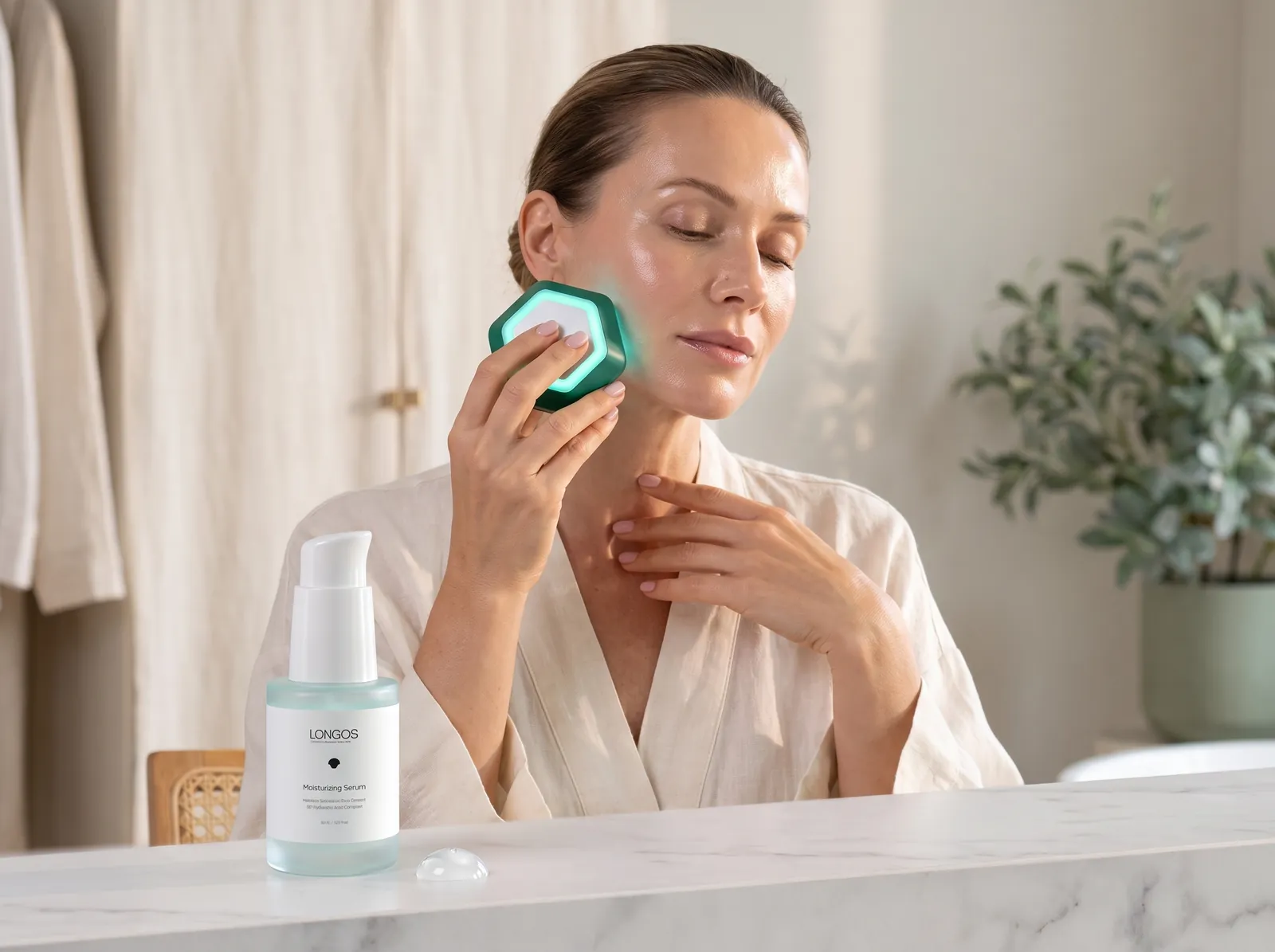
Hyaluronic acid suits almost every skin type, but how it helps depends on what your skin is dealing with. Separating two concepts here makes things easier.
Dry skin is a skin type that does not produce enough oil and has a weak barrier. Dehydrated skin, on the other hand, is a condition: even oily skin can look tight, dull and finely lined if it is losing water. Hyaluronic acid is a humectant, which means it draws in water and holds it. In dehydrated skin it targets exactly this gap; in dry skin it is not enough on its own, and you need a moisturizer on top that provides oil and barrier support.
Oily and acne-prone skin usually tolerates the light, oil-free texture of hyaluronic acid well. The picture is positive for sensitive skin that reddens easily, too: the review by Zanchetta and colleagues summarizes studies reporting that hyaluronic acid reduced redness in sensitive and reactive skin, rosacea and seborrheic dermatitis. If you have an ongoing condition such as rosacea or dermatitis, the serum can complement the treatment your dermatologist recommends, but it does not replace it. If you use potentially drying actives such as retinol or glycolic acid, applying a hyaluronic acid serum before these products may help your skin tolerate them better, according to the advice Harvard Health reports. For deeper changes such as sagging or wrinkles, however, the role of humectants is limited; we explain this in detail in our facial sagging guide.
How to use a hyaluronic acid serum: a step-by-step routine
Whether hyaluronic acid works often comes down to how you apply it. Turned into a daily routine, the dermatologist advice Harvard Health reports looks like this:
- Cleanse your face gently and do not pat it completely dry with a towel; leave your skin slightly damp.
- Apply the serum to damp skin. Hyaluronic acid draws the water it holds from this moisture. A few drops are enough for the whole face and neck.
- Follow right away with a moisturizer. A moisturizer with occlusive ingredients (for example one containing shea butter, jojoba oil or petrolatum) keeps the water hyaluronic acid has captured in the skin.
- Layer from thinnest to thickest. The liquid serum goes first, the gel or cream comes after.
- Use it morning and evening if you like. In the morning, always finish your routine with sunscreen.
Following this order consistently for a few weeks delivers far better results than switching products often.
When do results show? From hours to weeks
With hyaluronic acid, results do not appear all at once but across three different time frames, and knowing what each one means helps you set the right expectations.
The first hours. According to the review by Zanchetta and colleagues, high molecular weight hyaluronic acid can provide a measurable increase in hydration even one hour after application. This is why skin feels plumper and softer shortly after you apply the serum. However, this effect comes largely from water on the surface and fades over the day.
One to two weeks. As Harvard Health reports, products containing more than one molecule size can improve dryness, roughness and fine lines in as little as one to two weeks. The first noticeable results of regular use usually arrive in this period.
One to two months. The effects measured in controlled studies unfold over a longer period. The same review reports that the significant hydration effect of high molecular weight hyaluronic acid was measured between 28 and 60 days; in the Pavicic study, measurements were taken on days 30 and 60, and the difference in wrinkle depth appeared at the end of the 60 days.
In short, do not give up on the serum after a week. The feeling of hydration comes from the first day, but changes in fine lines take at least two months of regular use.
Common mistakes and popular myths
"The more drops, the more hydration." Extra serum does not make skin more hydrated; it can leave a sticky layer on the surface. A few drops are all you need.
"Applying it to a dry face is enough." A humectant needs water to work. That is why the recommended method is to apply it to damp skin and then seal in the moisture with a moisturizer.
"The higher the percentage on the label, the better the product." In the Pavicic study, significant results were achieved with a concentration as low as 0.1%. What matters is not only the concentration but also the molecule size and the formula as a whole.
"A hyaluronic acid filler and a serum do the same job." Fillers injected in clinics are dense, cross-linked gels that add volume. A serum supports the skin's surface hydration and appearance; it does not replace a filler.
What should you look for on a serum label?
Since 8D is not a standard definition, the way to tell whether a product really contains a multi-form hyaluronic acid system is to read the ingredient list. Look for these names on it:
- Sodium Hyaluronate: the sodium salt of hyaluronic acid; its size varies from product to product.
- Hydrolyzed Hyaluronic Acid: an enzymatically shortened, low molecular weight form.
- Sodium Acetylated Hyaluronate: an acetylated derivative.
- Hydroxypropyltrimonium Hyaluronate: a cationic derivative that clings to the skin.
- Sodium Hyaluronate Crosspolymer: a cross-linked network structure.
If you see several of these names together, the product uses hyaluronic acid in different sizes and types. Molecular size is rarely printed on the label; if you are curious, check the brand's product page or technical information.
A quick word of caution about percentages, too. 8D blends are usually added to formulas as a ready-made gel or solution; one supplier's technical document states that this gel is used at 1-20% in formulas, typically at 2-5% in products for normal and dehydrated skin. Most of that gel, however, is water. So when you see "5% 8D hyaluronic acid" on a label or in an ad, it does not mean that 5% of the product is pure hyaluronic acid.
Why does QOL Moisturizing Serum contain the 8D complex?
Quantum Orbit Labs' Moisturizing Serum is formulated with 8D Hyaluronic Acid Complex for hydration and barrier support. By definition, the 8D complex combines hyaluronic acids of different sizes and types; it is how the layered hydration idea described in this article translates into a serum.
Most Longos serums are of natural origin according to ISO 16128, and they are formulated below 40°C and at a defined pH to protect the active ingredients. If you use the serum with Longos Sense, the device's Ultrasonic Wave technology helps the serum's active ingredients absorb into the skin. Even without the device, the serum works the same way within the damp skin and moisturizer routine described above.
Where to start tonight
Tonight, after cleansing your face, apply a few drops of your hyaluronic acid serum before your skin is completely dry, and follow right away with your moisturizer; repeat this order the same way morning and evening for two weeks. If you would rather see your starting point through measurement than guesswork, run the AI skin analysis in the Longos Sense app once on clean, product-free skin before you begin the routine. When you measure your hydration level again under the same conditions two weeks later, you will see in numbers what the routine has really done for your skin.
Frequently Asked Questions
Is 8D hyaluronic acid better than regular hyaluronic acid?
8D brings together eight forms of hyaluronic acid in different sizes and types: small molecules go deeper, while large ones hold moisture on the surface. Dermatologists also recommend serums that combine high and low molecular weight forms. Still, independent clinical data directly comparing 8D blends with single-weight formulas is limited so far; how much better eight forms are together is a question that has to be tested product by product.
Can you use a hyaluronic acid serum every day?
Yes. A hyaluronic acid serum can be used morning and evening. After cleansing your face, apply a few drops while your skin is still slightly damp, follow immediately with a moisturizer containing occlusive ingredients, and finish your morning routine with sunscreen. Following this order consistently for a few weeks delivers far better results than switching products often.
Is a hyaluronic acid serum suitable for oily skin?
Yes. Oily and acne-prone skin usually tolerates the light, oil-free texture of hyaluronic acid well. Oily skin can lose water too, and it then looks tight, dull and finely lined; this is called dehydrated skin. Because hyaluronic acid is a humectant that draws in and holds water, it targets exactly this gap.
Can you use hyaluronic acid with retinol?
Yes, the two can be used together. According to the dermatologist advice reported by Harvard Health, if you use potentially drying actives such as retinol or glycolic acid, applying a hyaluronic acid serum before these products may help your skin tolerate them better. When layering, go from thinnest to thickest and finish your routine with a moisturizer containing occlusive ingredients.
When does a hyaluronic acid serum start to work?
Results arrive in three stages. High molecular weight hyaluronic acid can provide a measurable increase in hydration even one hour after application, but this effect fades over the day. Products containing more than one molecule size can improve dryness, roughness and fine lines within one to two weeks. In controlled studies, significant effects were measured between 28 and 60 days; fine lines need at least two months of regular use.
Does low molecular weight hyaluronic acid irritate the skin?
The picture is debated and depends on the formulation. In skin model studies, hyaluronic acid of 20 kDa and below increased TNF-α signaling, which is linked to inflammation, while 50 kDa was found to be safe. In a 2025 study, 3 kDa sodium hyaluronate did not increase inflammatory signals. The Cosmetic Ingredient Review found seven common forms safe in cosmetics. If your skin is sensitive, doing a patch test behind the ear or on the inner arm before first use is a good habit.
Clinical evidence

