
Blackheads
How to Get Rid of Blackheads: Causes, What Works at Home and the Risks of Squeezing
How do you get rid of blackheads? The short answer
A blackhead is a plug of oil and dead cells sitting in the mouth of a pore; the medical name is an open comedo. You reduce it not by pulling the plug out from the outside, but by slowing the formation of new ones inside the pore. Retinoids do this best. Salicylic acid, benzoyl peroxide and a sound cleansing routine support them. With regular use, the first difference usually shows up within 6-8 weeks.
Strips, peel-off masks, vacuums and metal tools can clear a plug temporarily. But the pore fills up again, and used wrongly they bring a risk of capillary damage, scarring, infection and irritation. Steam, on the other hand, does not open pores.
Let's make one distinction first. Most of the gray, evenly spaced dots on your nose that always come back are not blackheads but normal sebaceous filaments. With those, the goal is not to remove them but to make them less noticeable.
What is a blackhead and why is it black? An open comedo, not dirt
A blackhead forms in the pore, the opening of the hair follicle and sebaceous gland at the skin surface. According to the NCBI StatPearls acne review, the process starts with a tiny plug you cannot see, a microcomedone. As oil and keratin build up, the plug grows. If the pore opening stays closed, a whitehead (closed comedo) forms. If the buildup widens the opening, an open comedo, the blackhead, appears.
The color does not come from dirt. According to the same review, the dark color comes from oxidized oils and melanin pigment inside the plug. DermNet also stresses that the color comes from melanin at the surface, not from dirt. The American Academy of Dermatology (AAD) compares it to a cut apple turning brown: the plug darkens when it meets oxygen in the air.
That is why scrubbing does not work. According to the AAD, scrubbing blackheads makes acne worse, because the problem is not on the surface but inside the pore channel.
According to the 2024 clinical-presentation review by Wong and colleagues, on darker skin tones open comedones contrast less with the surrounding skin and can be missed.
You will find how a closed comedone, the whitehead, gets confused with milia in our guide to white bumps on the face.
Why do blackheads on the nose keep coming back? How they differ from sebaceous filaments
A good share of what people looking for a fix for nose dots actually see is sebaceous filaments. According to the Cleveland Clinic, these are thin, thread-like structures lining the oil glands and are a normal, healthy part of the skin. Because they contain no plug, oil flows freely to the surface.
The 2025 case report by Vasani and colleagues likewise describes filaments as a variation of normal skin physiology. A loose, porous keratin core makes it easier for oil to flow out. The table sums up the difference:
| Feature | Sebaceous filament | Blackhead (open comedo) |
|---|---|---|
| Color | Gray, light brown or yellowish | Dark brown or black |
| Appearance | Small, flat, evenly spaced on the nose and cheeks | Slightly raised, pore opening clearly widened |
| When squeezed | A thin, waxy thread or nothing | A waxy plug with a dark tip |
| Nature | Normal skin structure | Acne lesion |
| Does it come back? | Yes; according to the Cleveland Clinic it refills within 30 days | Fades with treatment, can re-form if the routine stops |
Removing a filament is neither possible nor necessary; by balancing oil and keeping the pore opening clean, you can make the dots less noticeable. It is also understandable that the nose is the most affected area: as summarized in the 2025 study by Jin and colleagues, the skin of the nose has a higher density of sebaceous glands than other parts of the face. We covered what makes pores look large and which ingredient works on which factor in detail in our guide to how pore-minimizing serums work and which ingredients matter.
What causes blackheads? The factors that feed the plug
The StatPearls review ties comedone formation to four processes: excess sebum production, abnormal keratinization in the follicle channel (cells sticking together instead of shedding), the bacterium Cutibacterium acnes, and inflammation. With blackheads, the first two dominate. Open comedones are usually non-inflammatory; they come with no redness or pain.
Hormones. Androgens enlarge the sebaceous glands and increase their secretion. According to the same review, most patients have normal hormone levels; what matters is how sensitive the gland is to them. This is why blackheads in adolescence gather on the forehead, nose and chin, the T-zone. You can find cycle-related flare-ups in adults in our article on the causes of hormonal acne in adults.
Products and friction. DermNet lists contact with greasy hair pomades, isopropyl myristate and propylene glycol among the causes of comedones. StatPearls also lists oil-based cosmetics, facial massage and repeatedly scrubbing the skin with soap and detergents.
Squeezing and harsh washing. According to DermNet, damage to the follicle wall from squeezing or abrasive washing can lead to new comedones. In other words, the method you use against blackheads can become one of their causes.
Smoking and sun. According to DermNet, comedonal acne is more common in smokers. Blackheads on skin that has seen many years of sun are a separate picture.
Diet and stress. StatPearls reports that milk consumption and a high-glycemic-load diet have been associated with adolescent acne, and that stress is linked to acne severity. These associations are observational. We found no study showing that diet alone clears blackheads.
What works on blackheads? Evidence-backed ingredients and concentrations
The AAD's 2024 acne guideline gives strong recommendations for topical retinoids and benzoyl peroxide, and conditional recommendations for salicylic acid and azelaic acid. The guideline also recommends combining different mechanisms: an ingredient that dissolves the plug works better together with one that reduces bacteria.
| Ingredient | Effect on blackheads | Studied concentration | Strength of evidence |
|---|---|---|---|
| Adapalene and other retinoids | Slows microcomedone formation, loosens the plug | Adapalene 0.1% | Strong recommendation, moderate certainty |
| Salicylic acid (BHA) | Loosens the plug inside the pore | 0.5-2% | Conditional recommendation, low certainty |
| Benzoyl peroxide | Reduces bacteria, mild effect on the plug | 2.5-10% | Strong recommendation, moderate certainty |
| Niacinamide | May reduce sebum secretion and inflammation | 2-4% | Small studies |
| Clay mask | Absorbs surface oil | Depends on the product | Pilot data without a control group |
Retinoids: the ingredient that goes to the source of the plug
Retinoids are vitamin A derivatives. The guideline describes them as the cornerstone of acne treatment because they both dissolve comedones and reduce inflammation. In one of the studies that shows the mechanism most clearly, Lavker and colleagues (1992) asked 15 volunteers to apply 0.1% tretinoin cream to one half of the face and a moisturizer to the other half for 12 weeks. On the tretinoin side, the microcomedone count fell by about 50% at week 6 and by about 80% at week 12. The change on the moisturizer side stayed very small.
In 2016, the US Food and Drug Administration (FDA) made adapalene 0.1% gel available without a prescription for ages 12 and over; it was the first over-the-counter retinoid. Ask your pharmacist how it is sold in Turkey. According to FDA warnings, redness, itching, dryness and burning can occur in the first weeks. The product should not be used on cut, eczematous or sunburned skin; if there is no improvement after 3 months of regular use, consult a doctor. If you are pregnant, planning a pregnancy or breastfeeding, talk to your doctor before using it.
Retinol in cosmetics is also a retinoid. But we found no studies showing that its effect on comedones is as strong as adapalene's.
Salicylic acid: an oil-soluble acid, more modest evidence
Because salicylic acid dissolves in oil, it can enter the pore channel and loosen the plug. According to the AAD, it works best on whiteheads and blackheads. The guideline's assessment is more modest than you might expect: the recommendation rests on a single randomized study. In that study, 0.5% salicylic acid produced an 11% greater reduction in open comedones at 12 weeks than a product with no active ingredient. No difference was seen in closed comedones.
We explained concentrations, the difference between rinse-off and leave-on products, and frequency of use in detail in our guide to the right concentration and use of salicylic acid. What you need to know here: salicylic acid makes more sense as a second step that complements a retinoid than as the only leg of a routine.
Benzoyl peroxide: a limited but useful role
Benzoyl peroxide reduces acne-associated bacteria by releasing oxygen radicals. According to the guideline, its effect on the plug is mild. Even so, in three randomized studies the percentage reduction in non-inflammatory lesions was on average 17 points greater than with a product with no active ingredient at 12 weeks.
A higher concentration does not mean better. In the 1986 three-part double-blind study of 153 patients by Mills and colleagues, a 2.5% gel reduced inflammatory pimples as much as 5% and 10% products; peeling, redness and burning were less frequent than with the 10% product. This is why the AAD recommends starting at 2.5% and reminds us that benzoyl peroxide bleaches towels, pillowcases and clothes. According to the guideline, some forms of tretinoin degrade when applied together with benzoyl peroxide; adapalene has no such restriction.
Niacinamide and clay: support for the oil side
In the 1995 double-blind study by Shalita and colleagues in 76 patients, 4% niacinamide gel reduced inflammatory lesions as much as 1% clindamycin gel over 8 weeks. There are also small studies showing that 2% niacinamide lowers sebum secretion. But we found no study showing that niacinamide dissolves blackheads directly; its role is to support oil balance.
The AAD notes that in oily, acne-prone skin, clays such as kaolin or bentonite help absorb oil. The clinical data are limited, though. In the 2012 pilot study by Meier and colleagues, participants applied a clay and jojoba oil mask 2-3 times a week for 6 weeks. Among the 133 people who submitted complete counts, the median comedone count fell from 26.5 to 16. The study had no control group, and participants counted the lesions themselves.
Among Longos serums, the main active of Anti-Acne Serum is purple willow (Salix purpurea) extract, which contains natural salicylates. We explained separately in our salicylic acid guide that the salicylates in willow are not the same thing as pure salicylic acid. Pore Minimizer Serum is formulated with Epilobium and other botanical extracts for the look of pores and oil balance. Neither replaces a retinoid; they support the oil and pore-appearance side of the routine.
How to get rid of blackheads at home naturally? Masks and kitchen recipes
Behind searches for "home masks" and "natural methods" there are often kitchen recipes. The evidence splits the picture in two.
A natural option with evidence: tea tree oil, in a ready-made gel. In the 1990 randomized study by Bassett and colleagues, 124 patients used either a 5% tea tree oil gel or a 5% benzoyl peroxide lotion. Both reduced inflammatory and non-inflammatory lesions, including open and closed comedones. Tea tree oil worked more slowly but caused fewer side effects. Applying undiluted essential oil to the skin is not the same thing; the AAD warns that essential oils can cause irritation and allergy.
Clay mask. A weekly clay mask is a reasonable helper. Follow the time on the label; according to the AAD, leaving a mask on longer or using it too often can cause irritation. Clay temporarily takes up surface oil; it does not stop the plug from forming.
What to avoid. According to a dermatologist quoted by the AAD, toothpaste contains abrasives such as calcium or carbonate and bleaching agents such as peroxide; none of them fights acne, but they can irritate the skin. The furanocoumarins in some citrus juices can, when applied to skin that then goes into the sun, cause a burn-like reaction called phytophotodermatitis. According to DermNet, redness and blisters can be followed by brown marks that last for years; the most common example is lime juice. According to the AAD, gritty scrubs such as walnut shell can also make tiny tears in the skin.
A non-comedogenic routine: stopping new plugs before they form
As important as reducing blackheads is slowing the formation of new ones. The AAD's advice is simple: choose a gentle cleanser labeled non-comedogenic, wash only with your fingertips, rinse, and pat dry with a clean towel.
Don't trust "comedogenic ingredient" lists blindly. The 2006 study by Draelos and DiNardo showed that finished products containing ingredients considered comedogenic in animal models do not necessarily cause comedones on human skin. The study involved only six people, but the message is clear: look at the whole product and your skin's response, not a single ingredient. If comedones increase in the same area after a new product, stop using it.
Take hair products into account too; greasy pomades are on DermNet's list of causes of comedones. You do not need to scrub your face with a brush or cloth. We covered what cleansing devices really add to the skin in our article on whether facial cleansing devices are really effective. A broad-spectrum sunscreen in the morning is also part of the routine, because according to the guideline retinoids can make skin more sensitive to the sun.
Blackhead strips, peel-off masks, vacuums and metal tools: what do they remove and what do they cost?
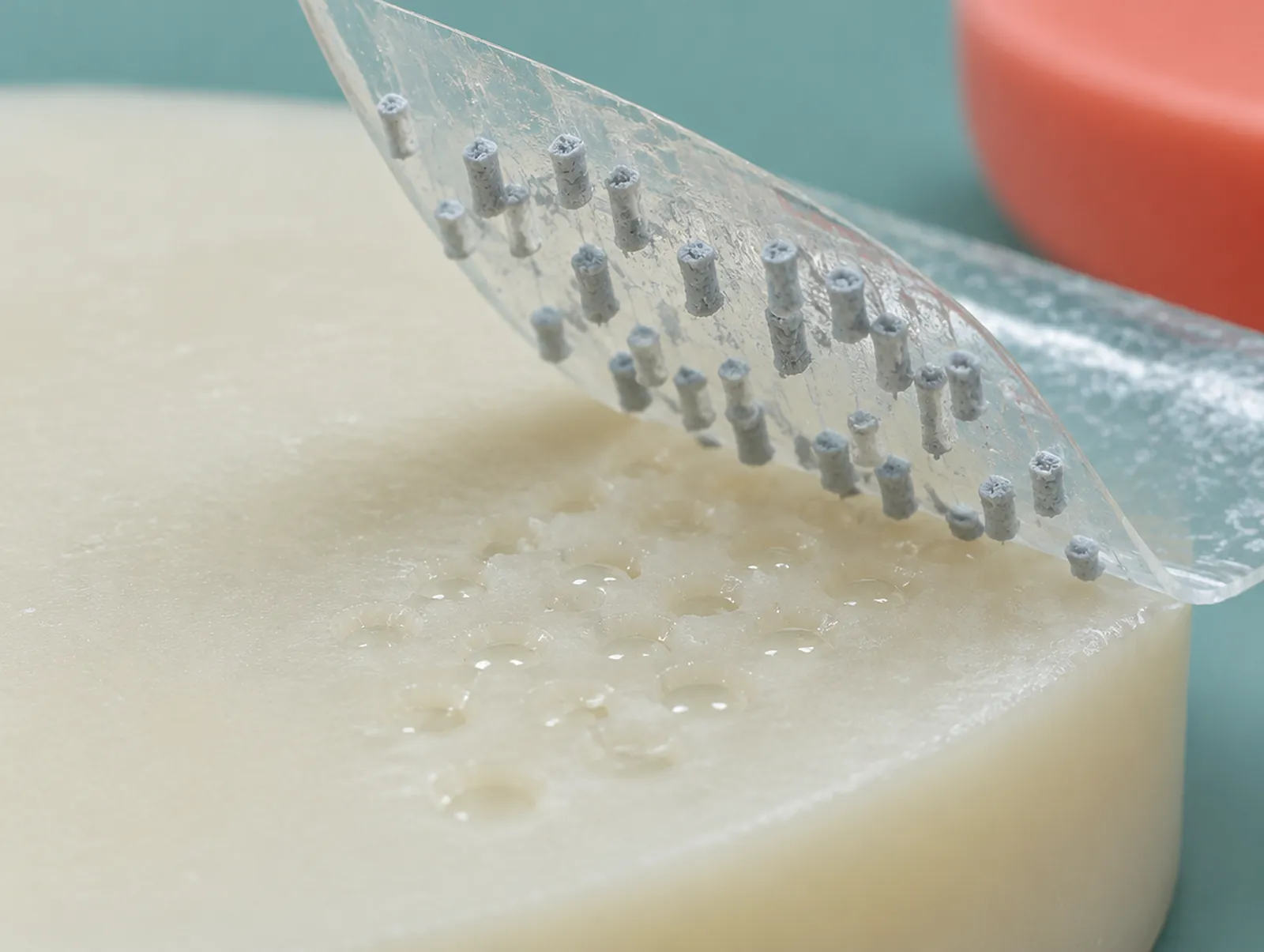
Tools sold as "blackhead removers" take out the plug or its upper part. None of them changes why the plug forms.
Blackhead strips and peel-off masks
A strip sticks to wet skin and, once dry, pulls out the buildup at the pore opening. In the 1999 study by Pagnoni and colleagues, a commercial strip effectively removed keratin plugs and clustered fine hairs from the nose; no inflammation was seen with repeated applications. Using tretinoin before the strip increased the amount of plug removed.
The problem is how long it lasts. According to the Cleveland Clinic, strips pull out sebaceous filaments along with blackheads, and emptied pores refill within 30 days. Ripping out filaments can dry the skin. A strip does not shrink the pore; it only empties it for a while. It is wise not to use one on skin that is red, irritated or in the first weeks of a retinoid.
We found no controlled study measuring the effect of peel-off masks on blackheads. The authors of the 2025 study by Jin and colleagues warn that squeezing the nose and peel-off masks can lead to infection, further widening of pores and capillary damage.
Vacuum blackhead removers
Vacuum devices draw out pore contents with negative pressure. According to an esthetician from the University of Utah Health system, these devices only work on blackheads that are already loose. When suction is too strong, bruising, irritation, micro-tears in the skin and telangiectasia, that is, visible capillaries, can develop; these vessels may require laser treatment.
A commentary published in 2026 in Dermatology Online Journal also lists bruising, petechiae (pinpoint bleeds) and post-inflammatory dark marks, and writes that on thin, rosacea-prone or sun-damaged skin even short use can cause permanent vessel dilation. The authors' note is honest too: there is no published case report specific to these devices; the risk is inferred from damage seen with suction practices such as cupping.
We also found no study showing that an ultrasonic spatula used on wet skin removes the hardened plug from the pore; we looked at what it can and cannot do in our guide to the ultrasonic spatula and ultrasound skincare.
Metal blackhead tools and squeezing
The AAD is clear: squeezing a blackhead can lead to infection or permanent scarring. When you squeeze at home, part of the contents is often pushed deeper into the skin; this increases inflammation and raises the scarring risk. Bacteria on your hands are another source of infection. A metal tool presses more evenly than a fingernail, but it does not remove these risks.
Sources differ here. DermNet lists gentle squeezing with a tool among the options for solar comedones on sun-damaged skin; the esthetician at Utah also says it can be used at home with the right technique. The AAD, however, recommends leaving the procedure to a dermatologist. We recommend the AAD's line. Do not use any tool on a lesion that is red, painful or deep; according to StatPearls, post-inflammatory dark marks are more common on darker skin.
Does steam open pores? A pore is not a door
It doesn't. As the McGill University Office for Science and Society points out, pores do not open and close like doors; their appearance changes with oil, buildup and inflammation. According to the same article, the effect of ice on the look of pores is also temporary. That is why the idea that cold water "closes" pores is a myth too.
Heat may soften the oil in the plug a little and make cleaning easier, but it does not dissolve the blackhead. Squeezing after steam carries all the risks of squeezing, on skin that is warmed and flushed. Steam rising from boiling water also carries a burn risk; according to the AAD, heat is among the common triggers that flare rosacea. We examined safe temperatures, durations and the real benefits of steam in detail in our guide to heat on the face, steam and thermal therapy.
We explain what genuinely makes pores look smaller at home, and the myths about ice, steam and strips, in our guide to shrinking pores.
When does professional blackhead extraction make sense?
In dermatology, this procedure is called comedone extraction or acne surgery. According to the AAD, a dermatologist removes blackheads and whiteheads with sterile instruments; the skin may need to be softened or peeled before the procedure. The Cleveland Clinic counts licensed estheticians among those who do this work, while the AAD points to a trained physician because of the risk of scarring and infection.
When? According to the AAD, extraction usually comes up when other treatments haven't cleared the skin. Because it takes time and can be expensive, it is rarely the first choice. The AAD mentions extraction as an option for blackheads and whiteheads that do not clear despite 6-8 weeks of regular treatment.
How well does it work? The evidence is limited. In a 2019 randomized study by Ramya and colleagues with 120 patients in India, extraction every 4 weeks gave the highest response rate for open comedones among the compared methods at 12 weeks (86.7%). However, at the 3-month follow-up the comedones had partly returned; the fewest recurrences were seen in the group taking oral isotretinoin. The AAD also states plainly: blackheads can come back, so a maintenance plan is needed after the procedure.
Extraction does not replace the routine; it speeds it up. No device used at home is the equivalent of a clinical extraction done under sterile conditions.
A weekly blackhead routine and a realistic timeline
The routine should be simple and not change often. The AAD advises not giving up on a product you started for results for 6-8 weeks. The dermatologist quoted by Yale Medicine also recommends using salicylic acid in the morning and a retinoid in the evening to limit irritation. The order below rests on these principles:
- Every morning: Wash with a gentle non-comedogenic cleanser using your fingertips, then apply a light moisturizer and a broad-spectrum sunscreen.
- In the first weeks, evenings, every other night: On clean, dry skin, spread a pea-sized amount of a retinoid (for example adapalene 0.1%) in a thin layer over the whole face, then moisturize.
- When your skin has adjusted, every evening: If redness and peeling increase, reduce the frequency. The AAD notes that applying moisturizer before the retinoid can reduce irritation.
- Once used to the retinoid, 2-3 mornings a week: If you want a second active, use a wash with 2% salicylic acid or 2.5% benzoyl peroxide as a cleanser; don't layer the two on the same day.
- 1 evening a week: A clay mask for the time on the label; skip the retinoid that evening.
- Never: Squeezing, scrubbing, or using strips and vacuums back to back.
What should you expect, and when?
| Time | What to expect | Source |
|---|---|---|
| First few weeks | Dryness, redness, mild burning may occur | FDA |
| Weeks 4-8 | Fewer new lesions | AAD |
| Weeks 8-12 | A difference in comedones starts to show | Cleveland Clinic |
| Week 12 | About 80% reduction in plugs you cannot see (tretinoin) | Lavker 1992 |
| Week 16 and after | Clearing; keep using the retinoid for maintenance | AAD |
According to the Cleveland Clinic, full improvement can take months. Sebaceous filaments don't disappear on this timeline; they only become less noticeable.
When should you see a dermatologist?
Blackheads are harmless, but some situations call for a physician's assessment:
- If there is no change despite 6-8 weeks of regular care (AAD), or if there is no improvement even though you have used an over-the-counter retinoid for 3 months (FDA).
- If blackheads come with deep, painful swellings. According to the AAD, deep acne usually does not improve with products used at home.
- If pimples leave dark marks or scars.
- If acne began suddenly and severely, or comes with irregular periods and increased hair growth. In this picture, StatPearls recommends investigating for excess hormones.
- If you are pregnant or planning a pregnancy. According to the AAD, some over-the-counter acne products are not safe in pregnancy; ask before starting on your own.
Conditions that look like blackheads. According to DermNet, large blackheads that gather around the eyes and temples on middle-aged and older skin with long sun exposure may be solar comedones. This picture, seen together with sun damage and heavy smoking, is called Favre-Racouchot syndrome and is not related to acne. The review by Wong and colleagues also lists small white bumps around the eyes (milia) and, in older age, yellowish bumps with a dimple in the center on the forehead and cheeks (sebaceous hyperplasia) as conditions that can be confused with comedones. Keep any tool or device away from lesions around the eyes; leave the diagnosis to a dermatologist.
Where to start this week
This evening, look closely at your nose in good light and sort the dots: gray and evenly spaced ones are filaments, dark and raised ones are blackheads. If blackheads dominate, start a single retinoid every other night, don't add a second active before your skin has adjusted, and don't give up for 8 weeks; put the strips and the vacuum in a drawer for that time.
If you would rather track the change by measurement than by eye, run the AI skin analysis in the Longos Sense app once on clean, product-free skin before you start. Look at your "pore appearance" and "pimples / blemishes" scores again after 8 weeks in the same light. The analysis is cosmetic appearance tracking and does not diagnose; this text is not medical advice either, but a care guide.
Frequently Asked Questions
What causes blackheads?
A blackhead is a plug made of oil and dead cells that builds up in the pore; its medical name is an open comedo. Excess sebum production and cells in the pore channel sticking together instead of shedding start the plug. Oil glands sensitive to androgen hormones, greasy cosmetics and hair products, scrubbing the skin hard, squeezing and smoking raise the risk. The dark color comes not from dirt but from the oxidized oils and melanin in the plug. That is why scrubbing does not clear a blackhead; you need care that works on the plug inside the pore.
What works on blackheads?
The strongest evidence is for retinoids. The American Academy of Dermatology's 2024 guideline supports topical retinoids and benzoyl peroxide with strong recommendations and salicylic acid with a conditional one. Adapalene 0.1% gel was the first retinoid sold without a prescription in the US; ask your pharmacist how it is sold in Turkey. With benzoyl peroxide, starting at 2.5% makes sense: in one study it was as effective as the 10% product on inflammatory pimples and less irritating. Niacinamide and a clay mask help balance oil but do not dissolve the plug. The first difference usually shows within 6-8 weeks.
How to get rid of blackheads at home: do masks work?
The most effective home approach is to start a retinoid every other evening and move to every evening as your skin adjusts, with a non-comedogenic cleanser and sunscreen in the morning. A clay mask absorbs surface oil; in a pilot study without a control group the comedone count fell over 6 weeks, but the evidence is weak. Use the mask once a week, for the time on the label. Avoid kitchen recipes such as toothpaste, baking soda and citrus juice; they can cause irritation and, together with sun, a burn-like reaction.
Are blackhead strips bad for your skin?
A strip pulls out the top of the plug in the pore opening and the sebaceous filaments, giving an instant clean look on the nose. In one study repeated use did not cause inflammation, but according to the Cleveland Clinic emptied pores refill within 30 days, and ripping out filaments can dry the skin. A strip does not shrink pores or stop blackheads from re-forming. Do not use one on red, irritated skin or skin that has just started a retinoid; the real result comes from a regular routine that works inside the pore.
Is it OK to use a blackhead removal tool?
Vacuum devices mostly work on plugs that are already loose; when suction is too strong, bruising, micro-tears and permanent visible capillaries can develop. The risk is higher on thin, rosacea-prone or sun-damaged skin. Squeezing with a metal tool or fingers carries a risk of infection and permanent scarring according to the American Academy of Dermatology, because part of the contents can be pushed deeper into the skin. For stubborn blackheads, professional extraction with sterile instruments is a safer option.
Why do blackheads on the nose keep coming back?
Most of the small, gray, evenly spaced dots on the nose are not blackheads but sebaceous filaments. They are normal structures that carry oil to the surface; when squeezed or pulled off with a strip, they refill within about 30 days. Because the skin of the nose has a high density of sebaceous glands, both filaments and true blackheads are more noticeable there. Removing a filament is not possible; a gentle routine that supports oil balance can make the dots less noticeable.
Clinical evidence

