
How to shrink pores: the short answer
Pores do not shrink permanently, but they can look smaller. A pore is the opening of a hair follicle and its sebaceous gland onto the skin. The main reasons pores look large are excess oil, weakening of the supporting tissue around the pore with age and sun, clogging and genetics. At home, the most consistent improvements in this appearance come from retinoids, salicylic acid, niacinamide, gentle cleansing and sunscreen applied every day.
A clay mask temporarily removes surface oil. Steam does not open pores, ice does not close them, and pore strips empty them for only a few weeks. Lemon can lead to dark spots in the sun, while baking soda and toothpaste can cause irritation; we found no study showing that they shrink pores.
In short
- Pore size is largely determined by genetics; the goal is not to erase pores but to soften their appearance.
- The strongest evidence for pore appearance is for retinoids; niacinamide and salicylic acid support the oil and clogging side.
- Sunscreen slows the breakdown of the collagen and elastin that surround the pore.
- The effects of hot water, ice, pore strips and kitchen recipes are either temporary or harmful.
- In studies, the first difference was measured at 4-8 weeks and a marked difference at 12 weeks and beyond.
What is a pore? An opening without a door
What we call a pore in everyday language is a small dip in the skin that you can see with the naked eye. DermNet defines enlarged pores as surface depressions into which one or more ducts of the sweat and oil glands open. A 2016 review by Dong and colleagues also uses the term for enlarged openings of hair follicles and sebaceous glands that are visible to the naked eye.
The sizes give you an idea. As cited in a 2015 study by Flament and colleagues, hair follicle openings are 40-80 micrometers across, while sweat gland openings are about 5-10 micrometers and invisible to the eye. The pores we notice in the mirror measure 250-500 micrometers. In other words, every pore you see is a shallow bowl that holds several smaller openings.
There is no door. As McGill University's Office for Science and Society points out, pores do not open and close like doors; their appearance changes with oil, buildup and inflammation. This one fact also explains why the myths about heat and cold do not work.
A pore is not a flaw, either. The sebum made by the sebaceous gland reaches the surface through these openings and protects the skin. We explain in detail why sebum is necessary in our guide to the composition of sebum and the role of the sebaceous glands.
Why do pores look large? Oil, loss of support, sun and genetics
A 2016 review by Lee and colleagues lists three main causes of pores that look large: excess sebum, loss of elasticity around the pore and an increase in hair follicle volume. Recurrent acne, sex hormones and skincare habits can also affect size.
Oil. In 2006, Roh and colleagues measured the pores of 60 volunteers, 30 women and 30 men, using magnified images. Sebum amount showed the strongest link with pore size, followed by male sex; age was also a significant factor. In women, pores grew significantly larger during ovulation. A 2013 study by Kim and colleagues, also with 60 people, likewise linked excess sebum, male sex and reduced elasticity with pores; this study found no clear link with age. According to Cleveland Clinic, pores are more noticeable along the center of the face because the sebaceous glands are concentrated there.
Loss of support and sun. According to Cleveland Clinic, collagen and elastin are the proteins that support the area around the pore; as they decline with age, the pore widens. The sun's UV rays also break down these two proteins. The review by Dong and colleagues reports that in aged and sun-damaged skin, a protein involved in building elastic fibers decreases around the pore. You can read how collagen is made and why it declines with age in our guide to collagen types and the care that supports collagen.
Genetics and ancestry. According to a dermatologist quoted by Cleveland Clinic, pore size is largely determined by genetics; if your parents have large pores, yours may be large too. In a study by Flament and colleagues with 2,585 women, pore size and density differed markedly by ancestry and, in most groups, stabilized after a certain age. The study was carried out by researchers at a cosmetics company.
Clogging. According to the American Academy of Dermatology (AAD), a clogged pore stretches and looks more noticeable, which is why pore-clogging products make the problem worse. According to Dong and colleagues, acne severity was not found to be directly linked to pore size, but open comedones are often seen inside pores. We also look at the factors that increase oil production in our guide to the causes of an oily face and the care that works.
Nose pores, blackheads and sebaceous filaments: which one are you looking at?
Most people who search for "how to shrink nose pores" are actually using one name for three different things.
An enlarged pore is an empty or only slightly oily bowl; up close, it looks like a small dip. A sebaceous filament, on the other hand, is a thin, thread-like structure that lines the sebaceous gland. According to Cleveland Clinic, everyone has them, they are a normal and healthy part of the skin, and because there is no plug inside, oil flows freely to the surface. They appear as small, flat dots that are grey, light brown or yellowish. When squeezed, a waxy thread may come out, and the pore refills within 30 days.
A blackhead is an acne lesion: a dark plug of oil and dead cells that blocks the pore opening. According to Cleveland Clinic, in a blackhead the plug stops oil from reaching the surface; a filament has no such barrier. As the clinic describes it, a blackhead looks like a dark spot inside a bump, while a filament is smaller, flat and lighter in color. We cover the causes of blackheads and the risks of squeezing in detail in our guide to how blackheads go away.
This distinction has a practical consequence. Trying to pull filaments out dries the skin and gives no lasting result. Blackheads, by contrast, decrease with ingredients that work inside the pore, such as retinoids and salicylic acid. According to Cleveland Clinic, the same ingredients also make filaments less noticeable.
What really works at home: an evidence table of methods
The review by Dong and colleagues gives an important warning: most of the treatments in use have not been studied with pore size as their primary target, and measurement methods vary from study to study. A 2023 review by Parvar and colleagues examined 19 clinical studies with a total of 591 people; it reported that combining methods and repeating treatments gave better results. Read the table with this in mind:
| Method | What does it do? | Evidence | Verdict |
|---|---|---|---|
| Retinoids (tretinoin, tazarotene, retinol) | Support the collagen and elastin structure, reduce clogging | Tazarotene: placebo-controlled study of 568 people, 24 weeks; tretinoin: 60 women, 12 weeks | Works |
| Niacinamide (2-4%) | Reduces surface oil | Two controlled studies with 100 and 30 people (oil); a half-face study with 52 people (pore count) | Moderate evidence |
| Salicylic acid | Dissolves in oil, loosens the plug inside the pore | AAD recommendation; studies measuring size are small and mostly involve clinic peels | Works for clogged pores |
| Sunscreen (SPF 30 and above) | Slows the loss of collagen and elastin | AAD recommendation; we found no direct study measuring pore size | Essential in the long run |
| Gentle cleansing (2 times a day, lukewarm water) | Removes oil and buildup, prevents irritation | AAD recommendation | Basic step |
| Clay mask | Absorbs surface oil | AAD recommendation; we found no pore size data | Temporary effect |
| Ice, cold water | Makes the skin look tighter for a short time | Cleveland Clinic: the effect lasts a few minutes | Does not close pores |
| Hot water, steam | Does not open pores | AAD: hot water irritates and can make pores look larger | Not recommended |
| Pore strips | Pull out plugs and filaments | Small 1999 study with a single product; Cleveland Clinic: pores refill in 30 days | Temporary, do not use often |
| Lemon juice | Contains furanocoumarins, reacts with sunlight | DermNet and case reports: phytophotodermatitis | Not recommended |
| Baking soda | Is an alkaline salt | pH of a 0.1 molar solution is 8.3; the skin's natural pH averages 4.7 | Not recommended |
| Toothpaste | Contains abrasives and whitening agents | Dermatologist speaking to the AAD: can irritate the skin | Not recommended |
Retinoids: the group with the most evidence for pore appearance
Retinoids are vitamin A derivatives. According to Dong and colleagues, they are first-line treatments for repairing the collagen and elastin structure damaged by aging and sun. Tretinoin, isotretinoin and tazarotene have been shown to have an effect on pores, wrinkles, dark spots, laxity and sebum.
Two studies stand out. In one study cited in the review, 568 people with moderate wrinkles or dark spots used 0.1% tazarotene cream or a placebo every day for 24 weeks. In the physicians' assessment, an improvement of at least one grade in pores was seen in 42% of the tazarotene group and 20% of the placebo group. In another study, 60 women applied 0.025% tretinoin cream every day for 90 days. The pore score fell from an average of 3.2 to 2.0 on day 84, and the improvement was sustained from day 28 onward.
A note on honesty. The review authors stress that retinoids also improve acne, so the data are not enough to say that the effect on pores is independent of acne. In the tretinoin study, 3 people left the study early because of dryness, peeling, burning and redness.
Where to start at home? The AAD recommends using a product containing retinol or retinyl palmitate at night for oily, mildly acne-prone or less firm skin with noticeable pores. To reduce irritation, it advises waiting 30 minutes after washing your face. Cleveland Clinic recommends starting with a thin layer two nights a week and increasing slowly, and reminds you that retinol can make the skin more sensitive to the sun; a dermatologist can prescribe stronger retinoids. If you are pregnant or breastfeeding, the AAD recommends not using products that contain retinol or retinyl palmitate.
Salicylic acid, niacinamide and clay: the oil and clogging side
Salicylic acid. Because it dissolves in oil, it can get into the pore canal. According to the AAD, it has been shown to unclog pores, and some salicylic acid cleansers are gentle enough for daily use. If it dries your skin, the academy recommends using a gentle cleanser in the morning and the salicylic acid one in the evening. Data that directly measure pore size, however, are weak. In a 1999 pilot study by Grimes, 25 people with dark skin received 20-30% salicylic acid peels in a clinic; only 5 of them had oily skin and enlarged pores as their complaint. You can find concentrations and correct use in our guide to how salicylic acid works in the pore.
Niacinamide. In a 2006 study by Draelos and colleagues, half of 100 Japanese participants used a moisturizer with 2% niacinamide and the other half used one without an active ingredient. In the niacinamide group, the sebum excretion rate fell significantly at weeks 2 and 4. In 30 white participants in the US, surface oil decreased in 6 weeks, but the excretion rate did not change significantly. Some of the researchers worked for a cosmetics company. In a 2007 two-group, half-face study by Chiu and colleagues with 52 Taiwanese participants, the number of pores decreased significantly at week 8 only in the group using 4% niacinamide.
Clay mask. According to the AAD, clays such as kaolin or bentonite help absorb oil. The effect is temporary, because clay does not change how much oil the sebaceous gland produces. Follow the time on the label: according to the AAD, leaving the mask on too long or using it too often can cause irritation.
Among the Longos serums, Pore Minimizer Serum is formulated with Epilobium and other plant extracts for pore appearance and oil balance. It supports the oil balance and pore appearance side of the routine.
Sunscreen and gentle cleansing: slowing the process that enlarges pores
The AAD's logic is simple: the more sun damage the skin takes, the more firmness it loses, and in skin that has lost firmness, pores look more noticeable. The academy recommends a broad-spectrum, water-resistant sunscreen of at least SPF 30 every day, even on rainy and cold days, and reminds you that damage builds up over time. Cleveland Clinic also recommends physical protection such as a hat. If you use a retinoid, this step becomes even more important.
Cleanse less, but cleanse right. The AAD recommends washing twice a day with a gentle non-comedogenic cleanser and lukewarm water. According to the academy, hot water irritates the skin and can make pores look larger. Scrubbing also leads to inflammation, and in inflamed skin, pores look more noticeable.
Read the label. The AAD recommends looking for one of the phrases "non-comedogenic", "oil free" or "won't clog pores" on every product you put on your face. Makeup products are included.
Steam, ice, strips and kitchen recipes: what should you stop doing at home?
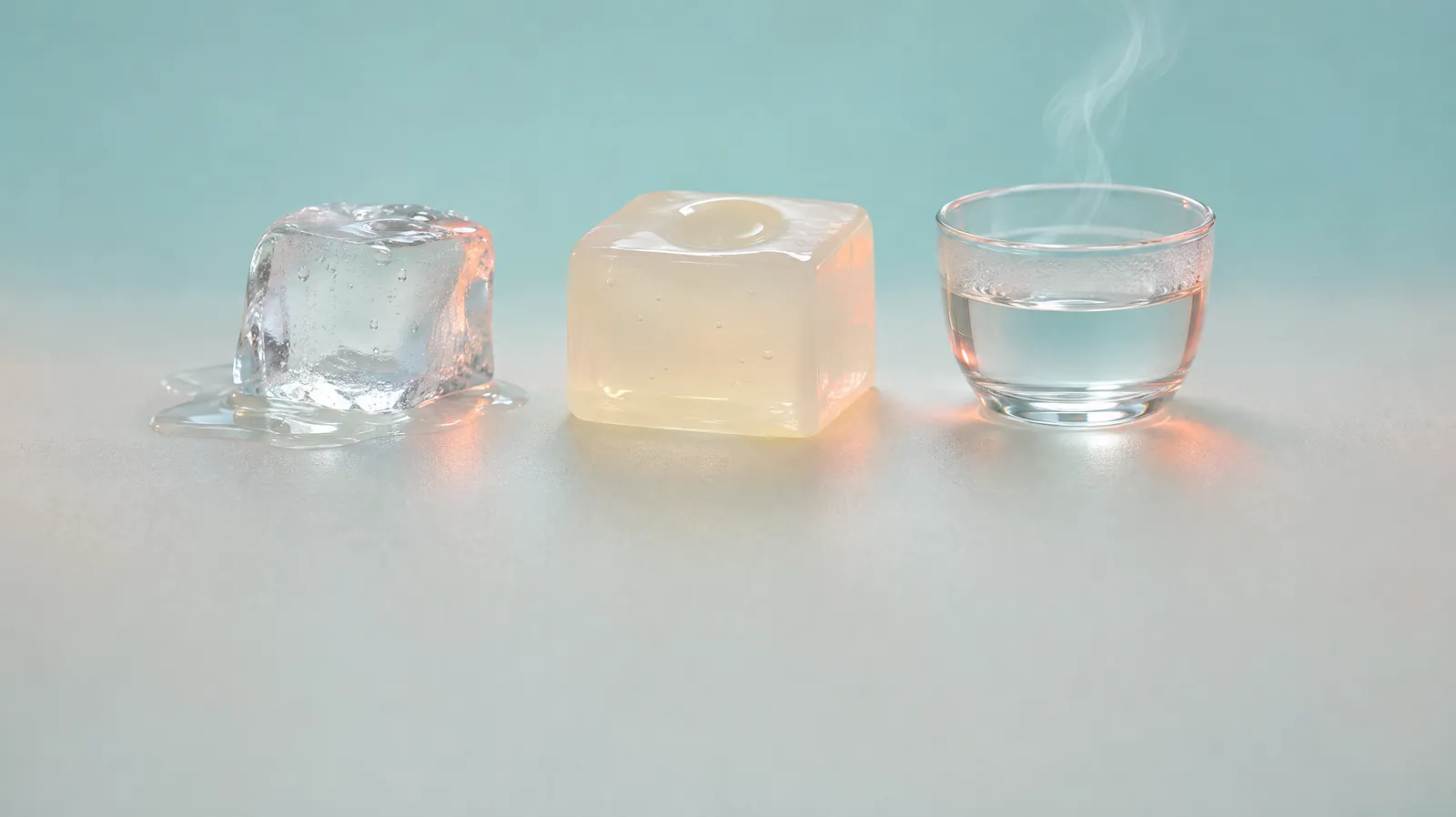
Because a pore has no lid that opens and closes, heat does not open it and cold does not close it. Recipes from the kitchen either do not work or can harm the skin.
Does ice close pores and steam open them?
Ice and cold water. According to the dermatologist quoted by Cleveland Clinic, an ice cube or a chilled roller makes the skin look tighter, but the effect lasts only a few minutes and fades as the skin warms up. McGill's article also stresses that the effect is temporary and does not shrink pores permanently. You can find the right duration and safe use in our guide to what ice rollers and cold facial massage tools do.
The real job of cold on the skin is about appearance. Longos Sense's Cryo Therapy mode is also used, as its user manual defines it, to improve the appearance of skin tone and reduce the appearance of puffiness by temporarily cooling the skin surface. According to the manual, it is used only on the face and neck, without touching the eyes or eyelids, and on skin without active lesions, open wounds or rashes.
Steam and hot water. A hot steam bath does not open pores. According to the AAD, hot water can irritate the skin and make pores look larger. Squeezing after steaming brings all the risks of squeezing to skin that is warm and flushed.
Pore strips and kitchen recipes
Pore strips. In a 1999 study by Pagnoni and colleagues, a commercial strip effectively removed keratin plugs from the nose; no inflammation was seen with repeated use. But a strip does not shrink pores; it only empties them. According to Cleveland Clinic, strips also pull out filaments, which can dry the skin; an emptied pore refills within 30 days.
Lemon. According to DermNet, when furanocoumarins in the juices of some plants and fruits stay on the skin and interact with the sun's UVA rays, phytophotodermatitis develops: redness and often blisters within 24-48 hours, followed by dark patches that can last for years. According to a 2014 case report by Hankinson and colleagues, lemon and lime belong to the plant family that contains these substances.
Toothpaste. According to a dermatologist speaking to the AAD, toothpaste contains abrasives such as calcium or baking soda, whitening agents such as peroxide, dyes and flavorings. None of these fight acne, but they can irritate the skin.
Baking soda. According to data cited by PubChem, a 0.1 molar solution of sodium bicarbonate has a pH of 8.3, which means it is alkaline. According to a 2006 study of 330 people by Lambers and colleagues, the skin's natural surface pH averages 4.7; skin with a pH below 5 has better barrier measurements, and even tap water with a pH of around 8 raises skin pH for up to 6 hours. The dermatologist who gave the toothpaste warning also lists baking soda among the abrasives. We found no study showing that baking soda shrinks pores.
Squeezing and layering acids
Picking makes pores more noticeable. The AAD writes that plucking, squeezing and picking at pores irritates the skin and makes pores look more noticeable. The dermatologist at Cleveland Clinic also says that squeezing and metal tools can leave marks. Applying a retinoid, salicylic acid, glycolic acid and a peel one after another on the same evening also increases irritation; according to a dermatologist quoted by the AAD, repeating similar ingredients can cause dryness and irritation.
A 4-week home pore routine
This plan is based on AAD and Cleveland Clinic recommendations. Its aim is to add active ingredients one at a time without irritating the skin. As the AAD advises for masks, test every new product on a small area first.
- Week 1, morning and evening: Wash with a gentle non-comedogenic cleanser and lukewarm water, without scrubbing. In the morning, apply an oil-free moisturizer and a broad-spectrum sunscreen of at least SPF 30. If you like, add a serum with 2-4% niacinamide to your morning routine.
- Week 2, evening: Two nights a week, apply a thin layer of retinol 30 minutes after washing. On the other nights, only moisturize.
- Week 3: If your skin has adjusted, move retinol to every other night. If clogging or blackheads are noticeable, use a salicylic acid cleanser on the evenings when you do not apply retinol; do not add a second acid on top of retinol on the same evening.
- Week 4: Once a week, on an evening without retinol, apply a clay mask for as long as the label says. If redness, burning or peeling increases, go back to the previous week.
- Every day: Do not squeeze, do not scrub, and do not make steam or pore strips part of your routine.
Four weeks is only the beginning. The AAD recommends sticking with an active ingredient you start in acne products for 6-8 weeks; in studies, a marked difference in pores was mostly measured at 8-12 weeks.
Can pores shrink in 1 day? A realistic timeline
Not permanently. The difference you can see on the same day comes from less surface oil and buildup: cleansing and a clay mask make pores look less noticeable for a while, and ice gives a few minutes of tightness. According to Cleveland Clinic, pore size is largely genetic, so pores cannot be made permanently smaller; but their appearance can be improved and their widening slowed.
| Time | What to expect | Source |
|---|---|---|
| Same day | Less oil after cleansing and a clay mask; the effect of ice lasts a few minutes | AAD; Cleveland Clinic |
| Weeks 2-4 | Drop in sebum secretion with 2% niacinamide | Draelos et al., 2006 |
| Week 4 | Improvement in pore score begins with tretinoin | Dong et al., 2016 |
| Week 8 | Fewer pores with 4% niacinamide | Chiu et al., 2007 |
| Week 12 | Pore score from 3.2 to 2.0 with tretinoin | Dong et al., 2016 |
| Week 24 | Improvement in pores in 42% of tazarotene users (placebo 20%) | Dong et al., 2016 |
Pore strips and squeezing, on the other hand, set the timeline back. According to Cleveland Clinic, an emptied pore refills within 30 days.
When do clinic options make sense?
If your pores still bother you after a few months of regular care, or if the issue comes more from laxity, you can discuss clinic options with a dermatologist. DermNet lists chemical peels, laser treatments and microneedling with radiofrequency among these options; some oral acne medicines that a physician considers suitable can also affect pore appearance.
The evidence is promising but small. In a 2011 study by Kakudo and colleagues, 22 women received five glycolic acid peels 2 weeks apart; the number of noticeable pores decreased by an average of 34.6%. According to Dong and colleagues, small studies with fractional lasers have also reported improvement. The review's conclusion, however, is cautious: most studies are small, have no control group and use different measurement methods. DermNet also states plainly that treatments aimed at preventing and shrinking pores are not very effective.
Parvar and colleagues recommend targeting sebum control in younger people and, at older ages, skin renewal as well. No device used at home is the equivalent of these clinic procedures. Home care is part of maintaining the result achieved in the clinic.
When should you see a dermatologist?
Enlarged pores are not a medical problem, but some situations call for a physician's assessment:
- If your pores come with deep, painful pimples or acne that leaves scars. According to the AAD, this type of acne usually does not improve with products used at home.
- If dark spots remain after pimples clear (AAD).
- If you see no results despite a few months of regular care (AAD).
- If you are pregnant or planning a pregnancy. The AAD points out that some acne products are not safe during pregnancy.
- If, in middle or older age, you have yellowish bumps of up to 3 millimeters on the forehead or cheeks with a visible hair follicle opening in the center. According to DermNet, this picture may be enlarged oil glands (sebaceous hyperplasia) and is sometimes confused with a type of skin cancer.
- If a single bump is growing or changing in color or texture, or has been bleeding, crusting or itching for more than 4 weeks. The NHS recommends seeing a doctor for these signs.
Where to start this week
This evening, look at your nose and cheeks somewhere close to daylight: small, flat, grey or light brown dots are filaments, dark and slightly raised dots are blackheads, and empty dips are enlarged pores. Then change only two things: apply sunscreen every morning and start retinol two nights a week. Set pore strips and steam aside for 12 weeks.
If you would rather track progress by measurement than by eye, run the AI skin analysis in the Longos app once on clean, product-free skin before you start; "pore appearance" is among the indicators the app scores. Repeat it in the same light after 12 weeks. The analysis is cosmetic tracking of appearance and does not diagnose; this text is also a skincare guide, not medical advice.
Frequently Asked Questions
Can pores shrink permanently?
No. According to Cleveland Clinic, pore size is largely determined by genetics, so pores cannot be made permanently smaller. Their appearance, however, can improve. Retinoids, niacinamide and salicylic acid reduce oil and clogging; sunscreen applied every day slows the breakdown of the collagen and elastin that surround the pore. In studies, the first difference was mostly measured at 4-8 weeks and a marked difference at 12 weeks and beyond. Studies on in-clinic peels and lasers are also small and mostly lack a control group, so no method makes pores disappear completely.
How do you shrink nose pores?
First, work out what you are looking at. Most of the small, flat, grey or light brown dots on the nose are sebaceous filaments; according to Cleveland Clinic, they are normal structures everyone has, and they refill within 30 days after being emptied. Dark, slightly raised dots are blackheads. For both, ingredients that work inside the pore, such as retinoids and salicylic acid, gentle cleansing twice a day and sunscreen soften the appearance. Squeezing and frequent use of pore strips irritate the skin and can make pores look more noticeable.
Does ice close pores?
No. Pores have no structure that opens and closes like a door. According to a dermatologist quoted by Cleveland Clinic, an ice cube or a chilled roller makes the skin look tighter, but the effect lasts only a few minutes and fades as the skin warms up. In the same way, steam and hot water do not open pores; according to the American Academy of Dermatology, hot water can irritate the skin and make pores look larger. Washing your face with lukewarm water is enough.
How can you tighten pores at home?
The most consistent approach at home is a simple routine. Use a gentle non-comedogenic cleanser and lukewarm water morning and evening, and apply sunscreen of at least SPF 30 every morning. In the evening, add a thin layer of retinol, starting with two nights a week, and increase the frequency as your skin gets used to it. If oiliness is marked, 2-4% niacinamide helps; if there is clogging, a salicylic acid cleanser helps. A clay mask once a week temporarily removes oil. Avoid kitchen recipes such as lemon, baking soda and toothpaste.
How many weeks does it take for large pores to shrink?
A difference seen on the same day is temporary: cleansing and a clay mask remove surface oil, and the effect of ice lasts a few minutes. With lasting care, the time is measured in weeks. In the study by Draelos and colleagues, 2% niacinamide reduced sebum secretion within 2-4 weeks; in the study by Chiu and colleagues, the number of pores decreased at week 8 with 4% niacinamide. In a tretinoin study cited in a review, improvement began on day 28 and the pore score fell from 3.2 to 2.0 on day 84. With tazarotene, improvement was seen in 42% of users at 24 weeks.
Why do pores get bigger?
According to a 2016 review by Lee and colleagues, the three main causes are excess sebum, loss of elasticity around the pore and an increase in hair follicle volume. In a 60-person study by Roh and colleagues, sebum amount showed the strongest link with pore size; male sex and age also played a role, and in women, pores grew larger during ovulation. Cleveland Clinic also lists the collagen and elastin lost with age and sun exposure, hormones and genetics. A clogged pore stretches and looks more noticeable.
Clinical evidence

