
Why does skin get dry in autumn? The short answer
Dry skin in autumn often starts with the air. Cold air carries little water; when it is heated indoors, its relative humidity drops even further, and the outermost layer of skin gives up its water to the air faster. Towards winter, the lipids and natural humectants in this layer also decrease. The result is familiar: tightness, roughness, fine white flakes and itching. In medical language, this picture is called xerosis.
The good news is that simple dryness usually clears up at home, and few steps do the work. A short, lukewarm wash, a cream or ointment applied in the first three minutes while the skin is still damp, and a bedroom kept at 30% to 50% relative humidity are enough for most people.
Not every flake is dryness, though. If itching interrupts your sleep, or you have plaques with silvery scale, greasy flakes around the brows and nose, or areas that crack and bleed, eczema, seborrhoeic dermatitis or psoriasis may be involved. In these cases a moisturizer alone is not enough; see a dermatologist.
How do cold air and indoor heating dry out skin?
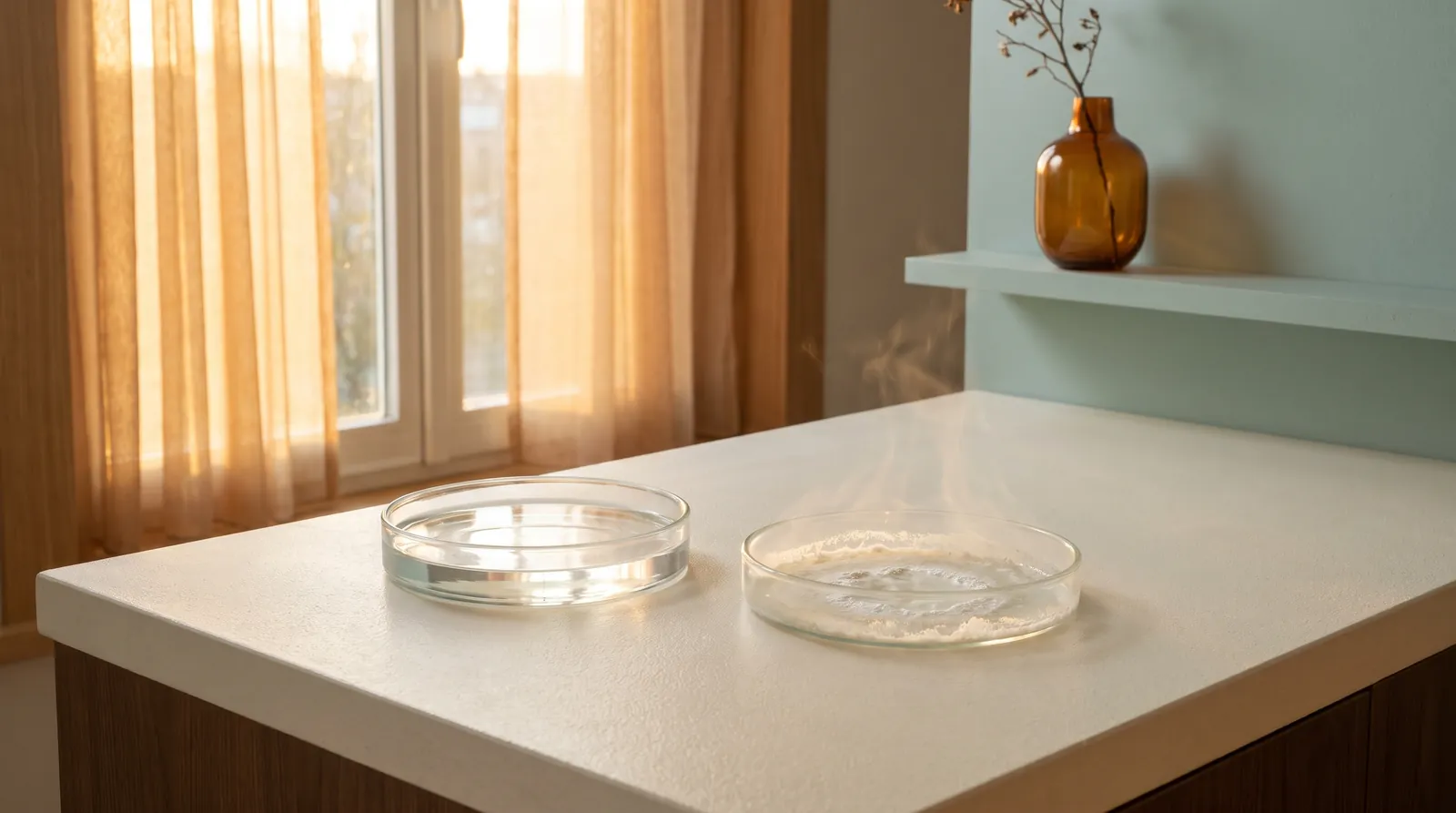
Why does relative humidity drop? The amount of water air can carry rises with temperature. When cold outdoor air is heated indoors, the water it holds stays the same while the amount it could hold goes up, so relative humidity falls. In a 1992 study by Reinikainen and colleagues in a Finnish office building, natural relative humidity in the wing without humidification was between 20% and 30%.
At what threshold does skin feel this dryness? In a 2006 study by Sunwoo and colleagues, 16 healthy young men were exposed to 10%, 30% and 50% relative humidity in a room at 25°C. When humidity fell below 30%, eyes and skin became dry; the authors therefore recommend keeping humidity above 30%. The study is small, but the threshold is practically useful.
The barrier's lipids decrease in winter. In a 1996 study by Rogers and colleagues, tape-stripped samples from the face, hands and legs showed that stratum corneum lipids were markedly lower in winter than in spring and summer. Ceramides also fell with age.
Natural humectants decrease too. In a 2004 study by Nakagawa and colleagues with 40 healthy people, the natural moisturizing factor (NMF) components lactate, potassium, sodium and chloride fell significantly from summer to winter. The change in the skin's physical properties when NMF was removed experimentally was equivalent to the change seen from summer to winter. Both of these studies came out of cosmetic companies' laboratories.
Skin becomes more reactive. According to a 2016 review by Engebretsen and colleagues, low humidity and low temperature weaken the barrier and leave skin open to mechanical stress. Skin cells release inflammation-triggering signals and cortisol, and mast cells in the dermis increase; skin reacts to irritants and allergens more easily. Cold, dry air also raises the risk of flare-ups in atopic dermatitis.
We covered how water loss and the barrier work in detail in our guide to the causes of moisture loss in skin.
Autumn habits that make dryness worse: hot showers, harsh cleansers, wool and too much exfoliation
As the weather cools, the urge grows to reach for hot water, thick clothing and scrubbing flaking skin clean. All four can feed dryness.
Long, hot showers. The American Academy of Dermatology (AAD) recommends limiting a shower or bath to 5-10 minutes, using lukewarm rather than hot water and keeping the bathroom door closed. When drying, do not rub; pat the skin with a clean towel.
Harsh or fragranced cleansers. According to DermNet, frequent washing with soap and detergent is among the causes of dryness-related eczema, and the organization recommends cream-type cleansers instead of soap. The AAD asks you to choose products labeled "fragrance-free", because products that say only "unscented" may contain substances that mask the smell of other ingredients and can irritate sensitive skin. It also recommends pausing products with alcohol, fragrance and retinoids on dry skin. When comparing ingredient lists, our guide that examines the technologies and ingredients of 30 skincare brands can help.
Wool. The AAD says wool and polyester can irritate dry, sensitive skin and recommends wearing a layer of cotton or silk underneath. According to a 2017 review by Zallmann and colleagues, there is no evidence that wool fibre is an allergen; irritation appears when fibre diameter is 30-32 micrometres or more. Very fine merino wool is well tolerated. The problem is not wool itself but thick, prickly fibres.
Too much exfoliation. It is tempting to rub flakes away, but flakes are a result of the problem, not its cause. According to the AAD, the harsher the exfoliation, the less often it should be done; too much leaves skin red and irritated. On dry, sensitive skin, a gentle chemical exfoliant can be preferred over mechanical scrubbing, with a moisturizer applied straight afterwards. If you use a retinoid or retinol, adding exfoliation on top can increase dryness.
Dry skin or dehydrated skin? Why the two get mixed up in autumn
In cosmetic language these two terms are often confused. Dry skin is a skin type: according to Lauren Zamborsky of Cleveland Clinic, skin that does not produce enough sebum looks dull and feels tight, even flaky. Dehydrated skin is a cosmetic description. What is missing is not oil but water in the outermost layer, so it can also occur in oily skin.
In autumn, the two meet in the same skin. If your cheeks feel tight after washing despite an oily T-zone, the picture is often closer to dehydration; a water-attracting serum with a light cream on top is usually enough. If the whole face stays rough, dull and flaky all day, barrier lipids are missing too. In this case the AAD recommends skipping lotion and starting with a cream or ointment.
One question guides you: does the tightness return a few hours after the cream? If it does, move to a richer texture and add a second layer in the evening. The biological difference between the two terms is explained separately in our moisture loss guide above.
Why does skin flake? Which type of flaking do you have?
In healthy skin, cells of the outermost layer shed one by one or in small groups, without being seen. According to a 2000 review by Harding and colleagues, enzymes dissolve the links that rivet the cells together, and these enzymes can only work with free water in their surroundings. When skin dries out, the links cannot be dissolved, cells lift off in clumps and white, dust-like flakes appear on the surface.
That is why flakes in simple dryness clear by moisturizing, not by rubbing; when flakes are thick and hard, a cream with 10% or more urea helps loosen them. But flaking appears in other conditions too, and each calls for different care:
| Condition | Where it is common | Appearance | Itch | Distinguishing clue |
|---|---|---|---|---|
| Simple dryness (xerosis) | Hands, face, arms, front of the legs | Fine, white, dust-like flakes; roughness | Mild and temporary | Clears with regular moisturizing |
| Dryness-related eczema (asteatotic eczema) | Most often the front of the legs; mostly in older age | Diamond-shaped cracked plaques separated by red lines | Marked; scratch marks may be present | Starts in winter, in low humidity |
| Atopic dermatitis (eczema) | In adults: inner elbows, behind the knees, hands, face, neck | Dry, cracked, crusted or thickened skin; colour change | Intense and constant | Often starts in childhood, flares and settles |
| Seborrhoeic dermatitis | Scalp, brows, sides of the nose, ears, beard area | Dry or greasy flakes; yellowish scale between the lashes | Usually mild; can be intense on the scalp | Favours oily areas |
| Psoriasis | Scalp, behind the ears, elbows, knees, back | Silvery-white scaly plaques; pink-red on light skin, grey on dark skin | Itchy and may hurt | Pitting of the nails may occur |
The information in the table is based on the patient pages of Cleveland Clinic, DermNet, the NHS and the AAD. It is not a diagnostic tool; if your skin resembles one of the last three rows, see a dermatologist.
Why do dryness and itching happen, and why is itch worse at night?
Dry skin itches because a weakened barrier lets irritants in more easily, and in cold, dry air skin becomes more reactive. Scratching irritates the skin further; the AAD therefore recommends not scratching.
Itch has a season and an hour. In a 2015 study by Valdes-Rodriguez and colleagues with 302 older people in Mexico, one in four had chronic itch, and 69% of them had dry skin. Of the participants with itch, 77% said it was worst in winter and 65% said it was worst at night.
Soothing itch at home. The AAD's advice is simple:
- Place a cool, damp cloth on the itchy area for 5-10 minutes, or until the itch passes.
- Take a lukewarm colloidal oatmeal bath.
- Apply a fragrance-free moisturizer while the skin is still damp and every time it itches.
- If a moisturizer is not enough, try a cooling product such as menthol or calamine.
- Wear loose cotton clothing and avoid sudden temperature changes.
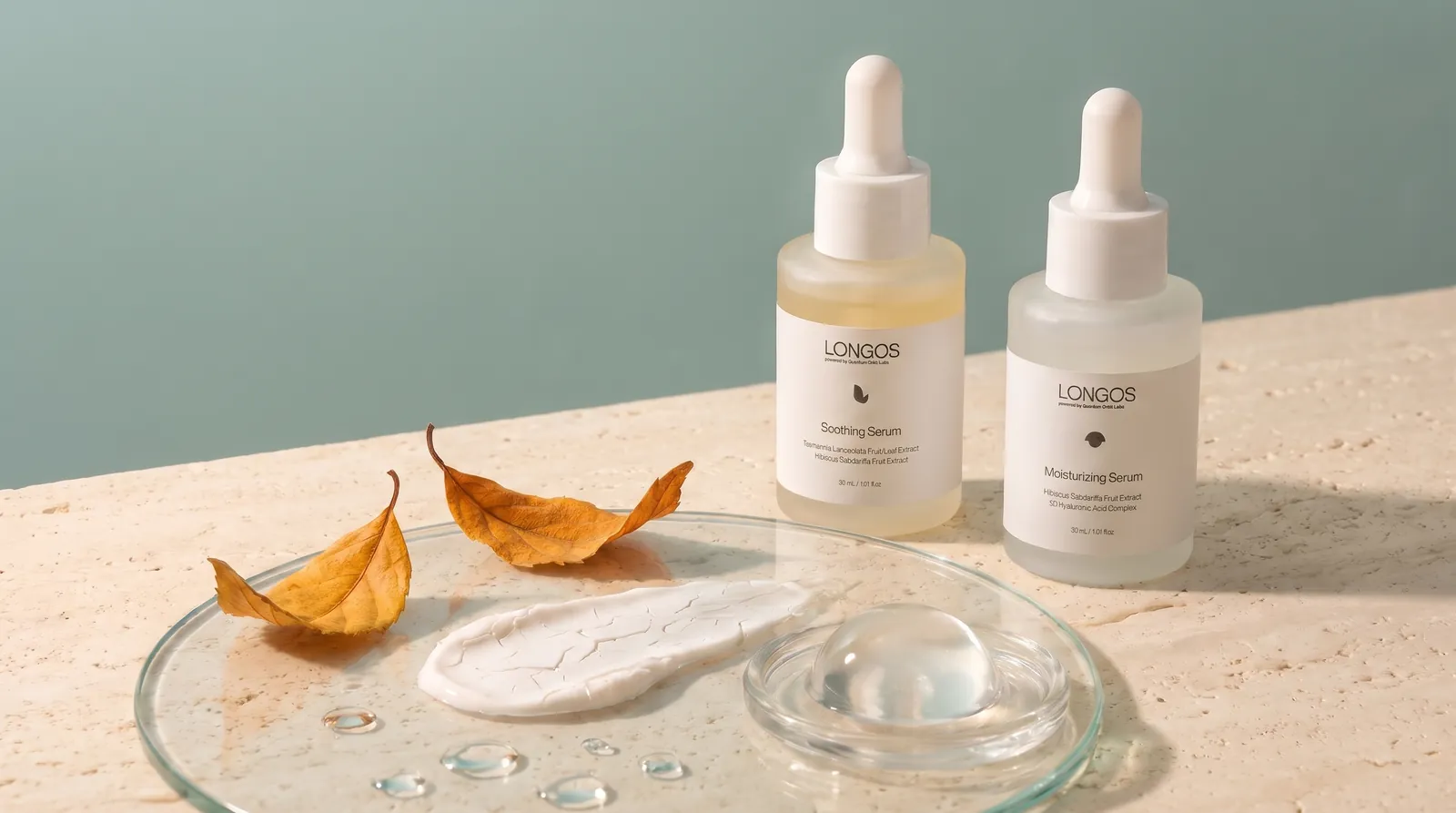
If dryness on the face comes with stinging, warmth and easy flushing, the skin is behaving reactively. In this period it makes sense to pause strong actives and focus on soothing. Longos Soothing Serum was formulated with Tasmannia Lanceolata extract for sensitive, reactive skin that feels itchy, and it fits this soothing step. It does not treat eczema or any other skin disease. To tell where redness comes from, see our guide on the causes of redness on the face and ways to soothe sensitive skin.
When is dryness not only a skin issue?
Seasonal dryness eases with the weather. Dryness that continues regardless of season, spreads over the whole body or arrives with other symptoms may point to a cause from within.
Thyroid. According to the NHS, symptoms of an underactive thyroid include dry skin, dry hair or hair loss, feeling colder than usual, extreme tiredness, weight gain and constipation. If several of these accompany your dryness, consult your doctor. The NHS notes that diagnosis looks at TSH and T4 levels in the blood.
Medicines and other conditions. DermNet links dryness-related eczema to an underactive thyroid, poor nutrition, severe weight loss and lymphoma. Medicines such as retinoids, diuretics (water pills) and protein kinase inhibitors can also cause this picture. According to the AAD, dry skin can be associated with atopic dermatitis, psoriasis and kidney disease, and long-lasting itch can be a sign of kidney, liver or blood diseases. In the Valdes-Rodriguez study, chronic itch was also associated with diabetes and venous insufficiency.
Age. According to the AAD, in the 60s and 70s skin thins and loses water more easily; medicines and illnesses contribute as well.
Which vitamin deficiency causes dry skin? An honest answer
Short answer: deficiencies of several vitamins and minerals can cause dryness and rash in the skin, but these pictures mostly occur in specific risk groups. A 2016 review by Galimberti and Mesinkovska lists the skin findings in deficiency of zinc and of vitamins A, B2, B3, B6 and C:
- Vitamin A. It can cause dry, rough, raised dots (phrynoderma). According to the review, it is rare in developed countries and is associated with malabsorption, liver disease and bowel surgery. In one series examined after obesity surgery, 69% of patients had vitamin A deficiency.
- Vitamin B3 (niacin). Pellagra, caused by niacin deficiency, first appears as a rash resembling sunburn on the face, neck and backs of the hands and feet. Alcohol use, eating disorders and some medicines create the risk.
- Vitamins B2 and B6. They can cause cracks at the corners of the lips and a rash around the nose resembling eczema or seborrhoeic dermatitis. B6 deficiency is rare in the general population, but according to the review, hidden deficiency can be common in older age.
- Zinc. A rash around the mouth and cracks at the corners of the lips are the most typical findings.
Vitamin D. In a 2019 meta-analysis by Hattangdi-Haridas and colleagues, blood vitamin D levels in people with atopic dermatitis were on average 14 nmol/L lower than in healthy people. In three supplement studies, the eczema severity score (SCORAD) was 11 points lower; the average dose was about 1,500-1,600 IU per day. This finding concerns eczema and rests on a small number of studies; it does not show that vitamin D corrects the dry skin of someone without eczema.
Omega-3. In a 2011 study by Neukam and colleagues, 13 women with sensitive skin took linseed oil for 12 weeks; water loss, roughness and flaking decreased. The group was very small and the result rests on a single study.
Practical decision. If dryness comes with cracks at the corners of the lips, a rash that gets worse in the sun, unexplained weight loss or a very restricted diet, discuss a blood test with your doctor; choose a supplement by the result, not by guesswork. For dryness that arrives in autumn and eases with a moisturizer, a vitamin pill is not the first step.
Soak and seal: why the three minutes after bathing matter
A moisturizer works best at the moment when skin has not yet lost its water. The AAD recommends applying a creamy, fragrance-free moisturizer within 3 minutes of bathing and throughout the day. In dermatology this approach is known as "soak and seal" (in English, "soak and smear").
The best-known description of the method comes from a 2005 article by Gutman and colleagues. In 28 patients with treatment-resistant, itchy rashes, soaking for 20 minutes in plain water before bed and immediately applying a medicated ointment to wet skin cleared the rashes or improved them markedly. The level of evidence is low: the study was retrospective, had no control group and the ointment contained a corticosteroid. For simple dryness, a plain ointment or a rich cream is used instead of medicine. The principle is the same: seal the water in while it is still in the skin.
In everyday terms it is short: wash in lukewarm water, pat dry without rubbing, and while the skin is slightly damp, apply the serum first and then the cream. On elbows, heels and the front of the legs, make an ointment the last step of the evening.
How to choose a winter moisturizer: urea, glycerin, ceramides and petrolatum
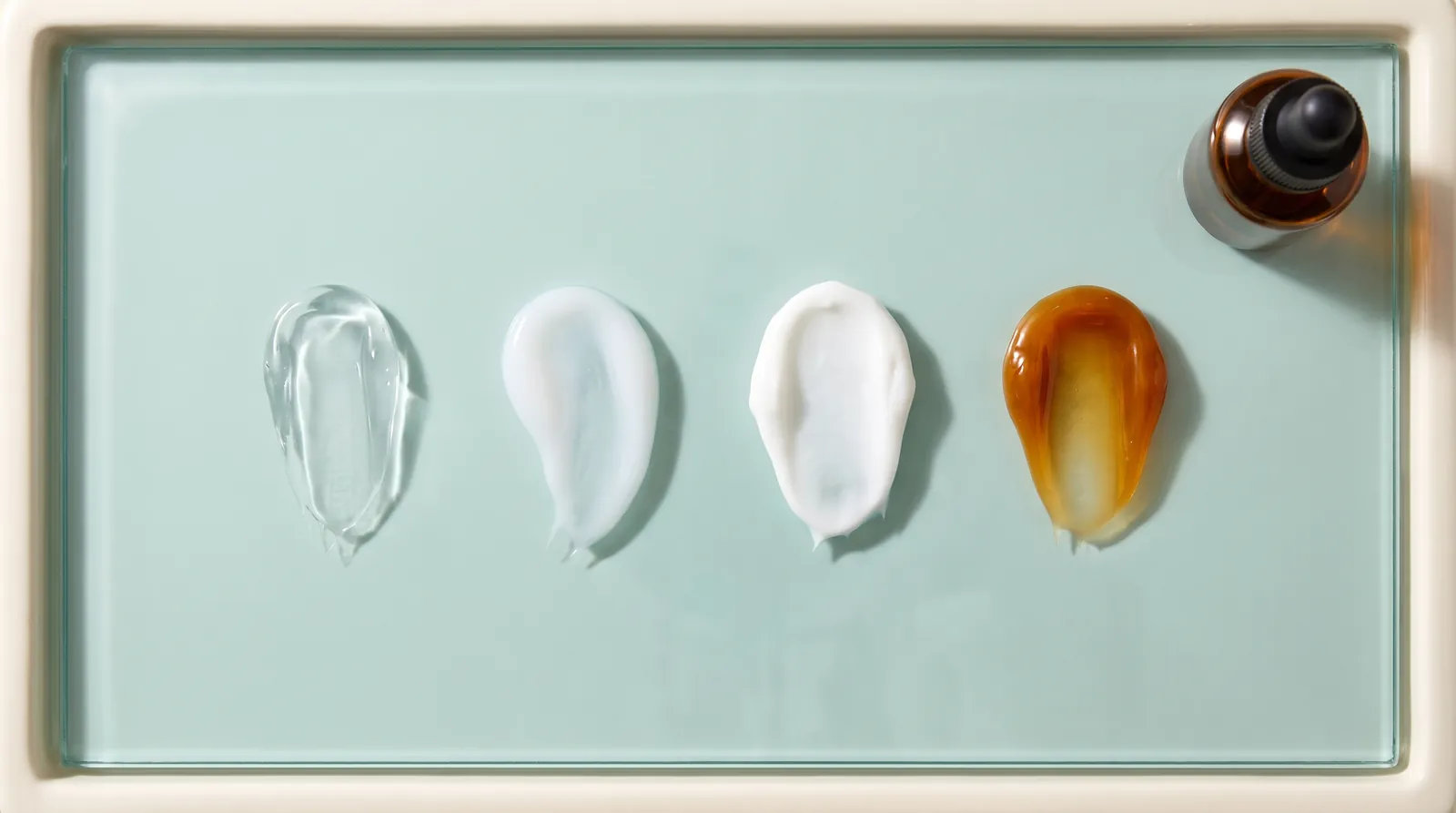
According to a 2017 Cochrane review covering 77 studies and 6,603 participants, moisturizers in eczema reduce flare-ups and lengthen the time to the next flare-up; compared with no moisturizer, this time rose from a median of 30 days to 180 days, but the quality of the evidence was low. On the other hand, the review found no reliable evidence that one moisturizer is better than another. In the BEE study by Ridd and colleagues with 550 children with eczema, lotion, cream, gel and ointment were also equally effective over 16 weeks; satisfaction was highest with lotion and gel.
These studies were done in people with eczema, but the lesson applies to simple dryness too: a product you enjoy applying every day does more than the "best" product waiting on the shelf. This table can guide you when choosing ingredients:
| Ingredient | What it does | Concentration and evidence | What to watch for |
|---|---|---|---|
| Urea | Draws in water; at high concentrations loosens flakes | 2-10% moisturizes, 10-30% moisturizes and loosens flakes, above 30% dissolves flakes; 10% was most often used in dryness studies | In one Cochrane study, more people in the urea cream group reported side effects; start with a low concentration on irritated skin |
| Glycerin | Draws in water, supports the barrier and skin elasticity | According to the 2008 Fluhr review, it improves skin properties in winter dryness and atopic dermatitis | In dry air, seal it with a cream on top |
| Ceramides | Replace the missing part of the barrier lipids | The AAD recommends a moisturizer with ceramides for dry skin | The winter ceramide study we mention below is manufacturer-funded |
| Petrolatum | Forms a film on the surface and slows water loss | Ghadially 1992: it did not slow the recovery of a damaged barrier, it sped it up | Feels greasy; suited to night and very dry areas |
A note on the sources. The urea ranges come from a 2021 review by Piquero-Casals and colleagues; two of its authors are employees of a dermocosmetic company, and three have received consulting fees from the same company. In Ghadially's study, petrolatum settled between the cells of a barrier damaged with acetone; in other words, it does not act only as a cover sitting on top.
Hyaluronic acid also belongs to the humectant family. The 8D Hyaluronic Acid Complex in Longos Moisturizing Serum was developed for moisture and barrier support; because a humectant alone may not be enough in dry air, apply the serum to damp skin and seal it with a cream. You can read how different molecule sizes behave in skin in our guide explaining what 8D hyaluronic acid is and how it is used.
Adjust the room too: humidifier, lukewarm water and controlled heat
Measure the humidity. The US Environmental Protection Agency (EPA) recommends keeping indoor relative humidity below 60%, ideally between 30% and 50%. An inexpensive hygrometer lets you see this range. The AAD recommends running a portable humidifier in the bedroom, especially while you sleep, and cleaning the device regularly to prevent mould.
How strong is the evidence? In Reinikainen's study, 290 office workers worked in humidified (30-40%) and non-humidified (20-30%) wings in weekly periods. A symptom score combining dryness of skin, eyes, throat and nose was significantly lower in the humidified period. The measurement relied on a diary; skin was not measured with an instrument.
Stay away from direct heat. DermNet lists fan heaters among the sources of low humidity and recommends avoiding direct heat in dryness-related eczema. Do not sit right in front of a radiator or stove.
Controlled heat is a different tool. Hot water and direct heat feed dryness; heat that touches skin briefly and at a limited temperature serves a different purpose. Thermal Therapy, one of the six technologies of Longos Sense, heats the contact surface to at most 39°C according to the user manual, and an NTC sensor provides automatic cut-off. Its purpose in the manual is to gently warm the skin surface to improve its appearance and support the absorption of cosmetic products; it does not treat dryness, and we have no published human study measuring this mode.
Use the device only on the face and neck, keep it moving continuously and slowly, and do not hold it on one spot for more than 10 seconds. Do not use it on cracked, bleeding or rashy skin, on eczema areas, or on the eyes and eyelids; according to the manual, the device is also not used under the age of 18, during pregnancy or while breastfeeding. We compared the difference between a hot towel, steam and controlled heat in our guide on applying heat to the face and thermal therapy.
An autumn routine step by step, with realistic timelines
- Shorten the wash. Keep showers to 5-10 minutes and the water lukewarm.
- Soften the cleanser. Choose a fragrance-free, cream-type cleanser.
- Pat dry. Do not rub with the towel; leave the skin slightly damp.
- Seal in the first 3 minutes. On the face, apply the water-attracting serum first, then the cream; on the body, use a cream or ointment.
- Ointment for cracks. In the evening, add a thin layer of petrolatum to heels, elbows, backs of the hands and the front of the legs.
- Refresh during the day. Reapply the moisturizer after washing your hands and whenever the skin feels tight; wear gloves in cold, dry air.
- Adjust the room. Keep relative humidity in the bedroom between 30% and 50%, and clean the humidifier regularly.
- Postpone exfoliation. Do not use a scrub until the flaking has cleared, then choose a gentle chemical exfoliant, used rarely.
When will you notice a change? In a 2012 study by Weber and colleagues in Hamburg in winter, a total of 154 people, mostly aged 50-80 and with very dry skin, completed the study. Participants used creams containing ceramides, NMF components and glyceryl glucoside twice a day. The increase in moisture could be measured in the first week and continued in the second; the effect was maintained even six days after the rich formula was stopped. The study was conducted and funded by the product's manufacturer.
DermNet also writes that dryness-related eczema usually responds quickly to treatment but often comes back. Practical expectation: with regular care, roughness and tightness ease in one to two weeks, and when you stop the care, dryness can return. A picture that does not change in two to three weeks should be reassessed.
When should you see a dermatologist?
In the situations below, contact a dermatologist or your family doctor instead of trying a new product at home:
- Dryness that does not improve. Cleveland Clinic and the AAD recommend seeing a doctor for dryness and itching that do not clear despite regular moisturizing.
- Itch that interrupts sleep. Itch that is constant, recurring or disrupts daily activities.
- Painful or bleeding cracks. The AAD recommends making an appointment for dryness that is painful, bleeding or very irritated.
- Signs of infection. According to the NHS, eczema that is blistered, crusted, weeping, painful, swollen or hot, that spreads suddenly or comes with a fever needs urgent assessment.
- Psoriasis-like plaques. Plaques with silvery scale, pitted nails, or recurring joint pain, swelling and stiffness.
- Greasy flakes. Greasy flakes on the brows, sides of the nose and ears, or yellowish crusts between the lashes.
- Symptoms that suggest the thyroid. If dryness comes with tiredness, feeling cold and weight gain.
- A new or changing spot. The AAD recommends that a spot that itches and is new or changing be examined for skin cancer.
Where to start this week
This evening, finish your shower in lukewarm water in under 10 minutes, pat your skin dry and apply the cream before 3 minutes are up. Put a hygrometer in your bedroom; if the reading is below 30%, run the humidifier. Keep the same products and the same order for a week, and set exfoliation aside for that time.
If dryness has not eased in two to three weeks, or the flaking resembles one of the last three rows of the flaking table, see a dermatologist instead of trying a new cream. This is a care guide, not medical advice.
Frequently Asked Questions
Why do dryness and itching happen?
Air is the most common cause. When cold air is heated indoors, its relative humidity drops and the outermost layer of skin loses water faster; studies show that the lipids and natural humectants in this layer decrease in winter. A weakened barrier reacts to irritants more easily, and the skin itches. Long hot showers, harsh soaps, coarse wool and too much exfoliation make things worse. If itching continues despite regular moisturizing, interrupts your sleep or spreads over the whole body, see a doctor about causes such as eczema, psoriasis, thyroid problems or kidney and liver disease.
Why does skin flake, and how does it clear up?
In healthy skin, dead cells shed without being seen. The enzymes that dissolve the structures binding these cells together need water; when skin dries out, the cells lift off in clumps and white flakes appear. With simple dryness, flakes clear by moisturizing, not by rubbing: wash briefly in lukewarm water, pat the skin and apply a cream or ointment within the first three minutes. For thick flakes, a cream with 10% or more urea helps. Greasy flakes, plaques with silvery scale or cracked plaques may point to seborrhoeic dermatitis, psoriasis or eczema, and then you should see a dermatologist.
Which vitamin deficiency causes dry skin?
Deficiencies of vitamins A, B2, B3 (niacin), B6 and C, and of zinc, can cause dryness, rash or flaking. But these deficiencies mostly appear in risk situations such as malabsorption, obesity surgery, alcohol use, eating disorders or a very restricted diet. Low vitamin D is linked to atopic dermatitis, and in a small number of studies supplements reduced eczema severity, but this finding cannot be carried over to people without eczema. For dryness that arrives in autumn and eases with a moisturizer, a vitamin pill is not the first step; if you suspect a deficiency, discuss a blood test with your doctor.
How do you choose a moisturizer for winter?
For dry skin, start with a cream or ointment instead of a lotion, and choose a fragrance-free product. Look for ingredients with evidence behind them: urea (2-10% moisturizes, 10-30% also loosens flakes), glycerin, ceramides and petrolatum. A Cochrane review found no reliable evidence that one moisturizer is better than another; in children with eczema, lotion, cream, gel and ointment worked equally well. So the product you enjoy applying every day is often the right one. If you use a water-attracting serum such as hyaluronic acid, seal it with a cream on top.
Why does skin get drier in the cold?
Cold air carries little water; when it is heated indoors, the water it holds stays the same while its relative humidity falls. In one small study, skin and eyes became dry when relative humidity dropped below 30%. Towards winter, the skin's barrier lipids and natural humectants also decrease, and skin becomes more reactive to irritants. Keeping the bedroom humidity between 30% and 50%, not sitting right in front of a radiator or stove, taking short lukewarm showers and wearing gloves in the cold all reduce this effect.
When should you see a dermatologist for dry skin?
See a dermatologist for dryness that does not improve in two to three weeks despite regular moisturizing, for itching that disturbs sleep or never lets up, and for painful or bleeding cracks. Blistered, crusted, weeping, swollen or hot areas and fever may be signs of infection and need urgent assessment. Plaques with silvery scale, greasy flakes around the brows and nose, dryness that comes with fatigue, feeling cold and weight gain, or a new itchy spot should also be shown to a doctor.
Clinical evidence

