Winter Sunscreen
Do You Need Sunscreen in Winter? UV in Autumn and Winter, the Right SPF and How Much to Apply
Do you need sunscreen in winter? The short answer
Yes, on most days. In winter the risk of sunburn drops clearly, but UVA rays, which age skin and darken dark spots, still reach the ground all year, even if not as strongly as in summer, and they pass through a large share of cloud and window glass. The American Academy of Dermatology (AAD) recommends applying sunscreen to every area of skin not covered by clothing on any day you go outside, because the sun emits harmful UV rays all year.
In Turkey the picture varies by city. In Istanbul the average UV index in December and January is around 2.3-2.5. According to the World Health Organization (WHO), the risk is limited even for very fair-skinned people when the index is below 2, and protection is recommended from 3 upwards. In Antalya the index in the same months is 3.6-3.7, which is above the threshold. In October both cities clear this threshold comfortably.
Practical rule: Do not drop your routine just because the season changed. Throughout autumn and winter, apply a broad-spectrum product of SPF 30 or higher to your face, neck and ears every morning. If you have melasma or a tendency to dark spots, choose a tinted formula with iron oxide. On snow, in the mountains and on long car journeys, treat winter like summer.
How does UV change from summer to winter? UVB drops sharply, UVA much less
Two kinds of ultraviolet rays reach the ground. According to the WHO, about 95% of them are UVA; UVA penetrates the deeper layers of the skin and contributes to ageing and wrinkling. UVB is the main cause of sunburn and delayed tanning, and most of it is filtered out in the atmosphere.
In winter the sun sits low in the sky and its rays travel a longer path through the atmosphere. This long path reduces mostly UVB, which ozone absorbs. According to measurements by the Turkish State Meteorological Service for 1997-2005, the monthly total UVB in Ankara falls from an average of 601 MED in July to 39 MED in December. MED is the smallest dose that causes redness in the skin; the difference is about 15-fold.
UVA does not fall by the same proportion. In Cole's 2001 review, measurements on clear days at the same latitude as Ankara (40° north) showed that at the winter solstice the daily UVB dose fell to one fifth of the summer value, while the UVA dose stayed at one third. Midday UVA intensity was about 42% of summer. At the end of September, midday UVA was still equal to 93% of the summer value. The author worked for a sunscreen manufacturer; the data are direct radiation measurements.
| Month | Istanbul | Antalya | By WHO threshold |
|---|---|---|---|
| July | 10.8 | 11.0 | Both 8 and above: do not stay outdoors at midday |
| September | 6.8 | 8.0 | Istanbul in the 3-7 range, Antalya 8 and above |
| October | 4.4 | 5.9 | Both 3-7: shade, hat, sunscreen |
| November | 2.7 | 4.2 | Istanbul below 3, Antalya in the 3-7 range |
| December | 2.3 | 3.7 | Istanbul below 3, Antalya in the 3-7 range |
| January | 2.5 | 3.6 | Istanbul below 3, Antalya in the 3-7 range |
| February | 3.4 | 4.9 | Both 3-7: protection recommended |
| March | 5.2 | 6.8 | Both 3-7: protection recommended |
The values in the table are the monthly average UV indices used in the 2024 study by Kallioglu and colleagues; the midday value on a clear day can be higher. For UVB, winter is a real break. For UVA, it is only a slowdown.
Do you need sunscreen on cloudy and overcast days?
According to the AAD, even on cloudy days up to 80% of the sun's harmful UV rays can pass through the clouds. The WHO paints a more detailed picture: UV reaches its highest level under a clear sky, and cloud cover usually reduces exposure. But thin or light cloud has little effect and can even increase UV through scattering.
So overcast weather is not a single condition. Thick, dark rain clouds reduce UV markedly, while a thin, bright layer of cloud cuts very little. Cool air is also misleading: in the WHO's words, UV can be neither seen nor felt, and the warmth the skin feels is not a measure of UV.
Practical rule: Do not decide by looking at the sky. According to the WHO, in many countries the UV index is published together with the weather forecast; check the day's index. If it is 3 or higher, apply your sunscreen whether it is cloudy or not.
Does window glass stop UVA? At home, in the office and in the car
According to the AAD, UVB is stopped by window glass, while UVA passes through it. You do not burn behind glass, but you keep receiving the rays that age skin and darken dark spots.
How much passes depends on the type of glass. In Hampton and colleagues' 2004 measurements, clear single-pane glass transmitted 62.8% of UVA, while grey laminated (layered) glass transmitted only 0.9%. In Boxer Wachler's 2016 measurements on 29 cars, windscreens blocked an average of 96% of UVA. For side windows the average was 71%, and it varied from 44% to 96% depending on the car.
The effect of many years is shown most strikingly by a case published in the New England Journal of Medicine in 2012. A 69-year-old man who had driven a delivery truck for 28 years had developed marked thickening and wrinkling on the left half of his face, the side facing the window. The authors attributed this to the cumulative effect of UVA passing through the glass; it is a single case, but the mechanism is well known.
In Turkey too the driver sits on the left, and on a long drive the area closest to the window is the left cheek. If you sit next to a sunny office window or drive for long periods every day, it makes sense to apply sunscreen on winter mornings as well. According to the WHO's INTERSUN programme, even people who work indoors receive 10-20% of the annual UV dose of people who work outdoors.
Snow, water and altitude: where winter UV matches summer
Snow
According to the WHO, snow can reflect up to 80% of UV, and fresh snow almost doubles the UV a person receives. The reflected rays come from below; they reach the area under the chin, around the wings of the nose and under the eyes.
Altitude
According to the WHO, UV levels rise by about 10% with every 1,000 metres; on a slope at 2,000 metres you receive roughly 20% more UV than at sea level. In Austria's UVA measurement network, the daily UVA measured in winter at a mountain station at 1,540 metres was double that of Vienna on the plain. The researchers explained the difference by less cloud and a frequent snow cover.
Water and sand
According to the WHO, grass, soil and water reflect less than 10% of incoming UV, dry sand about 15% and sea foam about 25%. On a long winter walk along the southern coasts, remember that Antalya's winter values are above the threshold.
For snow and mountains the standard is the summer standard. The AAD recommends a water-resistant, broad-spectrum product of SPF 30 or higher, and a lip balm of SPF 30 or higher for the lips; the WHO also asks for sunglasses that filter 99-100% of UV. If you take into account that in real life you will apply less than the amount on the label, choosing SPF 50 on the slope is reasonable.
Visible light and melasma: why winter is no break for dark spots
Visible light (400-700 nm) is not UV; it does not enter the SPF calculation, and most colourless sunscreens do not block it. In Mahmoud and colleagues' 2010 study of 20 volunteers with wheat-coloured and dark skin (Fitzpatrick IV-VI), visible light produced darker and longer-lasting pigmentation than long-wave UVA. No pigmentation was seen in very fair skin (type II). The study is small, and the skin was irradiated with laboratory light.
This finding helps explain why melasma does not fade completely in winter: even when UVB falls, visible light and UVA arrive all day, and both come in through windows. According to the AAD, tinted products (labelled "tinted") contain iron oxide and give extra protection against visible light; iron oxide is listed among the inactive ingredients in the ingredient list.
What did the studies show? In a double-blind study by Castanedo-Cazares and colleagues in Mexico in 2014, 68 patients with melasma used, for 8 weeks and together with 4% hydroquinone, either an SPF 50+ product with iron oxide or one that only blocked UV. The improvement in the melasma severity score (MASI) was 15% greater in the iron oxide group. In the 2015 study by Boukari and colleagues, 40 patients used one of two products for 6 months through spring and summer; the MASI score rose by a median of 0.45 in the iron oxide group and by 2.43 in the colourless group. People who put make-up over the colourless product did not have fewer relapses. A sunscreen manufacturer supported this study.
We have gathered the types of dark spots and the lightening ingredients with evidence in our guide on how to get rid of dark spots on the face. For brown marks left by acne, according to the AAD care also starts with sunscreen; you can find the routes by mark type in our article on how acne marks fade.
A little UVA every day: how photoageing and dark spots build up
You do not need to burn for photoageing to happen. In Lavker and colleagues' 1995 study, volunteers' back skin was given UVA at half the redness threshold (0.5 MED) on 5 days a week, 28 times in total. A single dose changed nothing; repeated doses led to thickening of the upper skin, a fall in the skin's immune cells (Langerhans cells), inflammation in the lower skin and a build-up in the elastic fibres. At the same redness dose, UVA caused more cumulative change than sun-like full-spectrum light.
There are also real-life data. In the 2013 randomised study by Hughes and colleagues in Australia, 903 adults under 55 were followed for 4.5 years. The group that applied broad-spectrum sunscreen every day showed no measurable increase in ageing; ageing was 24% lower than in those who used sunscreen only occasionally. The study was publicly funded and was assessed with skin casts taken from the back of the hand.
In Flament and colleagues' 2013 study, 298 French women who loved the sun and who avoided it were compared. Pigment spotting was strongly linked to the sun at every age; sagging, however, depended on age and did not differ between the two groups. The authors attributed 80% of the visible signs of ageing on the face to UV. This figure is an estimate from a single cross-sectional study carried out by researchers at a cosmetics company, not a direct measurement.
Sunscreen applied every winter morning slows the rate of this build-up. We have explained how sun-related ageing differs from chronological ageing in our article on the scientific causes of skin ageing and wrinkles.
Which SPF is enough in winter? SPF, PA and the broad-spectrum label
SPF only describes UVB. According to the US Food and Drug Administration (FDA), SPF mainly shows protection against sunburn, that is, UVB. According to the EU's 2006 recommendation, SPF 15 absorbs 93% of UVB and SPF 30 absorbs 97%. Because your main concern in winter is UVA, you need to look for a second piece of information on the label.
Three different labels describe UVA. The phrase "broad spectrum" is based on the FDA's critical wavelength test (370 nm and above). The EU recommendation requires the UVA protection factor to be at least one third of the SPF; according to the European Commission, products that meet this level may carry the logo with "UVA" in a circle. The PA system of the Japan Cosmetic Industry Association shows the UVA protection factor in four steps: PA+ (2-4), PA++ (4-8), PA+++ (8-16), PA++++ (16 and above).
A small calculation. By the EU criterion, a product of SPF 30 should have a UVA protection factor of at least 10; this corresponds to the PA+++ step. At SPF 50 the threshold rises to 16.7, that is, PA++++. A product that says SPF 30 but carries only PA+ or PA++ falls below this ratio.
The amount you actually apply shrinks the label. In the study by Fujiwara and colleagues, 63 people applied a median of 1.33 mg/cm² of sunscreen to the face; at this density, protection was about 63% of that at the standard amount. According to the authors, to get SPF 30-level protection with this amount, you need about SPF 47.5 on the label. The study was carried out by researchers from a cosmetics company and an industry association.
| Situation | Adequate choice | Not enough on its own |
|---|---|---|
| A 10-20 minute winter trip in town | Broad-spectrum SPF 30 with the UVA logo or PA+++ and above, a two-finger amount | An SPF 15 day cream with no UVA information |
| A desk by a sunny window, a long car journey | The same product, reapplied once at midday | A thin layer applied in the morning and forgotten |
| Melasma or a tendency to dark spots | Tinted SPF 30 or higher with iron oxide | Colourless sunscreen with make-up over it |
| Snow, skiing, mountain walking | Water-resistant SPF 50, reapplied every two hours, lip balm with SPF, UV-protective sunglasses | SPF in a moisturiser |
| A day with make-up | Sunscreen underneath, foundation on top | SPF foundation or powder alone |
We have explained in more detail what SPF measures and why you need to look for UVA protection separately in our guide on repairing skin from pollution and UV damage.
How much to apply and when to reapply
Amount. The SPF on the label is measured in the laboratory with 2 milligrams of product per square centimetre. For the face, the AAD recommends enough product to cover the length of your index and middle fingers. According to the EU recommendation, when the amount applied is halved, protection can fall by up to two thirds. In Boukari's melasma study, even patients who had been taught how to apply it actually applied close to 1 mg/cm².
Forgotten areas. In the 2019 study by Lourenco and colleagues, 84 people applied SPF 30 sunscreen on one day and SPF 30 moisturiser on another and were photographed with a UV camera. With sunscreen, an average of 11.1% of the face was left uncovered, and with the moisturiser 16.6%; around the eyelids these rates were 14% and 20.9%. Of the participants, 78% did not cover the inner corner of the eye next to the bridge of the nose, and most were unaware of it. The AAD recommends stick forms for the eye area.
Reapplying outdoors. The AAD and FDA recommend reapplying about every two hours when outdoors, and right after sweating or swimming. According to the AAD, a higher SPF does not let you stay outdoors longer without reapplying.
Reapplying indoors. We could not find a study that directly measures how often to reapply indoors; the organisations' two-hour rule is for time spent outdoors. A reasonable middle path is this: the layer you apply in the morning is enough for most winter days at a desk away from the window. If you sit next to a window that gets sun all day, plan to go outside at midday or set off on a long drive in the late afternoon, apply once more.
Moisturiser, make-up and tinted sunscreen: what order in the morning?
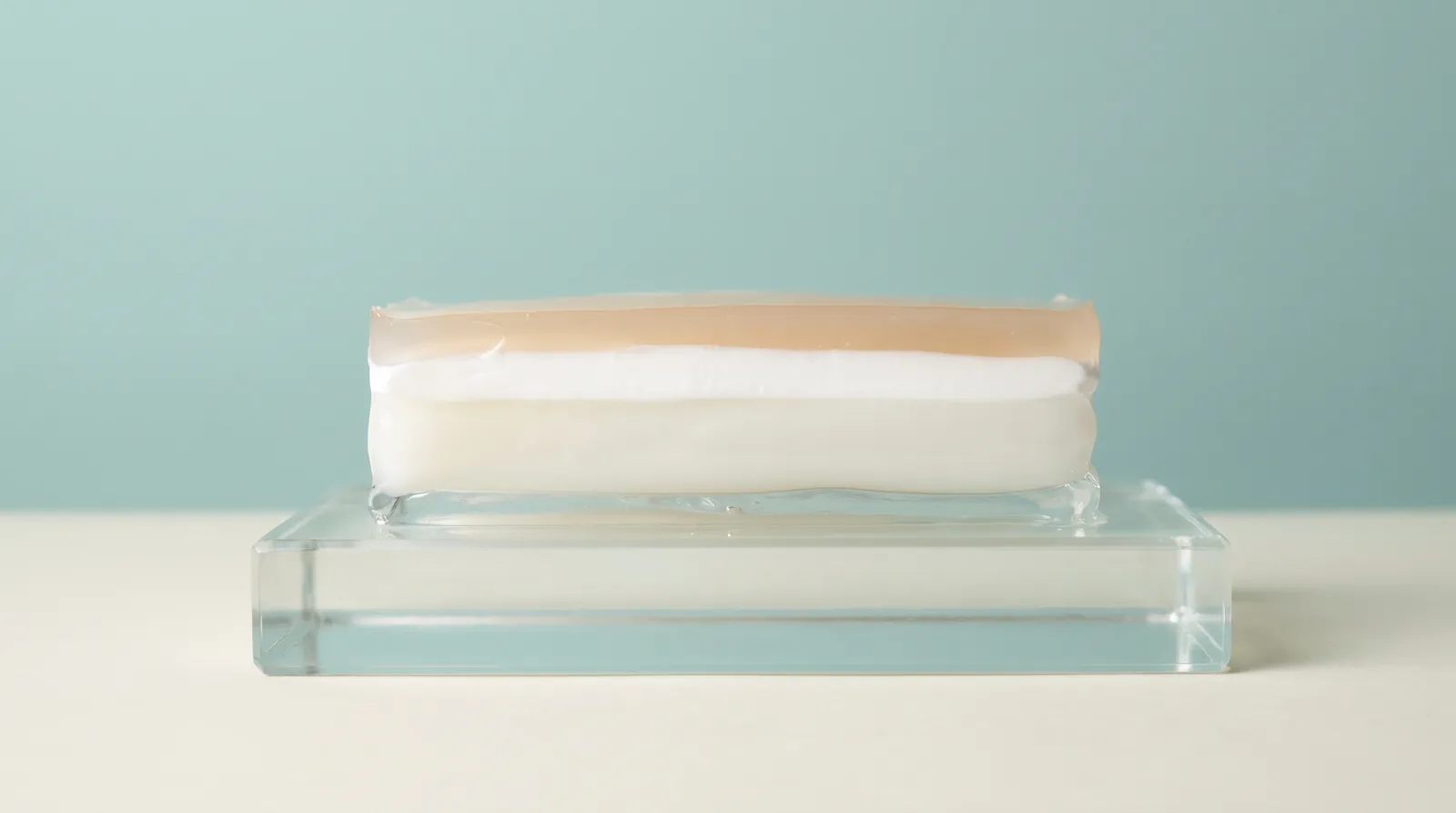
Winter routines get crowded. Order matters, because sunscreen needs to form an even film. According to the AAD, cream forms are the most suitable choice for dry skin and for the face.
- Gentle cleansing. Lukewarm water and a cleanser that does not leave your skin feeling tight are enough.
- Antioxidant serum. Vitamin C is an antioxidant that neutralises the free radicals UV creates in the skin; according to the 2017 review by Al-Niaimi and Chiang, sunscreens block these radicals only partly. The main active ingredient of Longos Brightening Serum is stabilised 3-O-Ethyl Ascorbic Acid, a stable vitamin C derivative. Formulated for uneven skin tone and the look of dark spots, this serum can take on this step in the morning, under sunscreen. The same review notes that clinical studies with vitamin C products are still limited. No serum replaces sunscreen; it is only an extra supporting layer underneath.
- Moisturiser. For dry winter skin choose a richer cream and wait a few minutes for it to absorb.
- Sunscreen. This is the last step of skincare. Cover the face, neck, ears and the area around the eyes. If you have melasma or a tendency to dark spots, use a tinted product with iron oxide at this step; according to the AAD, a shade that suits your skin also prevents the white cast that mineral products leave.
- Make-up. Foundation and powder go on top.
Why is SPF make-up not enough? In Fujiwara and colleagues' measurements, participants applied a median of 0.51 mg/cm² of liquid foundation and 0.10 mg/cm² of powder foundation to the face, while the SPF on the label is measured at 2 mg/cm². On the other hand, in Kim and colleagues' 2021 laboratory study, layering make-up over sunscreen clearly increased the effective SPF, even when both products were applied below the recommended amount. This study too was carried out at the research centre of a cosmetics company.
You can find the mistakes people make when choosing and storing a vitamin C serum in our guide on what a vitamin C serum does and the common mistakes.
Does sunscreen cause vitamin D deficiency?
The worry is understandable: vitamin D in the skin is made with UVB, and sunscreen filters UVB. But the real-life evidence shows that this effect is small. The 2019 systematic review by Neale and colleagues examined 4 experimental studies, 3 field studies and 69 observational studies. In experiments with artificial UV sources, sunscreen clearly reduced vitamin D production. In two randomised field studies, however, applying sunscreen every day did not change blood vitamin D levels.
Know the limits of the review as well. The field studies used products with an SPF of about 16; there is no randomised study with the high-SPF products recommended today. Most of the observational studies found no association.
In winter, the deciding factor is the sun itself. In Webb and colleagues' 1988 measurements, no vitamin D precursor formed in the skin in Boston (42.2° north) from November to February, even on clear days. According to the modelling by Kallioglu and colleagues for Istanbul and Antalya, effective vitamin D production in the skin lasts from early March to the third week of October; in January, November and December this effect is not seen. The model also assumes a situation in which the hands, arms and feet are uncovered, that is, a quarter of the body sees the sun. Reading the two sets of data together, for someone whose face and hands alone are uncovered in winter, giving up sunscreen adds little to vitamin D, while UVA exposure continues.
The AAD recommends that healthy adults get their vitamin D from foods that naturally contain it or are fortified. Decide on measurement and supplements for your vitamin D level together with your doctor.
Winter notes for children and sensitive skin
Babies and children
The FDA and AAD recommend keeping babies under 6 months out of direct sun and, if possible, not using sunscreen. According to the FDA, the risk of side effects such as rash is higher in babies than in adults. The best protection is shade, long-sleeved clothing and a wide-brimmed hat; if you are considering sunscreen, ask your paediatrician first.
For children aged 6 months and over, the AAD recommends products that contain titanium dioxide or zinc oxide; these mineral filters irritate children's sensitive skin less. On a snow holiday a child's face, ears and nose are exposed to reflection too, so reapply sunscreen every two hours.
Sensitive, dry or rosacea-prone skin
For sensitive skin, the AAD recommends products labelled "sensitive skin" and free of fragrance. For rosacea, and for cases where applying sunscreen causes stinging or burning, it points to formulas containing only zinc oxide and titanium dioxide. In winter dryness, cream textures are easier to apply. Before applying a new sunscreen to your whole face, try it on a small area for a few days.
When should you see a dermatologist?
Sunscreen is a care habit, not a diagnosis or a treatment. See a dermatologist, rather than trying products on your own, in these situations:
- A changing spot or mole. Have any spot that is new, growing, changing in colour or shape, itching or bleeding examined.
- Melasma that darkens in winter too. If it does not lighten at all despite three months of regular protection and care, or if it darkens in winter as well, discuss treatment options with your doctor.
- A rash that flares even behind glass. According to Hampton and colleagues, in some light-sensitive people, for example in polymorphic light eruption, even UVA passing through a car side window can trigger a flare.
- A reaction to sunscreen. Redness, itching or burning that recurs with every application can be a sign of allergy or irritation.
- A medicine that causes light sensitivity. Ask your doctor or pharmacist whether the medicine you take increases sun sensitivity.
Where should you start this week?
This week, look at the label of the sunscreen you have: does it say broad spectrum, the UVA logo in a circle or PA+++ and above? If it does, switch to the two-finger measure in the mornings and put the product next to the door; if it does not, check this criterion first when you buy a new one.
If you would like to track your skin tone through winter by measurement rather than guesswork, run the AI skin analysis in the Longos Sense app once this evening on clean skin with no products; the analysis scores pigmentation and skin tone evenness from 0 to 100. Repeat it once a month in the same light and watch how the score moves until spring. The analysis does not diagnose; this is a care guide, not medical advice.
Frequently Asked Questions
Do you need sunscreen in winter?
Yes, on most days. In winter UVB and the risk of sunburn drop clearly, but UVA, which ages skin and darkens dark spots, arrives all year and passes through much of the cloud and window glass. In Istanbul the average UV index in December and January is about 2.3-2.5, and in Antalya 3.6-3.7; the World Health Organization recommends protection from 3 upwards. In October, February and March the index in both cities is above that threshold. Applying a broad-spectrum product of SPF 30 or higher every morning is the simplest rule.
What is sunscreen for in winter?
In winter sunscreen mainly protects against UVA and, in tinted formulas, against visible light. UVA passes through glass, ages skin and darkens dark spots without causing a burn. In a 2013 randomised trial of 903 adults in Australia, people who applied broad-spectrum sunscreen every day showed no measurable increase in skin ageing over 4.5 years. For melasma, two small studies suggest that tinted products with iron oxide do better than products that only block UV. On snow and at high altitude the risk of burning stays high in winter too.
How often should you reapply sunscreen in winter?
When outdoors, the American Academy of Dermatology and the FDA recommend reapplying about every two hours, and right after sweating or swimming; on snow and on the ski slope the same rule applies unchanged. No study has measured how often to reapply indoors. If you work at a desk away from the window, one generous layer in the morning is enough for most winter days. If you sit next to a window that gets sun all day, plan to go outside at midday or set off on a long drive, apply once more.
Do you need sunscreen on cloudy or overcast days?
Most of the time, yes. According to the American Academy of Dermatology, up to 80% of UV rays can pass through clouds even on cloudy days. According to the World Health Organization, thick cloud cover usually reduces exposure, but thin or light cloud has little effect and can even raise UV through scattering. Cool air is also misleading, because you cannot feel UV. Instead of looking at the sky, check the day's UV index: if it is 3 or higher, apply your sunscreen whether it is cloudy or not.
What SPF is enough for autumn and winter?
For short trips in town, broad-spectrum SPF 30 is enough, as long as it also carries UVA protection: the UVA logo in a circle used in Europe, or PA+++ and above. In one measurement people applied a median of 1.33 mg/cm² to the face and got about 63% of the protection on the label, so SPF 15 day creams without UVA information are weak on their own. For melasma, a tinted SPF 30 or higher with iron oxide; on snow, on the ski slope and at high altitude, a water-resistant SPF 50 is a reasonable choice.
Does sunscreen cause vitamin D deficiency?
In real life the evidence for this is weak. In a 2019 systematic review, two randomised field studies showed that daily sunscreen use did not change blood vitamin D levels; however, those studies used products with an SPF of about 16. In winter the deciding factor is the sun itself: according to a modelling study for Istanbul and Antalya, effective vitamin D production in the skin lasts only from early March to the third week of October. Decide on measurement and supplements for your vitamin D level together with your doctor.
Clinical evidence