Ultrasonic Skincare Device
What does an ultrasonic skincare device do? Serum absorption, correct use and how it differs from HIFU
What is an ultrasonic skincare device? A vibration you cannot hear
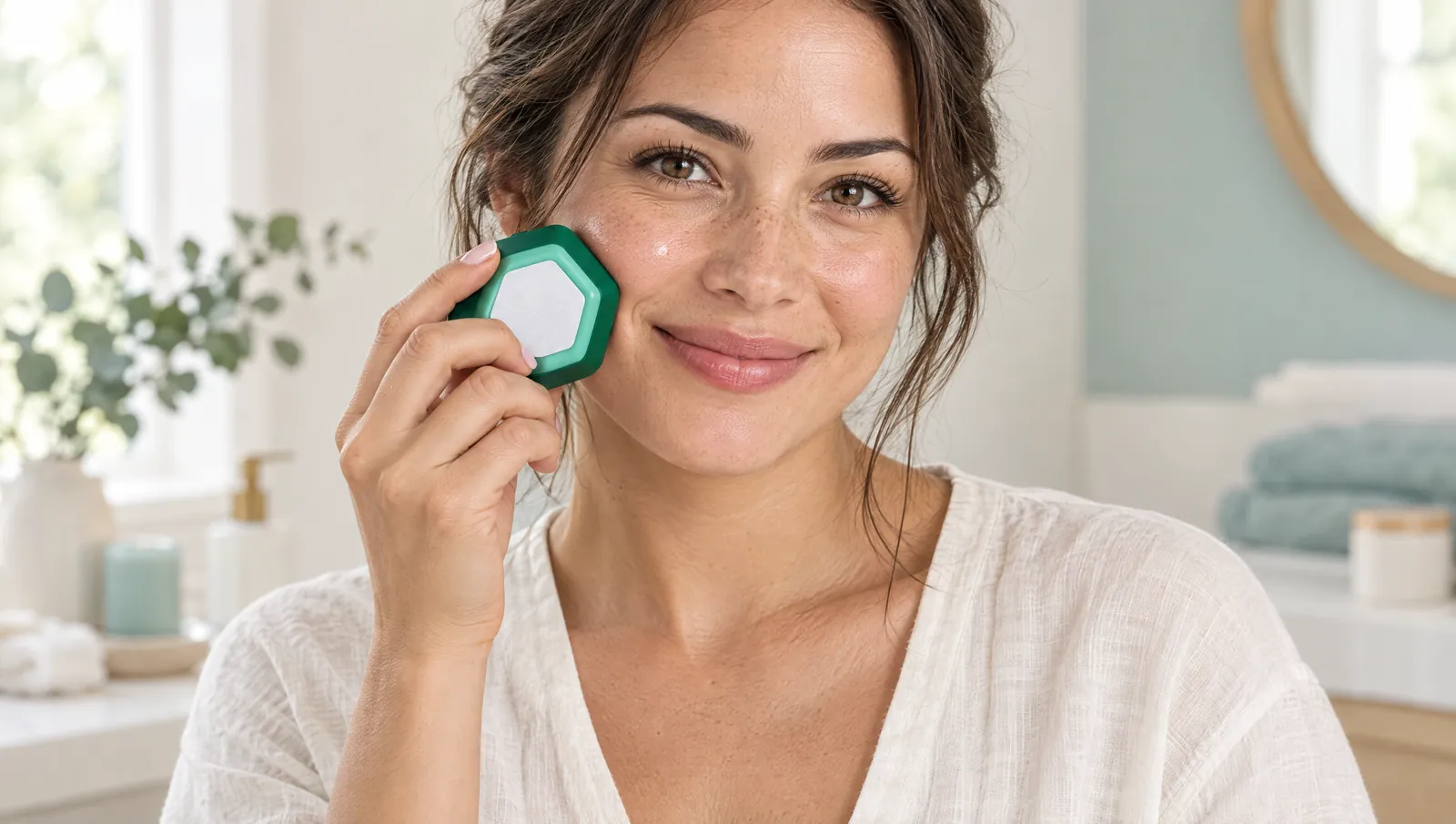
Ultrasound is vibration above the highest pitch the human ear can hear. According to a review of ultrasound's effects on the skin, that limit is 20 thousand vibrations per second, that is, 20 kHz. A small crystal inside the device turns an electrical signal into a mechanical wave, and the device head passes that wave on to the skin.
Three product groups with very different purposes are actually sold under the name "ultrasonic device". Knowing which one you are buying also tells you what to expect from it:
| Device | Where is it used? | What is it designed for? |
|---|---|---|
| Ultrasonic serum device | At home | Supporting the absorption of serum into the skin |
| Ultrasonic peeling spatula | At home | Clearing dead cells and oil from the surface of wet skin |
| HIFU (high-intensity focused ultrasound) | In a clinic, by a specialist | Tightening by creating heat points in deep tissue |
This article focuses on the first group: how ultrasound works together with serum. We explain how it differs from the other two further below.
Why is the skin barrier such a hard wall to get through?
The outermost layer of the skin, the stratum corneum, is a tight wall made of dead cells and the lipids between them. According to the same review, this layer is only 20 micrometres thick on average, thinner even than a single hair. This thin but sturdy wall protects the skin from water loss and from substances coming in from outside.
That protection is a good thing, but in skincare it comes at a price: a significant share of the serum you apply stays in the uppermost layers. In a 2026 study, when serum was simply applied by hand, the signals measured with Raman spectroscopy stayed within the top 6 to 10 micrometres of the skin's outermost layer. This is exactly where ultrasonic devices make their promise: to make the wall more permeable for a short time, without tearing it down.
How does ultrasound make skin more permeable? Cavitation
Using ultrasound to help carry substances into the skin is not a new idea. According to a comprehensive review by MIT researchers, this method, known as sonophoresis, has been in use since the 1950s; the first examples were meant to help cortisone creams pass into the skin more effectively.
The main mechanism behind the effect is called cavitation. The ultrasound wave creates tiny bubbles, or microbubbles, in the liquid layer on the skin, meaning the serum or gel. These bubbles grow and shrink with the rhythm of the wave, and some of them burst right next to the skin surface, producing very small jets of liquid. According to the review, these jets briefly disrupt the dead cells of the outermost layer and the arrangement of lipids between them, which increases permeability.
That is why the device never works on dry skin but always with a layer of liquid. The serum itself provides the medium in which the bubbles form.
Why does frequency matter? The difference between 20 kHz and 1 MHz
The effect of ultrasound on the skin varies greatly with its frequency. Reviews describe three ranges: low frequency between 20 and 100 kHz, therapeutic frequency between 0.7 and 3 MHz, and high frequency above 3 MHz.
Therapeutic and high frequency. According to the MIT review, skin permeability typically rises by a factor of 1 to 10 at frequencies of 1 MHz and above. Because these frequencies have been used in physiotherapy for many years, they also have a long safety record. The review reports that this range works especially well for helping small molecules pass into the skin.
Low frequency. In laboratory experiments on cadaver skin, 20 kHz ultrasound raised permeability up to a thousand times more than 1 MHz did. It is a striking number, but it does not describe what home devices achieve; it was obtained under controlled laboratory conditions with specific settings.
Depth. According to NCBI StatPearls, in physiotherapy 1 MHz targets deeper tissues, while 3 MHz targets more superficial ones. In skincare, the real target is not deep muscle but the upper layers of the skin.
Intermediate frequencies. The MIT review also notes that frequencies between 100 and 700 kHz have not yet been studied enough for delivering substances into the skin. That is why a device's frequency is an important piece of information for understanding what you can expect from it.
What does the evidence say? Results measured with serum
It is well known that ultrasound increases permeability in the laboratory. The real question is what happens when low-power devices made for home use are combined with serum. Three recent studies look at this question from different angles:
| Study | Device | Participants | Result |
|---|---|---|---|
| Kim et al., 2026 | 1 MHz ultrasound + two electrical methods, a single 90-second session | 22 women, aged 23-60, forearm | Serum absorption rose 2.6-fold and penetration depth 2.3-fold; no side effects observed |
| Choi et al., 2024 | Home device combining light, radiofrequency, microcurrent and low-intensity ultrasound, 8 weeks | 36 women, one half of the face | Hydration, elasticity, roughness, pore size and wrinkles around the eyes improved; no side effects observed |
| Vergílio and Leonardi, 2024 | 5 MHz ultrasound for 20 minutes once a week, 8 sessions | 67 women, aged 30-60 | Ultrasound alone showed no improvement in instrument measurements; the niacinamide formula increased hydration |
In the study by Kim and colleagues, measured absorption rose from 0.080 to 0.207 units, and the depth the serum reached went from 7.36 to 17.00 micrometres. The study by Choi and colleagues also examined tissue samples and found higher type 1 collagen expression and lower levels of an enzyme that breaks down collagen.
The takeaway from this table is clear: ultrasound is a carrier, and the serum does the real work. In the first two studies, ultrasound was used together with other technologies, so it is not possible to separate how much of the effect came from ultrasound. The third study also shows that ultrasound on its own does not work miracles; it becomes meaningful together with the right formula.
Is an ultrasonic peeling spatula the same as a serum device?
No, but the two are often confused. Products sold as a "skin scrubber", "ultrasonic spatula" or "facial cleansing spatula" usually belong to the same group: a thin, paddle-shaped metal tip vibrates and is glided over wet skin.
The spatula's main job is cleansing. The vibrating tip and the thin film of water on the skin loosen and wipe away dead cells and oil from the surface, which can make the skin feel smoother for a day or two. However, a spatula does not remove the hardened blackhead plug deep inside the pore. We cover the ingredients that loosen the plug in the pore in our salicylic acid guide.
A serum device, on the other hand, is not designed to scrape the surface but to support the passage of the serum you apply into the skin. Some spatulas also have a "serum mode", but the primary purpose of the two device groups is different.
The difference between at-home ultrasound and clinic HIFU

HIFU, or high-intensity focused ultrasound, has very little in common with home devices apart from the word "ultrasound" in its name. According to a review in the Journal of Drugs in Dermatology, HIFU focuses ultrasound energy up to 4 millimetres below the skin surface, creating small points of thermal damage in the tissue. As the body repairs these points, the tissue tightens.
This power and precision call for a specialist's control. According to the same review, HIFU received approval from the US Food and Drug Administration (FDA) in 2009 for eyebrow lifting and in 2012 for the submental area and neck. In a study published in the Journal of the American Academy of Dermatology, specialists saw a noticeable eyebrow lift in 30 of 35 people, or 86%, 90 days after a single HIFU session; the average increase in eyebrow height was 1.7 millimetres.
At-home ultrasonic devices, by contrast, generally use unfocused, low-intensity ultrasound and are not meant to create thermal damage in tissue. Their job is not to reach deep tissue for tightening but to help serum spread better in the upper layers of the skin. We explain in detail what works at home for deeper changes such as sagging in our facial sagging guide.
How to use an ultrasonic skincare device, step by step
The effect of ultrasound depends heavily on correct use. When we adapt the basic rules of ultrasound application in physiotherapy to a home routine, the steps look like this:
- Cleanse your face gently. Make-up, sunscreen and oil residue reduce the contact of ultrasound and serum with the skin.
- Apply serum or coupling gel generously. Ultrasound does not travel well through air; in physiotherapy, too, the head is always used with a coupling gel. The serum provides both the medium the wave travels through and the active ingredient to be carried.
- Glide the device slowly while keeping it in contact with the skin. Do not hold the head on one spot; keep it moving continuously over the skin instead of lifting it off and putting it back down.
- Follow the device's programme. Longer is not always better; the session length and how often to use the device, as given in the user manual, are based on the device's safe operating range.
- Finish the routine with a moisturiser. If you use the device in the morning, always apply sunscreen afterwards.
Which serum should you use with it?
Since ultrasound is a carrier, the serum itself largely determines the quality of the result. According to the MIT review, ultrasound at around 1 MHz is particularly effective at helping small molecules pass into the skin. Water-based, fluid serums both form a good conductive layer and spread easily over the skin.
It makes most sense to choose according to what your skin needs at that moment: humectants for dry, tight skin, brightening ingredients for dull, tired skin and soothing ingredients for sensitive skin. We explain how humectant serums work in our 8D hyaluronic acid guide.
It is also wise to leave a margin for caution. If ultrasound increases permeability, it can also increase the passage of a product that may irritate the skin. Before using strong actives such as high-concentration acids or retinoids with the device, check the user manual, and if you are unsure, it is safer to save them for evenings without the device.
What to look for when buying an ultrasonic skincare device
There are dozens of very similar devices on the market, and the promises on the box are often the same. These questions make the decision easier:
- What is it designed for? Is it a cleansing spatula or a serum device? If your goal is better serum absorption, a cleansing-focused spatula will not meet your expectations.
- Are the frequency and session length clearly stated? Frequency is the most concrete clue to how the device works. A timer or automatic shut-off limits each use to the recommended time.
- Does it explain which products to use it with? A good device clearly describes in its manual the type of serum or gel to use with it and the order of application.
- Are the safety warnings clear? Warnings in the manual about the eye area and sensitive or irritated skin show that the manufacturer takes the device seriously. For electrical devices sold in Europe, also check for the CE mark.
When will you see results?
The effect of ultrasound is best thought of on two different time scales.
In the same session. In the study by Kim and colleagues, the increase in serum absorption was measured 30 minutes after a single 90-second application. In other words, the delivery effect happens during the application itself.
Over weeks. Visible changes in the skin, however, take time. In the study by Choi and colleagues, improvements in hydration, elasticity and the appearance of pores were measured at the end of 8 weeks of regular use. That is why it is normal not to see a clear difference in the first few weeks; consistency matters more than intensity.
Who should not use it? Safe use
Used correctly, ultrasound is a low-risk technology. According to a review of the safety of therapeutic ultrasound, the risk of harm such as burns is low when it is applied correctly in physiotherapy. No side effects were reported in the two device-assisted studies above either.
Even so, some rules from Health Canada's ultrasound safety guideline also offer guidance for home use:
- Eyes: Ultrasound should not be applied to the eye, because the lens of the eye cannot dissipate heat. Do not use the device over your eyelids.
- Active infection: Applying ultrasound to inflamed and infected areas is not recommended. Do not pass the device over active, inflamed pimples, open wounds or irritated skin.
- Reduced sensation: Do not use it on areas where you cannot properly feel heat or pain.
- Pregnancy and implants: The guideline states that ultrasound should not be applied to areas where it could affect a fetus, or to the chest area in people with a pacemaker. If you are pregnant or have an implanted device in your body, ask your doctor before using it for facial care.
Common mistakes
"It works on dry skin too." Ultrasound does not travel well through air, and cavitation needs a liquid layer. Using the device without serum or gel takes away its main function.
"The longer I hold it on one spot, the better." Keeping the head moving continuously instead of holding it on one spot spreads the energy evenly across the skin.
"An ultrasonic spatula removes blackheads at the root." The spatula cleans the surface, but it does not remove the plug deep inside the pore.
"I will get a HIFU effect at home." Home devices do not use focused, high-intensity energy and do not replace clinic HIFU.
"The device delivers results regardless of the serum." Studies show that ultrasound on its own has a limited effect and that the real difference appears together with the right serum.
Ultrasonic Wave in Longos Sense: working with the other five technologies
Longos Sense, the AI-powered at-home skincare device by Quantum Orbit Labs, combines six technologies in a single body. Ultrasonic Wave, the subject of this article, is a gentle micro-vibration massage that can be used with a serum and is designed to improve the look of skin texture. Quantum Dot Light uses red, blue and near-infrared light; Radiofrequency temporarily warms the skin tissue and Thermal Therapy gently warms the skin surface. Cryo Therapy temporarily cools the skin surface to help improve the look of skin tone and reduce the look of puffiness. Mechanical Vibration, found on both of the device's surfaces, is separate from Ultrasonic Wave: a gentle vibration massage that stimulates the skin. We also explain how these technologies work together in our article on their combined effect.
The device's mobile app first runs an AI skin analysis, scoring wrinkles and fine lines, pore appearance, pigmentation and tone evenness, redness, and breakouts and blemishes on a 0-100 scale, and then recommends the serum and device mode that suit your concern. Controlled observations in the laboratories of Yildiz Technical University also show that when the right serum is matched with the right device protocol, the response is noticeably stronger than when either is used on its own. These are laboratory observations, not a medical claim. Longos Sense was designed for the face and neck, developed with German engineering and is CE certified.
Where should you start tonight?
Tonight, cleanse your face gently and apply a generous layer of a water-based serum that suits your skin's needs. Then glide your ultrasonic device slowly over the skin, keeping it in contact and away from the eye area, and close the routine with your moisturiser. If you would rather choose your first serum by measurement than by guesswork, run the AI skin analysis in the Longos Sense app once on clean, product-free skin before you start the routine. When you track your pore appearance and wrinkle and fine line scores under the same conditions over 8 weeks, you will see in numbers what the routine really does for the look of your skin.
Frequently Asked Questions
What does an ultrasonic skincare device do?
An ultrasonic serum device creates tiny bubbles in the layer of serum on the skin, which makes the skin's outermost layer more permeable for a short time and supports the passage of serum into the skin. This effect is called sonophoresis. The device is a carrier; the serum does the real work. An ultrasonic peeling spatula, by contrast, is designed for surface cleansing, and clinic HIFU for tightening deep tissue.
Does an ultrasonic device really increase serum absorption?
Studies support this. In a 2026 study, a device combining 1 MHz ultrasound with two electrical methods increased serum absorption 2.6-fold and penetration depth 2.3-fold in a single 90-second application. However, because the ultrasound was used together with other technologies, the whole effect cannot be attributed to ultrasound. Ultrasound on its own may have only a limited effect; the difference appears together with the right serum.
Is an ultrasonic skincare device harmful?
Used correctly, ultrasound is a low-risk technology. According to a review of therapeutic ultrasound, the risk of harm such as burns is low, and no side effects were reported in the device studies reviewed. Even so, do not use the device over your eyelids, on active inflamed pimples, on open wounds or on areas with reduced sensation. If you are pregnant or have an implanted device, ask your doctor first.
Can an ultrasonic device be used on dry skin?
It should not be. Ultrasound does not travel well through air; in physiotherapy, too, the head is always used with a coupling gel. Cavitation, the formation of tiny bubbles behind the effect, also takes place in the liquid layer on the skin. So after cleansing your face, apply serum or coupling gel generously and glide the device slowly while keeping it in contact with the skin.
Is an ultrasonic device the same as HIFU?
No. HIFU focuses ultrasound energy up to 4 millimetres below the skin to create small heat points in the tissue, and it is only performed in a clinic by a specialist. It received FDA approval in 2009 for eyebrow lifting and in 2012 for the submental area and neck. At-home ultrasonic devices generally use unfocused, low-intensity ultrasound and are designed to support the passage of serum into the skin.
When will you see results from an ultrasonic skincare device?
There are two different time scales. Serum delivery happens during the application itself; in one study, the increase in absorption was measured 30 minutes after a single 90-second application. Visible changes in the skin take time; in one home-device study, improvements in hydration, elasticity and the appearance of pores were measured after 8 weeks of regular use. Consistency matters more than intensity.
Clinical evidence