
Androgens
How to Get Rid of Pimples at Home: What the Evidence Supports, Kitchen Remedies to Skip and a 4-Week Plan
How do you get rid of pimples at home? The short answer
A pimple is a small lesion that forms when a hair follicle clogged with oil and dead cells is enlarged by bacteria and inflammation. For mild acne, the approach that works best at home is to choose one evidence-backed active, apply a thin layer to the whole acne-prone area and stick with it for 6-8 weeks. Those actives are benzoyl peroxide, adapalene, salicylic acid and azelaic acid.
For a single pimple that swells up that evening, a hydrocolloid patch, ice and a warm compress bring short-term relief. Toothpaste, lemon, garlic, baking soda, alcohol and cinnamon, on the other hand, have no proven effect on acne; what's more, they can irritate and even burn the skin.
In brief
- The American Academy of Dermatology's (AAD) 2024 guideline gives a strong recommendation to benzoyl peroxide and topical retinoids and a conditional recommendation to salicylic acid and azelaic acid.
- Among natural options, the best data are for 5% tea tree oil gel; a randomized study with medical honey found no significant difference.
- A single pimple does not vanish overnight; a routine shows results in 4-8 weeks, and clearing takes about 16 weeks.
- Deep, painful lumps, pimples that leave marks and severe acne that starts suddenly in adulthood need a dermatologist.
What is a pimple? A clogged pore, bacteria and inflammation
According to the NCBI StatPearls review on acne, every pimple starts with a plug you cannot see: the microcomedone. Four processes make it grow: excess sebum, cells in the follicle canal sticking together instead of shedding, the bacterium Cutibacterium acnes (C. acnes) and inflammation. If the opening of the plug is closed, a whitehead forms; if it is open, a blackhead. Bacteria and the immune response produce red, raised pimples, while a rupture of the follicle wall leads to deep nodules.
We explain what the oil glands produce in our guide to what sebum is and how the oil glands work. According to Mayo Clinic, acne is not caused by dirty skin, and scrubbing the skin hard makes it worse.
Which pimples can be managed at home? According to a dermatologist quoted by the AAD, mild acne made up of blackheads, whiteheads and small pimples can be treated effectively at home with over-the-counter products. For nodules and cysts, which Mayo Clinic describes as large, painful lumps beneath the skin, these products are usually not enough.
You will find why pores look larger in our guide to shrinking pores, and the small white bumps that get mistaken for pimples in our article on white bumps on the face.
What helps pimples at home? A table ranked by evidence
The table ranks frequently searched home methods by the strength of the evidence. "Limited evidence" means the question has not yet been answered by large studies.
| Method | What does it do? | Evidence | Verdict |
|---|---|---|---|
| Benzoyl peroxide 2.5-10% | Reduces bacteria | AAD: strong recommendation; 2.5% as effective as 10% (153 patients) | Works |
| Adapalene 0.1% | Clears plugs, reduces inflammation | AAD: strong recommendation for retinoids, 20 studies | Works |
| Azelaic acid | Opens plugs, fades dark marks | AAD: conditional recommendation, 3 randomized studies | Works |
| Salicylic acid 0.5-2% | Loosens plugs | AAD: conditional recommendation, a single randomized study | Limited evidence, useful |
| Niacinamide 4% | Reduces inflammation | 76 patients; AAD found the evidence insufficient | Limited evidence |
| Hydrocolloid patch | Covers, stops you touching | Pilot study of 20 people | Supportive |
| Ice | Eases pain | AAD advice, expert opinion | Useful short term |
| Tea tree oil 5% gel | Acts against bacteria | Placebo-controlled study of 60 patients | Limited evidence |
| Medical honey | Thought to be antibacterial | No significant difference in a study of 136 people | No evidence |
| Green tea 2% lotion | May reduce inflammation | Small studies, meta-analysis | Limited evidence |
| Toothpaste | Contains nothing that works on acne | Dermatologist quoted by the AAD: irritating | Not recommended |
| Lemon | Can burn with sun exposure | Cases of phytophotodermatitis | Not recommended |
| Garlic | Can cause chemical burns | Burn cases on the face | Not recommended |
| Baking soda | Disrupts the acid mantle | Its solution has a pH of 8-9 | Not recommended |
| Alcohol | Dries, irritates | AAD advises avoiding it | Not recommended |
| Cinnamon | Can cause allergy | Cinnamaldehyde is a known allergen | Not recommended |
Home actives that work: which ingredient, at what strength?
The AAD's 2024 guideline considers combining different mechanisms good practice. Still, starting with a single active at home is the easiest way to see how your skin responds.
Benzoyl peroxide: works against bacteria, start with a low strength
Benzoyl peroxide reduces bacteria by releasing free oxygen radicals, and it gently opens plugs. In three randomized studies cited by the guideline, the reduction in inflamed pimples at week 12 was on average 22 percentage points greater than with a product containing no active ingredient. According to the guideline, resistance of C. acnes to benzoyl peroxide has not been reported.
A higher strength is not better. In three double-blind studies with 153 patients published by Mills and colleagues in 1986, a 2.5% gel reduced inflamed pimples as much as the 5% and 10% products, and peeling, redness and burning were less frequent than with the 10% product. In the US, the permitted range for over-the-counter products is 2.5-10% (FDA, 21 CFR 333.310). According to the NHS, benzoyl peroxide makes the skin more sensitive to sunlight and can bleach towels, clothing and hair.
Salicylic acid: gets into the pore, modest evidence
Because salicylic acid dissolves in oil, it can enter the pore canal and loosen plugs. According to the AAD guideline, over-the-counter products contain it at 0.5-2%. The recommendation rests on a single randomized study: over 12 weeks, 0.5% salicylic acid produced a 25% greater reduction in inflamed lesions and an 11% greater reduction in open comedones than a product without an active ingredient. We cover strengths and frequency of use in detail in our guide to which strength of salicylic acid to use and how.
The main active in Anti-Acne Serum, one of the Longos serums, is purple willow (Salix Purpurea) extract, which contains natural salicylates. The serum can be added to an evening routine as a cosmetic step that supports the look of acne-prone skin; for stubborn or cystic acne, a dermatologist is the first port of call.
Adapalene: the first retinoid sold over the counter
The guideline considers topical retinoids the cornerstone of acne treatment: they clear plugs, reduce inflammation, improve uneven tone and help skin stay clear once it has cleared. In 2016, the US Food and Drug Administration (FDA) approved adapalene 0.1% gel for over-the-counter use from age 12. How it is sold varies by country; the NHS lists it among prescription medicines in the UK. For its status in Turkey, ask your pharmacist.
According to the FDA, the gel is applied once a day in a thin layer; redness, itching, dryness and burning may occur in the first weeks. It is not used on skin with cuts, eczema or sunburn, and if there is no improvement after three months, a doctor should be consulted. If you are pregnant or breastfeeding, ask your doctor first.
Azelaic acid and niacinamide: for sensitive skin and dark marks
Azelaic acid unclogs pores and is antibacterial and anti-inflammatory. According to the guideline, it can be especially useful for sensitive skin and darker skin tones because it evens out discoloration. In a study of 92 patients using a 20% cream twice a day, the share of patients whose lesions decreased by 50-100% was 28% higher after 3 months than with a product without an active ingredient.
The data on niacinamide are smaller. In a 1995 double-blind study by Shalita and colleagues, 76 patients used either 4% niacinamide gel or 1% clindamycin gel, an antibiotic, for 8 weeks; papules and pustules decreased by 60% and 43%, and the difference was not significant. The AAD guideline did not find enough evidence to make a recommendation for niacinamide, so think of it as a supportive step.
One swollen pimple tonight: patch, ice and a warm compress
Tonight's goal is not to erase the pimple but to reduce pain, swelling and the urge to pick at it.
Hydrocolloid patch. The AAD notes that a hydrocolloid pimple patch can protect the skin and may support healing. The data are small: in a 2006 double-blind pilot study by Chao and colleagues, 20 people applied either a hydrocolloid patch or an ordinary skin tape to their inflamed papules for a week. Healing took an average of 3.2 and 4.3 days, and the improvement in redness was more pronounced in the hydrocolloid group. A patch also makes it harder to touch the pimple.
Ice. According to the AAD, ice reduces inflammation and so eases pain, especially in painful pimples such as nodules and cysts. Do not put ice directly on the skin; wrap it in a thin, clean cloth and hold it on briefly.
Warm compress. For a deep, painful pimple without a head, the AAD recommends holding a clean cloth soaked in warm water on it for 10-15 minutes, three times a day; this helps the pimple come closer to the surface and heal. According to the academy, medications work better once the pimple reaches the surface, and a thin layer is enough.
Apply to the whole area. According to the AAD, applying medication only to the visible pimple does not prevent new ones. Spread the active over the whole acne-prone area, and use the patch and the compress only for that night's pimple.
How to get rid of pimples at home naturally: tea tree oil, honey and green tea
The AAD guideline did not find enough evidence to make a recommendation for tea tree oil, green tea or witch hazel applied to the skin. That does not mean "it doesn't work."
Tea tree oil: reasonable in a ready-made 5% gel, not as pure oil
In a 2007 double-blind study by Enshaieh and colleagues, 60 patients with mild to moderate acne applied either 5% tea tree oil gel or a gel without an active ingredient twice a day for 45 days; the gel was left on for 20 minutes and then washed off. The total lesion count fell by 43.6% in the tea tree oil group and by 12% in the placebo group, and side effects were similar. In a 1990 study of 124 patients by Bassett and colleagues, the 5% gel reduced lesions markedly, as did a 5% benzoyl peroxide lotion; its effect started more slowly, and it had fewer side effects.
These results apply to diluted, ready-made products. The AAD notes that essential oils can be too strong to apply directly to the skin and can cause irritation or allergy.
Honey: a study with medical honey found no difference
In a 2016 randomized study by Semprini and colleagues in New Zealand, 136 participants with acne washed with an antibacterial soap twice a day for 12 weeks. The honey group also applied a product made of 90% medical kanuka honey and 10% glycerin, left it on for 30-60 minutes and washed it off. An improvement in acne severity of at least two grades occurred in 4 of 53 people in the honey group and in 1 of 53 in the control group; the difference was not significant.
The study was funded by the maker of the honey product, and the result was still negative. Honey from the kitchen cupboard, for its part, is not medical-grade honey.
Green tea: promising in a lotion, uncertain from the teapot
A 2016 systematic review by Saric and colleagues examined eight small human studies and found some evidence that tea polyphenols applied to the skin may help with oil production and acne. In a 2020 meta-analysis by Kim and colleagues covering five randomized studies, green tea extract applied to the skin reduced inflamed lesions, while the effect of extract taken by mouth was very small.
These studies used lotions with standardized strengths; we found no study showing that a brewed tea bag has the same effect.
Homemade pimple masks: which kitchen recipes should you skip?
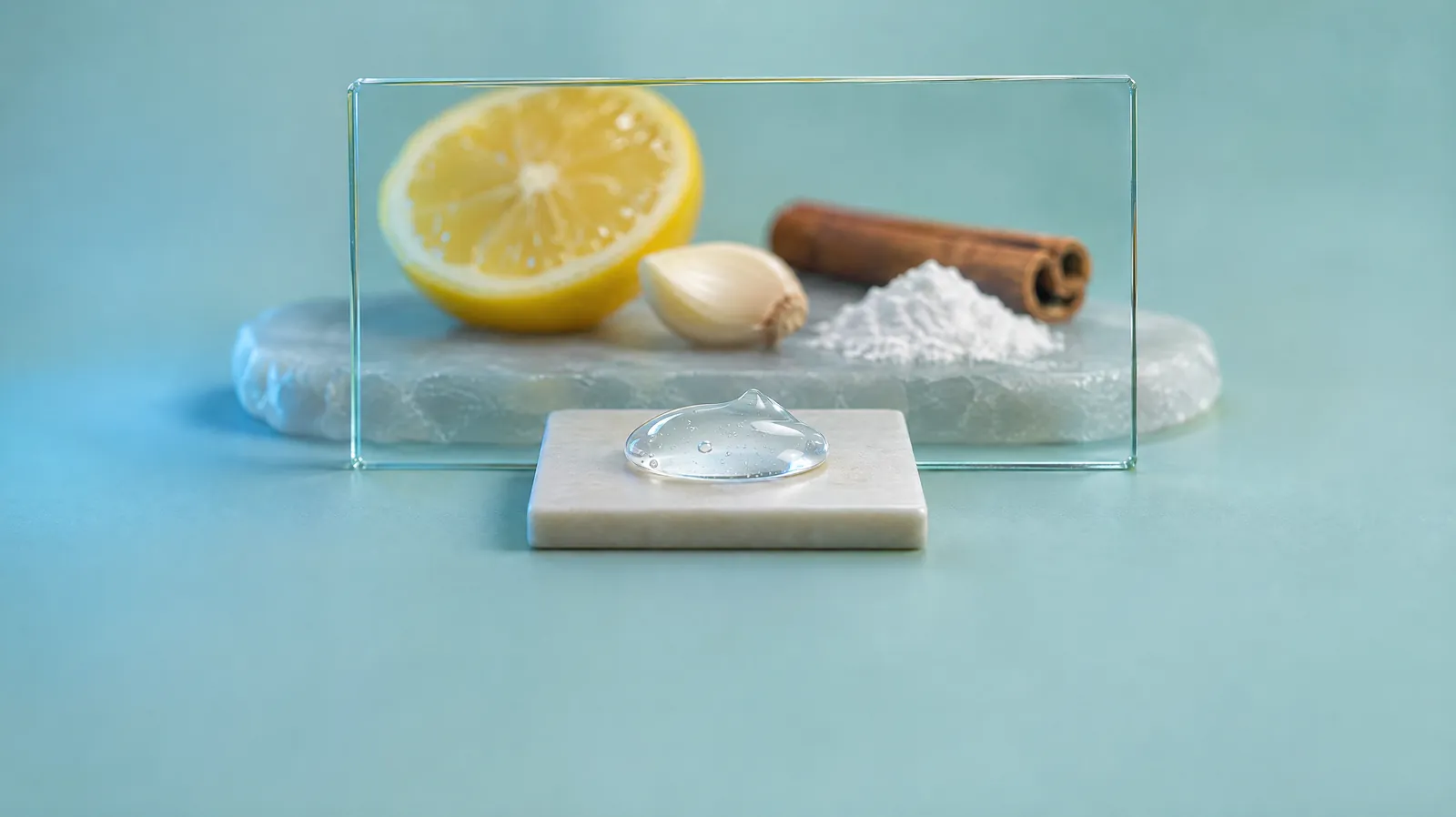
According to the AAD, masks do not replace acne treatment; for oily skin, the academy recommends clays that absorb oil, such as kaolin and bentonite. If you want a mask, a ready-made clay mask is a reasonable choice. Skip these six kitchen recipes, though:
Toothpaste. According to a dermatologist consulted by the AAD, toothpaste contains abrasives such as calcium or carbonate and whiteners such as peroxide. None of them fights acne, but they can irritate the skin.
Lemon. Furocoumarins in citrus juices react with sunlight and cause a burn-like reaction called phytophotodermatitis; according to DermNet, dark patches that can last for years may follow. In a 2017 case report by Matthews and colleagues, a 7-year-old child who squeezed lemon juice onto their skin in the sun developed burn-like wounds, up to second degree, in many areas including the face, neck and chest.
Garlic. In a 2017 case report, a 20-year-old patient applied a garlic paste made from an online recipe to a small lesion on the cheek and covered it; 12 hours later, a second-degree burn developed. According to Chiriac and colleagues, the allicin in garlic can cause cell death in the upper layer of the skin.
Baking soda. As a dermatologist from George Washington University explained on Medscape, a 1% baking soda solution has a pH of 8-9, while the pH of the skin is 4.1-5.8. Baking soda applied directly disrupts the skin's acid mantle and causes dryness and roughness.
Alcohol. The AAD advises people with acne to avoid astringent toners, alcohol and anything that dries the skin; dabbing cologne on a pimple falls into this group too. According to the academy, dry skin is irritated skin, and irritation raises the risk of new pimples.
Cinnamon. According to a 2017 paper by Connolly and colleagues, about 80% of cinnamon bark oil is cinnamaldehyde, and cases of allergic contact dermatitis from cinnamon products have been reported. We found no study showing that a honey and cinnamon mask works for acne.
Can a pimple go away in one day? Realistic timelines for one pimple and for the whole face
The short answer: no. According to the AAD, acne medications do not work overnight, but a single pimple does not last as long as people think either.
A single pimple. In a 2017 study by Tan and colleagues, the lesions of 32 people were mapped twice a week. According to the same team's 2019 conference abstract, papules lasted an average of 5.8 days and pustules 3.9 days. The probability of a single lesion leaving a mark was 5.7%, and long-lasting papules raised the risk of scarring. The authors included researchers from a pharmaceutical company. Still, the message is clear: a pimple that is left alone usually subsides within days, and the real goal is that it leaves no mark.
Faster in the clinic. According to the AAD, a corticosteroid injection given by a dermatologist flattens most nodules and cysts within 48-72 hours. This method is meant for a single, especially painful lesion, and only a doctor performs it.
Timeline for the whole face:
- First 4 weeks: According to the NHS, benzoyl peroxide usually starts to work within 4 weeks.
- Weeks 4-8: According to a dermatologist quoted by the AAD, pimples decrease in this window.
- Week 12: The NHS advises seeing a pharmacist or doctor if benzoyl peroxide has brought no improvement; the FDA says 3 months for adapalene.
- Week 16: According to the AAD, clearing is usually seen in 3-4 months.
A 4-week home acne routine: morning and evening, step by step
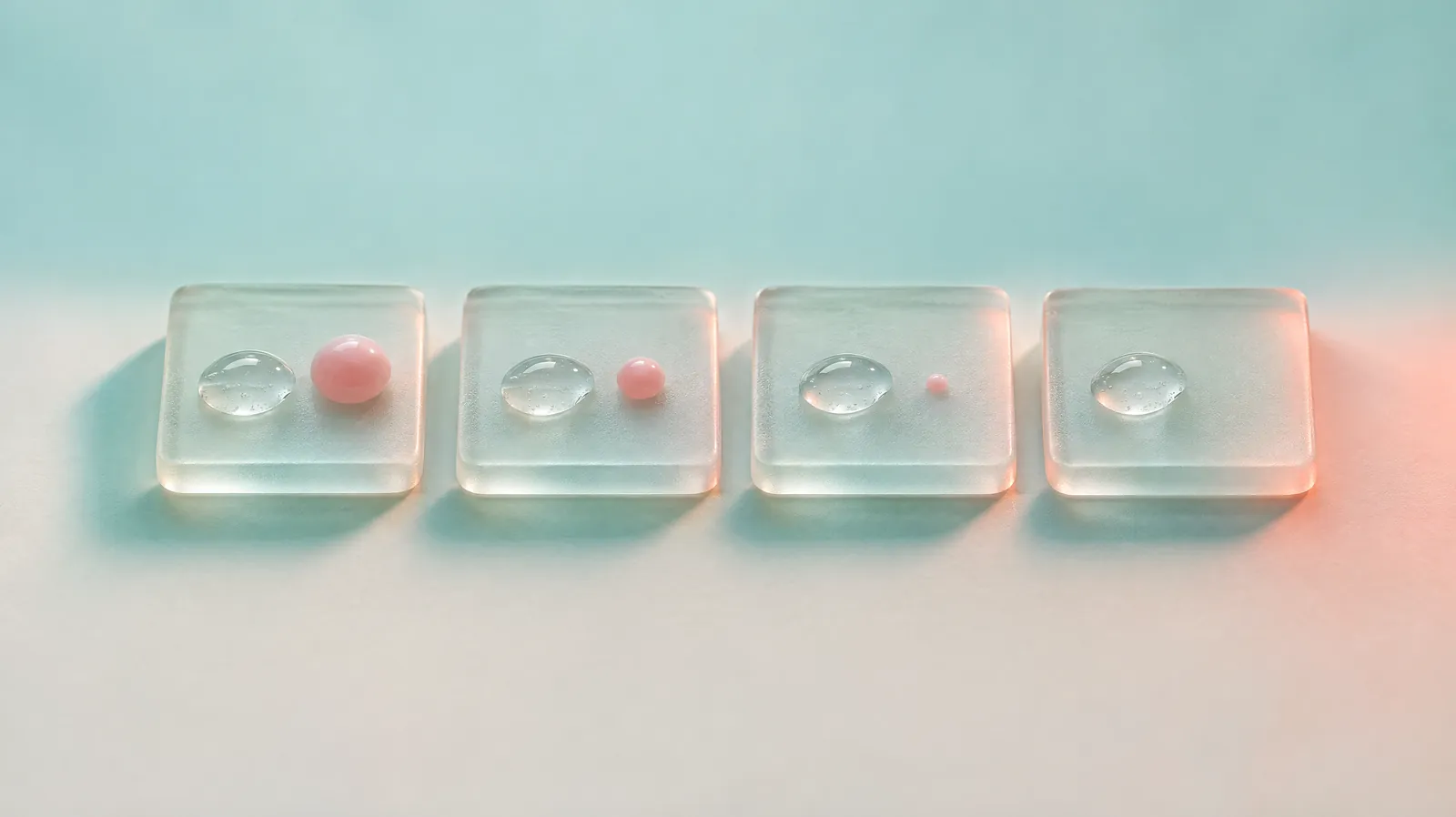
The plan is for mild acne and a single active. The AAD recommends using the product you choose for 6-8 weeks and adding no other products during that time.
- Before you start, 3 days: The FDA recommends that anyone using an over-the-counter acne product for the first time apply a small amount to 1-2 small areas for 3 days.
- Every morning: Wash with your fingertips and a gentle, non-comedogenic cleanser, then pat dry. Apply a moisturizer suited to acne-prone skin and a broad-spectrum, water-resistant, non-comedogenic sunscreen of at least SPF 30 (AAD).
- Week 1, every other evening: If inflamed pimples dominate, choose 2.5% benzoyl peroxide; if whiteheads and blackheads dominate, choose adapalene 0.1% or salicylic acid. Apply a thin layer to clean, dry skin over the whole acne-prone area.
- Week 2, every evening: If your skin has adjusted, move to every evening. If dryness increases, cut back and moisturize; according to the NHS, these side effects often pass within a few days or with less frequent use.
- Week 3: Keep the routine unchanged. Use a hydrocolloid patch or a warm compress on a pimple that swells up.
- Week 4: Count the new pimples, but wait until week 8 to decide. Add a second active only after your skin has adjusted to the first, and only after talking to your pharmacist or dermatologist.
- Never: Squeezing, scrubbing, washing many times a day, kitchen masks and layering two acids on the same evening.
If blackheads are your main problem, it makes more sense to build the routine in the order set out in our guide to how blackheads clear and the risks of squeezing.
What not to do at home: squeezing, scrubbing, stacking acids
Squeezing. According to the AAD, squeezing a pimple at home often pushes its contents deeper; this increases inflammation, makes the pimple more noticeable and raises the risk of permanent scarring. Bacteria on the hands are a source of infection, and picking at a deep nodule raises the risk of discoloration, especially in darker skin tones. You will find separate care for red, brown and pitted marks in our guide to how acne marks fade, by type.
Scrubbing and grainy exfoliators. According to the AAD, scrubbing the skin leads to flare-ups, and grainy exfoliators such as walnut shell can cause tiny tears in the skin.
Stacking acids and products. According to the AAD, trying a new acne product every week irritates the skin and can lead to new pimples. The academy notes that adding a mask with similar ingredients while using an exfoliating product can also cause dryness and irritation. The NHS, for its part, advises combining benzoyl peroxide with other acne products only with the approval of a doctor or pharmacist.
Washing too often, sleeping in makeup. The AAD recommends washing twice a day and after sweating; sleeping in makeup, even non-comedogenic makeup, can cause pimples.
Underestimating a serious reaction. According to the FDA, rare but serious allergic reactions have been reported with over-the-counter products containing benzoyl peroxide or salicylic acid; 44% of the 131 cases between 1969 and 2013 were hospitalized. If you feel throat tightness, shortness of breath or faintness, or notice swelling of the eyes, lips or tongue, stop the product and get emergency help. Mild redness and dryness, by contrast, are expected irritation.
How men can get rid of pimples at home: shaving, the beard area and helmets
The actives and the routine are the same for men; shaving is what makes the difference, because according to the AAD shaving can irritate the skin and make acne worse.
- Razor: The AAD recommends trying both electric shavers and disposable razors to find what suits you. The blade should be sharp and replaced every 5-7 shaves.
- Technique: Soften the skin by wetting it, use shaving cream and shave in the direction the hair grows, with light pressure. Don't try to shave off a pimple.
- Ingrown hair or pimple? Some of the bumps in the beard area are ingrown hair bumps called pseudofolliculitis barbae, which according to the AAD are especially common in men with darker skin. Shaving with the skin pulled taut and tweezing the hair out of a bump cause new ones. If they don't go away, see a dermatologist; the AAD notes that permanent grooves and raised scars can develop.
- Benzoyl peroxide: According to the NHS, it can bleach hair and fabrics, so take care with your beard, pillowcases and towels.
- Helmets and sweat: Mayo Clinic lists objects that press on the skin, such as helmets, tight collars and phones, among the triggers. Wash your face after exercise and blot sweat away (AAD).
- Medications: According to Mayo Clinic, medications containing testosterone can also trigger acne. Don't stop a medication on your own; talk to the doctor who prescribed it.
Blue light and home devices: for which skin, within which limits?
The Longos Sense manual describes the device's blue 415 nm Quantum Dot Light mode as cosmetic use "to improve the appearance of acne-prone skin". The light modes are applied to cleansed, dry skin on the face and neck, up to three times a day and for 5-10 minutes per area; they are not applied over the eyes or eyelids. The device is for adults aged 18 and over.
The manual also draws clear limits: the device is not used if there is an active skin infection, an open wound, a rash or an active lesion in the treatment area, nor during pregnancy and breastfeeding. In other words, the blue mode is not something to hold over a swollen pimple but a step in the care routine for acne-prone skin. The manual also asks anyone taking medications that cause light sensitivity to consult a doctor first; the AAD guideline notes that retinoids, and the NHS that benzoyl peroxide, can make the skin more sensitive to sunlight. If you use one of these actives, ask your doctor before adding the blue mode.
We cover the studies on light devices in our buying guide to devices for acne and blue light.
When should you see a dermatologist? Red flags
See a dermatologist in these situations:
- Deep, painful lumps (nodules and cysts). According to the AAD, these lesions often leave permanent scars; the earlier treatment starts, the fewer scars remain.
- Pimples that leave marks or dark spots. According to a dermatologist quoted by the AAD, these spots are a sign of significant inflammation, and over-the-counter products usually fall short.
- Acne that doesn't improve. If there is no improvement despite 6-8 weeks of regular use according to the AAD, or 12 weeks of benzoyl peroxide according to the NHS.
- Severe acne that starts suddenly in adulthood. According to Mayo Clinic, severe acne that starts suddenly later in life can be a sign of an underlying disease. The AAD guideline raises hormone testing when there are signs such as excess hair growth, infrequent periods and thinning hair. We cover cycle-related pimples and pimples along the jawline in our guide to the causes of hormonal acne in adults and how to care for it.
- Pimples that start with a medication. If they began after corticosteroids, testosterone or lithium, which Mayo Clinic lists, or after the epilepsy medications StatPearls mentions.
- Signs of infection or an emotional toll. The NHS advises seeing a doctor for skin that is hot, swollen and red, and when acne affects your mental health.
- Pregnancy. According to a dermatologist quoted by the AAD, some over-the-counter products are not safe during pregnancy, so ask first.
Where to start tonight
Tonight, look at your pimples in good light and ask one question: are red, raised pimples dominant, or whiteheads and blackheads? Choose one active based on the answer, test it on a small area for three days and stick with it for 8 weeks. For that whole time, leave the toothpaste in the bathroom and the lemon and garlic in the kitchen.
If you want to track the change by measurement rather than by the mirror, run the AI skin analysis in the Longos Sense app once before you start, on clean, product-free skin in good light, and note the "acne / spot" score. Repeat it in the same light in weeks 4 and 8. The analysis is cosmetic tracking of appearance and does not diagnose; this text, too, is a care guide, not medical advice.
Frequently Asked Questions
Can a pimple go away in 1 day at home?
No, no home method makes a pimple disappear in a day. According to data from a study in which lesions were tracked twice a week, papules lasted an average of 5.8 days and pustules 3.9 days. What you can do overnight is reduce pain and swelling: wrap ice in a thin cloth and hold it on briefly, or put a hydrocolloid patch over the pimple. The fastest way to flatten a single deep, painful nodule is a corticosteroid injection given by a dermatologist; according to the American Academy of Dermatology, most nodules and cysts flatten within 48-72 hours.
What mask can I make at home for pimples?
No study shows that masks made with kitchen ingredients work for acne, and some can burn the skin. Toothpaste irritates, lemon juice can cause a burn-like reaction when combined with sunlight, and cases of chemical burns from garlic and of allergy from cinnamon have been reported. A randomized study of 136 people with medical honey also found no significant difference. According to the American Academy of Dermatology, a mask does not replace acne treatment; for oily skin, a ready-made clay mask containing kaolin or bentonite is a reasonable helper as long as it is not used too often.
What helps pimples naturally?
Among natural options, the best data are for tea tree oil: in a placebo-controlled study of 60 patients, a 5% tea tree oil gel reduced the total lesion count by 43.6% in 45 days, compared with 12% in the placebo group. This result applies to a ready-made, diluted gel; pure essential oil can cause irritation and allergy. Green tea extract applied to the skin reduced inflamed pimples in small studies. The American Academy of Dermatology's 2024 guideline did not find enough evidence to make a recommendation for these plant-based options; the home options with the strongest evidence are actives such as benzoyl peroxide and adapalene.
Does toothpaste dry out pimples?
It may seem to, but it is not recommended. According to a dermatologist consulted by the American Academy of Dermatology, toothpaste contains abrasives such as calcium or carbonate, whiteners such as peroxide, colorants and flavorings; none of these fights acne, but they can irritate the skin. According to another page from the academy, irritated skin raises the risk of new pimples. For a single pimple, choose products made for the purpose instead of toothpaste, such as low-strength benzoyl peroxide, salicylic acid or a hydrocolloid patch.
How can men get rid of pimples at home?
The effective actives and the routine are the same for men: start with one active, apply a thin layer to the whole acne-prone area and stick with it for 6-8 weeks. Shaving is what makes the difference. The American Academy of Dermatology recommends using a sharp blade, wetting the skin and shaving gently with shaving cream in the direction the hair grows, changing the blade every 5-7 shaves and not trying to shave off pimples. Some bumps in the beard are ingrown hairs; if they don't go away, see a dermatologist. Benzoyl peroxide can bleach beards, towels and pillowcases.
When should you see a dermatologist for pimples?
Deep, painful lumps (nodules, cysts), pimples that leave marks or dark spots, acne that doesn't improve despite 6-8 weeks of regular care and severe acne that starts suddenly in adulthood need a dermatologist. According to Mayo Clinic, severe acne that starts suddenly later in life can be a sign of an underlying disease. If pimples started after a medication containing corticosteroids, testosterone or lithium, talk to the doctor who prescribed it. If you are pregnant, ask before starting any active. If you notice signs of a serious allergy, such as throat tightness, shortness of breath or swelling of the lips and tongue, stop the product and get emergency help.
Clinical evidence

