
Do wrinkle devices work? The short answer
At-home wrinkle devices can work, but their effects are modest and vary widely by technology. The two technologies with the most evidence are red and near-infrared LED and low-power radiofrequency (RF). Systematic reviews of home devices report measurable improvement in fine lines, texture and elasticity for these two; the same reviews also note that the studies are small and short, and that long-term data are missing. A home device does not stop expression lines, does not fill a deep fold and does not replace a facelift.
The right question is: what type of line do I have, and what does this device promise for it? Sunscreen and a retinoid remain the base; a device is a step added on top of that base. For the methods that go deeper at home, namely microneedling pens and at-home HIFU devices, the evidence is weak and the risk is high.
Practical rule: First work out what type of line you have. Then look on the box for a wavelength or frequency, temperature control, a Turkish-language manual, a CE mark and a warranty certificate. If one of these is missing, waiting is the safer decision.
Know your line first: expression lines, established wrinkles and sagging are not the same
We covered wrinkle types in detail in our guide to softening wrinkles at home and why skin ages in our article on the scientific causes of wrinkles and loss of elasticity; here we only summarize the part that changes a buying decision.
Expression (dynamic) lines come from muscle movement: they deepen when you smile, frown or squint. According to Mayo Clinic Health System, a good option for these lines is botulinum toxin, which temporarily relaxes the muscle movement. Established (static) wrinkles stay even when the face is at rest. According to the same source, they are caused by loss of elasticity and collagen plus sun or smoking damage, and fillers work far better than botulinum toxin here. Sagging is not a line at all; it is the tissue descending.
Home devices do not stop the muscle. In a 2022 study, 32 women used a home device combining bipolar RF with red light on one half of the face for 12 weeks, and only a commercially available anti-aging cosmetic product on the other half. On the device side, forehead lines, crow's feet and the lines running from the side of the nose to the corner of the mouth improved more than on the control side. For the lines between the brows, there was no significant difference between the two sides. Set your expectations for the frown line accordingly; our article on muscle-relaxing approaches for forehead wrinkles focuses on this area.
A simple mirror test. If a line disappears when your face is expressionless, it is an expression line; if it stays, it is established. Home devices mostly target the superficial part of the second group.
At-home wrinkle devices: eight technologies in one table
Devices on the market are sold as "anti-aging devices", "skin-tightening devices" or "wrinkle-removing devices", in the form of masks, panels and handheld tools.
| Technology | What it targets | Evidence for home devices | Home safety |
|---|---|---|---|
| Red and near-infrared LED | Fine lines, texture, elasticity | Moderate: randomized but small studies | Generally good; eye protection and photosensitivity matter |
| Radiofrequency (RF) | Wrinkles and mild laxity | Moderate: controlled but small and short studies | Heat control is essential; staying on one spot carries a burn risk |
| Microcurrent | Claimed muscle tone and a feeling of firmness | Weak: uncontrolled or conflicting studies | No serious side effects reported in small studies |
| Ultrasonic massage | Texture, serum application | Weak: almost no stand-alone wrinkle data | Low when used as directed; must not be confused with HIFU |
| At-home HIFU | Claimed lifting and tightening | Very weak: publications are largely on animal tissue | High: burns, nerve and eye damage reported even in clinics |
| Microneedling rollers and pens | Texture, fine lines, scars | Weak at home; strong data come from physician-performed treatment | High: risk of infection, scarring and pigment spots |
| Vibration and facial rollers | Blood flow, temporary glow | Wrinkles not measured | Low |
| Cryo (cold application) | Temporary look of puffiness and redness | No controlled study for wrinkles | Low; ice should not touch the skin directly or for long |
The two technologies with the most evidence: LED and RF
Red and near-infrared LED. A systematic review published in October 2026 examined 8 studies (365 participants) testing home LED devices. Sessions lasted 3-21 minutes, were repeated 2-7 times per week and ran for 4-12 weeks; significant improvement in wrinkles, texture and elasticity was reported, and side effects were rare and mild. The authors also note that irradiance and total energy were not reported consistently, and that no study compared a home device with clinical LED. We explained the effect of wavelengths in our guide to red light therapy and quantum dot LED.
Radiofrequency. RF aims to heat the skin and so stimulate collagen production by fibroblasts. A 2021 systematic review of home devices in dermatology examined 37 studies (19 of them randomized controlled) on different device types and found low-power RF recommendable for wrinkles; but this recommendation rested on one randomized and six lower-level studies, and there were no long-term data. In the 2022 study above, the manufacturer supplied the device, a gel containing a vitamin A ester was applied to the device side, treatments were done under supervision at the study center, and participants knew which side received the device. We described home use in our guide to at-home radiofrequency devices.
Weak evidence or high risk
Microcurrent. A 2012 study in Iran with 30 people reported about 18% improvement in forehead lines after 30 sessions, but it had no control group. In a 2022 study of 24 people using a home device that combined RF, red LED and microcurrent, wrinkle size and depth did not change significantly over 8 weeks; only texture improved.
Ultrasonic massage. It provides a gentle micro-vibration that accompanies serum application. In our review we did not find a strong controlled study showing that ultrasound alone reduces wrinkles. Positive results, such as the 2024 study with 36 women, come from devices that deliver light, RF, microcurrent and ultrasound together, and it is impossible to separate what each technology does.
At-home HIFU. HIFU focuses sound waves at a set depth beneath the skin to create heat points. In a national survey of institutions using HIFU in Japan, 165 side effects were reported in 139 cases; 61 were burns and 49 were nerve damage, and there were two cases each of cataract and floaters in the visual field. These occurred in clinics, in the hands of professionals. Most of the publications on at-home HIFU that we found were done on mouse and pig tissue.
Microneedling rollers and pens. According to the American Academy of Dermatology (AAD), products sold for home use are not designed to puncture the skin, and their results are less noticeable than those of a dermatologist's treatment. If they do puncture the skin, there is a risk of infection and scarring, and viruses such as warts and cold sores can spread across the skin. The U.S. Food and Drug Administration (FDA) has not granted over-the-counter (OTC) sale clearance to any microneedling medical device.
Vibration, facial rollers and cryo. In a 2018 study, 5 minutes of massage roller use on the cheek raised skin blood flow for at least 10 minutes; but the study involved 12 and 14 people, one of the authors worked at a beauty device company, and wrinkles were not measured. According to Cleveland Clinic, applying ice to the face gives a temporary refresh to puffiness and is not a long-term solution for wrinkles, and ice should not stay on the skin for long.
You will find where these technologies stand in 2026, and the role AI plays in these devices, in our beauty technology trends 2026 guide.
Which wrinkle responds to what? Realistic expectations at home and in the clinic
| Your concern | Realistic expectation with a home device | What is done in a clinic |
|---|---|---|
| Fine lines, rough texture | Mild, gradual improvement within weeks with LED and RF | Laser resurfacing, chemical peels, physician-performed microneedling |
| Expression line (between the brows, crow's feet, forehead) | The device does not stop muscle movement; the surface of the line may soften a little | Botulinum toxin; according to the AAD, its effect lasts about 3-4 months |
| Deep fold that stays at rest | Limited softening | Fillers, laser resurfacing |
| Mild laxity | A mild feeling of firmness with RF | Clinical RF and ultrasound; according to the AAD, the best result of clinical RF is seen at about 6 months |
| Marked sagging | Should not be expected at home | Surgery; according to the AAD, even minimally invasive methods do not give the result of a facelift |
Does a face-lifting device work? Devices sold at home as "face lifting" give at most a mild feeling of firmness; a result that actually lifts the tissue is a clinical or surgical procedure. The home products that come up when you search for a "HIFU face lift device" lack the anatomical knowledge and imaging-based assessment that Japanese researchers consider critical in the clinic. We gathered the causes of sagging in our guide to solutions for sagging facial skin at home.
Why sunscreen and a retinoid are still the base
Sunscreen slows new lines. In a randomized study of 903 adults in Australia, those who used broad-spectrum sunscreen every day showed no detectable increase in skin aging after 4.5 years. In this group, skin aging was 24% lower than in those who used sunscreen at their own discretion.
A retinoid acts on existing fine lines. In a 2023 analysis pooling six placebo-controlled studies of 0.1% stabilized retinol, 352 women used retinol or an inactive lotion for 8-12 weeks. Retinol gave more improvement than placebo in forehead, cheek and under-eye wrinkles and in crow's feet fine lines; side effects were mild or moderate and temporary.
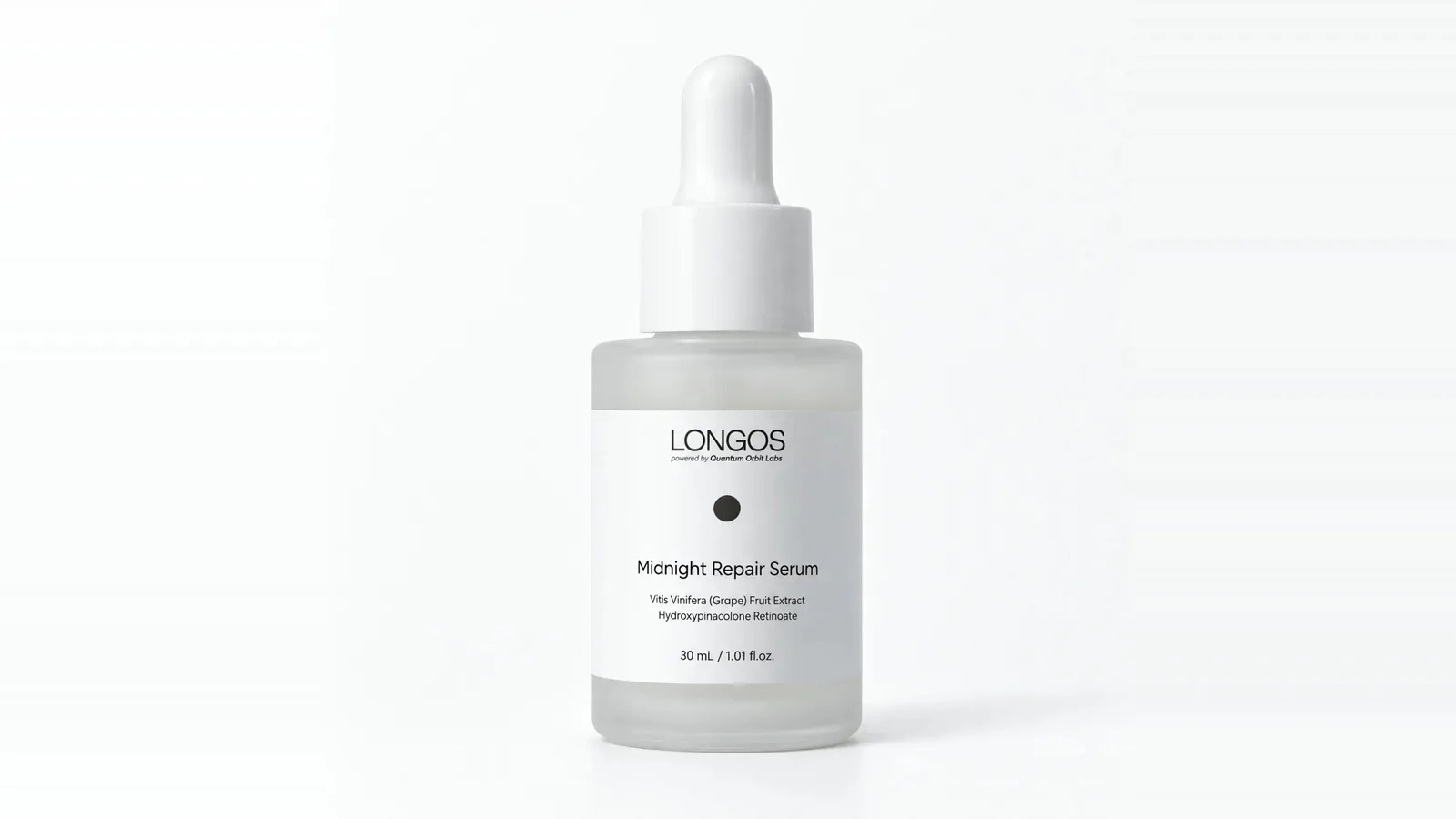
A gentler retinoid ester: HPR. Hydroxypinacolone retinoate (HPR) is an ester that binds directly to retinoid receptors without needing to be converted to retinoic acid. Most of the human studies we could find test HPR together with peptides or other retinoids, so it is hard to attribute the effect to HPR alone. The main active ingredient of Longos Midnight Repair Serum is this ester, Hydroxypinacolone Retinoate, and it is formulated for the retinoid step of the evening routine.
Where does the device fit? According to the AAD, dermatologists recommend red light as a complement to standard treatment, and may also recommend a home device to maintain the result of a clinical procedure. The order follows from this: sunscreen every morning, a retinoid in the evening, the device on set days of the week.
How to read "clinically proven" claims and before-and-after photos
When you see "clinically proven" on a product page, ask these questions:
- With which device? Was the study done with that device, or only with "the same technology"? The result of one RF device does not carry over automatically to another RF device. The AAD also notes that researchers test different devices, for different durations and with different questions, so the results cannot be compared.
- How many people, for how long? Most home-device studies involve a few dozen people and last a few months.
- Is there a control group? Comparing only "before" and "after" cannot separate the effect of the season or of a change in routine. In a 2014 red light study, wrinkles in the control group that received no treatment got worse over 12 weeks, and the authors pointed to the season as a possible explanation.
- What was measured? Wrinkle depth measured by an instrument is not the same as the feeling that "my skin is better". In one LED study in the systematic review, the researchers and independent assessors scored the improvement higher, while the participants' own scores did not differ between the two groups.
- Who ran it? A study supported by the manufacturer is not invalid, but it gains strength from an independent replication.
Before-and-after photos and reviews. If light, angle, distance, makeup and facial expression are not the same, the difference may come from the photo and not the device. A dermatologist quoted by the AAD reminds us that people documenting their treatments on social media can use filters and similar tools. In a reliable comparison, both photos are taken in the same light, from the same angle, without makeup and with a neutral expression; the date and the number of sessions are written down. Read user reviews with the same eye: how many weeks, how often, and compared with what?
Buying checklist: what to look for on the box, in the manual and on the product page
There is no single answer to "which is the best wrinkle device?" for everyone, but the criteria that separate a good device from a weak one are clear.
| Criterion | Why it matters | What to look for, and where |
|---|---|---|
| Technology and target | The technology must suit your type of line | The product page should state the technology and the problem it targets |
| Wavelength (LED) | Studies tested specific ranges | The nm value; in home LED studies, common values are about 630-660 nm for red and around 830-850 nm for near-infrared |
| Irradiance and dose | Two devices of the same color can deliver very different energy | mW/cm² or J/cm²; if it is not stated, ask the manufacturer |
| RF frequency and electrode type | Determines how the heat is produced | Frequency (MHz) and electrode type (bipolar, multipolar) |
| Temperature control | Prevents burns in RF and heat modes | Temperature sensor, upper limit (°C), automatic cut-off; a motion sensor is a plus |
| Duration and session protocol | Overuse raises the risk of irritation and burns | Minutes per area, sessions per week, intensity levels |
| Contact surface and gel | Some RF devices need gel to conduct energy | Whether gel is needed and whether it is in the box |
| Eye safety | A case of retinal damage linked to a blue LED mask was reported | Eye warning, instructions for protective goggles, a ban on use on the eyelid |
| Battery, charging and cleaning | Affects usage routine, hygiene and safety | Charging time, a ban on use while charging, cleaning instructions, water resistance |
| CE mark | It is the manufacturer's declaration of conformity, not an approval | CE mark on the device and the packaging |
| Turkish-language manual | You should not use a device without understanding the contraindications | Contraindication list, warnings and durations in Turkish |
| Warranty and manufacturer information | Determines who is responsible in case of failure or defect | Name, address and phone number of the manufacturer or importer on the warranty certificate |
| App | Measuring progress beats guessing | What it measures and whether it states clearly that it does not diagnose |
| Return terms | The right of withdrawal may be limited on hygiene grounds | Withdrawal and return conditions in the preliminary information form |
Irradiance and the eyes. In a 2026 measurement study, the documents of four LED masks had no data on emitted energy; masks labeled with the same color had clearly different irradiance, and similar session times corresponded to very different doses. A 2020 case report, on the other hand, described photochemical retinal damage in a 37-year-old woman using a blue LED mask; the authors recommend protecting the eyes during use.
CE and "FDA approved". According to the European Commission, the manufacturer affixes the CE mark and declares by it that the product meets the legal requirements; the mark does not show that an authority has approved the product as safe. According to the AAD, the FDA does not approve devices either, it allows them to be marketed. The phrase "FDA approved" carries no meaning for a device, and clearance indicates low risk, not effectiveness.
Warranty and returns (Turkish rules). Under the Turkish Regulation on Warranty Certificates, for goods within its scope the warranty period starts at delivery and is at least two years; the certificate must include the name, address and phone number of the manufacturer or importer. For online purchases in Turkey, the Regulation on Distance Contracts grants a 14-day right of withdrawal; but unless the parties agree otherwise, this right cannot be used for goods whose packaging has been opened and whose return is unsuitable for health and hygiene reasons. Read the seller's policy before you pay.
Claims and signs to stay away from
- "Permanent results" or "non-surgical facelift". Home device studies last a few months and long-term effects are unclear. According to the AAD, red light needs follow-up sessions, in the clinic and at home alike, because skin continues to age.
- "Botox effect" or "needle-free Botox". Botulinum toxin temporarily relaxes the targeted muscle; light, heat or vibration do not relax a muscle this way. A "FDA approved" or "FDA certified" label is a sign of the same kind.
- "Clinical results at home". According to the AAD, the red light dermatologists use is stronger than that of devices sold for home use.
- A product with no CE mark, Turkish-language manual, warranty certificate or manufacturer and importer address.
- A light-emitting mask with no eye warning, especially if it includes blue light.
- At-home HIFU cartridges sold by depth in millimeters, and microneedling pens with deep needles.
- Before-and-after photos not taken in the same light, and pushy sales language.
Who should not buy one, or should ask a doctor first?
Contraindications vary by device. As an example, the Longos Sense manual asks that the device not be used in these cases: active electronic implants such as a pacemaker, ICD, cochlear implant, neurostimulator or insulin pump; a metal implant, plate, screw or pin in the treatment area; active skin infection, open wound, rash or active lesion; epilepsy or a history of photosensitive seizures; pregnancy and breastfeeding; active cancer, a history of skin cancer or conditions that suppress immunity. The list also includes light sensitivity or use of photosensitizing medication, and use of blood-thinning medication; for these two items the manual asks you to consult your doctor. People under 18 are also on the list. Look for a similar list in the manual of every device you buy.
Additional light warnings. The AAD recommends that people with a light-sensitizing disease such as lupus, and those who take medication that makes the skin sensitive to light, consult a dermatologist before using a red light device. According to the Academy, darker skin tones are more sensitive to visible light, which can lead to more intense and longer-lasting dark spots.
When should you see a dermatologist? Show a spot that is new, growing, or changing in color or shape before trying a device; the AAD reminds us that someone who is not an expert can mistake a skin cancer for an age spot. If irritation, burning or blistering continues despite use as directed, stop using the device.
A realistic timeline: when do results show?
LED. In home device studies, treatment lasted 4-12 weeks. In a 2023 LED study, 137 women received red light on one half of the face and amber light on the other, 10 sessions over 4 weeks; the volume of wrinkles around the eyes decreased by about 30% on both sides, while moisture and elasticity did not change.
RF. In the split-face study, treatment was applied 5 days a week for the first two months and 3 times a week in the third month, and the assessment was made at week 12. In a home RF study with 22 women and no control group, wrinkle scores improved significantly at week 4.
Practical reading: It is normal not to see a clear change in the first month. Set your assessment between weeks 8 and 12, then continue with maintenance sessions.
How to use a wrinkle device: the first 4 weeks plan
- Read the manual from start to finish. Note the contraindication list, the treatment area and the ban on use around the eyes.
- Record your starting point. With a clean, makeup-free face, in daylight, take photos from the front and both sides at the same angle. If you have a device with an app, do the first analysis on the same day.
- Week 1: lowest level. Stay at the lower end of the frequency the manual recommends and keep sessions short. In RF and heat modes, keep the device moving without stopping. If there is redness, burning or blistering the next morning, take a break.
- Week 2: move to the recommended rhythm. If your skin stayed calm, raise the frequency to the level in the manual. Do not add a new active to your routine during this period; if irritation occurs, you will not be able to find the cause.
- Week 3: fixed days. Write the sessions into your calendar as fixed days. In one LED study in the systematic review, there was no difference between two and three sessions a week; more does not mean better.
- Week 4: compare, do not decide. Take new photos in the same light. Since most studies measured the result at weeks 8-12, leave the real assessment until then.
- Every day: sunscreen and cleaning. Apply broad-spectrum sunscreen every morning; after every session, clean the contact surface and dry it.
Where does Longos Sense stand on these criteria?
Let us apply the same list to our own device, using only what the manual says.
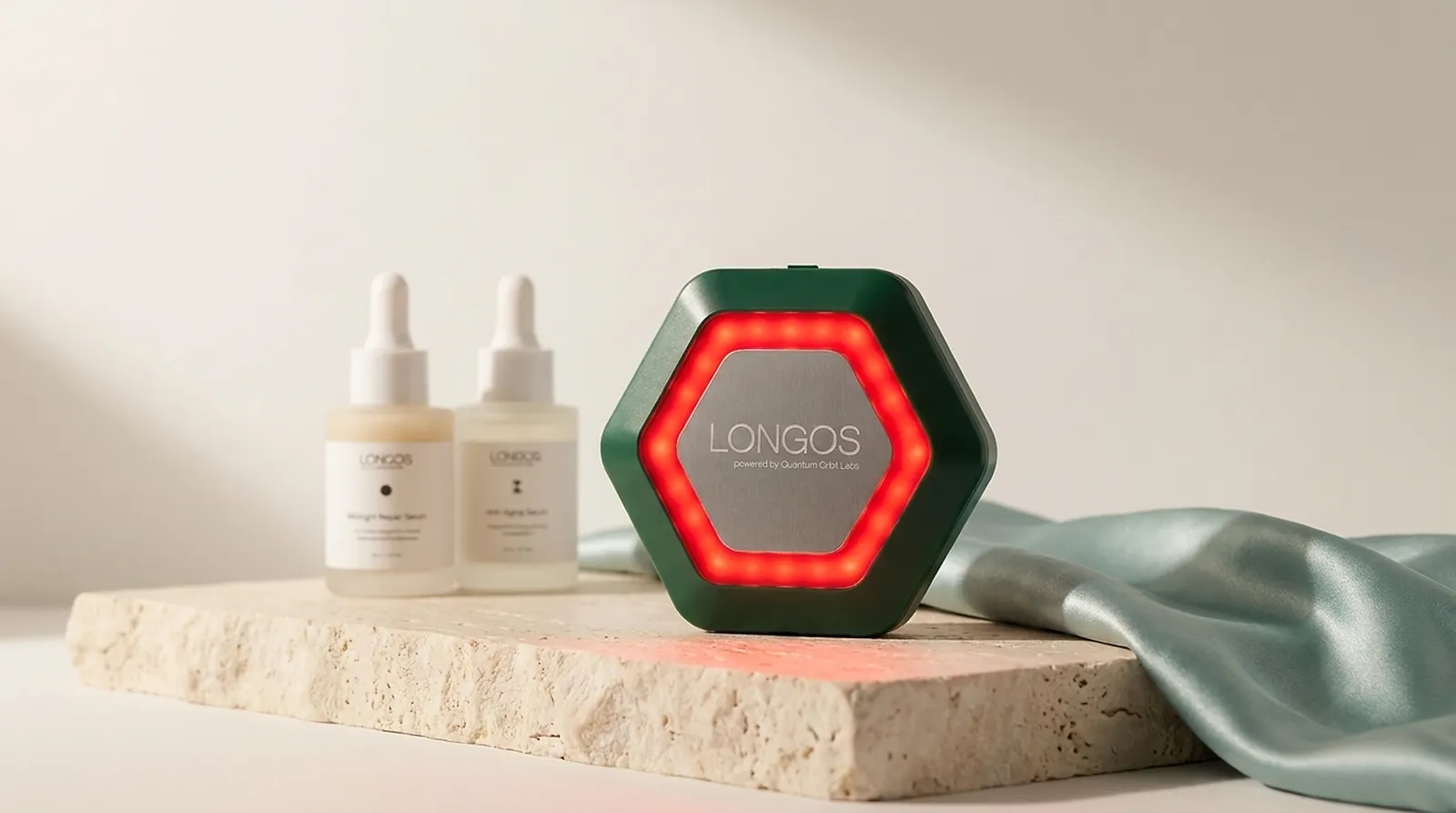
Technology and target. Longos Sense is a handheld device with two treatment surfaces and six technologies in one body: Quantum Dot Light technology (red 630 nm, blue 415 nm, near-infrared 850 nm), Radiofrequency (RF), Ultrasonic Wave, Thermal Therapy, Cryo Therapy and Mechanical Vibration. In the manual, wrinkles are mentioned in the indication of red 630 nm light: "improving the appearance of the skin; visually reducing wrinkles and fine lines". The manual defines the bipolar, 1 MHz RF mode as temporarily warming skin tissue to improve the appearance of the skin. The other modes (blue and near-infrared light, ultrasonic, heat, cooling, mechanical vibration) are defined for other cosmetic purposes, such as the appearance of acne-prone skin, the look of texture and tone, the look of puffiness and product absorption. The device has no microcurrent.
Wavelength, frequency and temperature. The wavelengths and the RF frequency are stated. The irradiance value (mW/cm²) is not in the manual; if you are curious, you can ask the support line. In heat mode, the contact surface rises to at most 39°C, and an NTC sensor provides automatic cut-off. For this mode, the manual asks you not to stay on one spot for more than 10 seconds, and to keep the device moving slowly and continuously in RF and heat modes.
Duration and use. For RF, 3-4 times a week with 5-10 minutes per session is recommended; for LED, at most three times a day with 5-10 minutes per area; for cooling, 3-5 minutes per session. Intensity is set with levels 1-6, and you are asked to start low. RF mode is used on dry skin, and ultrasonic mode can be used with a cosmetic serum. The device is used on the face and neck only, and is not applied to the eyes or eyelids.
Battery, cleaning, documents. The 1800 mAh lithium-ion battery charges in about 2 hours, and the device is not used while charging. It is not waterproof; cleaning instructions are in the manual. The device has a CE mark, the manual is in Turkish, the warranty period is 2 years; the manufacturer's name, address and MERSIS number (the Turkish trade registry number) are clearly stated in the manual.
App. The AI skin analysis scores five appearance parameters, including wrinkles and fine lines, from 0 to 100 on a photo taken with the front camera, and shows how the scores change over time. The manual clearly states that the analysis does not diagnose and is a tool for tracking cosmetic appearance.
Evidence. There is no published human study done with Longos Sense; the studies we cited above were done with other devices. For that reason we do not promise you a percentage or a timeframe; we tell you the cosmetic indications in the manual. You can find all the technical specifications on the product page of the Longos Sense kit.
Where should you start this week?
This evening, with your face expressionless, split your lines into two groups: those that disappear and those that stay. If the ones that stay are fine and superficial, the box of the device you are looking at should show an nm or MHz value, temperature control, a Turkish-language manual and a warranty certificate; if it is mainly the ones that disappear that bother you, talk to a dermatologist first.
If you already have a device, take the first photo this week and write the assessment date as week 12; if you use Longos Sense, repeat the wrinkles and fine lines score in the app on that date in the same light. This article is a care guide, not medical advice.
Frequently Asked Questions
Do wrinkle-removing devices work?
Some devices used at home can give a measurable but modest improvement in fine lines and texture. In systematic reviews, the technologies with the most accumulated evidence are red and near-infrared LED and low-power radiofrequency; the studies, however, are small and short, and long-term data are missing. Home devices do not stop expression lines, do not fill deep folds and do not replace a facelift. Evidence for microcurrent is weak, while at-home HIFU and microneedling pens carry high risk. Sunscreen every morning and a retinoid in the evening remain the base, and a device is added on top of them.
How is a wrinkle device used?
First read the manual from start to finish and check yourself against the contraindication list. Take a starting photo on a clean, makeup-free face, in the same light. In the first week, begin at the lowest level and at the lower end of the recommended frequency; in RF and heat modes, keep the device moving slowly and continuously instead of holding it on one spot. If your skin stays calm, move to the frequency in the manual in the second week, and do not add a new active to your routine during this period. Do not apply the device to the eyes or eyelids, clean the contact surface after every session and apply sunscreen every morning.
Do wrinkle devices have side effects?
In studies with LED and low-power RF devices, the reported side effects are mostly mild and temporary, such as brief redness. Holding the device on one spot in RF and heat modes carries a burn risk. Eyes must be protected with masks that contain blue light; a case of retinal damage after using a blue LED mask has been published. The riskiest group is at-home HIFU and microneedling pens: burns and nerve damage from HIFU have been reported even in clinics, and microneedling at home carries a risk of infection and scarring. People with an active implant such as a pacemaker, pregnant and breastfeeding women must check the contraindications in the manual.
How many minutes a day should a wrinkle device be used?
The duration is set by your device's manual, and it must be followed. In a 2026 systematic review of home LED devices, sessions lasted 3-21 minutes and were repeated 2-7 times per week. In one LED study in the review, there was no difference between two and three sessions a week, so more frequent use does not mean a better result. In a split-face study with a home RF device, a session lasted 6 minutes. Going beyond the duration in the manual increases the risk of irritation and burns.
When does a wrinkle device give results?
It is normal not to see a clear change in the first month. In studies with home LED devices, treatment lasted 4-12 weeks; in the split-face study of a home RF device, the assessment was made at week 12. With retinol the difference is measured at 8-12 weeks, while the effect of sunscreen shows over years. So set your assessment between weeks 8 and 12 and compare with photos taken in the same light. Once you get a result, you need to continue maintenance sessions, because skin keeps aging.
What should you check when buying a device for wrinkles?
First determine your type of line: for expression lines that disappear when the face is expressionless, expectations from a device are limited. Then check the box and the manual: for LED, the wavelength and, if possible, the irradiance value; for RF, the frequency and electrode type, a temperature sensor and automatic cut-off, clear session durations, an eye warning, a CE mark, a Turkish-language manual and a contraindication list, and on the warranty certificate the manufacturer or importer information and the return terms. Phrases such as "permanent results", "Botox effect" or "FDA approved", and before-and-after photos taken in different light, are warning signs.
Clinical evidence

