
sphingolipids
What Should Your Skin pH Be? The Acid Mantle, How It Is Measured and How to Protect It
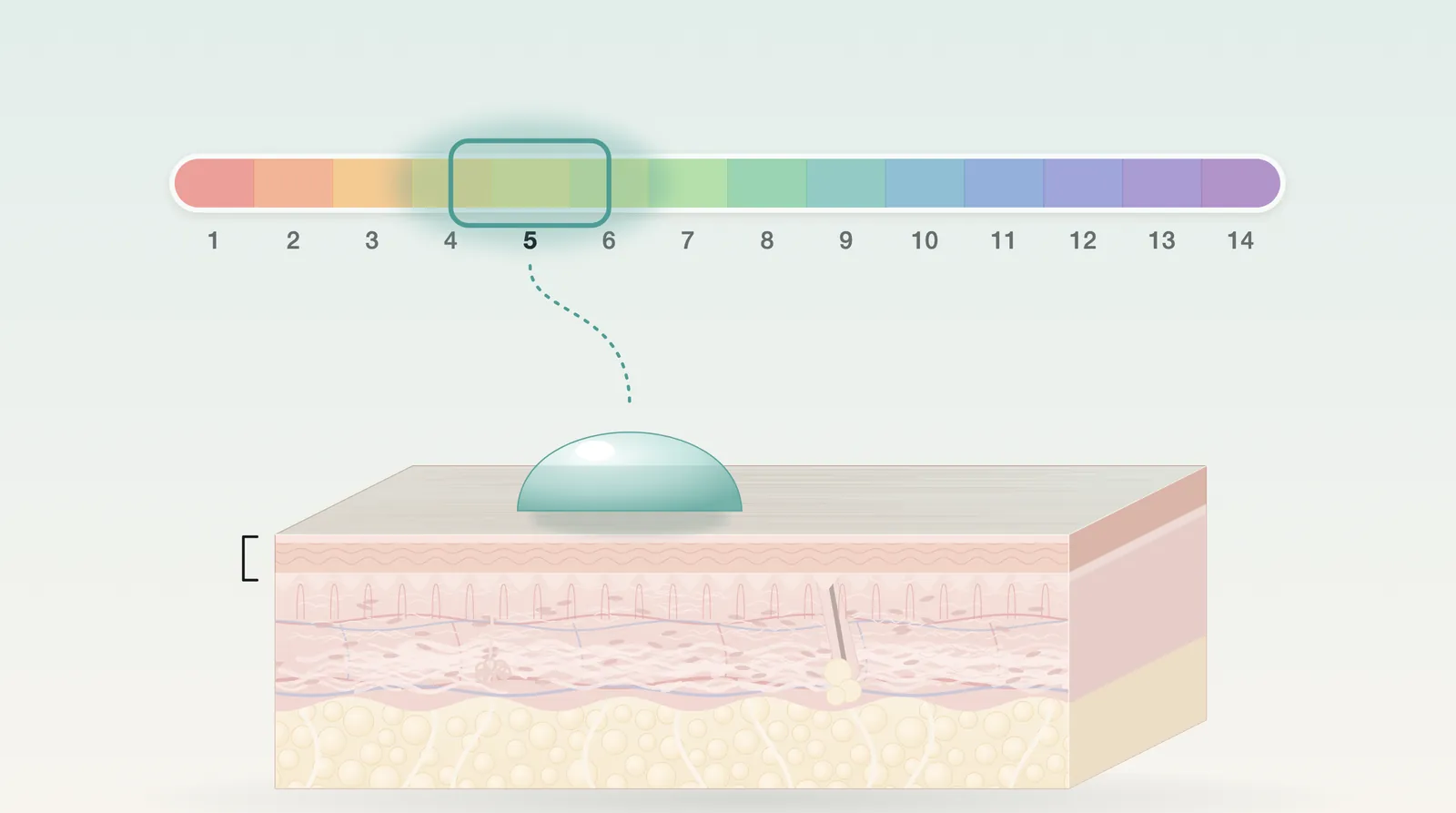
What is skin pH? The short answer
Skin pH is a measure of how acidic the outermost surface of the skin is. pH is the negative logarithm of the free hydrogen ion concentration in an aqueous solution; the scale runs from 0 to 14, 7 is neutral, values below it are acidic and values above it are basic (alkaline). The surface of healthy skin is mildly acidic, and this thin acidic layer is called the acid mantle.
The natural value is lower than many people assume. According to a 2006 multicenter study by Lambers and colleagues, once the effect of washing and products has worn off, skin surface pH averages 4.7, which is below 5. According to a 2018 review by Proksch, the living layers of the skin, by contrast, are close to neutral, at around 7-7.4.
In brief
- In healthy adults, skin surface pH falls within 4.1-5.8 at most body sites; the average is just below 5.
- Acidity is built jointly by free fatty acids, breakdown products of filaggrin and proton transporters in the cells.
- The enzymes that make ceramides, the orderly shedding of dead cells and the attachment of friendly bacteria all need an acidic environment.
- Alkaline soap, tap water, frequent washing and conditions such as atopic dermatitis raise pH.
- The basics of protecting pH at home are simple: a soap-free cleanser, lukewarm water, a moisturizer and no stacking of acids.
What is the acid mantle? A short history of the idea and where it sits in the skin
The name dates from 1928. According to a 2006 review by Schmid-Wendtner and Korting, Heuss first showed in 1892 that the skin surface is acidic. In 1928, Schade and Marchionini made more precise measurements with an electrode adapted to the skin and gave this layer the German name "Säuremantel", meaning acid mantle. According to a 2013 review by Ali and Yosipovitch, this acidity was long thought to serve only as a defense against microbes; today it is known to regulate barrier enzymes as well.
Where it sits: the stratum corneum. The acid mantle is not a separate film but the acidity on the surface of, and between the cells of, the stratum corneum, the outermost layer of the epidermis. You can read about the dead but still functional cells of this layer in our guide to the layers and cells of the epidermis.
Acidity is a gradient. According to Ali and Yosipovitch, there is a steep pH difference of 2-3 units between the acidic surface and the near-neutral interior of the body. According to a 2002 mouse study by Behne and colleagues, acidity builds up in small acidic domains between the cells that become more numerous toward the surface.
What should skin pH be? The normal range and why the numbers differ
There is no single right number, but there is a range. According to Proksch, skin surface pH at most body sites lies between 4.1 and 5.8 (95% range); the arithmetic mean is 4.9, and the differences between the face, trunk and arms are small. Ali and Yosipovitch give the range as 4-6.
Below 5, or 5.5? Lambers and colleagues measured the forearms of 330 people. When participants went 24 hours without showering or using products, the average pH fell from 5.12 to 4.93; from this drop, the authors estimated the natural value at 4.7 on average. Skin with a pH below 5 scored better on barrier, moisture and scaling measurements. The study was carried out in the research unit of a consumer goods company.
Why do older sources give higher values? According to Schmid-Wendtner and Korting, older assessments suggested 5.4-5.9 for the forearm. According to Lambers, previously used products, soap above all, and tap water noticeably raise the measured value.
A logarithmic scale magnifies small differences. According to Proksch, a rise of 0.3 units means that the hydrogen ion concentration in the environment has halved.
What keeps skin acidic: fatty acids, filaggrin, NHE1 and sweat
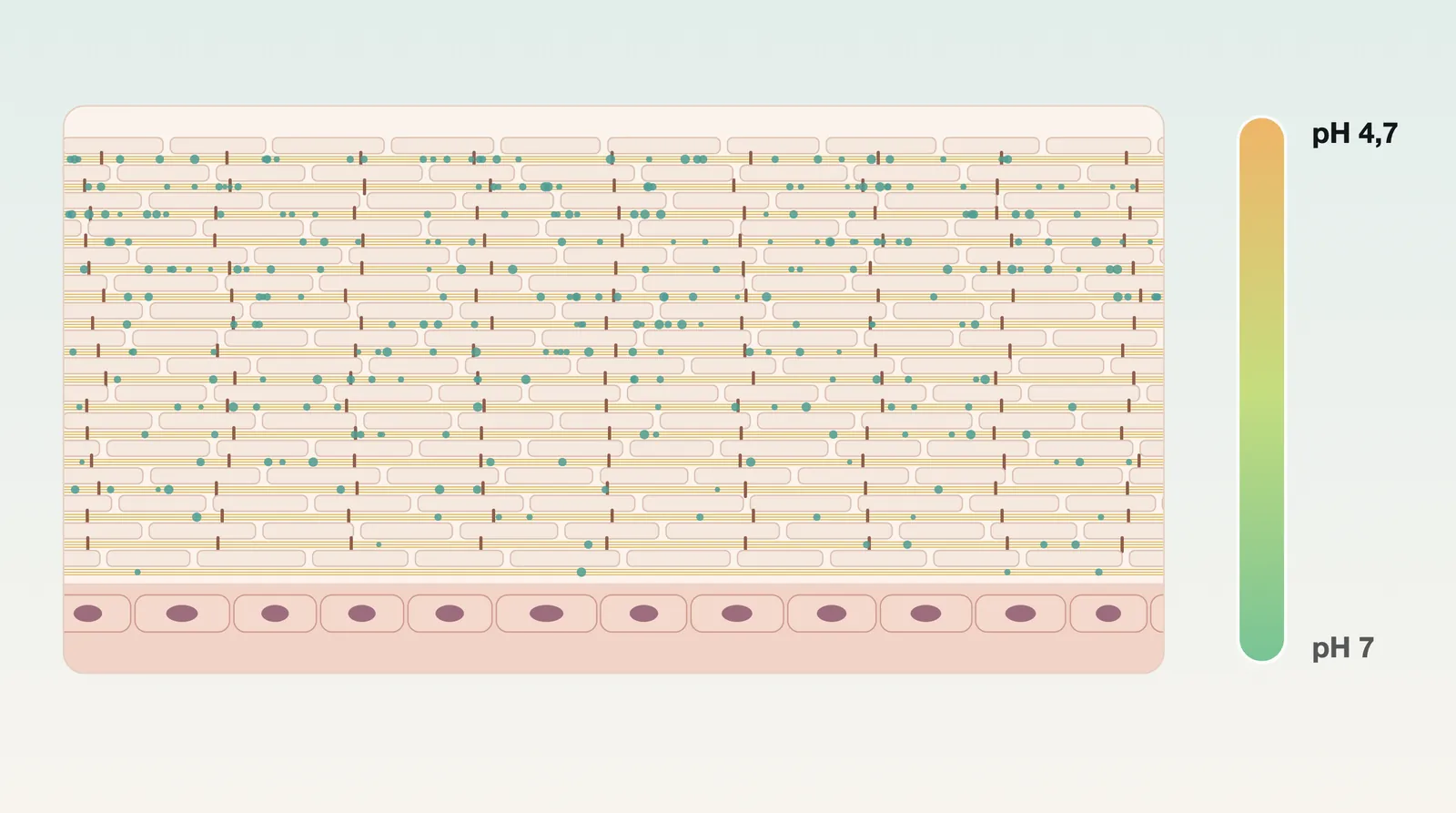
According to Proksch, several complementary pathways build the skin's acidity. Most of them were studied in mice by switching off the relevant gene or enzyme.
Free fatty acids. As the stratum corneum forms, phospholipids are broken down by the enzyme secretory phospholipase A2 (sPLA2), releasing free fatty acids. In a 2001 mouse study by Fluhr and colleagues, two different substances that inhibit this enzyme raised surface pH within three days, disrupted the barrier and reduced desmoglein 1, a protein that binds cells together. When palmitic, stearic or linoleic acid was applied at the same time, the disturbances resolved. According to Proksch, most fatty acids have a pKa of around 4.5, which makes them a good buffer at skin pH.
Filaggrin and urocanic acid. Inside the corneocytes, the protein filaggrin is broken down into amino acids; one of them, histidine, is converted into urocanic acid. According to Proksch, urocanic acid has a pKa of 4.7 and contributes to acidity, but it does not seem essential on its own: in mice lacking filaggrin, surface pH did not change or changed very little. In ichthyosis vulgaris, where filaggrin is deficient, a study cited by Ali and Yosipovitch measured a pH of 5.3, compared with 4.5 in healthy people.
NHE1, the sodium-hydrogen exchanger. According to Behne and colleagues, NHE1 is a proton-transporting membrane protein found most densely in the granular layer. In mice without this gene, surface pH measured with a conventional electrode was only slightly higher. Fluorescence imaging, however, showed that the acidic domains in the lower stratum corneum had almost completely disappeared, and the barrier recovered more slowly after tape stripping.
Sweat and lactic acid. According to Ali and Yosipovitch, sweat rich in lactic acid is thought to contribute to the acid mantle, and this secretion is reduced in atopic dermatitis. Proksch, however, writes that the pKa of lactic acid, 3.9, argues against it playing an important role in skin pH. The sources disagree here.
Buffering capacity. According to Proksch, lamellar bodies and melanin-carrying granules also release protons. Weak organic acids, fatty acids and amino acids together form a buffer that offsets an incoming acid or alkaline load for a while.
Skin pH by body site, age and sex
Small differences between body sites, large ones in skin folds. As Proksch reports, citing Marrakchi and Maibach, the most acidic areas of the face are the forehead and the upper eyelid, while the highest value is found on the chin. The armpits, the groin, the spaces between the toes and the area around the anus are known as "physiological gaps", and pH there rises to 6.1-7.4. According to Schmid-Wendtner and Korting, the high humidity in these areas raises pH.
| Site or group | Typical surface pH | Source |
|---|---|---|
| Inner forearm, after 24 hours without washing | Mean 4.93; estimated natural value 4.7 | Lambers et al., 2006 |
| Forehead | 4.4 | Proksch, 2018 |
| Upper eyelid | 4.6 | Proksch, 2018 |
| Chin | 5.6; highest value on the face | Proksch, 2018 |
| Armpits, groin, spaces between the toes | 6.1-7.4 | Proksch, 2018 |
| Newborns, first day after birth | Mean of six sites 7.08 (5.7 in adults) | Ali and Yosipovitch, 2013 |
| Dark skin (Fitzpatrick IV-V) and light skin (I-II) | 4.6 and 5.0 | Ali and Yosipovitch, 2013 |
The values come from different studies and devices; read each row within its own source.
Newborns. In a 2000 study by Yosipovitch and colleagues, the skin pH of 44 healthy newborns was higher than that of adults at every site measured, and most readings were above 6.6; it fell on the second day but did not reach adult levels. According to Proksch, a baby's skin reaches its physiological value in about four weeks.
Older age. In a 2007 study by Choi and colleagues, forearm pH in 55 people aged 51-80 was higher than in 65 people aged 13-21, and the rise began at about age 50. The same team found that NHE1 levels decrease in aged mice. According to Proksch, pH in women rises from 4.7 to 5.0 after menopause, and buffering capacity falls in older skin.
Sex. The findings conflict. In measurements Ehlers and colleagues made in 2001 with 11 volunteers, women's forearms (5.54) were slightly more acidic than men's (5.80), and the authors considered the difference small. In a study of 713 people in China (Man et al., 2009), however, forehead pH was higher in women aged 13-70 than in men. There is not enough evidence for a target value by sex.
Why does an acidic pH matter? Ceramide enzymes, barrier repair and shedding
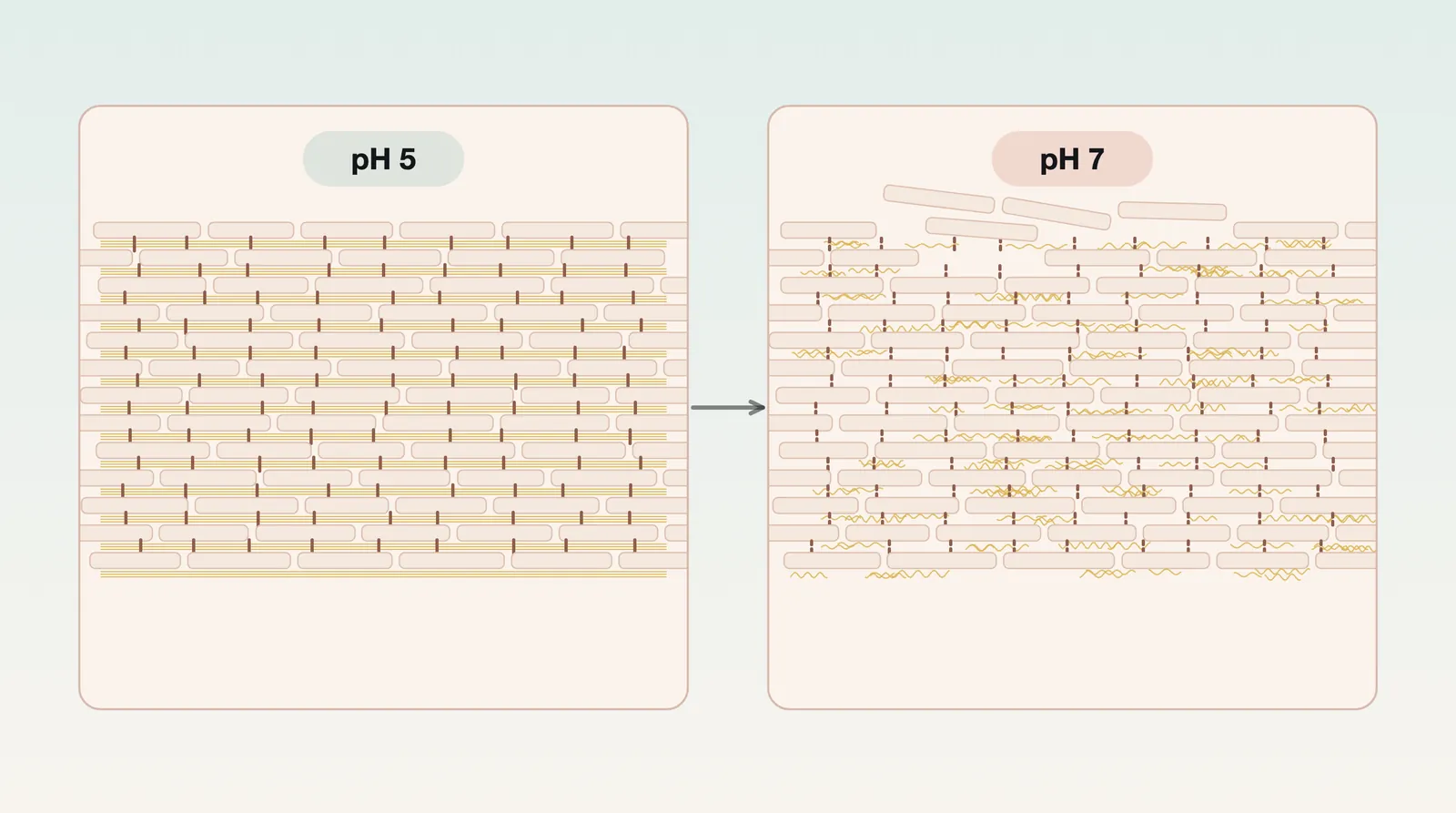
Ceramide-making enzymes like acid. Ceramides are a core component of the waterproof lipid mortar in the stratum corneum. According to Ali and Yosipovitch, of the two main enzymes involved in making ceramides, beta-glucocerebrosidase works best at pH 5.6 and acid sphingomyelinase at 4.5. The activity of beta-glucocerebrosidase is 10 times lower at pH 7.4 than at pH 5.5.
Lipid layers also organize in acid. According to Proksch, at pH 7 in the inner layers of the stratum corneum, 90% of fatty acids are ionized and their charged head groups repel each other. At a surface pH of around 5, fatty acids stay uncharged and orderly bilayers form.
The barrier repairs faster in acid. According to Ali and Yosipovitch, in hairless mice whose barrier was disrupted with acetone or tape, repair was faster on skin treated with an acidic buffer solution than on skin treated with a neutral buffer. According to Proksch, pH rises by 0.8-1 unit after tape stripping and returns to normal as water loss recovers. You can read in detail how a damaged barrier is recognized and how long it takes to recover in our guide to the signs of a damaged skin barrier and how it heals.
High pH loosens dead cells too early. Corneocytes are held together by protein junctions called corneodesmosomes. According to Ali and Yosipovitch, the serine proteases that cleave desmoglein 1 in these junctions, kallikrein 5 and kallikrein 7, work best at neutral pH. As pH rises, these enzymes speed up and the ceramide-making enzymes slow down; if protease activity persists, lipid secretion from the lamellar bodies also stops. The result is a stratum corneum with weakened mortar whose cells shed too early.
We describe the structure of the ceramides these enzymes make, and their role in the barrier, in our guide to ceramides.
The acid mantle and the skin microbiome: which bacteria like which pH?
Friendly bacteria hold on in acid. In experiments by Lambers and colleagues, the resident bacterial flora stayed attached to the skin at pH 4-4.5 but dispersed from the surface at pH 8-9. According to Ali and Yosipovitch, Staphylococcus aureus, by contrast, prefers a neutral pH, and its growth is suppressed at around pH 5.
In numbers. According to Proksch, S. aureus grows best at pH 7.5 and the acne-associated Propionibacterium acnes at 6.3. In an experiment cited by Ali and Yosipovitch, the antimicrobial peptide dermcidin in sweat killed more than 90% of S. aureus at pH 5.5, while at pH 6.5 this figure fell to 60%.
Cleanser pH shows up in the flora. In a 1990 randomized crossover study by Korting and colleagues, healthy volunteers used pH 5.5 and pH 7.0 versions of the same synthetic detergent on their forehead and forearms twice a day. During the neutral-product phase, both skin pH and propionibacteria counts were significantly higher. In an open-label study of 120 young people cited by Schmid-Wendtner and Korting, the number of inflamed pimples rose from the fourth week onward in those using alkaline soap and fell in those using an acidic syndet.
What raises skin pH? Soap, tap water, hard water and some skin conditions
Soap and frequent washing. According to Ali and Yosipovitch, soap-based cleansers are usually alkaline, at around pH 10, while cleansers based on synthetic detergents, known as syndets, are usually neutral or acidic (pH 7 and below). Washing the hands with soap raises palm pH by an average of 3 units, and the value has still not fully recovered after 90 minutes.
| Product or water | Measured or recommended pH | Source |
|---|---|---|
| Soap-based bars and baby soaps | 9.75-12.35 | Measurements by Baranda, in the review by Ali and Yosipovitch |
| Most cleansers classified as syndets | 3.61-7.72 | Same measurements |
| Antibacterial medicated soaps | 9-10 | Ali and Yosipovitch, 2013 |
| Tap water in Europe | Usually around 8.0 | Lambers et al., 2006 |
| Recommended cleanser range | 4.5-6.5 | Ali and Yosipovitch, 2013 |
| Panel condition for consumer products with glycolic and lactic acid | 3.5 or higher; acid concentration 10% or lower | CIR panel, as reported by the US Food and Drug Administration (FDA) |
| Formula in which L-ascorbic acid could penetrate pig skin | Below 3.5 | Pinnell et al., 2001 |
Even water alone. According to Lambers, tap water in Europe, which usually has a pH of around 8.0, raises skin pH for up to 6 hours. Proksch also notes the other side: the buffer of the stratum corneum is strong, many people tolerate alkaline soap well, and it is excessive washing that really depletes the buffer.
Hard water. In a 2018 study by Danby and colleagues, the skin of 80 people was washed with a sodium lauryl sulfate solution. The area washed with hard water retained 2.8 times more detergent residue than the area washed with deionized water; the residue increased water loss and redness, most of all in people with atopic dermatitis who carried a filaggrin mutation. The study was funded by a company that makes water softeners. The effect here came less from pH than from calcium and magnesium holding the detergent on the skin. According to a 2021 meta-analysis by Jabbar-Lopez and colleagues, children in hard water areas were more likely to have eczema (very low certainty of evidence), but in two randomized trials water softeners did not ease existing eczema.
Some skin conditions. According to Proksch, in atopic dermatitis pH is 0.2-0.3 units higher in lesional skin than in non-lesional skin, and 0.2 units higher in non-lesional skin than in healthy people. Ali and Yosipovitch list among the reasons the lower levels of urocanic acid and free amino acids that come with filaggrin deficiency. According to Proksch, pH is also higher in irritant contact dermatitis, psoriasis, acne, rosacea, and dry and sensitive skin. To tell dry, dehydrated and barrier-damaged skin apart, see our guide to the signs of dehydrated skin.
How is skin pH measured? The flat glass electrode and home test strips
The research method. According to Schmid-Wendtner and Korting, since the 1950s skin pH has mostly been measured with a flat glass electrode; this potentiometric method is more accurate than methods based on a color change (colorimetric). According to Proksch, a drop of water placed on the tip of the electrode provides ionic contact with the skin, and the measurement gives a reproducible result within seconds.
Conditions change the result. According to Ali and Yosipovitch, the electrode needs to be calibrated; too much water and a dry electrode surface both cause errors, and sweat and recent washing affect the result. Studies therefore standardize conditions: in the study by Man and colleagues, no products were applied to the test site for 24 hours, and participants rested for at least 30 minutes in a room at 22-24°C before measurement.
What does a home strip tell you? pH strips are colorimetric. In a 2017 study by Metheny and colleagues, 100 nursing students read four strips that change color in steps of 1 or 0.5 units a total of 2,000 times, using buffer solutions with a pH between 3.0 and 6.0. None was fully accurate at every value; the authors recommended a pH meter when an exact value is needed. The skin surface, moreover, does not have enough liquid to wet a strip, and added water changes the measurement. A strip can roughly show whether a cleanser is around 10 or around 5; it cannot tell you whether your skin is at 4.7 or 5.2.
How to protect and restore skin pH: a step-by-step routine
The skin's pH recovers through its own mechanisms; the job of a routine is not to push it up again and again. Most of the steps are based on recommendations from the American Academy of Dermatology (AAD).
- Switch to a soap-free cleanser. Ali and Yosipovitch recommend a cleanser with a pH between 4.5 and 6.5, preferably a syndet, and advise against daily use of antibacterial medicated soaps. In one study by Korting, skin pH was about 0.3 units lower during the acidic syndet phase than during the soap phase.
- Wash your face twice a day and after sweating. The AAD recommends applying a gentle, alcohol-free cleanser with your fingertips, not scrubbing, and patting your skin dry with a towel.
- Use lukewarm water and keep showers short. The AAD recommends washing the face with lukewarm water and, for dry skin, limiting showers and baths to 5-10 minutes.
- Use less lather. The AAD recommends using enough cleanser to remove dirt and oil but not so much that it foams heavily; in hard water areas, this also limits the detergent left on the skin.
- Apply moisturizer while your skin is still damp. The AAD recommends a fragrance-free cream or ointment and lists glycerin, hyaluronic acid, lactic acid and petrolatum among the ingredients to look for. Longos serums are formulated below 40°C and at a defined pH to protect their active ingredients; among them, the main active of the Moisturizing Serum is an 8D hyaluronic acid complex, developed for hydration and barrier support. Apply the serum before your cream.
- Use only one acid per evening. According to the FDA, serious side effects have been reported most often with the products that exfoliate the skin the most. Do not layer glycolic acid, salicylic acid and L-ascorbic acid on the same evening; choose one and increase how often you use it according to how your skin responds.
- Keep going for four weeks, then assess. In Korting's studies, the effects of cleansers were tracked over four-week periods. If stinging, burning or redness increases, the AAD recommends telling a dermatologist.
We also cover the flaking and itching that central heating and cold weather make worse in our article on the causes of dry skin in autumn and how to ease it.
AHAs and vitamin C: what does the pH of an acid product mean?
A low pH determines the strength of the acid. According to the FDA, products containing AHAs exfoliate the surface layer of the skin; the degree of this effect depends on the type of acid, its concentration, the pH of the product and the other ingredients. CIR, the cosmetics industry's self-regulatory review panel, drawing on industry-supported studies, found glycolic and lactic acid products safe if the acid concentration is 10% or lower, the pH is 3.5 or higher and sun protection is provided.
Sun sensitivity. In FDA studies, volunteers who used AHAs for four weeks showed an 18% increase in sensitivity to UV-induced redness, which disappeared one week after they stopped. The FDA recommends sunscreen while using AHAs and for one week after stopping.
An acidic product can also help the barrier. As cited by Ali and Yosipovitch, lactic acid increased ceramide production in human keratinocytes by 300% in the laboratory. A formula with 4% L-lactic acid (pH 3.7-4.0) applied twice a day reduced water loss after four weeks, lowered sensitivity to detergent and increased total ceramides in the skin. Concentration and frequency are decisive.
Vitamin C. According to a 2001 pig skin study by Pinnell and colleagues, L-ascorbic acid penetrated the skin only when formulated below pH 3.5. The best absorption was seen at 20%; the magnesium ascorbyl phosphate and ascorbyl palmitate that were tested did not raise L-ascorbic acid levels in the skin. According to a 2021 review by Capponi and colleagues, the reason is that the molecule, with a pKa of 4.2, stays uncharged only at this low pH. In the Pinnell study, one of the authors was a consultant to a vitamin C serum manufacturer. We explain how an oil-loving acid works inside the pore in our guide to what salicylic acid does and how to use it correctly.
Common skin pH myths: "pH-balanced" labels, apple cider vinegar and lemon
"pH 5.5 is the skin's pH." According to Proksch, many skincare products are adjusted to 5.4 or 5.5 with the aim of preserving the "physiological" skin pH, yet adult skin lies within 4.1-5.8 and averages 4.9. According to a 2021 review by Lukić and colleagues, there is broad agreement that products should fall in the 4-6 range, but there is no more precise target. A "pH-balanced" claim on the label says nothing about a product's surfactant or its buffering capacity. In measurements by Baranda and colleagues, several bath products containing mineral oil that were classified as syndets had a pH above 12.
"Apple cider vinegar balances the skin's pH." In a 2019 pilot study by Luu and colleagues, 22 people, 11 of them with atopic dermatitis, soaked one forearm for 10 minutes every day for 14 days in diluted apple cider vinegar containing 0.5% acetic acid, and the other forearm in water. pH fell right after application but the effect did not last; there was no significant effect on the barrier, and 72.7% of participants reported mild side effects. Undiluted vinegar carries more risk: according to Feldstein and colleagues, table vinegars contain 4-8% acetic acid and can cause chemical burns, especially when covered with a bandage. In 2012, Bunick and colleagues reported a chemical burn in a child after cotton soaked in apple cider vinegar stayed under a bandage for 8 hours.
"Lemon acidifies and brightens the skin." According to DermNet, phytophotodermatitis develops when furanocoumarins in the sap of certain plants and fruits remain on the skin and interact with the sun's UVA rays: redness and often blisters within 24-48 hours, followed by dark marks that can last for years. DermNet lists lime juice among the known causes and cites cases caused by citrus. Putting citrus juice on your face and then going out in the sun can leave marks.
"An alkaline diet changes your skin's pH." According to Proksch, the pH of the stratum corneum is not linked to the body's acid-base balance: in dialysis patients, blood pH is low while skin pH is measured as high.
When should you see a dermatologist?
pH is not a diagnosis, but some conditions that come with a high pH need treatment. See a dermatologist if:
- Dryness persists even though you have simplified your cleansing and routine. According to the AAD, an underlying condition such as atopic dermatitis, psoriasis or kidney disease may be the cause.
- Every product you apply, including moisturizer, burns or stings.
- You have itchy, dry, cracked or thickened patches and skincare is not helping. The NHS advises seeking urgent help for eczema that blisters, weeps or contains pus, that is painful and hot, or that comes with a fever.
- You have a red, persistent rash in the armpits, the groin or under the breasts, especially if you have diabetes. According to Ali and Yosipovitch, the alkaline environment in skin folds makes candida infection easier.
- Your skin has become raw or blistered after vinegar, lemon or another home mixture, or streaky or drop-shaped redness has appeared after sun exposure.
Where to start this week
Make one change this week: swap your soap-based cleanser for a soap-free syndet, wash your face twice a day with lukewarm water and apply moisturizer while your skin is still damp. Wait four weeks before adding a new acid. Instead of measuring pH with a strip, watch how stinging, tightness and redness change.
If you want to track the change under the same conditions, run the AI skin analysis in the Longos app once this evening on clean, product-free skin and repeat it in the same light four weeks later. The analysis scores appearance, not pH; redness is one of these appearance parameters, and the result is cosmetic tracking, not a diagnosis. This is a skincare guide, not medical advice.
Frequently Asked Questions
What is skin pH?
Skin pH is a measure of the acidity on the surface of the stratum corneum, the outermost layer of the skin. pH is a scale from 0 to 14: 7 is neutral, values below it are acidic and values above it are alkaline. The surface of healthy skin is mildly acidic, and this acidic layer is called the acid mantle; the name comes from measurements made by Schade and Marchionini in 1928. Its acidity is built jointly by mechanisms such as free fatty acids, urocanic acid derived from filaggrin and a proton transporter called NHE1. The living layers of the skin, by contrast, are close to neutral, at around pH 7-7.4.
What should skin pH be?
There is no single right number, but there is a range. According to a 2018 review by Proksch, the surface pH of healthy adult skin lies between 4.1 and 5.8 at most body sites, with an average of 4.9. In a study of 330 people by Lambers and colleagues, the natural value without the effect of washing and products was estimated at 4.7 on average. In skin folds such as the armpits, the groin and the spaces between the toes, pH rises to 6.1-7.4. The value is higher in newborns and from about age 50 onwards.
How do you restore your skin's pH?
Skin pH recovers through its own mechanisms; the aim of a routine is not to keep pushing it up. Instead of a soap-based cleanser, choose a soap-free syndet with a pH between 4.5 and 6.5. Wash your face twice a day with lukewarm water, do not scrub, and apply moisturizer while your skin is still damp. Do not use more than one acid product on the same evening, and avoid home mixtures such as vinegar or lemon. Keep the change going for about four weeks and watch how stinging, tightness and redness develop.
How is skin pH measured, and can you measure it at home?
In research, skin pH is measured with a pH meter fitted with a flat glass electrode; a drop of water placed on the tip of the electrode provides contact with the skin, and the result comes within seconds. In one large study, for example, no products were applied to the test site for 24 hours and participants rested in a room kept at a constant temperature. Home pH strips rely on a color change and are read in steps of 0.5 or 1 unit; the skin surface also lacks enough liquid to wet them. A strip can roughly show whether a cleanser is clearly alkaline, but it cannot show the exact pH of your skin.
Does soap disrupt the skin's pH?
Traditional soaps are alkaline; according to the review by Ali and Yosipovitch, their pH is usually around 10. Washing the hands with soap raises palm pH by an average of 3 units, and the value has still not fully recovered after 90 minutes. Because the buffer of the stratum corneum is strong, many people tolerate alkaline soap well; what really depletes the buffer is frequent, repeated washing. On dry, sensitive or eczema-prone skin, a soap-free syndet with a pH between 4.5 and 6.5 causes less irritation.
Does apple cider vinegar balance the skin's pH?
The evidence does not support this. In a 2019 pilot study, 22 people soaked one forearm for 10 minutes a day for 14 days in diluted apple cider vinegar containing 0.5% acetic acid. pH dropped right after application but the effect did not last, there was no significant effect on the barrier, and 72.7% of participants reported mild side effects. Undiluted table vinegars contain 4-8% acetic acid and can cause chemical burns, especially when covered with a bandage. If you want acidic skincare, choose a product with a stated pH and concentration.
Clinical evidence

