Ömer Tahir Günkara
What Is a Secondary Metabolite? How Plant Extracts Are Made and What They Do on Skin
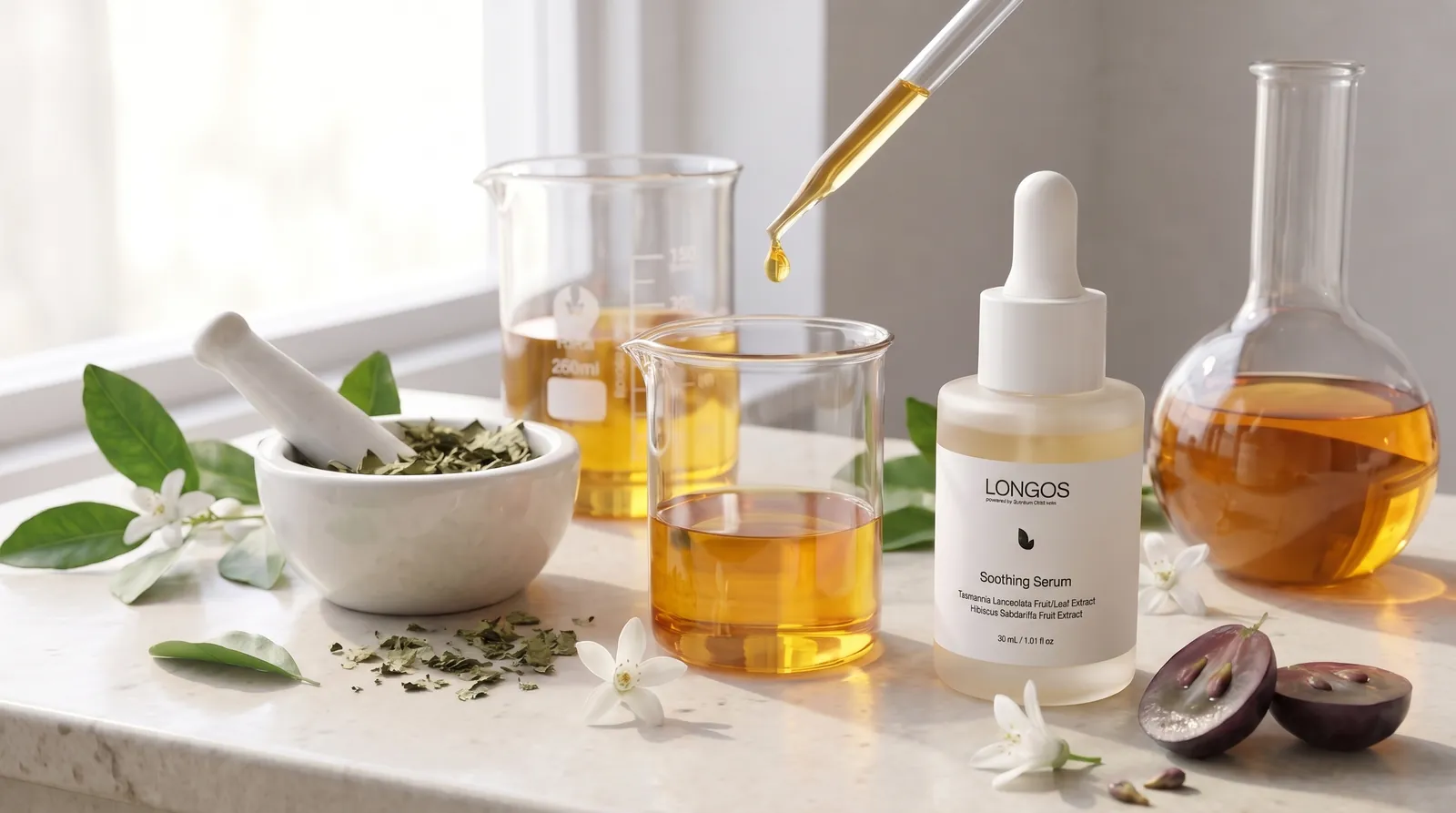
What is a secondary metabolite? A short, accurate definition
Secondary metabolites are organic compounds that a plant does not need directly for its growth, development and reproduction, but that govern its relationship with its environment. The plant uses them to defend against herbivores and microbes, to protect itself from UV rays and to communicate, for example in pollination. In the literature they also appear as "specialized metabolites" or "natural products." Primary metabolites, by contrast, are molecules found in every plant that do life's basic work: sugars, amino acids, fatty acids and nucleic acids.
According to a 2020 review by Erb and Kliebenstein, plants produce hundreds of thousands of small organic compounds. Primary metabolites are largely conserved across plants and are directly required for growth; secondary metabolites are mostly specific to particular plant lineages. The review also stresses that the boundary is not sharp.
For cosmetics, the point is this: most plant extracts on a label are mixtures of these secondary metabolites. Polyphenols, flavonoids, tannins and the terpenes in essential oils all belong to this group. Practical rule: when you see "plant extract," do not picture a single substance; picture a mixture of molecules that varies with the plant's species, the conditions it grew in and the way the extract was obtained.
The backbone of this guide is the extraction work of Prof. Dr. Ömer Tahir Günkara, a faculty member in the Department of Chemistry, Faculty of Science and Arts, at Yildiz Technical University (YTU). For transparency, let us say it up front: Prof. Günkara works with Quantum Orbit Labs, leads the formulation work on the Longos serums and sits on QOL's science board. The guide you are reading is also published on QOL's own blog.
You will find his academic work in our profile of Prof. Dr. Ömer Tahir Günkara and how the app builds its serum suggestions in our guide to AI skin analysis.
The difference between primary and secondary metabolites
According to a 2025 review by Palazon and Alcalde, primary metabolic pathways exist in all plants and across most of the life cycle, because they are essential for survival. The production of secondary metabolites, however, depends on particular developmental stages, organs or environmental conditions.
| Feature | Primary metabolites | Secondary metabolites |
|---|---|---|
| Main role | Growth, energy production, cell structure, reproduction | Interaction with the environment: defense, UV protection, signaling, pollination |
| Distribution | Shared by all plants | Mostly specific to certain species, organs or stages |
| Examples | Glucose, amino acids, fatty acids, nucleic acids | Flavonoids, tannins, terpenes, alkaloids |
| Amount | Relatively constant | Varies markedly with stress, climate and harvest time |
| Importance to the plant | The plant cannot grow without them | Not strictly essential, but they raise resilience to environmental pressures |
| Form you meet in cosmetics | Sugar derivatives, amino acids, plant oils | Extracts, essential oils, purified plant actives |
Why is the boundary blurry? According to the same review, phytosterols and some plant hormones such as gibberellin are also made through the terpenoid pathway, yet they perform vital functions in all plants. The useful question is this: is the molecule universal and essential, or is it species-specific and a response to the environment? If the latter, it is most likely a secondary metabolite.
Main classes: phenolics, terpenoids, alkaloids and others
Secondary metabolites are divided into three large families by their structures and the pathways that produce them: phenolics, terpenoids and nitrogen-containing compounds. According to a 2025 review by Khan and colleagues, most phenolics come from the shikimic acid pathway, while terpenoids come from the mevalonic acid (MVA) and methylerythritol phosphate (MEP) pathways.
Phenolics and flavonoids. They carry one or more hydroxyl (OH) groups attached to an aromatic ring. According to a 2020 review by Agati and colleagues, flavonoids alone cover more than eight thousand structures. Stilbenes (resveratrol in grapes) and phenolic glycosides (salicin in willow bark) also belong to this family. Tannins fall into two groups: condensed tannins such as proanthocyanidins, and hydrolyzable tannins; oenothein B is one of the ellagitannins in the second group.
Terpenoids. This is a large family built from five-carbon isoprene units; the fragrance molecules in essential oils, carotenoids and plant sterols belong here. Polygodial in the leaves of Tasmanian mountain pepper (Tasmannia lanceolata) is a drimane sesquiterpene known for its pungent, burning taste.
Alkaloids. These are compounds that contain nitrogen and often have strong biological effects. Caffeine in coffee, tea and cacao is a purine alkaloid; a 2008 review by Ashihara and colleagues summarizes the evidence that caffeine takes part in chemical defense in these plants.
| Class | Common chemical feature | Example compound and source | Main role in the plant |
|---|---|---|---|
| Phenolics, flavonoids | Aromatic ring and OH groups | Resveratrol (grape), proanthocyanidins (grape seed), salicin (willow bark), oenothein B (Epilobium) | UV protection, antioxidant defense, defense against fungi |
| Terpenoids | Skeleton made of isoprene (C5) units | Polygodial (Tasmannia lanceolata), essential oil components, carotenoids | Deterring herbivores, scent signals |
| Alkaloids | Nitrogen in the structure | Caffeine (coffee, tea, cacao) | Chemical defense |
| Sulfur-containing and other groups | Glycosides containing sulfur or cyanide | Glucosinolates, cyanogenic glycosides | Defense against herbivores and pathogens |
Why plants make these molecules: defense, UV and signaling
A plant cannot run away. It answers a threat not with movement but with chemistry.
Defense. According to a 2017 study by Mathie and colleagues, polygodial, which is responsible for the pungency of Tasmannia lanceolata, is a molecule discussed for its antifeedant property and its role in keeping predators away. Resveratrol, meanwhile, is a phytoalexin: according to a 2019 review by Intagliata and colleagues, it plays a protective role in the plant against UV rays, wounding and fungal infections.
UV protection. According to a 2021 review by Shi and Liu, plants prevent or limit damage under UV-B stress with flavonoids that they accumulate and that are often called a "sunscreen." The 2020 review by Agati and colleagues argues that these flavonoids do not just filter light; they also work as antioxidants against the reactive oxygen species produced by light stress.
Signaling and communication. According to Palazon and Alcalde, secondary metabolism is the source of the chemical signals that shape pollination, seed dispersal and pathogen defense.
Why does this matter for cosmetics? Because production depends on stress, the content of the same species varies from plant to plant. In a 2001 study by Read and Menary, the polygodial proportion in the dry leaves of 58 Tasmannia lanceolata plants collected from 12 regions of Tasmania ranged from 0.11% to 2.9%. In a 2017 study by Sulima and colleagues, the salicylic glycoside content in the bark of 91 Salix purpurea genotypes selected from the wild also differed markedly from genotype to genotype. The source of the raw material and the extraction method are therefore the two main variables that determine what an extract contains.
What a plant extract is and how it is made: five core methods
A plant extract is a mixture obtained by transferring compounds from a part of the plant (leaf, bark, seed, fruit or root) into a solvent. The solvent can be water, ethanol, glycerin or carbon dioxide under pressure. A 2018 review by Zhang, Lin and Ye summarizes the common methods as follows:
- Maceration. The plant material is left to soak in the solvent. It is simple and can be used for heat-sensitive components; the drawbacks are long duration and low yield.
- Soxhlet extraction. The solvent is continuously evaporated and condensed so that it passes over the material again and again. It is efficient and uses less solvent than maceration, but high temperature and long duration raise the chance of thermal degradation.
- Ultrasound-assisted extraction. Cavitation produced by sound waves in the solvent, meaning micro-bubbles that form and collapse, speeds up the dissolution and spread of compounds. Because it can lower temperature and time, it suits heat-sensitive compounds.
- Microwave-assisted extraction. Microwaves directly heat polar molecules such as the water in plant tissue. Because heat and mass move in the same direction, extraction speeds up, yield can rise and the use of organic solvents falls.
- Supercritical CO2 extraction. Carbon dioxide above its critical point becomes a fluid that dissolves like a liquid but diffuses like a gas. According to the review, the critical temperature of CO2 is about 31 °C, which makes it possible to extract heat-sensitive compounds at a mild temperature. Because its polarity is low, it is ideal for nonpolar compounds such as oils and essential oils; for more polar compounds, a small amount of a co-solvent is added to the fluid.
The solvent can be removed afterward or can remain in the formula; this detail also affects the name on the label.
Why the method changes what an extract contains: examples from Prof. Günkara's congress abstracts
Like dissolves like. According to a 2023 editorial by Popova and Bankova in the journal BMC Chemistry, solvents whose polarity is close to that of the target compound generally give better results, and ethanol-water mixtures are recommended for extracting phenolics. Supercritical CO2, on the other hand, favors oils and volatile terpenes. The same leaf gives two different extracts with two different methods.
Heat is selective. In a comparison reported by Zhang and colleagues, the extract obtained from tea by Soxhlet at 70 °C had lower total polyphenol and alkaloid content than the one obtained by maceration below 40 °C; the degradation of catechins was attributed to the high temperature. The yield may be high, but the molecule you are after may have been damaged along the way.
Prof. Günkara's group works on exactly this question. According to his AVESIS profile at YTU, Prof. Günkara works in organic chemistry, asymmetric synthesis, heterocyclic compounds, organic spectroscopy and organometallics. The Günkara Research Group (GRG) that he founded lists extraction technologies and the isolation of bioactive compounds from natural sources among its areas of work, alongside drug active ingredient synthesis.
Four congress abstracts on which Prof. Günkara is among the co-authors, presented at the 19th Asian Chemical Congress in Istanbul on 9-14 July 2023, address the comparison of methods itself:
- Preparing an extract from moringa (Moringa oleifera) by a microwave-assisted method, determining its flavonoid content and comparing the results with conventional extraction,
- obtaining essential oil from sage (Salvia) by a microwave method and comparing it with conventional steam distillation,
- preparing an extract with supercritical CO2 from Cavus grapes (Vitis vinifera) grown on Bozcaada, determining its resveratrol content and comparing it with a conventional method,
- obtaining an extract from Echium amoenum with supercritical CO2 and determining its content by HPLC.
These are congress abstracts, not peer-reviewed journal articles. Because the AVESIS list does not include result figures, we do not write which method "won." What matters is the question itself: from the same plant, which method gives the same molecule in higher amounts and in a less degraded state?
Grape seed and resveratrol: the chemistry of a polyphenol
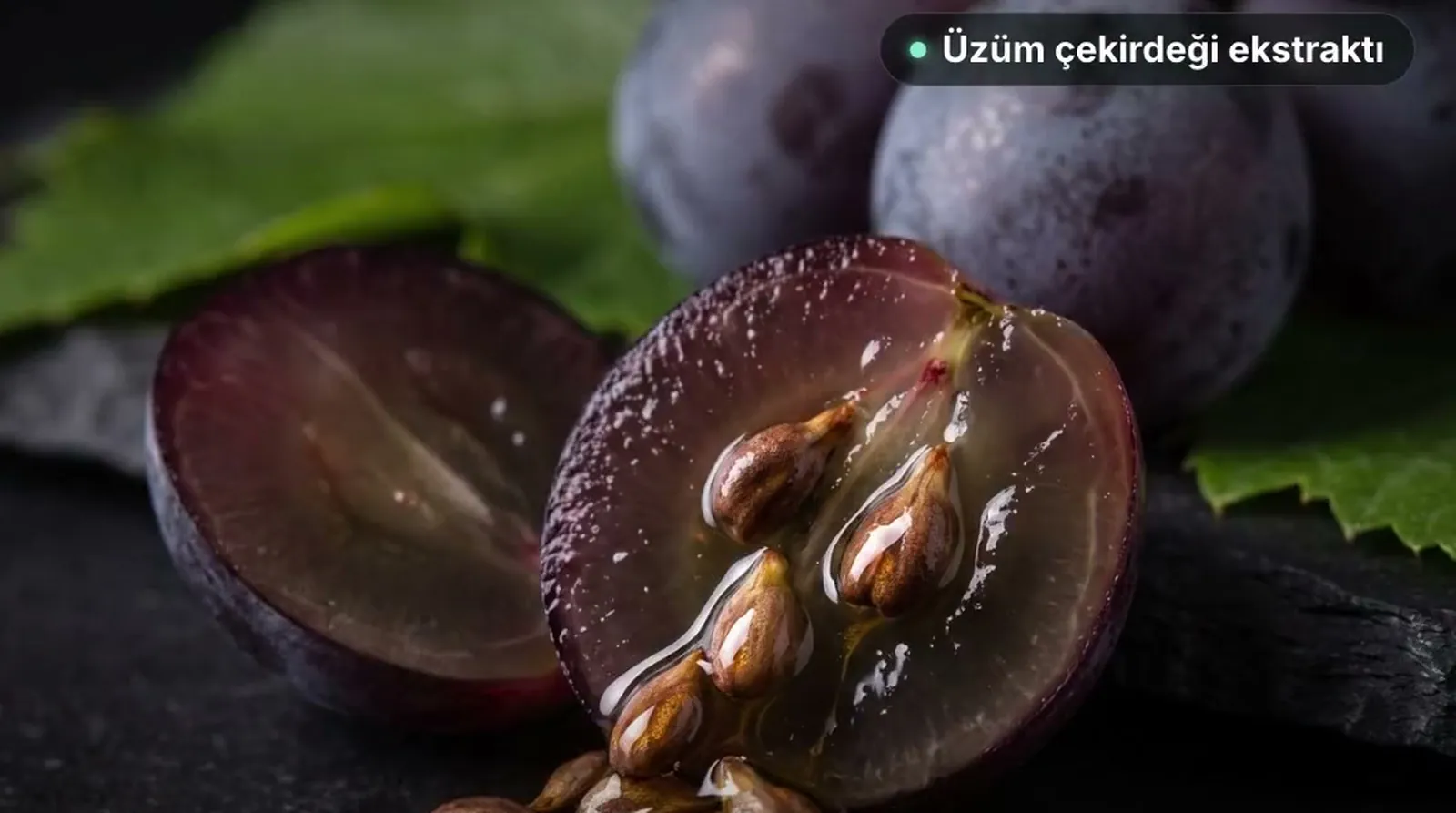
Grape is a good example: a single fruit holds several classes of phenolics at once. According to the review by Intagliata and colleagues, resveratrol (3,5,4'-trihydroxystilbene) is a stilbene found in plants such as the grapevine (Vitis vinifera), peanut and Japanese knotweed. In nature it is mostly in the trans form; under UV light it converts to the cis form and can undergo further photochemical reactions. It is very poorly soluble in water (21 micrograms per milliliter at pH 7.4 and 37 °C), and according to the review its stability and solubility are strongly affected by pH and temperature.
A 2017 study by Pentek and colleagues notes that resveratrol is commonly found in the skin of red grapes. The seed carries a different chemistry. According to a 2019 review by Rodríguez-Pérez and colleagues, grape seed extract is a rich source of proanthocyanidins, consisting mainly of catechin, epicatechin, gallic acid and oligomeric and polymeric proanthocyanidins. The same review stresses that the findings come from animal models and that, before moving to human studies, new animal studies designed with standard doses and composition are needed.
No extract replaces sunscreen. A plant's own UV defense does not provide the same protection when you apply it to your skin as an extract. According to a 2023 review by Michalak, some natural substances that looked promising raised the SPF value only slightly or moderately when added to sunscreens. An antioxidant extract can have a place in your routine, but it does not replace the broad-spectrum sunscreen of at least SPF 30 recommended by the American Academy of Dermatology (AAD). You can read why UV does not drop to zero even in the cooler months in our guide to sunscreen in winter.
Stability and formulation: why low temperature and a defined pH matter
Extraction is only the first step. A molecule can also degrade inside the formula.
pH. A 2000 study by Friedman and Jürgens examined the stability of seven natural polyphenols between pH 3 and 11. Caffeic, chlorogenic and gallic acid were unstable at high pH, and these changes were irreversible. Catechin, epigallocatechin, ferulic acid and rutin, on the other hand, resisted marked degradation. So there is no single "polyphenol behavior"; each molecule tolerates a different pH range.
Temperature and light. The thermal degradation risk in the Soxhlet example also applies when a heat-sensitive active is added to a formula. The conversion of resveratrol to the cis form under UV likewise shows that light is a variable. The U.S. Food and Drug Administration (FDA) reminds us that cosmetics can spoil if stored in a place that is too hot or humid.
How is this handled in Longos serums? Longos serums are formulated at low temperature (below 40 °C) and at a defined pH to protect the active ingredients. The serums are largely of natural origin (ISO 16128); many are COSMOS approved and vegan. Stability also recurs in Prof. Günkara's cosmetic chemistry work; in 2022 he was among the authors of an abstract on the stabilization of hypochlorous acid presented at the 12th Cosmetic Chemistry Congress.
The same logic applies to non-botanical actives: the main active of the Brightening Serum is 3-O-Ethyl Ascorbic Acid, a stabilized vitamin C derivative. You can find what a vitamin C serum is for in our article on the evidence and common mistakes of vitamin C serums. What you can do at home is simple: store the serum in a cool place out of the sun and keep the cap closed.
The skin penetration problem: barrier and molecule size
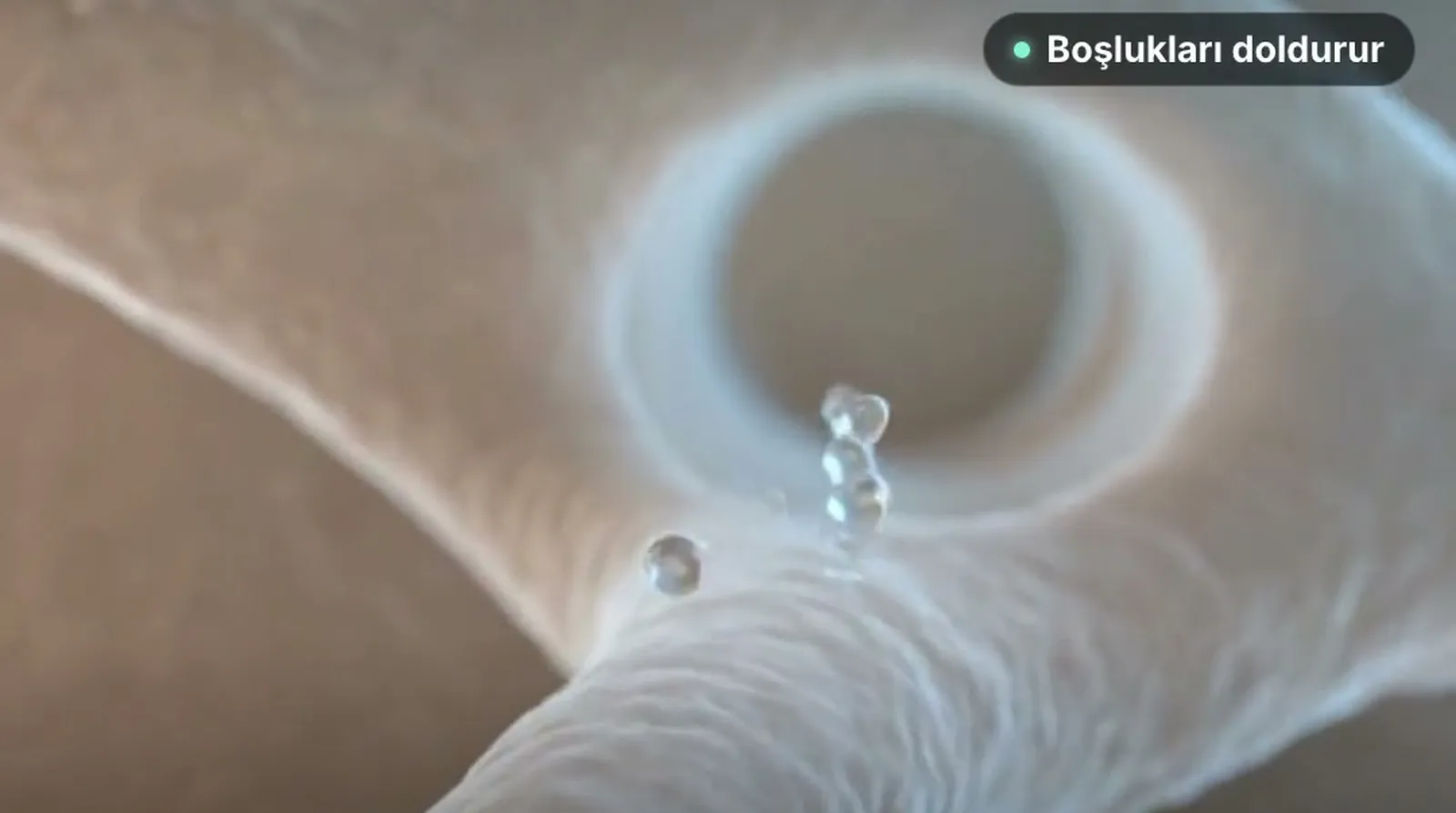
In video interviews for Quantum Orbit Labs, Prof. Günkara sums up the job of the skin like this: "The skin is designed to keep outside effects outside. It is really a protective barrier." The main layer of this barrier is the outermost stratum corneum. According to a 2015 review by Alkilani and colleagues, the cells of this layer consist mainly of insoluble keratin (70%) and lipids (20%), and it is the principal obstacle limiting the passage of foreign molecules.
The 500 Dalton rule. In 2000, Bos and Meinardi argued that a compound's molecular weight must be below 500 Daltons for it to be absorbed through intact skin. Among their grounds was that almost all common contact allergens and all known drugs used in transdermal systems fall below this limit. Alkilani's review adds that approved transdermal drugs also have a balanced oil-water solubility (log P 1-3). The rule is not a hard wall but a rough threshold.
Small molecule, large molecule. Resveratrol, with the formula C14H12O3, has a molecular weight of about 228 Daltons, which is below the threshold; its problem is not size but its low solubility in water and its sensitivity to light. Tannins, on the other hand, can be much larger; according to PubChem records, some ellagitannins have a molecular weight above 1,500 g/mol. A 2018 review by Yoshida and colleagues notes that high-molecular-weight tannins have limited bioavailability because of low solubility, stability and membrane permeability, and that laboratory findings must be interpreted with care.
This is why the formula matters. The review by Intagliata summarizes studies reporting that when resveratrol is loaded into solid lipid nanoparticles, more of it is retained in the skin layers in laboratory skin models. In 2024, Prof. Günkara's team also presented an abstract at the Anatolian Organic Chemistry Conference on the synthesis and liposomal encapsulation of cosmeceutical bioactive peptides. We explained why molecule size is discussed so much for hyaluronic acid in our guide to 8D hyaluronic acid and molecule size.
According to its manual, Thermal Therapy in Longos Sense gently warms the skin surface to support the absorption of cosmetic products, while Ultrasonic Wave is a gentle vibration massage that can be used with a serum. The device is used only on the face and neck, never on the eyes or eyelids.
What does the evidence say about topical plant extracts?
The honest answer: promising, but mostly at the laboratory level.
The laboratory is not the skin. That an extract shows an effect in cell culture or a test tube (in vitro) does not mean the same effect will be seen on skin. Michalak's review stresses that in vitro research on the biological activity of plants must be backed by in vivo studies, and that promising preliminary findings must be confirmed by clinical studies.
Human studies are few. According to a 2010 evidence-based review by Reuter, Merfort and Schempp, the best evidence for botanical products is in inflammatory skin diseases such as atopic dermatitis and psoriasis; even so, many more controlled clinical studies are needed to establish efficacy and risks. According to a 2020 review by Hoffmann and colleagues, about 30% of the 300 plant monographs that Germany's Commission E evaluated between 1976 and 1993 received a negative outcome; most of the positive plants relevant to dermatology also reached only a low level of evidence because high-quality clinical studies are scarce.
There are examples of going from plant to treatment, too. The same review reminds us that salicylic acid, which comes from willow bark, is still used in topical treatment. The place of a botanical molecule in dermatology is earned through purification, dose and clinical study.
When you meet an extract claim, ask these four questions:
- Was the study done in cells, in animals or in humans?
- Is the tested concentration close to the proportion in the product?
- Was there a comparison group, that is, a placebo or a formula without the extract?
- How many people took part, for how long, and who measured the result?
To set expectations in the right place, a sentence from Prof. Günkara in the video interviews for Quantum Orbit Labs is a useful guide: "We cannot stop aging, but we can slow down the effects of aging."
Natural does not mean safe: allergy and patch testing
According to the FDA, the source of an ingredient does not determine its safety; whether grown organically or not, many plants can contain toxic or allergenic substances. The FDA has also not set a definition for the term "natural" on cosmetic labels.
According to a 2025 review by Sukakul and Svedman, natural ingredients can also be allergens: the fragrance compounds and essential oils commonly found in products with "natural" claims are common sensitizers, and propolis and colophony (pine resin) are also known natural allergens. In a 2021 study of patients patch tested at a tertiary clinic in New Zealand, 12.9% of patients were sensitized to at least one botanical allergen. The most frequent reactions were to allergens from the terpene family, and the most common exposure was not the plants themselves but botanical cosmetics and personal care products.
The link in chemistry. One of the grounds of the 500 Dalton rule was that almost all common contact allergens fall below this limit. Small molecules that enter the skin easily can also carry a risk of sensitization.
How do you test at home? The AAD recommends the following:
- Apply the product, in your usual amount, twice a day for 7-10 days to an area the size of a coin on your inner forearm or the inner fold of your elbow.
- If there is no redness, itching or swelling, you can use the product.
- If there is a reaction, gently wash off the product and do not use it again; if the reaction is severe and does not ease with a cold compress or petroleum jelly, see a dermatologist.
The AAD also warns that products labeled "fragrance-free" or with botanical ingredients can still contain fragrance-related components. For repeated reactions whose cause you cannot find, a patch test done by a dermatologist can show which substance you are sensitive to.
How to read extract names on an INCI list
Cosmetic ingredient lists are written with international INCI names. According to the INCI rules of the U.S. industry association Personal Care Products Council, the names of botanical ingredients begin with the Latin genus and species, followed by the plant part and the type of preparation. In "Vitis Vinifera Seed Extract," Vitis is the genus, Vinifera the species, Seed the seed and Extract the extract.
Four rules to know when reading:
- In the U.S., a common English name can be written in parentheses after the Latin name; the example in the rules is "Prunus Persica (Peach) Leaf Extract." In the EU, the common name in parentheses is not used.
- If more than one plant part was used, the parts are separated by a slash; according to the guidance of Health Canada, an expression such as "Flower/Leaf" shows that all of the stated parts were used.
- If the solvent remains in the final product, it appears in the name. If the solvent was removed, or if the solvent is carbon dioxide that evaporates away, it is not written in the name; so you cannot tell from the label that supercritical CO2 was used.
- According to Article 19 of the EU Cosmetic Products Regulation No. 1223/2009, ingredients are listed in descending order of their weight at the time they are added to the product; ingredients below 1% may be listed in any order after those above 1%.
The last rule matters: you cannot infer the proportion of an extract near the end of the list from its position. The plant part matters at least as much as the plant. According to Sulima and colleagues, Salix purpurea bark is among the willow species with the highest salicylic compound content; in grapes, resveratrol stands out in the skin and proanthocyanidins in the seed. The part written on the label tells you which family of metabolites to expect.
Secondary metabolites in Longos serums: four examples
In a video published on YTU's official YouTube channel, Prof. Günkara explains that they use secondary metabolites in the eight serums they have prepared. The Longos serums were developed in the laboratories of Yildiz Technical University through the work of Prof. Günkara and his team; according to YTU's LinkedIn post of 27 October 2026, the work is an academia-industry collaboration carried out within Yildiz TTO A.S.
| Serum | Main botanical active | What the literature says about the plant | Need it targets |
|---|---|---|---|
| Soothing | Tasmannia Lanceolata | Tasmanian mountain pepper; its leaves contain drimane sesquiterpenes such as polygodial (terpenoid) | Sensitive, reactive skin |
| Anti-Aging | Anigozanthos Flavidus extract and Hexapeptide-9 | Tall kangaroo paw, native to Western Australia | Firmness, fine lines |
| Detox & Blue Light | Epilobium (Oenothein B) and Theobroma cacao | Oenothein B is a macrocyclic ellagitannin (phenolic) | Blue light and environmental stress |
| Anti-Acne | Salix Purpurea (natural salicylates) | Salicylic glycosides such as salicin, salicortin and tremulacin in the bark (phenolic) | Acne-prone skin |
From willow to salicylate. The salicylic glycosides in Salix purpurea bark come from the same family as salicylic acid, but they are not the same molecule as purified salicylic acid; do not confuse "natural salicylate" on a label with a salicylic acid concentration. We explained how salicylic acid dissolves in oil and reaches the mouth of the hair follicle in our guide to what salicylic acid does.
Oenothein B from Epilobium. According to a 2016 review by Schepetkin and colleagues, oenothein B is the dominant polyphenol of Epilobium angustifolium (14-23%). It is a large molecule formed when two tellimagrandin I units join in a ring; its antioxidant effects have been reported in laboratory studies. Epilobium is also in the Pore Minimizer Serum for pore appearance and oil balance; you can find the ingredient side of that goal in our article on the ingredients of serums that target pore appearance.
What does this table not show? The chemistry in the table is what the literature says about the plants; it does not show the proportions in the serums or the effect on skin. You can see each serum's highlighted ingredients on our science page, where we collect the six technologies of Longos Sense and the serum measurements; the measurements there were made in the laboratory, not on skin.
What can you do this week?
This week, open the ingredient list of a botanical product in your bathroom and read a single extract: which plant, which part, and where in the list. Before adding a new extract serum to your routine, try it on your inner forearm for 7-10 days; and leave your morning sunscreen in place, however antioxidant the extract may be.
If you would rather choose which need of your skin to focus on by looking than by guessing, run the AI skin analysis in the Longos Sense app once this evening on clean, product-free skin; the analysis follows cosmetic appearance and does not make a diagnosis. In Prof. Günkara's words: "If you take good care of your skin, you will keep getting the reward for it as the years pass." This is a care guide, not medical advice; for persistent redness, burning or repeated reactions, see a dermatologist.
Frequently Asked Questions
What is a secondary metabolite?
Secondary metabolites are organic compounds that a plant does not need directly for growth and development, but that govern its relationship with its environment. The plant uses them to defend against herbivores and microbes, to protect itself from UV rays and to communicate, for example in pollination. In the literature they are also called specialized metabolites or natural products. Flavonoids, tannins, terpenes and alkaloids are well-known examples of this group. Because their production varies with species, organ and environmental conditions, the content of the same species can differ from plant to plant.
What is the difference between primary and secondary metabolites?
Primary metabolites are molecules such as sugars, amino acids, fatty acids and nucleic acids that are present in all plants and are essential for growth. Secondary metabolites are mostly specific to certain species, are produced in particular organs or developmental stages, and serve environmental functions such as defense, UV protection or signaling. Their amounts vary with stress, climate and harvest time. The boundary is not sharp: some plant hormones, such as phytosterols and gibberellin, are made through the terpenoid pathway but perform vital functions in all plants.
What are the main classes of secondary metabolites, and what are some examples?
There are three large families. Phenolics carry an aromatic ring and hydroxyl groups; flavonoids, resveratrol in grapes, proanthocyanidins in grape seed and salicin in willow bark belong here. Terpenoids are built from five-carbon isoprene units; components of essential oils, carotenoids and polygodial in Tasmanian mountain pepper are examples. Alkaloids contain nitrogen; caffeine in coffee, tea and cacao is a well-known purine alkaloid. Glucosinolates and cyanogenic glycosides are other groups involved in plant defense.
What is a plant extract, and which methods are used to make it?
A plant extract is a mixture obtained by transferring compounds from a leaf, bark, seed, fruit or root into a solvent such as water, ethanol, glycerin or carbon dioxide under pressure. Common methods are maceration, Soxhlet, ultrasound-assisted, microwave-assisted and supercritical CO2 extraction. The method changes the result: the polarity of the solvent determines which molecules are drawn out, and temperature determines whether heat-sensitive compounds degrade. Supercritical CO2, with a critical temperature of about 31 °C, can extract oils and volatile compounds at a mild temperature.
How far do plant extracts penetrate the skin?
The stratum corneum, the outermost layer of the skin, is a strong barrier against foreign molecules. According to the frequently cited 500 Dalton rule, a compound's molecular weight must be below 500 Daltons for it to be absorbed through intact skin. Small polyphenols such as resveratrol fall under this limit but dissolve poorly in water; large tannins such as oenothein B are far above it and have limited bioavailability. So an extract's effect on skin depends on the formula, the delivery system and the concentration, and it has to be measured separately.
Can products with natural plant extracts cause allergies?
They can. According to the U.S. Food and Drug Administration, the source of an ingredient does not determine its safety, and many plants can contain allergenic substances. Essential oils, fragrance compounds, propolis and colophony are well-known natural allergens. Before putting a new product on your face, do as the American Academy of Dermatology recommends: apply it twice a day for 7-10 days to a small area on your inner forearm or the inner fold of your elbow. If you notice redness, itching or swelling, stop using the product; if the reaction is severe or keeps coming back, see a dermatologist.
Clinical evidence