Ömer Tahir Günkara
Who Is Prof. Dr. Ömer Tahir Günkara? His Research at YTU and Work in Cosmetic Chemistry
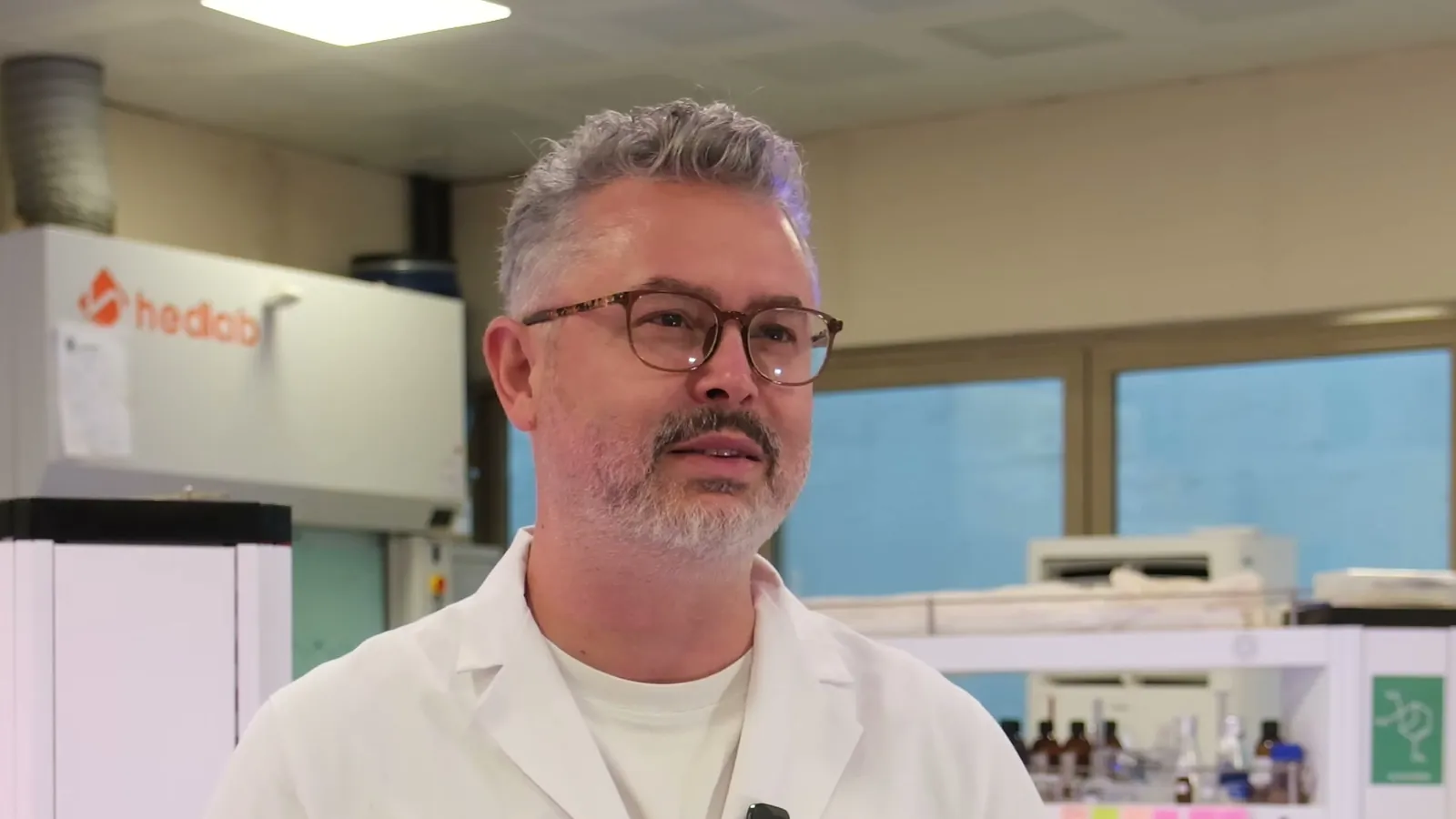
Who is Prof. Dr. Ömer Tahir Günkara? The short answer
Prof. Dr. Ömer Tahir Günkara is an organic chemist and faculty member in the Department of Chemistry, Faculty of Science and Letters, at Yildiz Technical University (YTU; Yildiz Teknik Üniversitesi). He completed his entire chemistry education at YTU, started in the same department as a research assistant and now teaches as a professor. The Günkara Research Group (Gunkara Research Group, GRG), which he founded and leads, works on topics ranging from the synthesis of active pharmaceutical ingredients to obtaining bioactive compounds from natural sources.
One branch of his work reaches into cosmetic chemistry. His AVESIS profile lists conference abstracts on plant extraction, cosmeceutical peptides and cosmetic formulation, along with roles he has held at cosmetic chemistry congresses. On 27 October 2026, YTU announced an academic-industry collaboration with Quantum Orbit Labs, carried out within Yildiz TTO A.S., and described it through his account.
Transparency note: Prof. Günkara works with Quantum Orbit Labs; he leads the formulation work on the Longos serums and sits on the company's science board. This article is published on Quantum Orbit Labs' own blog. We state the source of every piece of information below in the text itself, chiefly YTU's official pages, the AVESIS profile and open scientific publications.
If you want to read more about the fields he works in, see our guide to secondary metabolites and the chemistry of plant extracts and our article on what AI skin analysis can and cannot measure.
From research assistant to professor at YTU: his academic path
The entire education was at YTU. According to YTU's Impact page, Günkara completed his bachelor's, master's and doctorate in chemistry at Yildiz Technical University. According to AVESIS, he finished his master's in 2009 and his doctorate in 2013. His master's thesis was on the synthesis of tricyclic amino acid esters and reductive Heck reactions. His doctoral thesis dealt with the synthesis of new heterocyclic compounds that may show biological activity.
The titles came step by step. The experience record in AVESIS shows that he worked as a research assistant from 2011 to 2013 and as a research assistant with a PhD from 2013 to 2019, and that he became an associate professor in 2019. According to his LinkedIn profile, he has been a professor since February 2025. The same profile says he also taught organic chemistry at Istanbul University in 2019-2020.
| Period | Stage | Source |
|---|---|---|
| Bachelor's | Chemistry, YTU Faculty of Science and Letters | YTU Impact, AVESIS |
| 2007-2009 | Master's, YTU Department of Chemistry | AVESIS, ORCID |
| 2009-2013 | Doctorate, organic chemistry, YTU | AVESIS, ORCID |
| 2011-2013 | Research assistant, YTU Department of Chemistry | AVESIS |
| 2013-2019 | Research assistant with a PhD | AVESIS |
| 2019 | Associate professor | AVESIS |
| 2019-2020 | Organic chemistry course at Istanbul University | |
| Since February 2025 | Professor, YTU Department of Chemistry | LinkedIn, AVESIS |
What does he teach? The courses listed in AVESIS include general chemistry, organic chemistry, synthesis of bioactive compounds, stereochemistry, advanced organic chemistry and green chemistry. The profile shows 14 thesis supervision records. The titles of the theses he supervised follow the same line: bioactive drug-candidate molecules, new heterocyclic compounds and trace-level determination of active pharmaceutical ingredients.
What does organic chemistry do? A short translation for non-chemists
The chemistry of carbon. Organic chemistry is the chemistry of molecules with a carbon backbone. Announcing the 2010 chemistry prize, the Nobel Committee describes the field as the basis of life and points out that organic chemistry lies behind the colour of flowers and behind bacteria-killing substances such as penicillin. An organic chemist's job is to build the desired molecule step by step, purify it and confirm that the substance obtained really is the target molecule.
Besides organic chemistry, the AVESIS profile lists four areas of expertise. For someone who is not a chemist, they can be translated like this.
Asymmetric synthesis. Some molecules are mirror images of each other that cannot be superimposed, like your right and left hands; these are called enantiomers. According to a 1992 policy statement of the US Food and Drug Administration (FDA), these two forms can behave differently in the body: the l-form of propranolol acts as a beta blocker, while the d-form does not. Asymmetric synthesis aims to produce one of the two forms selectively.
Heterocyclic compounds. If the backbone of a ring-shaped molecule contains another atom such as nitrogen alongside carbon, the molecule is heterocyclic. According to an analysis by Vitaku and colleagues published in 2014, 59% of distinct FDA-approved small-molecule drugs contain at least one nitrogen heterocycle. Günkara's doctoral thesis was also on new molecules in this class.
Organic spectroscopy and organometallic chemistry. Spectroscopy is the general name for methods that read a molecule's structure from how it interacts with light or a magnetic field. Organometallic chemistry deals with compounds that form a bond between a metal and carbon. The Heck reaction in his master's thesis also proceeds with the help of a metal atom: according to the Nobel Committee, carbon atoms meet on a palladium atom in this reaction. The 2010 chemistry prize was awarded for these palladium-catalysed cross-coupling reactions, and the method is used in drug manufacturing today.
What does the Günkara Research Group (GRG) work on?
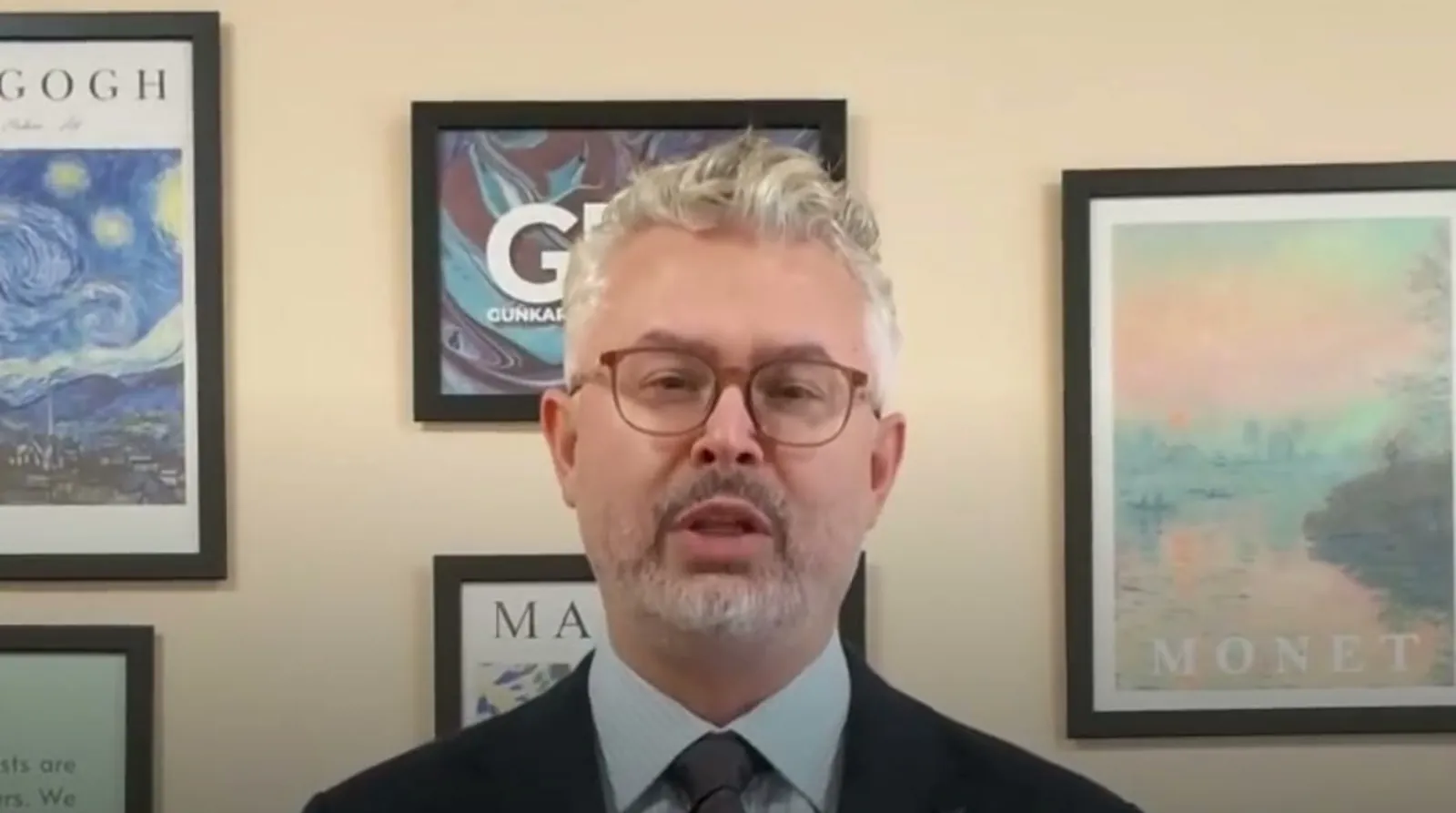
One group, a wide range. The GRG website introduces Prof. Günkara as the founder and leader of the group, and YTU's Impact page also names him as its head. The group page in AVESIS mentions about 40 members. Its fields of work include synthesis of active pharmaceutical ingredients, new drug design, new synthetic routes for heterocyclic compounds, syntheses of deuterium-labelled drugs, analytical method development and isolation of bioactive compounds from natural sources.
Why is deuterium interesting? Deuterium is the heavy isotope of hydrogen, with one extra neutron. According to a 2017 news piece in Nature Reviews Drug Discovery, the carbon-deuterium bond is stronger than the carbon-hydrogen bond, so some drug molecules are hoped to resist enzymes in the body better. According to a 2023 review, the FDA approved the first deuterated drug in 2017 and the first drug designed with deuterium from the start in 2022.
Students are part of the project. The group runs many student projects through TUBITAK's 2209-A and 2209-B programmes. According to TUBITAK, 2209-A supports the own research projects of associate degree and undergraduate students. 2209-B is for student projects that aim to solve an industry problem or have potential for application in industry; in these projects, an industry advisor works alongside the academic advisor. In the project list in AVESIS, many plant extraction projects carried out with these programmes stand out.
What is extraction? How does an active ingredient get from the plant to the lab?
The science of separation. Extraction means separating the useful molecules in a plant from the rest of the tissue with the help of a solvent. The target is often the plant's secondary metabolites. According to a 2025 review, primary metabolites such as sugars, amino acids and fatty acids are essential for growth. Secondary metabolites such as phenolics, terpenoids and alkaloids are produced depending on specific tissues, developmental stages and environmental conditions; the review notes that these compounds are widely used in the pharmaceutical, cosmetic and food industries.
Microwave-assisted extraction. The plant and the solvent are heated with microwave energy. According to a 2002 review, this method needs less solvent and less time than conventional methods. Yields can be equivalent to conventional methods, and sometimes even higher.
Supercritical CO2 extraction. When carbon dioxide is raised above about 31 °C and 73 atmospheres, it enters a supercritical state in which it behaves neither fully like a gas nor fully like a liquid. According to a 2024 review, this method uses a non-toxic solvent and can work at low temperatures that do not damage heat-sensitive compounds. Another 2025 review writes that it leaves no toxic solvent residue but does not dissolve polar compounds well, and that recovering the CO2 is costly. Every method has a limit; the right method is chosen according to the target molecule.
Cosmetic chemistry conference abstracts: which plants, which questions?
First, a reading note. All of the works below are listed in AVESIS as conference abstracts. A conference abstract is a short summary of work presented at a congress; it does not carry the same weight as a full-text journal article. Even so, it shows well which questions a researcher is working on.
| Subject of the work | Method | Congress and year |
|---|---|---|
| Extract and flavonoid content from the Moringa plant | Microwave-assisted extraction, compared with the conventional method | 19th Asian Chemical Congress, Istanbul, 2023 |
| Extract and resveratrol content from Cavus grapes grown on Bozcaada | Supercritical CO2, compared with the conventional method | 19th Asian Chemical Congress, Istanbul, 2023 |
| Obtaining essential oil from sage and determining its content | Microwave, compared with steam distillation | 19th Asian Chemical Congress, Istanbul, 2023 |
| Extract and content of Iranian borage (Echium amoenum) | Supercritical CO2, analysis by HPLC | 19th Asian Chemical Congress, Istanbul, 2023 |
| Pet cosmetics containing oats and rosemary | Formulation | 13th International Cosmetic Chemistry Congress, Antalya, 2023 |
| Studies on hypochlorous acid and its stabilization | Stability | 12th Cosmetic Chemistry, Production and Standardization Congress, Antalya, 2022 |
| Cosmeceutical bioactive peptide synthesis and liposomal encapsulation | Peptide synthesis, liposome | Anatolian Conference on Organic Chemistry, Antalya, 2024 |
What are liposomes for? Liposomes are tiny spheres made of a phospholipid bilayer. According to a 2022 review, they can carry a water-soluble active ingredient in the inner aqueous compartment and a fat-soluble one within the bilayer; because their structure resembles the cell membrane, they are studied as carriers in cosmeceutical products. Cosmeceutical peptide synthesis and liposomal encapsulation also appear in AVESIS as a 2023-2025 project.
What does the table tell us? The extraction method determines which molecule is obtained, in what amount and how intact. Formulation is the job of keeping that molecule stable inside a product. An organic chemist's path toward cosmetics runs through these two questions.
Congresses, refereeing and a documentary: his roles outside the lab
Organizing congresses. According to AVESIS, he served as congress secretary at the 10th and 12th International Cosmetic Congresses and the 11th International Chemistry Congress. He took the same role at the 7th International Medicinal Chemistry Congress in 2019, and he was scientific coordinator of the 1st Food Chemistry Congress. The scientific activities section of the profile shows that between 2019 and 2023 he took part in organizing cosmetic, food, pharmaceutical and analytical chemistry congresses, most of them held in Antalya.
Peer review and professional body. According to the same profile, he has been a member of the Chemists Association since 2021. He has refereed for SCI-indexed journals such as Bioorganic Chemistry, Microchemical Journal, Turkish Journal of Chemistry and Journal of Chromatographic Science, and he also evaluated TUBITAK 1001 projects. Peer review means that other experts examine a study's method and results before it is published.
Taking science to the screen and to students. According to the AVESIS record, in 2018 he presented the documentary "Etme Bulma", broadcast on TRT Belgesel; the series' producer introduces it as a science series explaining the physics and cause-and-effect behind everyday actions. According to YTU's Impact page, on 2 April 2024 he showed students around his laboratory during an event of the university's Chemical Technologies Club. At the same event he spoke about interdisciplinary collaboration between chemistry, cosmetics and food sciences.
Why does a chemistry professor formulate serums? Academic-industry collaboration through the TTO
What does a technology transfer office do? Knowledge produced at a university does not turn into a product on its own; the bridge in between is often built by a technology transfer office (TTO). By its own description, Yildiz TTO is a structure working within Yildiz Technopark that transfers YTU's academic knowledge and research to industry. Through its patent and licensing, international projects and university-industry collaboration units, it supports academics and industrialists in protecting, patenting and commercializing research outputs.
How does YTU describe the project? According to YTU's LinkedIn post of 27 October 2026, Prof. Günkara describes the personalized skincare system developed within the academic-industry collaboration carried out with Quantum Orbit Labs within Yildiz TTO A.S. According to the post, this system:
- Brings together AI-assisted skin analysis with a mobile app, a care device and specially formulated serums.
- Determines, according to the skin's needs, which product to use and in what amount, and which treatments to prefer.
- Keeps treatments found unsuitable for the user out of the care programme before it even starts.
- Combines light, radiofrequency and hot-cold applications in a single device.
In the video published on YTU's official YouTube channel, Günkara explains the third point in his own words: "If a treatment is not suitable for your skin, it removes it from your therapy programme before it even starts." In the same video, he says they use secondary metabolites in eight serums.
An interdisciplinary product. In video interviews filmed for Quantum Orbit Labs, Günkara explains that the device comes not from a single discipline but from fields such as organic chemistry, electrical-electronics, software and biophysics working together. The share of chemistry is clear: deciding which active ingredient stays stable in which formula and how it is protected inside the product.
What does he say about skin, ageing and collagen in videos?
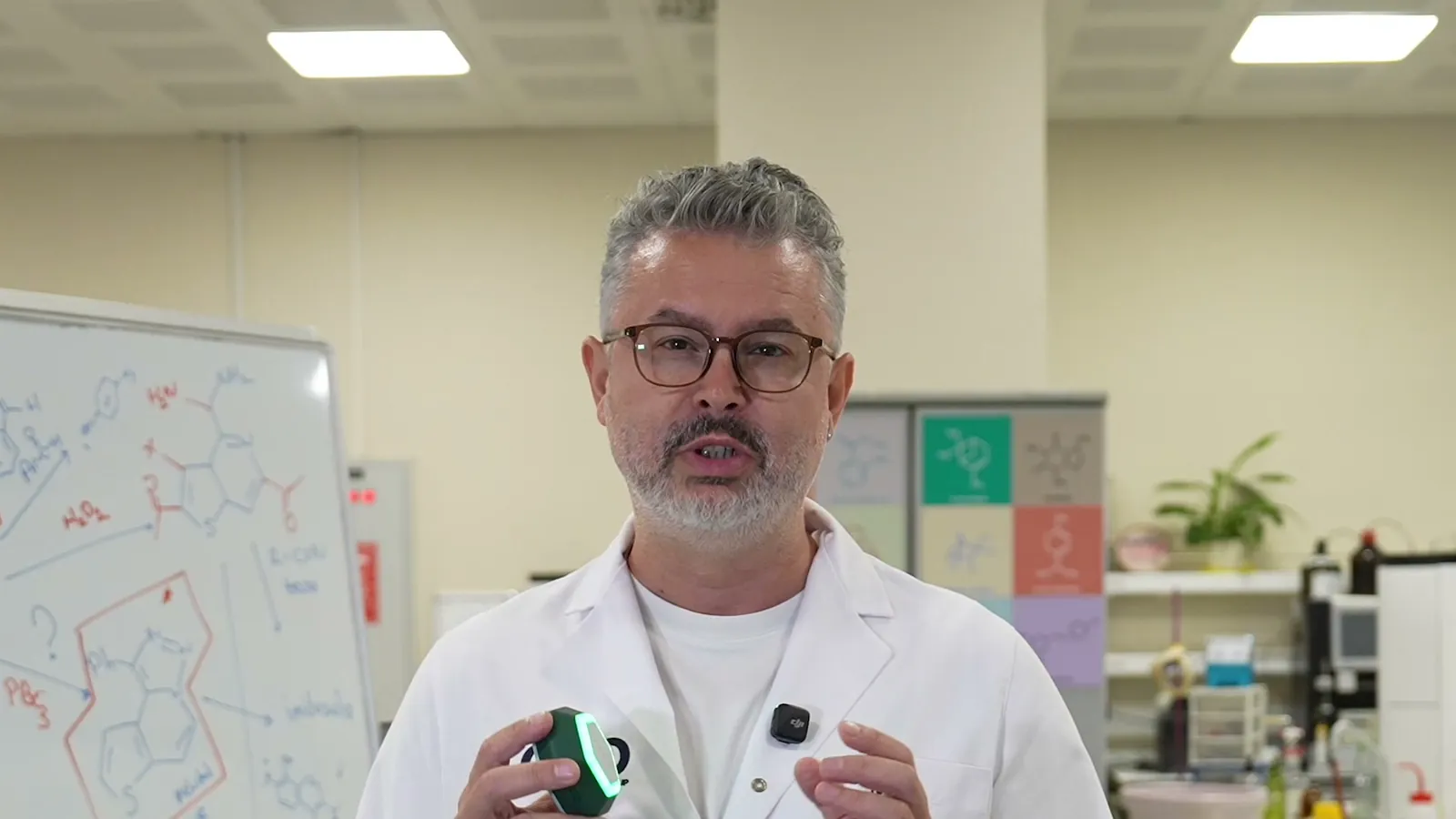
In video interviews filmed for Quantum Orbit Labs, Günkara explains skin science in everyday language and sets the goal not as looking merely young, but as looking natural. Cosmetic care at home is one way of getting closer to this goal. Clinical procedures such as fillers, botulinum toxin, lasers or thread lifts serve different purposes and are options chosen after a physician's assessment; home care does not replace them, and for pronounced sagging or deep wrinkles the right first step is a dermatologist's examination.
Not stopping ageing, but slowing its effects
"We cannot stop ageing, but we can slow down the effects of ageing." In the same video, Günkara sees collagen loss at the root of wrinkles, loss of elasticity and sagging. The path he recommends is simple: eating healthily, sleeping regularly and benefiting from supportive care. The American Academy of Dermatology (AAD) likewise recommends daily sun protection, quitting smoking and a balanced diet to reduce early skin ageing; the academy's skin care guide for the 40s and 50s also keeps adequate sleep on the list.
Like a muscle, collagen needs care
"Just as you look after your muscle, you need to look after your skin and your collagen." The strength of the comparison is that it sees ageing not only as fate but as a process that care can help manage. Science counts two factors together here. According to the AAD, the sun plays a large role in early skin ageing. A 2006 study by Varani and colleagues showed that collagen production falls with age even in sun-protected skin: fibroblasts taken from people aged 18-29 produced an average of 82 ng of type I procollagen per millilitre in the laboratory, while the figure for those taken from people over 80 was 56 ng.
A fibroblast is the cell that produces collagen in the dermis. Care does not erase the effect of age, but it manages the factors you can change, such as sun and habits. You can read about the ages at which collagen loss becomes noticeable in our article on when collagen loss in skin begins.
Expression lines. Günkara explains expression lines as fine lines formed when muscles pull on the skin and that can deepen over time, which is why he recommends keeping an eye on them. The AAD describes the same mechanism: when you contract the same muscles over and over for years, these lines become permanent. You can find the biology behind wrinkles and loss of elasticity in our article on the scientific causes of skin ageing.
The skin is a barrier
"The skin is designed to keep outside influences out. In fact, it is a protective barrier." The scientific counterpart of this observation is the stratum corneum, the outermost layer of the skin. According to a 2023 review, this layer consists of dead cells filled with keratin arranged in a brick-and-mortar pattern within a lipid matrix; it limits the evaporation of water from the body and blocks the entry of chemicals from outside. According to the review, the small number of products that deliver drugs into the body through the skin can also be explained by this low permeability.
The same barrier also makes the job harder for active ingredients applied to the skin. That is why an important part of formulation science concerns how an active ingredient meets the barrier. You can find out what happens when the barrier weakens in our guide to the signs of a damaged skin barrier.
Spots do not come from a single cause
Günkara explains that spots can have many causes: irregular melanin production, hormones and DNA damage caused by the sun's UV rays. According to the AAD's melasma page, sunlight prompts the body to make more melanin, and the rise in oestrogen and progesterone during pregnancy is thought to trigger melasma. According to Cleveland Clinic, skin damage such as acne, cuts or burns can also leave dark marks. We explained which spot calls for which care in our guide to types of dark spots on the face. A stubborn, growing or changing spot should first be shown to a dermatologist.
His role at Quantum Orbit Labs: formulation and science board
The role is stated openly. On Quantum Orbit Labs' science page, which explains the science behind Longos Sense, Prof. Dr. Ömer Tahir Günkara's name appears in the experts section under formulation. The Longos serums were developed in the laboratories of Yildiz Technical University under the direction of Prof. Günkara and his team. The serums are formulated below 40 °C and at a defined pH to protect the active ingredients.
What is in the serums? According to the company's product information, one of the featured actives of the Moisturizing Serum is 8D Hyaluronic Acid Complex. In a video, Günkara describes this complex as a structure that brings together eight different forms of hyaluronic acid: small, medium and large molecular size, cross-linked and acetylated forms. You can read why molecular size matters in our article on 8D hyaluronic acid and molecular size. In the Anti-Aging Serum, the Anigozanthos Flavidus extract and the peptide Hexapeptide-9 stand out.
How should the measurements be read? The science page explains that the electrochemical activity of each serum was measured in the laboratory first on its own and then while Longos Sense was running. According to the page's own note, these are laboratory measurements, not measurements made on skin; the result seen on skin varies from person to person. In other words, this data is not a human study but controlled observations of the serum's chemical activity.
Device and app. Longos Sense brings six technologies together in one device; the ones that stand out in YTU's post are light, radiofrequency and hot-cold applications. According to the user manual, the device is used only on the face and neck area and is not applied on the eyes or eyelids. The AI analysis in the app produces appearance scores from a photo taken with the front camera. The manual describes this analysis as a cosmetic appearance-tracking tool that does not make a diagnosis.
The team. According to the company's page on the story and team of Quantum Orbit Labs, Quantum Orbit Labs works in Berlin and Istanbul, and engineers, chemists and physicians are on the same team. Prof. Günkara's formulation role corresponds to the chemistry arm of this team.
Where can you follow his academic work?
AVESIS. In his profile in YTU's academic data system, education, experience, publications, projects, refereeing and congress roles sit in separate tabs. On the publications page, journal articles and conference papers are listed separately; this distinction is the first place to look to understand the weight of a piece of work.
Profile numbers. As of November 2026, according to the AVESIS profile, there are 148 publication records, of which 49 are indexed in Web of Science and 51 in Scopus. The same profile shows a Web of Science h-index of 9, a Scopus h-index of 10 and 3 registered intellectual property records. According to Hirsch, who defined the h-index in 2005, a researcher with an h value of 10 has 10 publications with at least 10 citations each. Hirsch also notes that a single number can only roughly summarize a researcher and that it differs between fields.
ORCID and Google Scholar. ORCID is a persistent identifier number given to researchers; Günkara's ORCID number is 0000-0003-3528-5045, and the record shows education details and journal articles. You can reach his publications and citations by searching his name in Google Scholar. Because each database indexes different publications, citation and h-index numbers vary from platform to platform.
LinkedIn and the group site. His LinkedIn profile has the title history and education years, while the website of the Günkara Research Group (Gunkara Research Group) has the group's fields of work, publications and announcements.
How can you test the science behind a serum this week?
Pick a skincare product you use or are thinking of buying and answer three questions: who developed the formula, and can that person's work be seen on an open academic profile; what measurement does the claim rest on, laboratory or human skin; does the brand itself state the limit of that measurement? Stay at a distance from a claim for which you cannot find a clear answer to all three.
If you want to record how your skin looks today as a starting point, run the AI analysis in the Longos app once this evening on clean, product-free skin, then repeat it once a week. The analysis does not diagnose; for a lasting or changing skin problem, the right address is your dermatologist.
Frequently Asked Questions
Who is Ömer Tahir Günkara?
Prof. Dr. Ömer Tahir Günkara is a faculty member working in organic chemistry in the Department of Chemistry, Faculty of Science and Letters, at Yildiz Technical University. He completed his bachelor's, master's and doctorate at YTU. According to AVESIS, he started as a research assistant in 2011 and became an associate professor in 2019; according to his LinkedIn profile, he has been a professor since February 2025. The Günkara Research Group (GRG), which he founded and leads, works on synthesis of active pharmaceutical ingredients, heterocyclic compounds and obtaining bioactive compounds from natural sources. At Quantum Orbit Labs he leads the formulation work on the Longos serums and sits on the company's science board.
In which areas does Prof. Ömer Tahir Günkara do research at YTU?
His AVESIS profile lists organic chemistry, asymmetric synthesis, heterocyclic compounds, organic spectroscopy and organometallic chemistry as research areas. His doctoral thesis was on the synthesis of new heterocyclic compounds that may show biological activity; his master's thesis involved reductive Heck reactions. On the cosmetic side, there are conference abstracts on plant extraction with microwave and supercritical CO2, cosmeceutical peptide synthesis and liposomal encapsulation. These abstracts are short summaries presented at congresses, not full-text journal articles.
What is the Günkara Research Group (GRG)?
The Günkara Research Group is an organic chemistry research group in the YTU Department of Chemistry, founded and led by Prof. Dr. Ömer Tahir Günkara. The group page in AVESIS mentions about 40 members. The group works on synthesis of active pharmaceutical ingredients, new drug design, new synthetic routes for heterocyclic compounds, deuterium-labelled drugs, analytical method development and isolation of bioactive compounds from natural sources. Together with students, it runs many TUBITAK 2209-A and 2209-B projects.
How can you find Ömer Tahir Günkara's publications on Google Scholar and AVESIS?
The most detailed source is YTU's academic data system, AVESIS. In his profile, education, experience, publication, project and refereeing information sit in separate tabs, and journal articles are listed separately from conference papers. As of November 2026, AVESIS shows 148 publication records, a Web of Science h-index of 9 and a Scopus h-index of 10. His ORCID number is 0000-0003-3528-5045. You can reach his work by searching his name in Google Scholar and his title history through his LinkedIn profile. Because the databases index different publications, the numbers vary from platform to platform.
What is Ömer Tahir Günkara's relationship with Quantum Orbit Labs?
Prof. Günkara works with Quantum Orbit Labs: he leads the formulation work on the Longos serums and sits on the company's science board in the area of formulation. The Longos serums were developed in the laboratories of Yildiz Technical University under the direction of him and his team. In its post of 27 October 2026, YTU announced this work as an academic-industry collaboration carried out within Yildiz TTO A.S. According to the post, the system brings together AI-assisted skin analysis with a mobile app, a care device and specially formulated serums.
Why does a chemistry professor develop skincare serums?
A serum requires bringing active ingredients together in the right proportions, in a stable form and in a structure suited to the skin; this is the subject of organic chemistry and formulation science. Obtaining an active ingredient from a plant calls for extraction methods, and protecting it inside the product calls for knowledge of stability. Knowledge at a university is often transferred to industry through technology transfer offices. Yildiz TTO is a structure working within Yildiz Technopark that transfers YTU's academic knowledge and research to industry, and it supports patent, licensing and university-industry collaboration processes.
Clinical evidence